
The Sovereign Compute Squeeze — How Energy Constraints Redrew AI Infrastructure in 72 Hours
This launch-edition scenario imagines a grid operator pausing new data-centre interconnections, and traces how AI builders would reroute within days. It is an analytical exercise, not reporting on a real event.
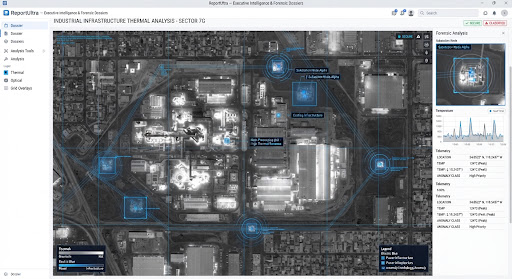
- 01TRIGGER: A pause on new large-load interconnections turns power, not chips, into the binding constraint.
- 02RESPONSE: Builders pivot to private generation, behind-the-meter supply and cooler, power-rich regions.
- 03EXPOSURE: Developers with unsecured sites lose the most; owners of firm power and land gain leverage.
This dossier is an illustrative analytical scenario built from general public knowledge. It is not original reporting, and no event described here is claimed to have happened. The premise: a major grid operator announces a temporary pause on new large-load interconnections for data centres, and within roughly three days the planning assumptions of AI infrastructure builders change. The question is how a capital-intensive industry reroutes when electricity, rather than silicon, becomes the scarce input.
The signal
Large computing campuses have grown from tens of megawatts to hundreds, and some proposals now reach into the gigawatt range. Utilities in several regions have publicly described interconnection queues stretching for years. A formal pause would be a small administrative step with an outsized signalling effect: it tells every developer in the queue that the timeline on their financial model is no longer reliable.
In this scenario, the first 24 hours are mostly confusion. Developers read the notice, counsel reads the tariff, and procurement teams ask whether equipment orders already placed can be redirected. By the second day, the discussion shifts from "when does the pause end" to "which of our sites can run without the grid at all."
Why it matters
AI training and inference campuses are unusual customers. They want high load factors, fast ramp-up and very high reliability. Those are exactly the attributes that strain a local network, because equipment such as large transformers and high-voltage switchgear already carries multi-year lead times. A pause does not create the bottleneck; it makes an existing one visible and political.
It also changes bargaining power. A site with an existing interconnection agreement becomes more valuable than a vacant parcel with better fibre. Land alone stops being the asset. Firm, permitted capacity becomes the asset.
Mechanics of the pivot
Builders in this position tend to pursue several routes at once, and none is free of trade-offs.
- Behind-the-meter generation. On-site gas turbines or engines can supply a campus directly. Speed is the appeal, but air permits, fuel supply and emissions commitments add their own delays and community scrutiny.
- Private power agreements. Long-term contracts with generators, including nuclear and renewable owners, tie a campus to a specific source. Counterparties gain a creditworthy anchor customer; the builder gains certainty, usually at a cost premium over regulated tariffs.
- Colder, cheaper regions. Northern climates reduce cooling load, and regions with surplus hydro or wind can offer lower marginal power costs. The price is latency to major population centres, which matters less for training than for interactive inference.
- Staged energisation. Phasing a campus so that early halls run on temporary supply while permanent connections are built reduces idle capital.
The common thread is that the data centre starts to look like an industrial plant with its own energy strategy, not a tenant on the network.
Who is exposed
Pure-play developers holding speculative sites without signed connection agreements carry the most risk, because their financing often assumes a delivery date they do not control. Hardware buyers with large accelerator orders face a different problem: chips that arrive before a powered building exists are depreciating assets sitting in a warehouse. Cloud providers with diversified footprints can shift workloads between regions, so they are more resilient than single-site operators.
On the other side, owners of firm generation, brownfield industrial sites with existing grid connections, and regions with surplus power gain negotiating leverage. Local governments may also gain, though they inherit questions about water use, noise and the effect on residential electricity bills.
Scenarios
Base case. The pause lasts months, not years, and is replaced by a queue reform that requires larger deposits and firmer commitments. Speculative projects drop out, serious ones proceed, and the industry splits between grid-connected and self-supplied campuses.
Upside case. Regulators pair the pause with a framework allowing flexible-load agreements, in which campuses curtail during peak stress in exchange for faster connection. Builders accept the discipline, and the network gains a controllable large customer.
Downside case. Pauses spread across several regions at once, equipment shortages persist, and private generation faces its own permitting backlog. Capital that was earmarked for compute sits idle, and project finance markets reprice the risk of delayed energisation.
What to watch
- Whether grid operators attach flexibility or curtailment conditions to new large-load connections.
- Lead times quoted for transformers, switchgear and gas turbines.
- Announcements of long-term power agreements between compute developers and generators.
- Permitting decisions on on-site generation near large campuses.
- Any shift in accelerator delivery schedules linked to building readiness rather than chip supply.
This dossier is analysis built on an illustrative scenario, not a recommendation to buy, sell or hold any asset.