Did Playground Games Really Change Fable for “Chud Gamers”? The New Trailer Reignites the Character Design War
THE “UGLY FABLE” WAR JUST TOOK A WILD TURN — AND PLAYGROUND GAMES MAY HAVE ACTUALLY LISTENED. 👀🔥
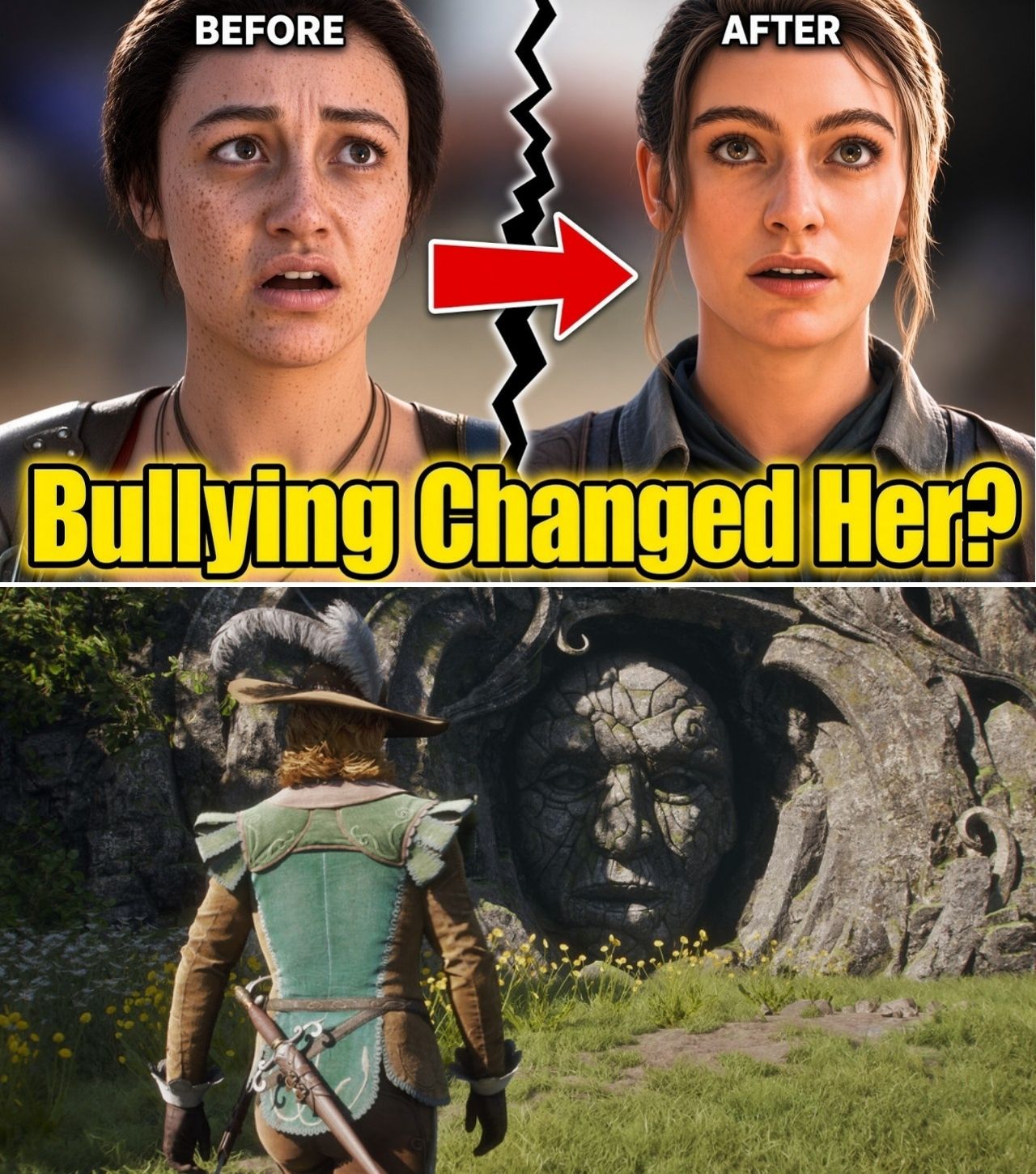
The new Fable trailer suddenly shows a female character who looks noticeably different from the face Xbox kept showing for years — softer features, fewer freckles, and a much more conventionally attractive appearance.
Gamers instantly noticed… but here’s the crazy part: did Playground quietly change the character because of the backlash, or are people completely misunderstanding what they’re looking at?
And why did this tiny visual change suddenly reignite the entire “woke vs. anti-woke” war around Fable?
👇 Click the link to see what actually changed — and what Playground has NOT confirmed.
Did Playground Games Really Change Fable for “Chud Gamers”? The New Trailer Reignites the Character Design War
A noticeably different female character in the latest Fable teaser has reignited an old culture-war argument — but whether Playground Games actually changed the character because of fan backlash remains unconfirmed.
For a few brief seconds, the latest Fable trailer managed to do something that years of marketing had failed to accomplish.
It got almost everyone talking about the same thing.
Not the open world.
Not Jack of Blades.
Not the combat.
Not even the game’s famously British sense of humor.
It was the face of a female character.
The new Gamescom teaser for Playground Games’ Fable appears to show a noticeably different version of the female character previously featured in promotional material. Players immediately spotted softer facial features, fewer freckles and a more conventionally attractive appearance. Gaming outlets and social-media users quickly began describing the difference as a “redesign.”
And almost instantly, the old Fable culture-war argument came roaring back.
One side claimed Playground had finally listened to criticism from gamers who disliked the original character design.
Another side accused those players of celebrating a supposed capitulation to “chud” or anti-woke sentiment.
A third group pointed out something that complicates the entire story:
The new Fable has character customization.
So what exactly changed?
And did Playground actually change anything because of the backlash?
The face that started another gaming war
The controversy goes back to the earliest marketing for the new Fable.
Playground Games, the studio best known for Forza Horizon, was handed the enormous task of reviving Microsoft’s fantasy RPG franchise after Lionhead Studios was closed in 2016.
The project has been positioned as a new beginning for the series rather than a straightforward continuation.
The game retains Albion, British humor, magic, morality and familiar characters, but Playground has rebuilt the series around a modern open-world RPG structure. The developers have repeatedly emphasized that they are approaching the project as fans of the original games while also trying to modernize the formula.
Early trailers introduced players to the game’s world and its characters.
One particular female character eventually became a lightning rod.
Some players criticized her facial design as unattractive or uncanny, while others argued that the criticism itself demonstrated how aggressively some gamers react whenever a female character does not conform to conventional beauty standards.
The debate became part of the larger online “anti-woke gaming” conversation.
Then the Gamescom teaser arrived.
And players noticed that the face had apparently changed.
The new version looks noticeably different
The difference is subtle enough that someone unfamiliar with the earlier trailers might not notice it.
For people who had followed Fable for years, however, it was immediately recognizable.
The newer version has softer facial contours and a more conventionally attractive appearance, while some of the more distinctive features seen in previous promotional material appear reduced.
Gaming outlets quickly picked up on the change.
Games.gg described the latest version as having “softer facial features,” fewer freckles and a different facial structure.
GameMeca similarly reported that the female protagonist appeared noticeably more attractive in the new teaser.
The result was predictable.
Social media exploded.
Some gamers celebrated the change.
Others mocked the people celebrating it.
And a third group started asking the more interesting question:
Why did Playground change the character at all?
Did Playground cave to the backlash?
This is where the story becomes much less certain.
There is currently no official statement from Playground Games saying that the character was redesigned because of criticism from gamers.
That distinction is extremely important.
The change is observable.
The timing is observable.
The online backlash is observable.
But the causal connection is not established.
The studio has not publicly said:
“We changed the character because players complained.”
Without that confirmation, the claim remains speculation.
And there is another major reason to be cautious.
Fable allows players to customize their protagonist.
Earlier demonstrations and developer presentations have shown that players can select different character appearances rather than being permanently locked into one face. Community discussions about the latest controversy repeatedly point this out.
That means the woman seen in the trailer may not necessarily represent the single canonical appearance of the player’s Hero.
She may be one preset.
She may be a marketing character.
She may represent a particular configuration.
Or Playground may indeed have changed a previously used preset.
At this point, the available evidence does not conclusively establish which explanation is correct.
The character creator complicates the entire argument
This may be the strangest part of the controversy.
A substantial portion of the people arguing about the character’s appearance may never actually have to play as that exact character.
The new Fable gives players significant customization options.
That has led some Reddit users to accuse both sides of exaggerating the importance of the trailer model.
One side says:
“They changed her because gamers complained.”
The other says:
“Who cares? You can customize your character anyway.”
Both positions contain some truth, but neither completely resolves the question.
Marketing matters.
Even if players can customize their Hero, the character shown in a major trailer becomes part of the game’s public identity.
If Xbox repeatedly shows one particular face, audiences naturally associate that face with Fable.
Changing it therefore becomes newsworthy regardless of whether the player can eventually alter it.
Why the “chud” argument exploded
The word “chud” has become part of a broader online culture-war vocabulary used by some gaming communities to describe aggressively anti-woke or reactionary gamers.
In the Fable controversy, it is being used primarily as an accusation against people who celebrate the character’s new appearance.
Some Reddit users have explicitly framed the redesign as evidence that Playground is responding to pressure from those players. Others have rejected that framing and accused critics of manufacturing a controversy around an ordinary character preset.
The irony is that both sides appear to be interpreting the same few seconds of footage through their existing assumptions.
For one group:
“They listened to gamers.”
For another:
“They caved to gamers.”
For another:
“This is not even the same character.”
And for yet another:
“It doesn’t matter because the game has customization.”
That is why the controversy has become much bigger than the actual visual change.
Fable has always been about appearance
There is also a historical reason why character design generates unusually strong reactions in Fable discussions.
The original games made physical appearance part of gameplay.
In Fable, morality could visibly affect the Hero’s appearance. Players could become increasingly angelic or demonic depending on their choices.
Later games expanded the system further.
The new Fable, however, takes a different approach.
Playground has said that its new morality system is more nuanced and subjective, and it deliberately moves away from having good and evil choices automatically transform the Hero’s physical appearance in the same way previous games did.
That means the developers are already making a significant philosophical change to how the franchise treats character appearance.
For longtime fans, that can make the latest controversy feel like part of a much larger question:
How much of classic Fable is Playground actually trying to preserve?
The answer may be: more than people expected
Despite all the online arguments about character design, the newest footage has generally strengthened the case that Playground understands the tone of Fable.
The game’s world is colorful, absurd and distinctly British.
The humor remains prominent.
Characters can be ridiculous without the game abandoning its darker fantasy elements.
And the 2026 trailers have revealed major returning elements, including Jack of Blades, one of the franchise’s most recognizable villains. A Reddit discussion following the Xbox showcase received an overwhelmingly positive reaction from fans excited about his return.
Another community discussion praised the way Playground has gradually changed the tone of its trailers — moving from whimsical fairy-tale humor toward a darker and more complex story while retaining the franchise’s British personality.
That is arguably more important to the success of the reboot than the shape of one character’s cheekbones.
The new trailer also changed perceptions of the game itself
Interestingly, the most significant shift in Fable discourse may have nothing to do with the character controversy.
Earlier this year, Playground released a much longer gameplay presentation showing approximately 30 minutes of relatively extended footage.
The response from some skeptical observers was surprisingly positive.
Kotaku described it as the first time the reboot had really felt like a “real game,” after years of cinematic teasers and short gameplay snippets.
That matters because Fable has faced a unique problem.
The game was announced years ago.
Its development has been lengthy.
Its release has moved.
And because Playground was previously known primarily for racing games, some players wondered whether the studio could actually deliver a large-scale fantasy RPG.
The longer gameplay footage helped answer at least some of those questions.
The game is real.
It is playable.
And it appears to have a functioning open world, combat system, quests, dialogue and exploration structure.
The release date has also moved
The current Fable is no longer a 2026 release.
Microsoft and Playground Games have announced a February 23, 2027 launch for Xbox Series X|S, PC and PlayStation 5.
That delay has given Playground additional time to polish the game.
It also means the latest Gamescom material is effectively part of the final stretch of marketing before release.
Consequently, every visible change is now receiving much more scrutiny.
A different character model is no longer just a technical development detail.
It becomes potential evidence of how Playground is responding to years of feedback.
Is this actually a win for “chud gamers”?
That depends entirely on what happens next.
If Playground intentionally changed the character because of consumer feedback, then yes, it would demonstrate something that is increasingly unusual in AAA gaming:
A studio responding to criticism before launch.
But that does not automatically mean the studio has abandoned its creative direction.
It could simply mean the developers looked at the character, looked at player reactions and decided that another presentation worked better.
That happens constantly in game development.
Conversely, if the model is simply another preset or an unrelated character, then the entire “Playground caved to gamers” narrative collapses.
And there is currently no official evidence proving the former.
The bigger question is what Fable becomes
The new Fable is attempting something difficult.
It has to satisfy longtime fans who remember Lionhead’s games while attracting a generation of players who have never touched them.
It has to preserve the franchise’s humor without making the game feel archaic.
It has to build an enormous modern open world without losing Fable’s strange, storybook personality.
And it has to establish Playground Games as a credible RPG developer after the studio spent much of its history making racing games.
That is a much bigger challenge than whether one female character looks prettier in a trailer.
The latest community discussions actually provide a useful snapshot of that challenge.
Some longtime fans are excited because the new trailers finally look like the Fable they remember. Others remain concerned about changes to morality, character progression and the franchise’s older systems.
And then there is the culture-war audience, ready to interpret every character model as a political statement.
The most honest conclusion
Did Playground Games change a female character in Fable?
It certainly appears that a character model shown in earlier promotional material has been changed or replaced.
Did they do it because angry gamers complained?
We don’t know.
Is the new version noticeably different?
Yes. Multiple outlets and players have independently noticed the change.
Can players customize their Hero?
Yes, and that makes the assumption that this specific face represents the mandatory player character questionable.
Does the change prove that Playground has abandoned some kind of DEI philosophy?
No.
Does it prove that anti-woke gamers forced Xbox to retreat?
Also no.
What it proves is that gamers are watching Fable extremely closely.
And perhaps that’s the most important story here.
After years of waiting, the reboot is finally becoming a tangible game rather than a mysterious Xbox project hidden behind cinematic trailers.
The latest footage has given players much more to analyze — the world, combat, morality, customization, returning characters and now, apparently, the faces of its Heroes.
The game launches on February 23, 2027.
By then, we’ll know whether the new Fable actually delivers the fantasy fans have been waiting for.
And we’ll also finally know whether this character redesign was a genuine response to player feedback…
or whether the Internet spent a week fighting over a face that was never as important as it thought.