CDPR Is Not Dead — But Blood of Dawnwalker May Be the New Witcher Fans Have Been Waiting For
CD PROJEKT RED MAY HAVE JUST CREATED ITS OWN SUCCESSOR — AND IT DOESN’T EVEN BELONG TO CDPR. 🩸
The Blood of Dawnwalker is being made by the very developers who helped create The Witcher 3… and after the latest gameplay, fans are asking an uncomfortable question: Did the real Witcher magic leave CDPR with them?
With The Witcher 4 now targeting 2028, Dawnwalker is suddenly looking less like a “Witcher clone” — and more like the RPG some fans have been waiting for.
🔥 Click the link to see why gamers are calling Dawnwalker the new Witcher.
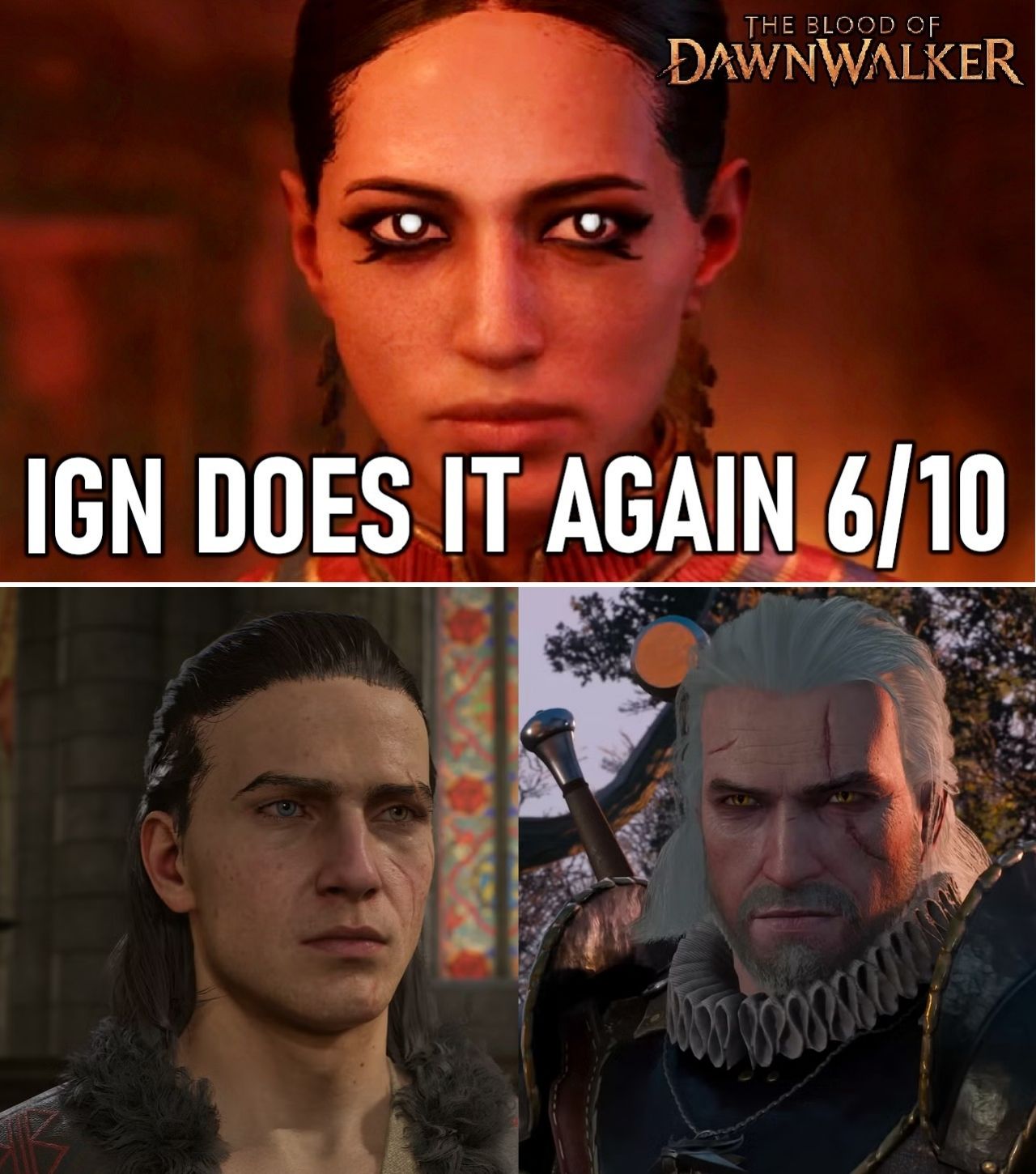
With The Witcher 4 now targeting 2028, a new dark-fantasy RPG from former CD Projekt Red developers is suddenly attracting comparisons that would have sounded almost absurd a few years ago.
For years, CD Projekt Red had an unusually powerful position in the RPG industry.
The Polish studio became synonymous with sprawling open worlds, morally complicated characters, branching quests and stories in which seemingly insignificant decisions could eventually produce major consequences. The Witcher 3: Wild Hunt became the benchmark against which many narrative-driven open-world RPGs were measured, while Cyberpunk 2077 — despite its disastrous launch — eventually rebuilt much of its reputation through years of updates and the acclaimed Phantom Liberty expansion.
But now, one of the most intriguing challenges to that formula is coming from somewhere unexpected.
Not from Bethesda.
Not from BioWare.
Not from Rockstar.
It is coming from Rebel Wolves, a relatively young Polish studio founded by veterans of CD Projekt Red.
And its debut game, The Blood of Dawnwalker, is arriving at an unusually convenient moment.
CDPR has confirmed that The Witcher 4 is targeting a 2028 release. The studio is working on what it describes as its biggest and most ambitious Witcher project yet, with Ciri taking the lead role. Before that, The Witcher 3 is also scheduled to receive a new expansion in 2027.
That leaves a sizeable gap for fans of the studio’s particular brand of dark fantasy.
Dawnwalker may be perfectly positioned to fill it.
The “new Witcher” comparison isn’t coming from nowhere
Calling The Blood of Dawnwalker “the new Witcher” is obviously provocative.
It is also not entirely unreasonable.
The game’s creative leadership includes people who actually worked on The Witcher series. Rebel Wolves was founded by Konrad Tomaszkiewicz, who served as game director on The Witcher 3: Wild Hunt. The studio has recruited additional former CD Projekt Red developers, making comparisons between the two projects almost inevitable.
The similarities are immediately visible.
Dawnwalker is a dark-fantasy action RPG built around exploration, quests, dialogue, combat and player choice. Its world is filled with medieval settlements, monsters, supernatural forces and morally complicated characters.
Even some of its mechanics look familiar to anyone who has spent hundreds of hours with Geralt.
A recent hands-on report from Kotaku noted that it was difficult to avoid seeing The Witcher in the game: players can follow glowing tracks using a “sense”-style ability, discover information through notes and interact with supernatural elements in ways reminiscent of CDPR’s RPG design.
But that does not necessarily mean Rebel Wolves is simply copying its former employer.
In several respects, the studio appears to be attempting something considerably more ambitious.
The biggest difference is the clock
The defining idea behind Dawnwalker is not simply that its protagonist is a vampire.
It is that time itself is a gameplay mechanic.
The story takes place in 14th-century Carpathia, where protagonist Coen is transformed into a Dawnwalker — a supernatural being who occupies a strange middle ground between human and vampire.
Players have a limited amount of time to pursue their objectives.
That changes the fundamental structure of the RPG.
In a conventional open-world game, players can often postpone the main story indefinitely. They can spend 20 hours collecting materials, clearing bandit camps or completing unrelated side quests before returning to the central narrative.
Dawnwalker is designed around the idea that time is actually passing.
Consequences can occur because the player chose to do something else.
A character may become unavailable.
A quest may change.
A situation may evolve.
The result is intended to create what Rebel Wolves calls a more dynamic “narrative sandbox.”
That concept has already caught the attention of previewers.
Game Informer, which spent significant time with the game and interviewed its developers, highlighted Rebel Wolves’ focus on pushing player choice further than some of the systems seen in The Witcher 3 and Cyberpunk 2077.
That could ultimately be the game’s biggest advantage.
It is not trying to become The Witcher 4.
It is trying to take some of the design principles that made The Witcher 3 successful and push them in a different direction.
And then there is the vampire
The second major distinction is obvious.
Geralt is a monster hunter.
Coen is becoming a monster.
During the day, the protagonist retains more of his human nature. At night, his vampiric abilities become substantially more important.
That creates a gameplay loop built around transformation rather than simply character progression.
Rebel Wolves has shown directional combat, magic, traversal and a collection of vampiric abilities in its extended gameplay showcase. The developer’s own presentation emphasized the differences between approaching situations during the day and at night.
The vampire concept also allows the developers to explore a fantasy that traditional Witcher-style monster hunting cannot.
Instead of asking:
“How do I kill the monster?”
the game can ask:
“What happens when I become one?”
That distinction gives Dawnwalker a potentially stronger identity than the “Witcher clone” label suggests.
The community is already making the comparison
On Reddit, the comparison is almost unavoidable.
In the Witcher subreddit, recent discussions about the game have attracted enthusiastic responses from players who specifically cite the former CDPR developers and the vampire setting as reasons for their excitement. One highly upvoted comment described the game as “very Witcher like” while expressing hope that it would launch smoothly.
Another recent PCGaming discussion about the game generated hundreds of votes, with players generally expressing optimism while debating technical requirements and performance. Some users joked about The Witcher imagery appearing almost instinctively whenever the game is shown.
That enthusiasm is important.
But so is the skepticism.
The game is not guaranteed to become the next Witcher 3 simply because some of its developers worked on that game.
In fact, that pedigree may create an unusually high bar.
The former-CDPR problem
There is a strange paradox at the heart of Dawnwalker.
The thing that makes people excited about the game is also one of the things that could hurt it.
Rebel Wolves is constantly introduced as “the studio founded by former Witcher developers.”
That is excellent marketing.
But it also invites comparisons with one of the most celebrated RPGs ever made.
If a character animation looks slightly awkward, players will compare it with The Witcher 3.
If combat feels repetitive, players will compare it with The Witcher 3.
If a quest fails to deliver a memorable choice, players will compare it with The Witcher 3.
And if the game succeeds, those same comparisons could become its greatest selling point.
The studio’s CEO and game director Konrad Tomaszkiewicz has said he is comfortable with the comparisons. After focus testing, he expressed confidence that Rebel Wolves had created “a really cool game” and said the console versions were already running well.
That confidence will soon be tested.
The first real warning came from performance
Interestingly, the biggest recent controversy around Dawnwalker has not been its story or gameplay.
It has been performance.
After console footage was shown running at 30 and 40 frames per second, sections of the community questioned why a major 2026 action RPG would not offer a 60fps option.
Reddit discussions reflected that frustration. Some players described the lack of an announced 60fps mode as a reason to reconsider buying the game at launch.
Then Rebel Wolves changed course.
On August 24, the studio confirmed that Dawnwalker will launch with a Performance Mode targeting 60fps on PS5, PS5 Pro and Xbox Series X through a Day One patch. The game will also have 40fps Balanced and 30fps Quality modes.
That episode may ultimately prove more significant than it looks.
It demonstrated that the studio is watching the community closely.
More importantly, it showed that Rebel Wolves is willing to adjust its launch plans when players make a particular concern impossible to ignore.
For a new developer attempting to establish its reputation, that responsiveness could matter.
But is CDPR actually “dead”?
No.
That part of the argument does not survive scrutiny.
CD Projekt Red remains one of the industry’s major RPG developers, and The Witcher 4 is currently targeting 2028 with more than 500 developers reportedly working on the project.
The studio is also preparing The Witcher 3: Songs of the Past, a new expansion planned for 2027.
So there is no evidence that CDPR is collapsing or has somehow lost its ability to make Witcher games.
The more interesting argument is different:
What if the creative DNA that made CDPR special is no longer exclusive to CDPR?
That is where Rebel Wolves becomes genuinely fascinating.
Developers leave.
Studios change.
Creative teams evolve.
And sometimes the people who helped establish a particular style take that experience somewhere else.
That is exactly what happened with Rebel Wolves.
Dawnwalker doesn’t need to replace The Witcher
Perhaps the most useful way to view the situation is not as a battle between CDPR and Rebel Wolves.
The industry could actually benefit from having both.
CDPR is developing The Witcher 4, a huge continuation of one of gaming’s most established fantasy franchises.
Rebel Wolves is building an original universe around vampires, a time-limited narrative structure and a protagonist whose powers fundamentally change depending on the time of day.
Those are different propositions.
The danger is that fans may expect Dawnwalker to reproduce the emotional impact of The Witcher 3 immediately.
That is an impossible standard.
But if Rebel Wolves can successfully reproduce the philosophy behind CDPR’s best RPG design — strong writing, meaningful choices, memorable side characters and consequences that feel personal — it may not need Geralt, Ciri or the Witcher name.
It can build something of its own.
The real test is now days away
The Blood of Dawnwalker launches on September 3, 2026, on PC, PlayStation 5 and Xbox Series X|S.
The review embargo is reportedly scheduled for August 31, giving critics only a few days before launch to publish their full verdicts.
Until then, the available evidence remains promising but incomplete.
Hands-on previews have generally praised the writing, atmosphere and time-driven structure, while combat and presentation have generated more divided reactions. There are still no full scored reviews to establish whether the finished game actually lives up to the enormous expectations surrounding it.
And that is why the “CDPR is dead” headline should ultimately be treated as provocative fan rhetoric rather than a factual conclusion.
CDPR isn’t dead.
If anything, the more interesting possibility is that CDPR’s legacy has escaped the building.
The people who helped make The Witcher 3 one of the defining RPGs of its generation have taken what they learned and built a new studio around it.
Now they have to prove that the magic was never just the Witcher brand.
If The Blood of Dawnwalker succeeds, it won’t kill CD Projekt Red.
It may do something far more interesting.
It may prove that the next great Witcher-style RPG doesn’t need to be a Witcher game at all.