Marvel’s Wolverine and the “Don’t Like It, Don’t Buy It” Backlash: Why Insomniac Is Fighting Back
INSOMNIAC JUST TOLD THE WOLVERINE HATE TRAIN: “DON’T LIKE IT? DON’T BUY IT.” — AND NOW THE INTERNET IS EXPLODING. 🐺🔥
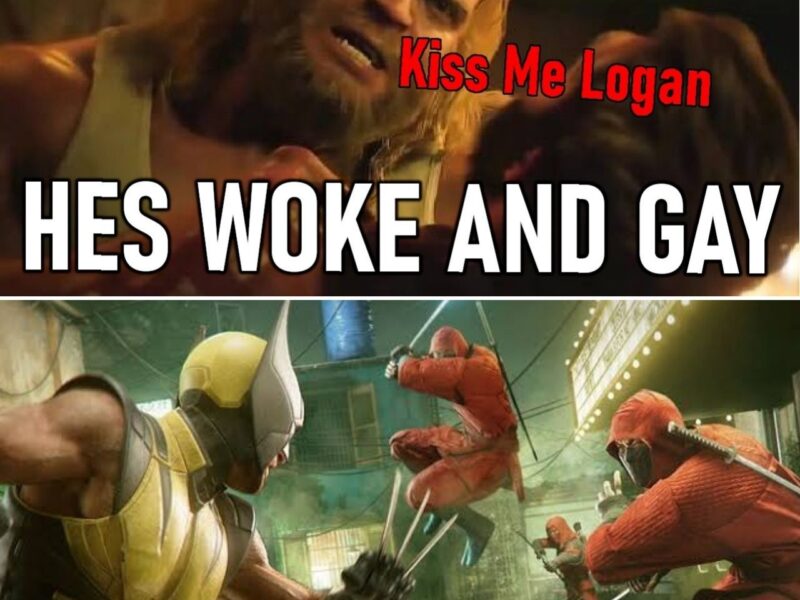
After weeks of people calling Marvel’s Wolverine repetitive, outdated and “dead on arrival,” the backlash has become so intense that Insomniac is openly pushing back — while the developers insist the game was built specifically around Logan, not another Spider-Man formula.
But here’s where things get messy: are fans genuinely criticizing a flawed game… or has social media turned Wolverine into the Internet’s latest punching bag before anyone has even played it?
👇 Click the link to see what Insomniac said, why fans are divided, and what’s really behind the Wolverine hate wave.

Marvel’s Wolverine has become the latest target of gaming’s online negativity cycle, with Insomniac defending its upcoming PS5 exclusive as social media criticism intensifies ahead of launch.
There is a strange situation developing around Marvel’s Wolverine.
The game has received largely positive impressions from people who have actually played it.
Insomniac Games has released increasingly substantial gameplay footage.
The title has gone gold.
Its September 15 release date is locked in.
And yet, if someone spent the past few weeks looking only at gaming social media, they could easily conclude that Insomniac had just produced one of the biggest disasters in PlayStation history.
That disconnect has become the story surrounding the game.
Rather than simply discussing whether Marvel’s Wolverine is good, online communities have increasingly been arguing about whether it looks good, whether its gameplay is sufficiently original, whether it is too similar to Spider-Man, whether its combat is violent enough and whether Sony’s broader reputation is affecting how people perceive it.
Insomniac itself has now acknowledged the intensity of the backlash.
The studio’s community and marketing director James Stevenson described the negativity surrounding the game as a “relentless onslaught,” arguing that social-media algorithms can amplify negative reactions in ways that are not necessarily representative of the broader audience.
That response has only added fuel to the debate.
The “Don’t like it, don’t buy it” interpretation
The phrase circulating around the controversy — essentially, “Don’t like it? Don’t buy it” — captures a sentiment that has become increasingly common among developers and publishers dealing with online criticism.
But it is important not to confuse that sentiment with an official Insomniac statement literally telling fans to stop complaining.
The more substantive message from the studio has been that criticism is expected, but the sheer volume and character of the online negativity can become detached from constructive feedback.
Game director Mike Daly has also said Insomniac is accustomed to criticism after working on the Spider-Man games. The studio learned that even highly successful games can generate strong complaints, and Daly emphasized that the team is focused on making the best possible game for the character.
That context matters because Wolverine is being judged against a particularly high standard.
The last major Insomniac superhero games were Marvel’s Spider-Man, Spider-Man: Miles Morales and Spider-Man 2.
Those games established a recognizable Insomniac formula.
Now players are looking at Wolverine and asking whether the studio has actually moved beyond it.
The biggest complaint: it looks familiar
The most persistent criticism is not that Marvel’s Wolverine looks technically bad.
It is that it looks too familiar.
GameSpot described the game as potentially playing things “a little too safe,” arguing that its latest gameplay presentation contained numerous recognizable action-adventure conventions.
That criticism has spread through Reddit, X and other gaming communities.
One recent Reddit discussion about the game’s backlash received hundreds of votes, with commenters describing the main complaints as Insomniac’s formulaic design, potentially repetitive gameplay and concerns that certain sections look dated. Others argued that the criticism had become exaggerated and that the actual gameplay looks strong.
That disagreement gets to the heart of the controversy.
The question isn’t really whether Wolverine looks like a bad game.
The question is whether “good but familiar” is good enough anymore.
For some players, the answer is no.
They want each major AAA release to introduce new mechanics, new structures and new ways of interacting with its world.
For others, that expectation is unrealistic.
A game does not need to reinvent action games to be excellent.
It simply needs to execute its chosen formula extremely well.
The irony of the open-world criticism
There is another reason the current backlash has frustrated some observers.
Marvel’s Wolverine is not an open-world game.
That was intentional.
Insomniac has explained that it wanted to build an experience suited specifically to Wolverine rather than simply repeating the open-world structure of Spider-Man.
The game is therefore a more linear, focused action adventure.
And yet, that decision has itself become a source of criticism.
GameSpot recently highlighted the irony: Spider-Man 2 was criticized by some online players for being too open-world, while Wolverine is now being criticized for being too linear.
It illustrates a fundamental problem with online discourse.
There is no universal “correct” design.
One player wants a huge open world.
Another thinks open worlds are bloated.
One player wants a focused campaign.
Another calls it restrictive.
One player wants more cinematic storytelling.
Another calls the same storytelling “interactive movie” design.
Insomniac cannot satisfy all of those demands simultaneously.
But the criticism isn’t entirely manufactured
It would also be unfair to dismiss every complaint as Internet rage.
There are legitimate questions about Wolverine.
One is combat variety.
Wolverine’s core fantasy is inherently repetitive: he has claws, he punches people and he heals from injuries.
The challenge for Insomniac is making those mechanics interesting over an entire campaign.
Recent hands-on previews suggest the studio has attempted to solve this through Rage mechanics, different enemy types, traversal abilities, environmental interactions and a greater emphasis on aggressive combat.
TechRadar’s hands-on preview described the game as extremely violent, with combat designed to reward aggression and Wolverine’s ability to absorb damage. The preview also praised the emotional dimension of the game’s character interactions, particularly Logan’s relationship with Mystique.
But the same preview noted that some boss encounters felt predictable.
That is exactly the kind of criticism that is useful.
It identifies something specific about the experience rather than simply declaring the entire game “trash.”
The gore debate is another strange battlefield
The game is also caught in an unusual argument about violence.
When Insomniac first announced Wolverine, many fans wondered whether the studio would actually make Wolverine’s combat brutal enough.
After all, Insomniac was known primarily for the comparatively family-friendly Spider-Man games.
The answer appears to be an emphatic yes.
The game is rated M and features graphic dismemberment, blood and brutal finishing moves.
Insomniac has repeatedly emphasized that Wolverine’s combat is supposed to feel substantially different from Spider-Man’s.
The latest hands-on reports have reinforced that.
TechRadar described the game as a particularly violent superhero experience, while Insomniac itself calls the title a “brutal, violent, and action-packed” single-player adventure.
And yet some online fans continue to complain that it isn’t sufficiently graphic.
One Reddit discussion captured the absurdity of the debate: users simultaneously argued that the game was repetitive and that it did not provide enough variety in its bloody takedowns.
At some point, expectations become almost impossible to satisfy.
The game is actually receiving positive previews
This may be the most important fact being lost in the social-media argument.
People who have played substantial portions of Marvel’s Wolverine have generally responded positively.
The official PlayStation hands-on report highlighted a Sentinel battle requiring players to combine dodging, parrying and Wolverine’s abilities, while also emphasizing team-up sequences involving Mystique and Sabretooth.
TechRadar’s preview was also broadly enthusiastic about the combat and Logan’s characterization.
GamesRadar has similarly reported positively on the game’s ability to establish a distinct identity despite sharing some design DNA with Insomniac’s Spider-Man titles.
None of that proves the finished game will be excellent.
Preview coverage is not a substitute for a full review.
But it does demonstrate that the online narrative of unanimous rejection is inaccurate.
The reaction is clearly divided.
So why does the hate feel so overwhelming?
The answer may have less to do with Wolverine than with PlayStation itself.
Sony has accumulated several controversies among sections of its audience.
The company’s decision to end physical disc production for new PlayStation releases after January 2028 has angered physical-media advocates.
The price of games and hardware has generated recurring debate.
The closure or restructuring of certain PlayStation projects has also contributed to frustration.
And social media has become an environment where those grievances can attach themselves to the next major PlayStation release.
That happened with the latest Wolverine marketing.
A July cinematic trailer attracted more than a million YouTube views, but reporting found that a large portion of the discussion was dominated not by Wolverine but by anger over Sony’s physical-disc policy.
That is an extraordinary example of context overpowering content.
Sony releases a Wolverine trailer.
Fans respond to Sony’s disc policy.
The game itself becomes secondary.
Wolverine is now carrying Sony’s baggage
This is arguably the most unfair part of the situation for Insomniac.
The developers did not decide Sony’s corporate strategy.
They did not decide whether PlayStation would manufacture discs after 2027.
They did not create every controversy surrounding the platform holder.
But because Marvel’s Wolverine is one of Sony’s biggest releases of 2026, it has become a convenient target for frustration with the company.
Insomniac’s Stevenson specifically referenced this wider environment when discussing the online negativity.
The studio appears to believe that the current reaction is being amplified by circumstances surrounding PlayStation itself, rather than simply by the game’s quality.
That doesn’t mean every criticism is unfair.
It means the game is being evaluated in a much larger political and commercial context.
There is also the “modern AAA” fatigue
The criticism reflects a larger phenomenon across gaming.
Players are increasingly tired of recognizable blockbuster formulas.
The modern AAA action game often includes:
Cinematic cutscenes
Skill trees
Upgrade materials
Stealth sections
Enemy camps
Environmental puzzles
Context-sensitive takedowns
Companion sequences
Large cinematic boss battles
These mechanics are not inherently bad.
But after years of major releases using variations of the same structure, players can become sensitive to repetition.
That is why Wolverine can simultaneously look polished and familiar.
The question is whether the individual pieces are executed well enough to overcome their familiarity.
Insomniac is not pretending the game is something it isn’t
The studio’s response is revealing.
Rather than trying to turn Wolverine into a revolutionary genre experiment, Insomniac has doubled down on character authenticity.
The developers have talked extensively about making Logan feel physically different from Spider-Man.
Actor Liam McIntyre reportedly studied footage of rabid dogs to help capture Wolverine’s feral behavior, while the animation team worked to translate that aggression into his movement.
The studio has also deliberately avoided turning the game into another massive open-world superhero sandbox.
Instead, the focus is on Logan.
That decision may frustrate players who expected a larger world.
But it is also evidence that Insomniac is not simply copy-pasting Spider-Man 2.
The X-Men angle could be the long-term payoff
The game is also doing something potentially important for Sony’s larger Marvel strategy.
Marvel’s Wolverine takes place in a world where the X-Men do not yet exist.
Logan is instead part of Team X, operating in a world where mutants remain largely hidden and are feared or hunted.
Jean Grey, Mystique, Sabretooth, Lady Deathstrike and Omega Red all have roles in the game, creating a foundation that could eventually lead toward a much larger X-Men universe.
That makes the game’s commercial performance important beyond Wolverine himself.
A successful game could give Sony and Insomniac a foundation for future mutant-focused projects.
A failure would not necessarily kill those plans, but it would certainly make them harder to justify financially.
The game has already gone gold
For Insomniac, there is one piece of good news.
Marvel’s Wolverine has officially gone gold.
That means development has been completed and the game is ready for mass production. Sony and Insomniac confirmed the milestone on August 21.
The release date is September 15, 2026, exclusively on PlayStation 5.
At this stage, the studio is therefore unlikely to make fundamental changes based on social-media criticism.
The game that players have been debating is essentially the game they are about to receive.
And that makes the next few weeks unusually interesting.
“Don’t buy it” is actually the wrong test
If players genuinely dislike what they see, they have every right not to purchase the game.
That is the most basic form of consumer choice.
But the opposite is also true.
People who are excited about Wolverine do not need to apologize for buying it.
The more useful test is not whether the game satisfies every demand on social media.
It is whether the final product succeeds on its own terms.
Does Wolverine feel like Wolverine?
Is the combat fun after 10 hours?
Does the linear structure keep the pacing tight?
Are the characters memorable?
Does the story justify the enormous production investment?
Does the game give players enough variety to avoid becoming a sequence of repeated claw attacks?
Those questions will matter far more than whether a 20-second clip on X received 50,000 likes.
The verdict belongs to players now
The irony of the current controversy is that Marvel’s Wolverine has not actually been released yet.
The game has been previewed.
It has been dissected.
Its trailers have been mocked.
Its combat has been analyzed frame by frame.
Its character models have been debated.
Its alleged similarities to other games have become memes.
And Insomniac’s developers have been pulled into the argument.
But the most important evidence still doesn’t exist:
The final player experience.
That arrives September 15.
Until then, there are two very different stories surrounding Marvel’s Wolverine.
One is the social-media story: another supposedly stale Sony blockbuster being destroyed by an angry gaming community.
The other is the hands-on story: a polished, extremely violent, focused superhero adventure that appears to understand what makes Wolverine different from Spider-Man.
Neither side can claim victory yet.
And perhaps that is the simplest lesson from this entire episode.
You don’t have to love Marvel’s Wolverine. You don’t have to buy it. You don’t even have to be excited about it.
But after weeks of increasingly extreme online discourse, there is one thing everyone should probably do before declaring the game a failure:
Actually play it.