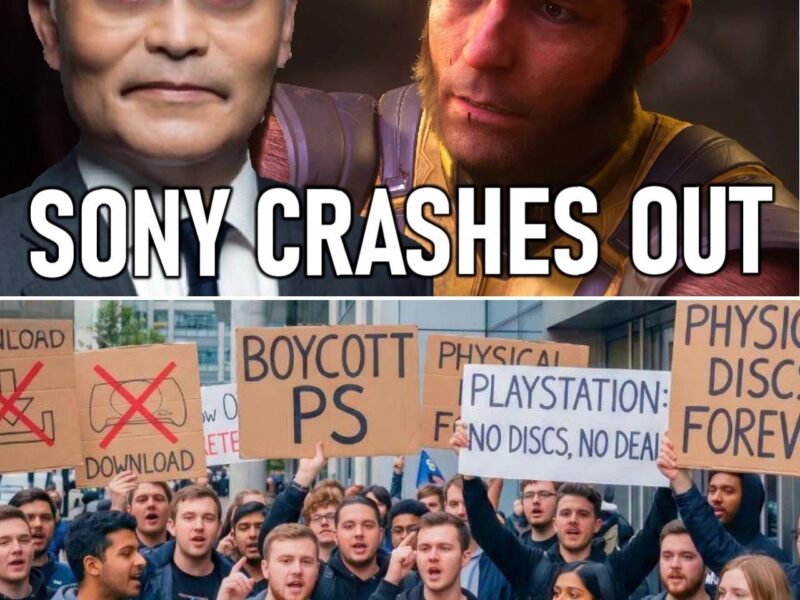
Sony Is Facing a PlayStation Boycott — But Is the Company Really Trying to Stop It?
SONY IS GETTING HIT WITH A BOYCOTT — AND ITS OWN NUMBERS MAY BE THE REASON IT DOESN’T CARE. 🔥
PlayStation fans are shutting down consoles, canceling purchases and demanding Sony reverse its decision to kill physical game discs… but then Sony dropped a message that made the backlash even louder.
And now the real question is getting harder to ignore: Is Sony actually trying to stop the boycott — or does it already know exactly how this ends?
👇 Click the link to see what Sony said, why gamers are furious, and what could happen next.
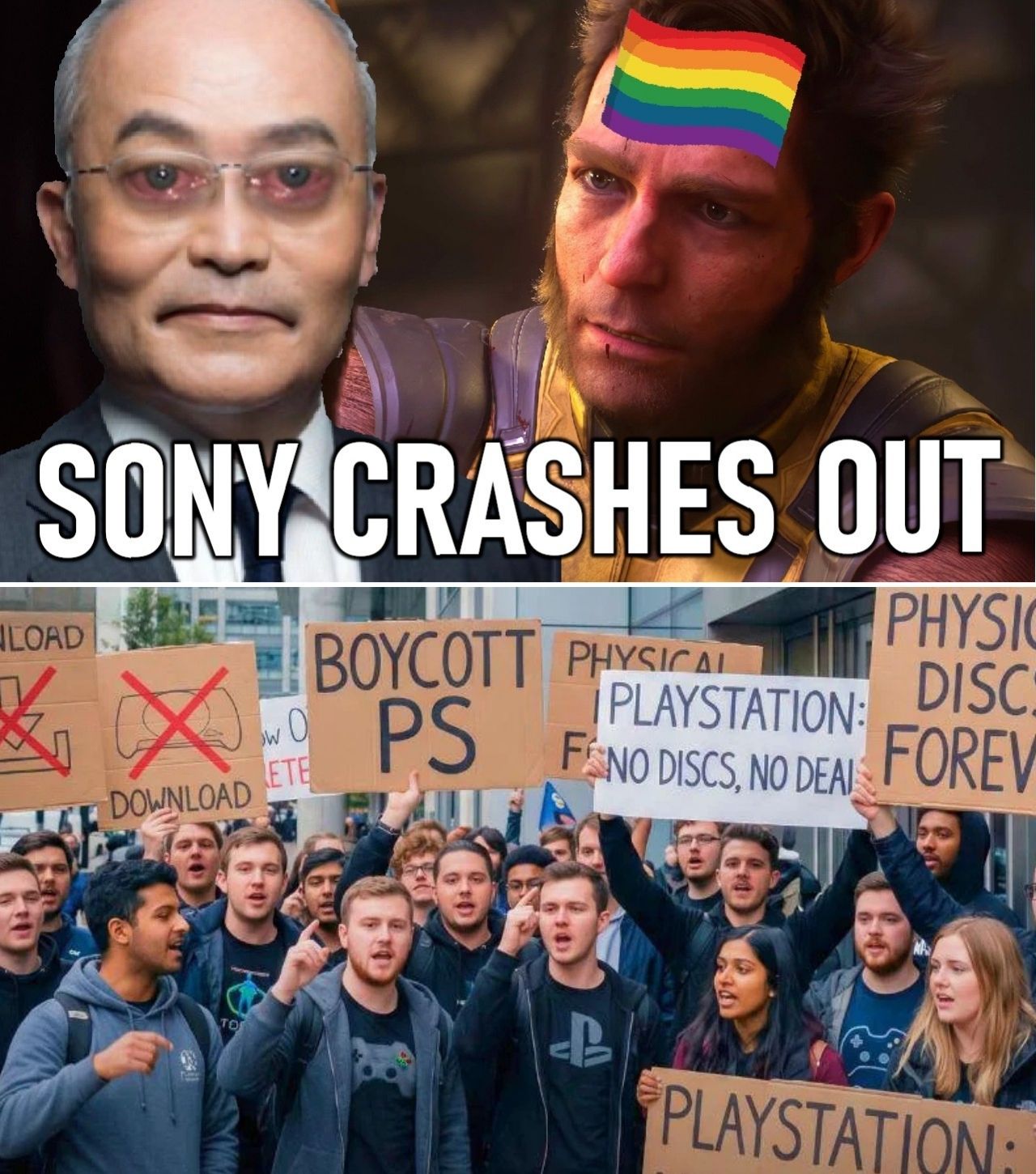
PlayStation fans have launched a coordinated boycott over Sony’s decision to abandon physical game discs — but the company’s financial numbers suggest the protest faces an uphill battle.
Sony is facing one of its most organized waves of consumer backlash in years.
Beginning August 23, PlayStation users participating in the #PSBlackout campaign have been encouraged to stop using their consoles, log out of PlayStation Network, avoid purchases and, in some cases, cancel subscriptions. The protest is scheduled to run through August 30 and is aimed at reversing Sony’s decision to stop producing physical discs for new PlayStation games from January 2028.
The campaign has generated considerable discussion across Reddit, X and gaming communities.
But there is an important wrinkle in the story.
Despite the dramatic language surrounding the boycott — including claims that Sony is “begging” players to stop protesting — Sony has not publicly announced that it is asking gamers to end the boycott. In fact, the company’s most recent public position points in almost the opposite direction.
Sony appears prepared to continue moving toward digital distribution.
That has created an unusual showdown between a company that sees physical media as an increasingly outdated business model and a portion of its customer base that sees physical games as a matter of ownership, preservation and consumer rights.
What started the boycott?
The controversy began on July 1, when Sony Interactive Entertainment announced that physical disc production for all new games released on PlayStation consoles would end in January 2028.
Under the plan, new games released after that date will be distributed digitally through the PlayStation Store and through retailers offering digital products. Games that have already been released — or are scheduled to receive physical versions before the cutoff — will not be affected.
Sony described the decision as a response to changing consumer preferences.
The company said digital purchasing has become the dominant method of accessing games and that the move would allow PlayStation to align its resources with how most players currently obtain software.
From Sony’s perspective, the numbers are difficult to ignore.
According to Reuters, digital downloads represented approximately 80% of Sony’s full-game software sales during fiscal 2025.
That figure is central to the company’s argument.
For Sony, physical discs increasingly represent a shrinking part of the business while requiring manufacturing, distribution, retail logistics and inventory management.
For consumers who still buy discs, however, the issue is not simply about convenience.
It is about what happens when the physical option disappears entirely.
Why are gamers so angry?
The strongest criticism revolves around the concept of ownership.
When someone buys a physical game, the disc can generally be resold, traded, lent to another person or retained as part of a collection.
Digital purchases operate differently.
Sony’s own terms make clear that digital software is licensed rather than sold outright. That distinction became particularly controversial this week after Sony sent users an automated reminder emphasizing the licensing nature of digital purchases, just as the #PSBlackout campaign was getting underway.
The timing was enough to reignite criticism.
For preservation advocates, the concern goes beyond whether someone can play a game today.
They are asking what happens decades from now.
If a digital storefront closes, a publisher loses a license or a game becomes unavailable for download, consumers may have fewer options for preserving access to that title.
Physical media does not solve every preservation problem — modern games frequently require patches, online services or large downloads — but advocates argue that a physical release still provides something tangible that digital distribution cannot.
That is why the dispute has become much larger than “discs versus downloads.”
It has evolved into an argument over what consumers actually own in the digital era.
Enter #PSBlackout
The organization behind the current campaign is Does It Play?, a group focused on game preservation and the ability to play games without relying indefinitely on online services.
The group called for a seven-day PlayStation blackout from August 23 through August 30.
Participants were encouraged to avoid logging into PSN, playing games or purchasing products from PlayStation.
The campaign has attracted support from sections of the gaming community and has generated thousands of comments and posts across social media.
But it has also produced skepticism.
Some PlayStation users argue that a one-week protest is unlikely to cause meaningful financial damage to a company whose business is overwhelmingly digital.
Others question whether temporarily turning off a console can realistically change a strategic decision that Sony says was made after extensive analysis.
That criticism can be seen directly in Reddit discussions.
One highly upvoted discussion about the boycott produced both strong support and blunt skepticism, with some users arguing that the protest would have little effect because digital gaming already dominates PlayStation’s business.
That disagreement may be the biggest weakness of the movement.
A boycott only works if enough consumers participate for long enough to create a measurable commercial consequence.
Sony’s response was not exactly a retreat
If the boycott was supposed to force Sony into an immediate reversal, the company’s recent statements have not provided much encouragement.
During Sony’s July 31 earnings call, CFO Lin Tao acknowledged that the company understood the emotional attachment players have to physical games.
But she also made clear that Sony intended to proceed with the transition.
According to reporting by CFO.com, Tao said Sony had spent significant time considering the community’s objections but had concluded that digitalization was the dominant trend. She also said Sony was not currently seeing a business impact from the controversy.
That last point may be the most important sentence in the entire dispute.
Sony is essentially saying:
We hear you. We understand why you’re angry. But the numbers still tell us to proceed.
The financial data helps explain why.
During the quarter ending June 30, Sony reportedly generated roughly $1.2 billion from digital game sales compared with approximately $128 million from physical game sales, according to CFO.com’s analysis of the company’s results.
The contrast is enormous.
Sony can therefore acknowledge the cultural importance of physical games while simultaneously deciding that maintaining physical production is no longer strategically attractive.
That is why the idea that Sony is “begging the boycott to stop” needs to be treated cautiously.
There is currently no clear evidence that Sony is begging players to abandon the protest.
The reality appears more complicated: Sony is acknowledging the backlash while continuing with the underlying business strategy.
The community isn’t united either
Perhaps surprisingly, the biggest obstacle facing the boycott may not be Sony.
It may be PlayStation’s own audience.
Reddit discussions show a clear divide.
Some players describe the decision as a breaking point and say they are willing to stop buying PlayStation products.
Others say they have already been digital-only for years and see little reason to participate.
One discussion about the blackout featured users joking about how few people they believed would actually participate, while others insisted that even a relatively small protest could send an important message.
Another discussion suggested that players should boycott major upcoming releases rather than simply turn off their consoles for a week, arguing that withholding money would send a stronger message.
That creates an obvious problem.
A consumer may strongly support physical games while simultaneously wanting to play Marvel’s Wolverine, Grand Theft Auto VI or another major release.
For many gamers, the attachment to physical media may not be strong enough to outweigh their desire to play the games themselves.
There is also a question of scale
The boycott is highly visible online.
But visibility and economic impact are not the same thing.
Sony has not published evidence showing that the blackout has materially affected PlayStation revenue, and it would be premature to claim that the campaign has caused significant financial damage.
Some online observers have even pointed to continued PlayStation sales as evidence that the boycott has not meaningfully changed consumer behavior.
At the same time, the protest should not simply be dismissed.
The fact that a preservation-focused campaign has managed to organize an international blackout demonstrates that physical media still has an unusually passionate constituency.
The petition supporting continued physical releases has also attracted hundreds of thousands of signatures, according to multiple reports.
That gives Sony something more important than a one-week sales fluctuation to consider: brand sentiment.
Why this matters beyond PlayStation
The Sony dispute is effectively a preview of a broader battle taking place throughout the games industry.
Digital distribution has already become the dominant model.
Sony’s decision simply takes the process to its logical extreme.
Microsoft and other publishers are also operating in an increasingly digital marketplace, while retailers and physical-media manufacturers have been dealing with declining demand.
Sony’s decision therefore does not exist in isolation.
If it succeeds commercially, competitors may have even less reason to maintain physical releases.
That is precisely why preservation advocates are treating this as a critical moment.
If physical games disappear from the mainstream market, bringing them back later could be extremely difficult.
So, is Sony “begging” gamers to stop?
Not based on the evidence currently available.
The more accurate description is almost the opposite.
Sony appears to recognize the backlash, but its leadership has repeatedly indicated that the company intends to continue toward digital distribution.
The company says approximately 80% of full-game software sales are already digital, and its executives have argued that consumer behavior and the economics of the industry justify the change.
That does not mean the boycott is meaningless.
It means the protesters face a difficult task.
They are attempting to reverse a corporate strategy built around a long-term shift in consumer behavior, rather than simply convince Sony to change a single unpopular product feature.
The coming days could provide the first indication of whether #PSBlackout can produce measurable pressure.
If participation remains limited to a passionate minority, Sony is unlikely to have a financial reason to change course.
If the movement grows into sustained cancellations, reduced purchases and measurable changes in consumer behavior, the calculation becomes different.
For now, the battle is less about whether Sony can hear the protesters.
It clearly can.
The real question is whether enough PlayStation customers are willing to stop spending money until Sony has no choice but to listen differently.
And that is a much harder fight than simply turning off a console for seven days.