INVINCIBLE FEMALE MARINES? How a Glitch in ‘Halo: Campaign Evolved’ Triggered the Gaming Industry’s Latest Culture War
GENDER WARS IN HALO? Internet erupts after clips show female NPCs are “INVINCIBLE” in Halo: Campaign Evolved—while male Marines get instantly wiped out! 💥
Is Halo Studios deliberately shielding female characters, or has modern gaming culture hit peak paranoia over a simple technical glitch? As viral videos of players unloading entire magazines into unkillable female Marines flood X, YouTube, and Reddit, gamer outrage has reached a boiling point over alleged “political favoritism”…
Discover the viral clips, the anti-woke backlash, and the surprising technical truth that developer testing finally uncovered! 👇🔥
In the modern video game ecosystem, even a technical bug can turn into a full-scale cultural battleground within hours.
The launch of Halo: Campaign Evolved—the ambitious remake of Bungie’s genre-defining 2001 shooter Halo: Combat Evolved—has found itself embroiled in a bizarre online controversy. Viral clips posted across social media showed female Non-Playable Characters (NPCs) taking direct gunfire without dying, while their male counterparts were killed instantly under identical conditions.
The phenomenon quickly sparked wild speculation across platforms including X (formerly Twitter), Reddit, and YouTube, with anti-woke commentators, culture critics, and frustrated fans accusing Halo Studios of enforcing ideological double standards. However, industry reporting and community testing suggest that the truth behind the “invincible female Marine” scandal is far more mundane than the internet narrative implies.
The Viral Clips: “Women Are Invincible in Halo”
The controversy began shortly after the launch of Halo: Campaign Evolved, as early access players began testing NPC damage physics inside the game’s opening campaign mission, “The Pillar of Autumn.”
Multiple gameplay videos surfaced online showcasing players unloading entire assault rifle magazines into friendly female UNSC Marines aboard the Halcyon-class cruiser. To the shock of viewers, the female NPCs appeared completely immune to damage, shrugging off bullets, explosions, and melee strikes without reacting or dying. Conversely, when players turned their weapons on nearby male Marines, the male NPCs collapsed and died as expected, provoking immediate hostile counter-reactions from surviving crew members.
Within hours, channels across YouTube and content creators like Geeks and Gamers, The M4 Empire, and Doctor Disaster published videos questioning the mechanics, with titles declaring that female characters had been turned into unkillable machines.
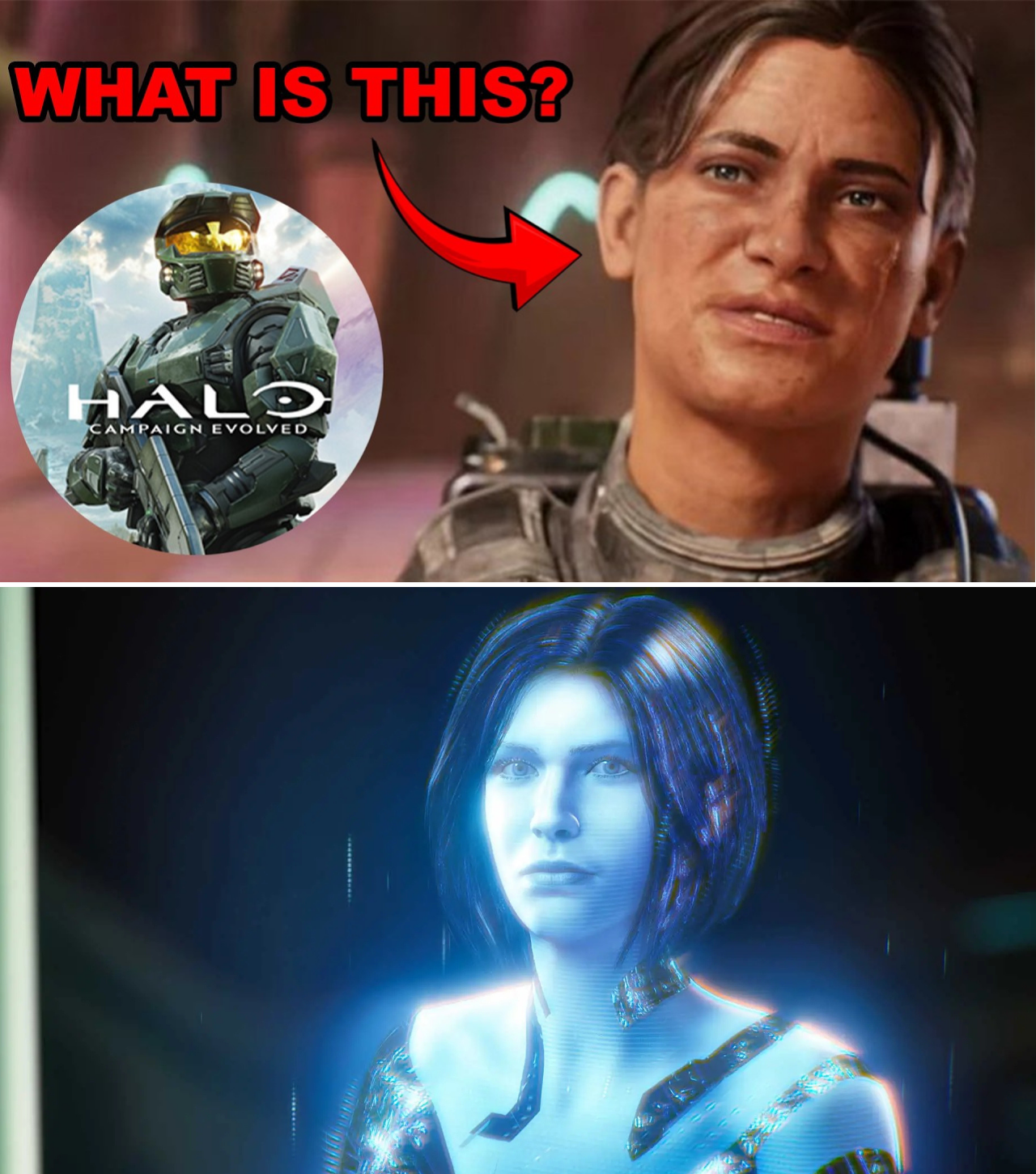
The imagery was immediately integrated into broader criticisms regarding Halo Studios’ recent design choices, including the controversial visual redesign of Cortana and the introduction of new original characters like Lieutenant Williams.
Culture War Explodes: Accusations of “Gender Protectionism”
Given the tense relationship between modern AAA developers and online gaming communities, the viral clips immediately fueled claims that Halo Studios had implemented intentional “gender protectionism” or political censorship.
On subreddits like r/KotakuInAction and r/halo, posts analyzing the video clips gained thousands of upvotes. Critics argued that protecting female NPCs from player hostility reflected a growing trend among Western game studios attempting to satisfy corporate DEI (Diversity, Equity, and Inclusion) mandates or avoid potential public relations scrutiny over violence against female characters.
“If male Marines can be killed by friendly fire, but female Marines are hardcoded to be invulnerable gods, that isn’t game mechanics—that’s politics,” posted one user in a viral thread on X. “Why is Halo Studios altering basic sandbox mechanics that worked fine 25 years ago?”
“First we get Cortana redesigned to look less like her classic self, and now female Marines literally can’t take damage,” wrote another commenter on Reddit. “Whether it’s a bug or a feature, it shows how little care went into quality assurance.”
For several days, social media algorithms pushed the narrative that Halo Studios had intentionally rendered female characters invulnerable, turning Campaign Evolved into the latest talking point in modern gaming’s identity debates.
The Technical Reality: Hitboxes, Bugs, and a Stealth Patch
However, as tech analysts and gaming journalists dug deeper into the issue, a much simpler, highly rational technical explanation emerged.
Reporting by GAMINGbible and hands-on testing by independent creators, including clips shared by Pirate Nation, revealed that female NPCs were not, in fact, systematically invulnerable across the entire game. Instead, players discovered that female Marines could indeed be killed in subsequent levels and under specific combat scenarios—pointing directly toward a technical malfunction rather than an intentional design choice.
Game developers and technical analysts pointed to two primary causes:
NPC Hitbox Misalignments: The newly updated character models for female UNSC Marines featured altered collision meshes and hitbox coordinates compared to the legacy male Marine models. In closed environments like “The Pillar of Autumn,” geometry clipping issues caused bullets to register as misses or pass through collision zones entirely.
First-Mission Scripting Conflicts: Certain NPCs on the introductory level are tied to cinematic scripting triggers. A logic error in the remake’s updated engine framework occasionally flagged specific female character variants as “essential mission assets,” automatically disabling friendly fire damage scripts.
The resolution arrived rapidly. Following a massive 12GB title update pushed out to Xbox Series X|S and PC platforms, players confirmed that the damage registration discrepancies had been quietly resolved. Post-patch testing demonstrated that both male and female UNSC personnel now react identically to friendly fire and enemy attack patterns.
Neither Halo Studios nor parent company Xbox Game Studios issued a public statement directly acknowledging the culture war discourse, quietly letting the technical patch settle the debate.
Why Did a Simple Bug Go Nuclear?
The speed and intensity with which the “Invincible Female Marine” issue went viral highlights a deeper systemic issue facing modern game publishers: an acute crisis of consumer trust.
Over the past decade, repeated PR missteps, narrative shifts, and polarizing developer statements across the Western games industry have left core audiences hyper-vigilant and deeply skeptical of developer intent. When technical bugs overlap with sensitive political topics or visual redesigns, players are increasingly inclined to attribute glitches to deliberate ideological agendas rather than simple coding errors.
Furthermore, Halo: Campaign Evolved had already generated polarizing community reactions prior to the bug’s discovery. While outlets like GAMINGbible awarded the remake an “Exceptional 9/10” for its graphical fidelity, campaign remix modes, and expanded weapon sandbox, core fans on forums remained skeptical of changes to cutscene choreography, altered voice lines, and missing legacy features like PC split-screen at launch.
In an environment where player goodwill is already running dangerously thin, even a minor hitbox mismatch on a starting level can spiral into an international social media controversy.
Moving Past the Drama
With the 12GB performance patch officially deployed and NPC damage mechanics normalized across all character models, the “Invincible Female Marine” saga serves as a textbook example of how quickly technical defects can be transformed into cultural weaponization.
For Halo Studios, the incident highlights the vital necessity of rigorous Quality Assurance testing in an era where every single frame of gameplay will be parsed, analyzed, and broadcast to millions of viewers on social media. As the studio continues its multi-year transition to Unreal Engine 5 and works to stabilize the future of the Halo franchise, one lesson stands out above all: in modern AAA gaming, even the smallest bug can trigger a massive war online.