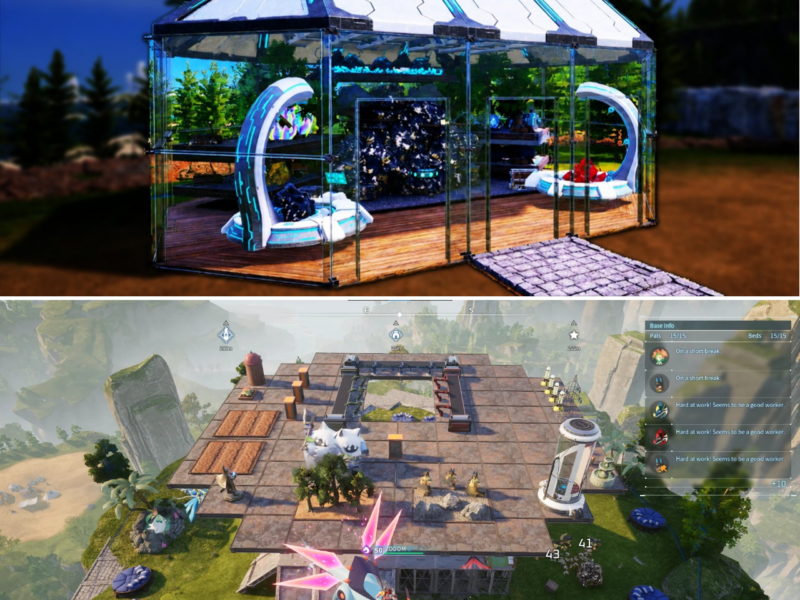
VERTICAL AUTOMATION: HOW A FLOATING ALL-IN-ONE MINING BASE IS REVOLUTIONIZING PALWORLD 1.0
This ultra-compact Palworld 1.0 mining build crams EVERY resource node in the game onto ONE tiny foundation grid… ⛏️💥
Base builders are throwing away their sprawling multi-base setups after discovering how floating furniture glitches let you stack Coal, Sulfur, Pure Quartz, Hexelite, and Material Synthesizers directly on top of each other! But if you forget to remove this ONE specific table, your Pals get stuck forever… 🔥 👇
Click here to unlock the ultimate All-in-One Palworld 1.0 Compact Mining Base blueprint:
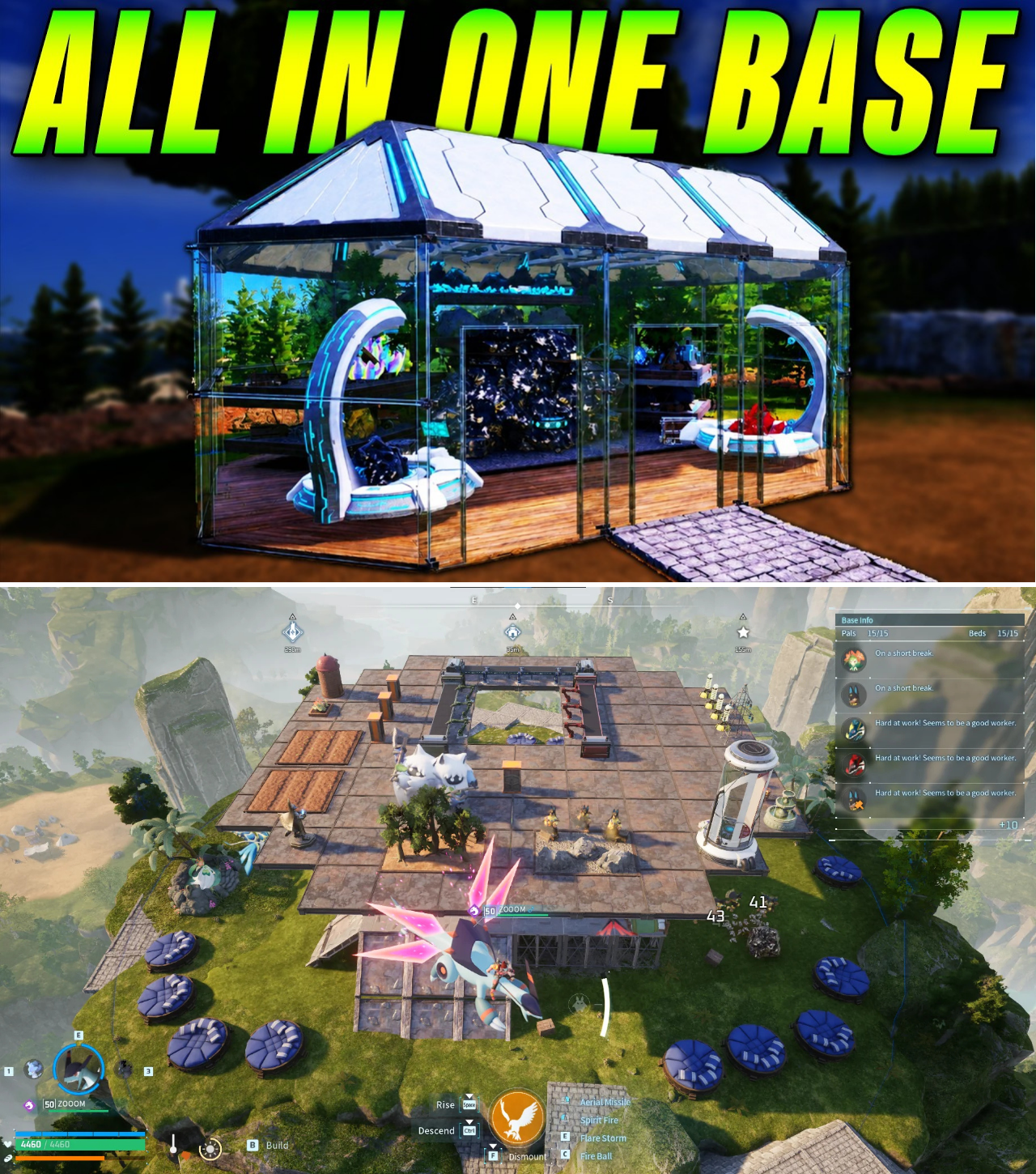
Management of base territory has reached a critical turning point in Pocketpair’s hit survival game, Palworld 1.0. Following recent major updates that expanded resource requirements—introducing high-tier materials like Hexelite, Pure Quartz, Chromite, and Corroium—survivalists routinely found themselves forced to burn multiple base claims across distant biomes just to keep their resource supply chains flowing.
However, a revolutionary architectural design originally created by Korean builder GOP and popularized by gaming content creator Fusion Thunder has completely disrupted the resource-gathering meta. By utilizing precise snap alignments and temporary floating furniture props, players can now build a hyper-compact, all-in-one mining facility that harvests every single mineable resource in the game on a microscopic foundation footprint.
The Tech Blueprint: Bridging Modern and Traditional Furniture Sets
Before attempting this high-efficiency vertical stack, builders must unlock specific architectural technology tiers within their Technology Tree:
Wood Living Room Furniture Set (Level 5 Technology)
Glass Structure Set (Level 45 Technology)
Japanese Style Furniture Set (Level 55 Technology)
The structural magic of this build relies on the unique snapping properties of specific furniture items—namely the Japanese Writing Table, Japanese Floor Cushion, Folding Screen, and Wooden Bench.
When higher-tier production nodes like quarries or synthesizers are constructed on top of these temporary decorative items, disassembling the underlying support furniture leaves the production facilities floating safely in mid-air. This glitch-free floating mechanic bypasses standard collision boxes, allowing multiple quarries to occupy the exact same vertical grid column.
“You’re taking what normally requires five separate base plots and squeezing it into a single 5×5 foundation platform,” explained Fusion Thunder in his build breakdown. “It eliminates Pal travel times completely.”
Step-by-Step Vertical Stacking: From Coal to Pure Quartz
Construction begins on a symmetrical 5×5 foundation footprint with clipped corner triangle foundations. The vertical assembly follows a strict, layered sequence to maximize space without disrupting worker Pal pathfinding:
Ground Tier (Ore & Base Foundations): The Ore Mining Site II is centered along guideline wooden walls. On the adjacent triangular foundations, builders place Japanese Writing Tables to temporarily align the Sulfur Quarry on the left and the Coal Quarry on the right. Once snapped to nearby diagonal glass walls via Axis Alignment Mode, the writing tables are safely disassembled.
Tier Two (Logging & High-Tier Crystals): Japanese Floor Cushions are positioned in the center of the lower quarries. Builders stack Logging Site I and Logging Site II directly over the lower nodes. Jumping onto the logging frames, secondary cushions are placed to snap the Hexelite Quartz Mine and Pure Quartz Quarry directly above.
Tier Three (Stone Pit & Solite): Temporary Japanese Folding Screens are stacked vertically along central guide walls. The Stone Pit snaps to the upper screens, followed by a writing table that supports a floating Solite Quarry at the very top of the stack.
By disassembling all temporary screens and tables upon completion, the entire resource stack hovers smoothly in the air without causing physics bugs or structural collapses.
Material Synthesizers and Floating Overhead Logistics
To ensure complete resource coverage for new 1.0 endgame alloys, the facility incorporates Ancient Material Synthesizers along the lateral wings.
By placing temporary Wooden Benches along diagonal glass perimeter walls, builders snap synthesizers into hovering side positions. Once constructed, disassembling the benches leaves the synthesizers suspended on the sides. Feeding raw inputs like Chromite and Corroium into these units allows the base to synthesize synthetic end-game ores without requiring manual mining pits.
Logistics are equally streamlined for maximum Pal efficiency:
Embedded Feed Box: A Cold Food Box is recessed directly inside the central Ore Mining Site using a writing table trick, ensuring mining Pals never have to walk more than two steps to eat.
Floating Overhead Storage: Above the mining stack, floating Advanced Storage Chests are aligned on temporary ceiling rails. Once the support ceilings are removed, the chests float directly over the quarries, allowing Transport Pals to instantly haul mined ores upward with minimal pathing delays.
Glass Tinting and Pal Pathfinding Optimization
To complete the facility, the entire stack is enclosed within Glass Pal Passage Entrances and glass wall panels, capped off with a modern angled roof.
Because standard glass wall textures in Palworld 1.0 can appear foggy or opaque from certain angles, builders utilize the in-game paint set to dye all glass walls Black. Painting glass black converts the texture into a crystal-clear, highly transparent tint—giving the entire facility a sleek, modern architectural aesthetic.
From a functional standpoint, the compact 5×5 footprint completely solves one of Palworld’s most persistent issues: worker Pal pathfinding degradation. Because all mining, logging, eating, and storage nodes exist within a tight 3-tile radius, worker Pals like Astegon, Anubis, or Blazamut never get lost, stuck on terrain, or starved due to broken AI pathing loops.
The Future of Base Efficiency in Palworld 1.0
The rise of compact, multi-tier designs like the GOP/Fusion Thunder mining base [http://www.youtube.com/watch?v=iyCpNkdoGnA] represents a significant leap forward in base engineering.
By compressing every primary resource in the game—Stone, Wood, Ore, Coal, Sulfur, Pure Quartz, Hexelite, and Solite—into a single automated footprint, players free up their remaining base slots for mega-factories, breeding ranches, and aesthetic builds. As the Palworld 1.0 meta continues to mature, vertical space optimization remains the ultimate strategy for survivalists looking to master the Palpagos Islands.