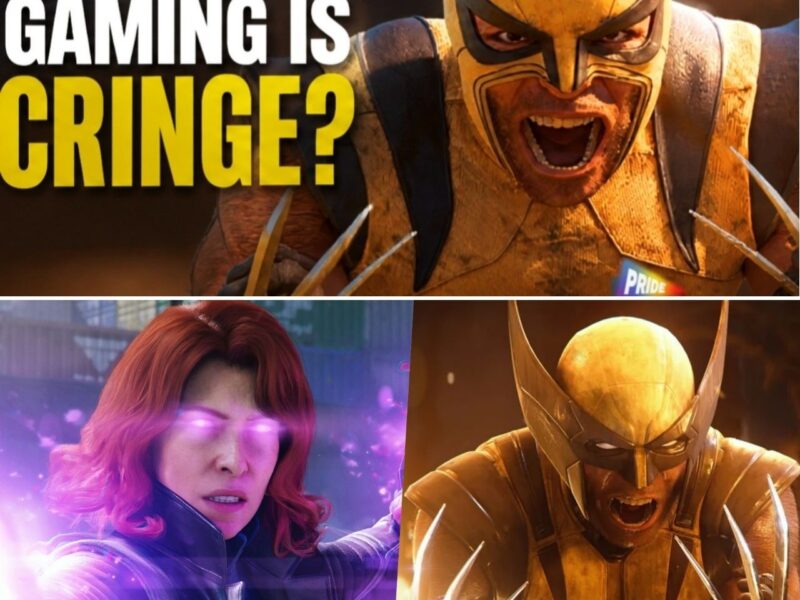
Why Insomniac’s Wolverine Looks “Cringe” — And What the Backlash Says About Modern AAA Gaming
WOLVERINE WAS SUPPOSED TO BE INSOMNIAC’S NEXT MASTERPIECE. SO WHY DOES THE INTERNET KEEP CALLING IT “CRINGE”? 👀
The claws are brutal, the violence is real, and the previews are surprisingly positive — yet a growing wave of players says something about the game feels way too familiar… and the criticism goes far beyond Wolverine himself.
Is this actually a bad Wolverine game — or are we watching the backlash against the entire modern AAA formula finally explode?
🔥 Click the link and see what’s really happening behind the Wolverine backlash.
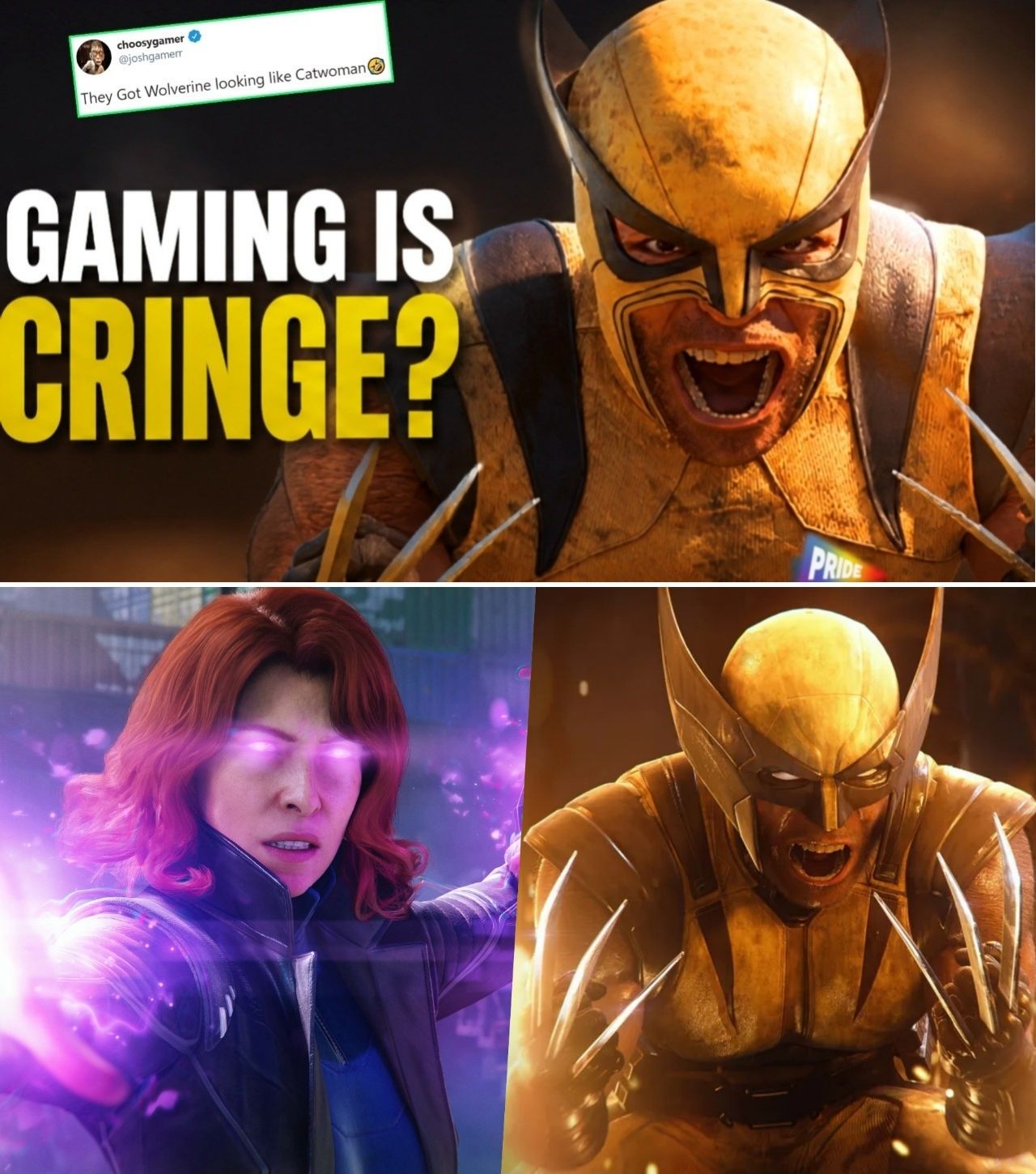
For a game that has barely reached players’ hands, Insomniac Games’ Marvel’s Wolverine has already managed to become the subject of a surprisingly heated argument.
The PlayStation 5 exclusive is one of the most anticipated superhero games of 2026, and early hands-on previews have generally been encouraging. Critics have praised its brutal combat, darker tone and attempts to give Logan an identity distinct from Insomniac’s Spider-Man games.
Yet online, another conversation has been gathering momentum: Does Wolverine look too much like a modern Insomniac game — and, more broadly, too much like the increasingly familiar AAA action-game template?
That question has become difficult to separate from the game itself.
On Reddit and other gaming communities, some players have described the footage as repetitive, overly cinematic or insufficiently distinctive. Others have criticized the apparent reliance on familiar combat systems, linear progression and animation-heavy encounters. Some have even argued that the game resembles “Spider-Man without the web-swinging,” despite the very different tone and protagonist.
At the same time, another section of the community thinks the backlash is dramatically overstated.
And that divide may ultimately be more interesting than the controversy itself.
The criticism: “Where is the Wolverine game?”
The central complaint is not necessarily that Marvel’s Wolverine looks technically poor.
In fact, the opposite may be true.
The game appears polished, violent and visually ambitious. Insomniac has leaned heavily into Wolverine’s physicality, with Logan using his claws in close-quarters combat, taking substantial damage and healing during fights.
The problem for some players is that underneath those spectacular animations, the gameplay can appear familiar.
A Reddit discussion following the game’s gameplay reveals saw players complain that the combat appeared “bland,” repetitive and too close to the structure of Insomniac’s previous games. One recurring criticism was that the player seemed to spend a considerable amount of time watching elaborate animations rather than making meaningful mechanical decisions.
Another Reddit discussion focused specifically on the game’s violence. One group of fans expected Wolverine to deliver an exceptionally brutal combat system, including more dramatic dismemberment and more extreme enemy reactions. For those players, visible blood alone was not enough to capture the character’s reputation.
That distinction matters.
Wolverine is not simply another superhero. His entire identity is built around claws, regeneration, pain and animalistic aggression. Fans therefore arrived with a very specific fantasy in mind: What would it actually feel like to fight as Wolverine?
Some believe Insomniac has captured that fantasy.
Others think it has only partially done so.
The “Insomniac formula” problem
There is a bigger issue underneath the argument.
Insomniac has become one of Sony’s most recognizable first-party studios partly because it has developed an extremely effective approach to blockbuster action games.
Its Spider-Man titles combine cinematic storytelling, accessible combat, spectacular traversal, collectibles, side activities and character-driven missions.
That formula works.
But success can create its own problem: once players recognize the structure, familiarity can begin to look like repetition.
That is exactly what some gamers appear to be reacting to with Wolverine.
A Reddit discussion in August described the game as potentially feeling like “Insomniac Spider-Man with a lot more blood,” with other users making similar complaints about the combat’s combo-heavy structure.
Another community discussion argued that much of the negativity was actually a reaction to Insomniac’s established design language rather than to anything demonstrably broken in Wolverine.
The irony is that Insomniac itself seems aware of this problem.
The studio has deliberately made Wolverine different from its Spider-Man games in several important ways. It is a more linear experience rather than another massive open-world superhero adventure, and Wolverine is the only playable character.
Insomniac has even acknowledged the lessons learned from the criticism surrounding previous games.
Game director Mike Daly recently said the studio had become accustomed to criticism after Spider-Man, noting that even highly successful games can still generate complaints online.
Wolverine is supposed to be different
The strongest argument against the “Spider-Man clone” criticism is what Insomniac has actually built around Logan.
Unlike Peter Parker, Wolverine is not designed around mobility and constant traversal.
He is designed around aggression.
The game introduces a Rage system intended to reward aggressive combat and give players access to especially powerful attacks. Early hands-on reports have emphasized the weight and brutality of Logan’s fighting style rather than simply transferring Spider-Man’s mechanics onto a different character.
The narrative structure is also deliberately different.
Insomniac has described Wolverine as a more focused, linear action experience. The story moves through locations including Madripoor and explores Logan’s past, his relationship with other mutants and his psychological trauma.
The developer has also confirmed that Wolverine will be the sole playable character.
That decision is particularly notable because Spider-Man 2 attracted criticism for sections in which players controlled characters other than Spider-Man.
Insomniac’s decision to keep the player permanently behind Logan’s claws therefore appears to be a conscious attempt to maintain the fantasy of being Wolverine throughout the experience.
And then there is the gore
Perhaps the strangest part of the backlash is the argument over violence.
When Wolverine was first announced, one obvious question was whether Insomniac — best known for relatively accessible superhero adventures — would actually make the character as violent as fans expected.
The answer appears to be yes.
Recent hands-on reports describe combat involving significant blood, brutal takedowns and an intentionally aggressive approach. TechRadar’s preview described the experience as extremely violent, with the game’s combat actively encouraging players to fight aggressively rather than constantly avoid confrontation.
Insomniac creative director Marcus Smith has also discussed the challenge of balancing Wolverine’s regenerative abilities and violent nature with gameplay that still maintains tension and risk.
Yet some fans still want more.
That creates an unusual situation in which a game can be objectively more violent than most mainstream AAA action titles and still be criticized for not being violent enough.
The expectation is partly inherited from X-Men Origins: Wolverine, the notoriously bloody 2009 game that has developed something of a cult reputation among Wolverine fans.
Interestingly, Insomniac has openly acknowledged that game as an inspiration.
The developers have said they studied X-Men Origins: Wolverine while attempting to solve the same fundamental problem: how to make controlling Wolverine feel different from controlling an ordinary action-game protagonist.
The Internet may be amplifying the negativity
There is another factor that should not be ignored: social media.
Insomniac community director James Stevenson recently addressed the volume of negative discussion surrounding Wolverine, arguing that algorithms can amplify negative reactions and make them appear more representative than they actually are.
That does not mean the criticism is fake.
It means the loudest criticism is not necessarily the majority opinion.
The Reddit discussions demonstrate exactly how divided the community has become.
Some players describe the game as repetitive and uninspired. Others say they are increasingly excited after seeing the latest footage. One recent discussion contained comments ranging from “looks good” to concerns that the game feels too similar to Insomniac’s previous work.
Another discussion was even more blunt: some users argued that people were judging a game they had not yet played, complaining about everything from Wolverine’s physical appearance to his health bar and linear structure before experiencing the finished product.
That is an important distinction.
The game has not been fully reviewed yet.
Most of the current debate is based on trailers, previews and limited hands-on sessions.
A bigger problem for AAA games
This is where the Wolverine controversy becomes more interesting.
The debate may have little to do with Wolverine.
Modern AAA games have reached a strange point where technical quality is no longer enough to impress players.
High-resolution character models, cinematic cutscenes, elaborate animations, huge production values and familiar progression systems are now expected.
Players increasingly want games to have a strong mechanical identity.
That creates a difficult challenge for studios like Insomniac.
If a developer changes its formula too dramatically, it risks alienating the audience that made the previous games successful.
If it stays too close to the formula, players complain that everything feels the same.
Wolverine appears to be caught directly in the middle.
Insomniac is attempting to preserve the polished combat and cinematic presentation that define its games while creating something darker and more character-specific.
Whether that balance succeeds will ultimately depend on something trailers cannot show: how satisfying the combat feels after 10, 20 or 30 hours.
The final verdict will have to wait
For now, calling Marvel’s Wolverine “cringe” is premature.
There are legitimate criticisms worth discussing. The gameplay shown so far has prompted reasonable questions about repetition, linearity, combat depth and how far Insomniac is willing to move beyond its established formula.
But there is equally strong evidence that the studio has made meaningful changes.
Early previews have generally been positive. Hands-on coverage has highlighted Wolverine’s heavier combat, darker storytelling and distinctive Rage mechanics.
The game has also officially gone gold ahead of its September release, meaning the core development phase is complete and the project is moving into its final preparations.
And perhaps most importantly, the controversy has revealed what players now expect from a major superhero game.
They don’t merely want Wolverine to look like Wolverine.
They want to feel like Wolverine.
If Insomniac delivers that fantasy, the current backlash may disappear almost overnight.
If it doesn’t, the game could become another example of a modern AAA blockbuster that is technically impressive, professionally produced — and still leaves players asking the same uncomfortable question:
“Why does this feel like something I’ve already played?”