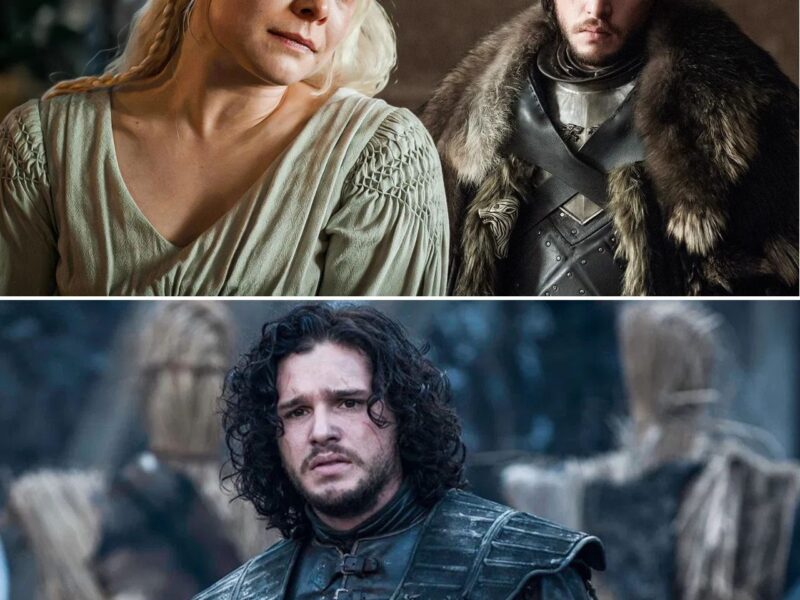
9 Years Later, Kit Harington’s Coldest Game of Thrones Quote May Be a Warning About Rhaenyra’s Fate in House of the Dragon Season 4
NINE YEARS AGO, JON SNOW WARNED DAENERYS — AND NOW RHAENYRA MAY BE WALKING STRAIGHT INTO THE SAME TRAP.
One line from Game of Thrones suddenly feels terrifyingly relevant after the House of the Dragon Season 3 finale… and what Rhaenyra does next could change EVERYTHING.
The parallel is almost too disturbing to ignore. 👀🔥
See why fans are connecting Kit Harington’s old warning to Rhaenyra’s terrifying Season 4 future 👇
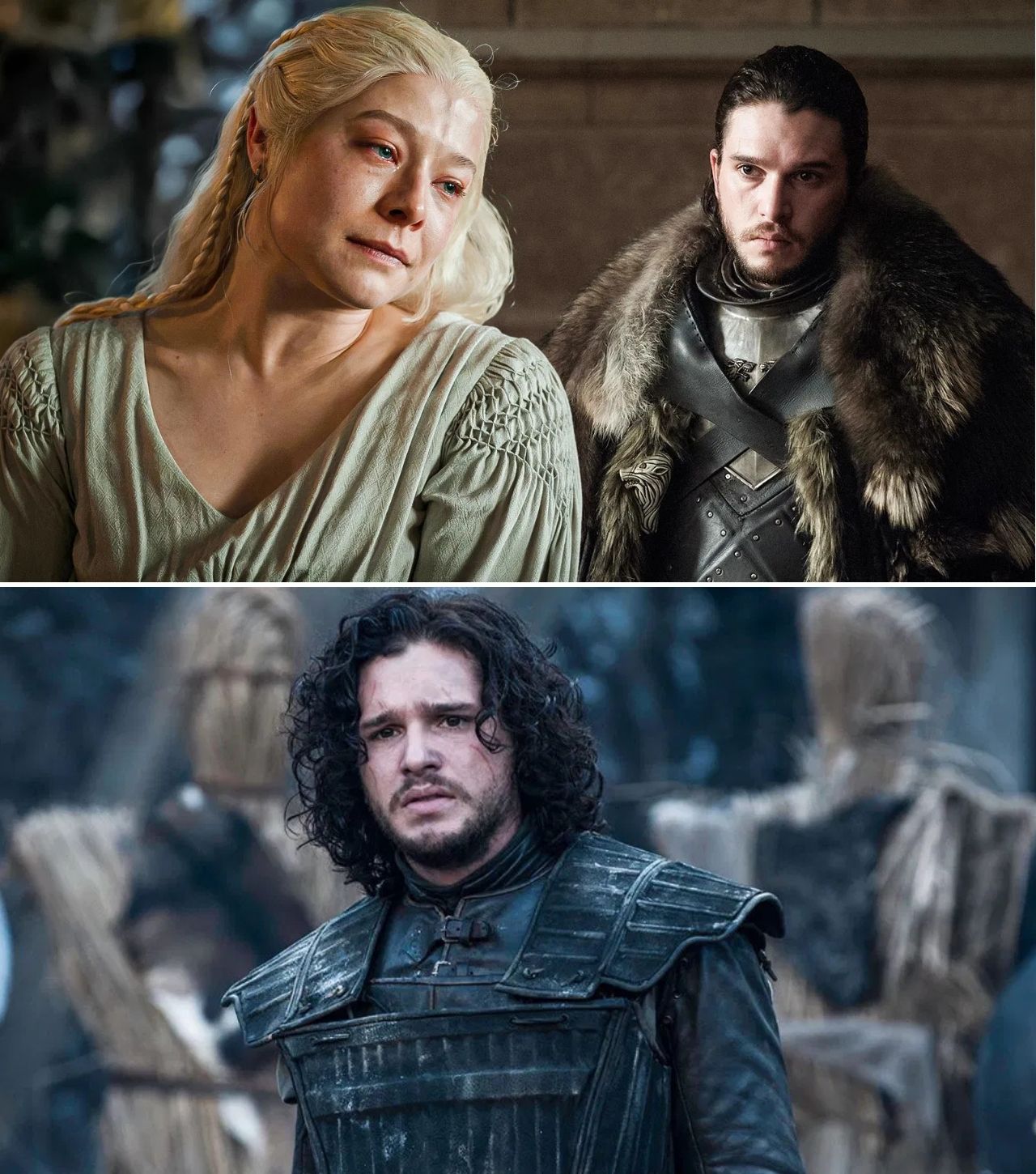
Spoiler warning: This article discusses the House of the Dragon Season 3 finale and major events from George R.R. Martin’s Fire & Blood.
Nine years after Jon Snow warned Daenerys Targaryen that power could turn her into exactly the kind of ruler she once fought against, that same line has acquired a new and unsettling meaning.
In Game of Thrones Season 7, Jon Snow, played by Kit Harington, told Daenerys that if she used her dragons to “melt castles and burn cities,” she would be “no different” from the rulers she sought to replace. The scene was not presented as a prediction of Daenerys’ future so much as a warning about the line between liberator and tyrant.
But after the conclusion of House of the Dragon Season 3, fans are increasingly seeing a similar trajectory in Rhaenyra Targaryen.
The comparison is not simply based on both women being Targaryen queens with dragons. Rhaenyra has now reached a point where her claim to the Iron Throne, her belief in destiny and prophecy, and her willingness to use violence are becoming increasingly difficult to separate.
That is why an August 25 analysis from FandomWire has reignited discussion around Jon Snow’s old warning and what it could mean for Rhaenyra when House of the Dragon returns for its fourth and final season.
The Jon Snow warning that suddenly feels different
The original scene takes place on Dragonstone in Game of Thrones Season 7, Episode 4, “The Spoils of War.”
Jon and Daenerys are negotiating an alliance. Daenerys wants Jon to bend the knee, while Jon needs her military support against the forces threatening Westeros.
During their conversation, Daenerys’ dragons become part of the larger question of how she intends to use power.
Jon’s warning is blunt: if Daenerys uses her dragons to destroy castles and burn cities, she becomes indistinguishable from the tyrants she claims to oppose.
At the time, the line worked primarily as a character moment. Jon was challenging Daenerys’ belief that having a righteous cause automatically justified whatever methods she used.
History, however, gave the line considerably more weight.
By the end of Game of Thrones, Daenerys had destroyed large portions of King’s Landing after the city had effectively surrendered. Jon ultimately killed her, fearing what she might do next, while Drogon destroyed the Iron Throne.
The controversial speed of Daenerys’ transformation has remained one of the most debated elements of the final season.
House of the Dragon is now presenting a much slower version of a potentially similar progression.
Rhaenyra’s transformation has taken years, not minutes
The key difference is that Rhaenyra’s story has been developing for three seasons.
When viewers first met her, she was a young princess struggling against a political system that repeatedly told her that her gender made her unfit to rule.
Her claim to the throne was complicated, but her motivation was relatively straightforward: she believed the crown had been promised to her by her father, King Viserys I.
The war gradually changed her.
Rhaenyra lost children, allies and political opportunities. She watched the conflict consume members of her family and repeatedly encountered people who treated compromise as weakness.
By Season 3, her relationship with power had become much more complicated.
Entertainment Weekly’s analysis of the finale described the episode as a major turning point for Rhaenyra, highlighting her increasingly authoritarian approach and the significance of her rejection of traditional religious authority. Showrunner Ryan Condal characterized the transformation as a major change in her relationship with Westeros and its people.
That distinction matters.
Rhaenyra is not simply becoming “evil.” The show is depicting a ruler increasingly convinced that extraordinary circumstances require extraordinary actions.
And that is precisely where Jon Snow’s warning becomes relevant.
The dangerous idea that Rhaenyra is the exception
One of the most important developments in the Season 3 finale is Rhaenyra’s increasingly powerful belief in prophecy.
She ultimately presents herself not merely as the rightful claimant to the Iron Throne, but as someone whose destiny is tied to a larger Targaryen mission.
The language surrounding the “Prince That Was Promised” connects directly to the mythology established in Game of Thrones.
But it also creates a dangerous psychological problem.
If a ruler believes that history, prophecy or divine will has selected them for a particular purpose, opposition can become more than political disagreement.
It can become an obstacle to destiny.
That is the parallel FandomWire draws between Rhaenyra and Daenerys: both characters increasingly see their cause as morally exceptional, while the destructive consequences of their actions become easier to justify.
The Season 3 finale pushes Rhaenyra further down that road.
She orders the execution of the High Septon after he refuses to recognize her authority. She becomes increasingly isolated from former allies. And after Helaena’s death, the political and personal consequences of her choices become even more severe.
Entertainment Weekly similarly described the finale as leaving Rhaenyra increasingly isolated, while highlighting Helaena’s death as a major emotional and political turning point.
Fans are divided over what the show is doing with Rhaenyra
The audience reaction has been far from unanimous.
On Reddit, some viewers have argued that Rhaenyra’s increasingly aggressive behavior finally gives Emma D’Arcy more dramatic material to work with. One post in the r/asoiaf Season 3 finale discussion praised Rhaenyra’s performance while noting that the character had finally begun taking decisive action.
Other viewers have been considerably less enthusiastic.
A post in r/HouseOfTheDragon following the finale described Rhaenyra as becoming increasingly difficult to sympathize with and criticized the season’s overall writing and pacing.
That disagreement is important because it shows that the Rhaenyra-versus-Daenerys comparison is not simply an accepted fact among viewers.
Some fans see Rhaenyra as a tragic ruler being pushed toward increasingly brutal choices by a brutal war.
Others believe the show is deliberately setting up a darker transformation.
There is also a third interpretation: Rhaenyra may not be destined to become another Daenerys at all.
The similarities could simply be thematic.
The biggest difference between Rhaenyra and Daenerys
Despite the parallels, the two characters are not identical.
Daenerys’ final transformation in Game of Thrones occurred after years of accumulating trauma but was presented very quickly during the final season.
Rhaenyra’s decline has been considerably more gradual.
That gives House of the Dragon an opportunity that Game of Thrones never fully had: allowing viewers to watch the character make one compromise after another until the distinction between necessary violence and tyranny becomes increasingly difficult to identify.
There is also a major difference in the source material.
House of the Dragon is adapting the events of Martin’s Fire & Blood, meaning the broad historical destination of the Targaryen civil war is already known to readers.
The television adaptation, however, has changed numerous details and character motivations.
That makes it dangerous to assume that every event from the book will occur exactly as written on screen.
The show’s creators have already demonstrated a willingness to alter character relationships, motivations and individual events.
Season 4 now has an enormous problem to solve
The stakes are particularly high because Season 4 will be the show’s final season.
HBO chairman and CEO Casey Bloys confirmed in January that the fourth season would conclude the series, following the Targaryen history toward its natural endpoint.
Current reporting indicates that Season 4 is expected to arrive in 2028, with production anticipated to begin in 2027. People reported that the fourth season is planned as the conclusion of the “Dance of the Dragons” story, while noting that a specific release date has not yet been announced.
That leaves the writers with a difficult balancing act.
Rhaenyra has to remain a compelling protagonist while the story moves toward the historical consequences fans of Fire & Blood already know.
If she becomes too sympathetic, the darker elements of her arc may lose their impact.
If she becomes too monstrous too quickly, the show risks repeating the criticism that surrounded Daenerys’ final transformation.
The most effective approach may therefore be the uncomfortable middle ground: allowing viewers to understand why Rhaenyra makes increasingly ruthless decisions while simultaneously recognizing how dangerous those decisions have become.
The prophecy may be the most important clue
Perhaps the most unsettling element of the Season 3 finale is not the violence itself.
It is Rhaenyra’s certainty.
She is no longer simply fighting because she wants the throne.
She increasingly believes she is supposed to have it.
That distinction could define Season 4.
Jon Snow’s warning to Daenerys was ultimately about what happens when a ruler stops seeing their own power as a potential danger.
Rhaenyra now has many of the same ingredients: a contested claim, a powerful dragon, enemies surrounding her, enormous personal losses and an increasingly absolute belief in her own historical purpose.
But whether those ingredients lead to a Daenerys-style catastrophe remains an open question.
And that is what makes Jon Snow’s nine-year-old line so fascinating.
It does not prove that Rhaenyra will follow Daenerys’ exact path.
It does, however, provide a chilling framework for understanding where her story could be heading.
For now, the Targaryen civil war is entering its final chapter. Rhaenyra has the throne, but her enemies are still alive, her alliances are fracturing and her grip on power is becoming increasingly dependent on fear and dragons.
The question for Season 4 may no longer be whether Rhaenyra can win the Iron Throne.
It may be whether she can win it without becoming the very thing she once believed she was destined to defeat.
And nine years after Jon Snow warned Daenerys that dragons could turn a liberator into “more of the same,” that question has never felt more relevant.