“Why Didn’t They Grab Her?” Pamela Cisneros’ Mother Questions NYPD Shooting After Deadly Times Square Stabbing
“WHY DIDN’T THEY JUST GRAB HER?” — PAMELA CISNEROS’ MOTHER IS DEMANDING ANSWERS.
As the horrifying Times Square confrontation unfolded, several NYPD officers surrounded her — but when Tasers failed, two officers opened fire as she moved toward them with knives.
Now her mother is asking the question that is dividing people: With so many officers there, why couldn’t someone grab Pamela by the arm instead? And what the newly opened investigation could reveal about those final seconds may change how this confrontation is viewed. 👇
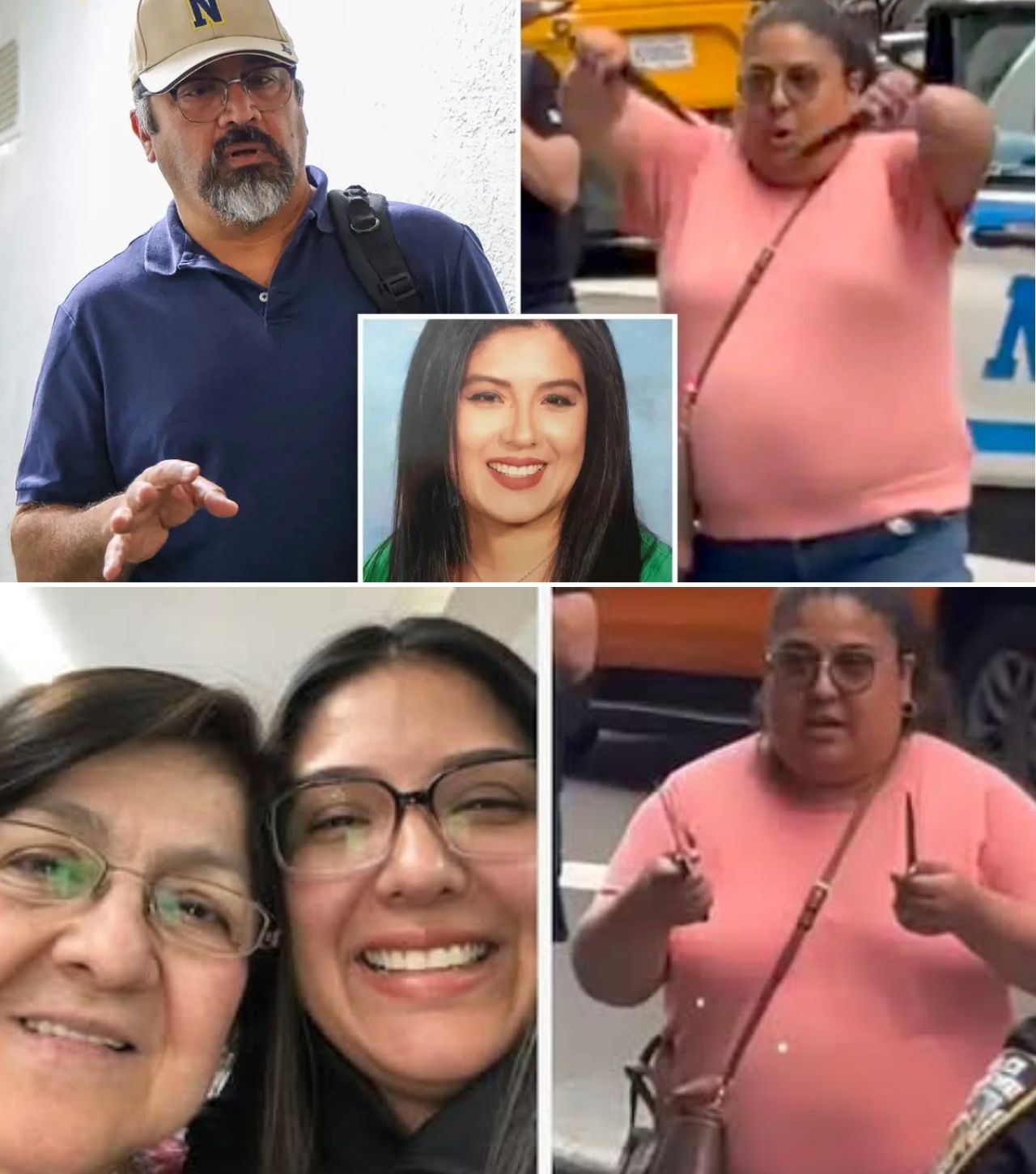
“Why Didn’t They Grab Her?” Pamela Cisneros’ Mother Questions NYPD Shooting After Deadly Times Square Stabbing
The mother of Pamela Cisneros is demanding answers after NYPD officers fatally shot her daughter following a terrifying knife attack in the middle of Times Square — questioning why police could not physically restrain the 49-year-old woman instead of opening fire.
“There were so many police, why didn’t they grab her by the arm?” Cisneros’ mother asked in Spanish during an interview with Fox 5 News.
Her question comes as authorities begin a formal investigation into the Aug. 31 confrontation, which ended with Cisneros dead and two victims of the preceding stabbing attack — one of them fatally wounded.
The circumstances surrounding the police shooting are now being examined independently. New York Attorney General Letitia James’ Office of Special Investigation announced Wednesday that it had opened an investigation into Cisneros’ death. The office stressed that the facts currently available are preliminary and subject to change.
The case has therefore entered two very different conversations: one about the devastating attack that left Bank of America employee Erin Piacenti dead, and another about whether police officers had any alternative to using deadly force when confronted by a woman carrying two knives.
The confrontation captured on video
The police encounter happened shortly after the stabbing attacks.
According to the New York Attorney General’s preliminary account, officers encountered Cisneros at approximately 4:26 p.m. on Seventh Avenue between West 42nd and West 43rd Streets.
She was holding a knife in each hand.
Officers ordered her to drop the weapons, but authorities say she did not comply.
Three officers deployed Tasers. The preliminary investigation found that the Tasers appeared to have no effect.
Cisneros then allegedly moved toward the officers while still holding the knives.
Two officers fired their service weapons, striking her.
She was taken to a local hospital, where she was pronounced dead.
Cellphone footage from the scene has since circulated widely online, showing the tense standoff between Cisneros and officers.
The footage has become central to the public debate because it allows viewers to see at least part of the confrontation themselves — although video alone does not necessarily establish everything that happened immediately before or during the shooting.
Her mother sees another option
For Cisneros’ mother, however, the question is straightforward.
If multiple officers were present, she wants to know why one or more of them could not have physically grabbed her daughter and taken control of her arms.
Her comments reflect the family’s broader difficulty accepting how quickly the confrontation ended.
Cisneros’ brother, Patrick Peralta, has also said that he never knew his sister to be violent.
Speaking after the attack, Peralta described Cisneros as someone who had struggled with serious mental-health problems but who had appeared to become more stable in recent years.
He said she had been receiving treatment and had not previously demonstrated the kind of aggression that unfolded in Times Square.
That history has made the final moments particularly difficult for the family to understand.
Their relatives have described a woman who had experienced years of personal and mental-health difficulties but who, in their view, had recently seemed to be doing better.
Her father, Mario Cisneros, similarly told reporters that he had seen his daughter shortly before the attack and believed she was doing well.
He also said she had been receiving medication through injections as part of her treatment.
The family’s account, however, does not answer the central question facing investigators: what happened in the seconds between police encountering Cisneros and the officers firing their weapons?
What police say happened
The preliminary account from the Attorney General’s office provides an important piece of that timeline.
Officers did not immediately shoot Cisneros when they first encountered her.
They reportedly gave her commands to drop the knives.
Three officers then deployed Tasers.
The Tasers apparently failed to stop her.
Only after Cisneros allegedly moved toward the officers while still armed did two officers fire their service weapons.
That sequence is significant because the investigation will have to determine exactly how much time officers had to react and what options were realistically available at each moment.
Questions could include the distance between Cisneros and the officers, the speed at which she was moving, the positioning of individual officers, whether officers had an opportunity to retreat, and whether other less-lethal options were available.
Those details cannot be determined simply from the number of officers visible at the scene.
The Attorney General’s investigation is specifically designed to examine deaths involving police encounters. Under New York law, the Office of Special Investigation assesses incidents in which a police or peace officer may have caused a person’s death, whether the person was armed or unarmed.
The tragedy that came first
The police shooting cannot be separated from what happened moments earlier.
Police say Cisneros had already attacked two people with knives.
The first victim was a 68-year-old man who was stabbed in the abdomen.
Cisneros then allegedly continued toward West 42nd Street, where she attacked Erin Piacenti.
Piacenti, 32, was fatally stabbed.
Police later described the attack as random and unprovoked, and authorities have found no indication that it was terrorism-related.
Piacenti’s death has added another heartbreaking dimension to the case.
She was a Bank of America vice president and had recently become a mother. According to People, she was returning to work after maternity leave when she was killed and left behind a 5-month-old daughter.
For her family, the question is not why police shot the attacker.
It is why a young mother heading home from work never made it home.
A mental-health history emerges
As investigators reconstruct the attack, Cisneros’ family has provided a picture of a woman who had experienced serious mental-health struggles.
Her brother said she had been diagnosed with bipolar disorder after experiencing postpartum depression following the birth of one of her children.
Her father described a previous mental-health crisis in which she allegedly attempted suicide by jumping in front of a subway train in Queens in 2019. The New York Times reported that he later helped her attend medical appointments and believed treatment had improved her condition.
Authorities have also confirmed that Cisneros had previous mental-health-related interactions with police.
Yet relatives say she was not known to them as a violent person.
That apparent contradiction is one of the most difficult elements of the case.
It also creates a danger of oversimplification.
A history of mental illness does not, by itself, explain violent behavior, and investigators have not publicly established that a specific mental-health episode caused the Times Square attack.
What happened inside Cisneros’ mind that afternoon remains unknown.
Online reaction is becoming another battleground
The confrontation has quickly become a subject of debate online.
Some viewers have questioned whether officers could have used additional physical restraint, echoing the concerns raised by Cisneros’ mother.
Others have argued that the circumstances were fundamentally different from an ordinary arrest because officers were confronting a person who had allegedly just stabbed two people and was holding two knives.
That distinction is important.
Police officers are trained to consider distance, weapon availability, movement, surroundings and the immediate threat to officers and civilians when deciding how to respond.
A knife can become lethal at extremely close range, meaning the practical question is not simply how many officers are present, but what each officer can safely do at that precise moment.
The independent investigation will therefore matter far more than online speculation.
The unanswered question
Cisneros’ mother’s question — why officers did not simply grab her daughter — is emotionally powerful.
But answering it requires information that the public does not yet have.
Investigators will need to examine body-camera footage, cellphone video, witness accounts, officer statements, forensic evidence and the precise sequence of commands, Taser deployments and gunfire.
The Attorney General’s office has already cautioned that the preliminary facts may change as the investigation develops.
That means any definitive judgment about whether officers could have safely restrained Cisneros would be premature.
At the same time, the family’s question is unlikely to disappear.
For them, the confrontation represents the final moments of a daughter, sister and mother whose life had been marked by years of personal struggles — but whom they say they did not know as a violent person.
For Piacenti’s family, the tragedy is even more devastating.
She was a new mother who had just returned to work. She was killed in a random attack while making her way through one of the busiest areas of New York City.
And for the city, the case now raises two separate but connected questions.
Could anything have prevented the stabbing?
And once the attack had happened, could the final confrontation have ended without deadly force?
Those questions will not be answered by social-media arguments or a single piece of cellphone footage.
They will ultimately depend on what investigators discover about those critical final seconds in Times Square.
For now, the NYPD shooting remains under investigation, while Cisneros’ family continues to search for an explanation for how a woman they say had never been violent became the center of a deadly afternoon — and why her final encounter with police ended in gunfire.