“Three Beers” And A 0.16 BAC: The Detail In The Stephen Schneider Case That Has The Internet Doing The Math
🍺 “THREE BEERS.” THEN CAME THE 0.16 BAC.
Stephen Schneider reportedly told police he had just two Guinnesses and a Miller Lite before taking the boat out — but hours later, prosecutors say his blood alcohol level was about twice the legal limit.
Now the internet is doing the math: Was “three beers” really the whole story… or is there something about the timeline and blood test we still don’t know? 👇
The strange gap between those two numbers is becoming one of the biggest questions in the case. 🔥
“Three Beers” And A 0.16 BAC: The Detail In The Stephen Schneider Case That Has The Internet Doing The Math
Stephen Schneider’s reported account of what he drank on the night his boat crashed into a Barnegat Bay channel marker has become one of the most closely scrutinized details in the case.
According to court-related reporting, Schneider told police he had consumed three beers — two Guinnesses and one Miller Lite — over approximately two hours during a family dinner before operating his boat.
Prosecutors later told a judge that Schneider’s blood alcohol concentration was approximately 0.16, roughly twice New Jersey’s legal limit for operating a vessel.
That contrast has become a major focus of online discussion.
On Reddit, users have questioned whether three beers could produce the reported result, while others have pointed to the timing of the blood draw and the need for more information before drawing conclusions. The discussion has turned the phrase “three beers” into one of the most recognizable details in the case.
But there is an important distinction between what the internet is speculating about and what investigators have actually established.
The 0.16 figure is part of the prosecution’s case. The precise implications of that result — including what Schneider’s BAC may have been at the exact moment of the crash — are matters that can depend on timing, testing and expert interpretation.
The night began with a family dinner
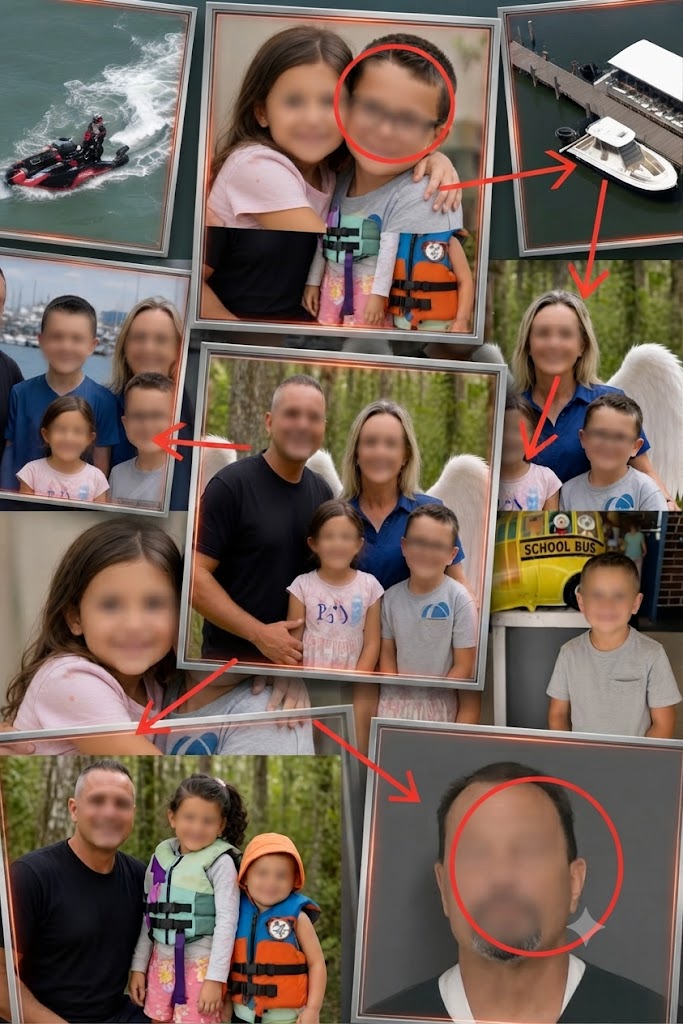
The crash happened on July 19, when Schneider, 64, was operating his Tidewater Custom 280 on Barnegat Bay in New Jersey.
His grandchildren, 9-year-old Mya Bella Golabek and 7-year-old Sigmund Paul Golabek, were aboard.
Authorities say the boat struck a channel marker at around 9 p.m., throwing both children into the water.
Both children were wearing life jackets, according to reporting on the case. They were later found unresponsive and taken to a hospital, where they were pronounced dead.
The collision triggered an investigation that eventually resulted in Schneider being charged with two counts of reckless vessel homicide, along with operating a vessel under the influence and reckless operation of a vessel.
The alcohol evidence has become central to that prosecution.
At his detention hearing, prosecutors argued that Schneider had been significantly impaired when he was operating the boat. ABC7 and NBC New York reported that prosecutors cited a BAC of approximately 0.16.
What Schneider reportedly told police
According to the affidavit as reported by multiple outlets, Schneider told investigators that he had consumed three beers over approximately two hours.
The drinks were reportedly identified as two Guinness beers and one Miller Lite.
That level of specificity has made the statement particularly interesting to online observers.
It was not simply a vague statement that he had “a few drinks.” Investigators reportedly received a specific number and specific types of beer.
That gives prosecutors, defense attorneys and investigators something concrete to examine.
Were the drinks actually ordered?
How large were they?
When were they consumed?
Were there additional drinks?
What did restaurant records show?
And most importantly, what does the toxicology evidence actually establish about Schneider’s condition at the time he was operating the vessel?
Those questions are likely to become increasingly important as the case moves through court.
Then came the 0.16 figure
The prosecution’s reported BAC of approximately 0.16 is the number that changed the public conversation.
New Jersey’s legal limit for operating a vessel is 0.08. A reported 0.16 therefore represents roughly twice that threshold.
NBC Philadelphia reported that prosecutors characterized Schneider as having been impaired by alcohol when the crash occurred.
The prosecution’s position is straightforward: the BAC is evidence that Schneider was operating the vessel while significantly impaired, and that impairment is relevant to the homicide charges.
But the existence of a 0.16 measurement does not automatically answer every scientific question about the crash.
The timing of the test matters.
And that is where the online debate becomes particularly intense.
The blood-test timing is drawing attention
According to the affidavit discussed in a large Reddit thread, the accident occurred shortly after 9 p.m., while the blood was sealed for testing at approximately 12:45 a.m.
That means the blood sample was obtained several hours after the reported collision.
Some Reddit users have focused heavily on that gap, attempting to calculate what Schneider’s BAC might have been at the time of the crash.
One commenter argued that if the 0.16 result was recorded several hours after the collision, the number raises obvious questions about how much alcohol had been consumed before the crash.
Another commenter pointed out that beer strength and serving size can affect calculations.
Others questioned whether the publicly released information contains enough detail to know exactly how the BAC should be interpreted.
Those disagreements are important because online BAC calculations can easily become misleading.
A person’s alcohol concentration is affected by numerous factors, including body size, sex, food consumption, drinking pattern, metabolism and the timing of alcohol consumption. More importantly, a blood concentration measured hours after an incident is not necessarily identical to the concentration at the moment of the crash.
That is why forensic toxicologists, rather than social-media arithmetic, are likely to be important if the issue becomes a major courtroom dispute.
Reddit is split between certainty and skepticism
The Reddit discussion surrounding the case illustrates just how polarized the reaction has become.
Some commenters treat the reported 0.16 as essentially settling the question.
One highly upvoted comment joked that when someone tells police they had “3 beers,” the real number could be much higher.
Another commenter asked whether the beers could have had unusually high alcohol content or been served in larger-than-standard quantities.
But other users pushed back against jumping to conclusions.
One discussion specifically noted the approximately four-hour gap between the crash and the blood collection and questioned why more toxicology details had not been made public.
Another commenter pointed out that the precise BAC information had previously been redacted in material circulating online.
That is an important reminder that social-media discussion is not the same thing as a completed forensic analysis.
The Reddit conversation is evidence of public reaction, not evidence that Schneider drank more than he reported.
The “three beers” claim is not proof of anything by itself
There is another important issue getting lost in the online debate.
Even if the reported three-beer account and the reported 0.16 BAC appear difficult to reconcile to some observers, that does not automatically establish that Schneider lied.
There are several questions that would need to be answered before anyone could responsibly reach that conclusion.
For example:
Were the beers standard servings?
How much time passed between the final drink and the crash?
Exactly when was the blood sample collected?
What testing method was used?
Was the reported 0.16 the original laboratory measurement or a later interpretation?
Were other substances detected?
Were additional toxicology findings made available?
And what do forensic experts conclude about Schneider’s estimated BAC at the time he was operating the boat?
Those are the kinds of questions that can distinguish a social-media theory from evidence that could actually be presented in court.
The channel marker adds another layer
The alcohol debate is also intertwined with another unresolved question: why did the boat strike the channel marker?
Schneider reportedly told investigators that he was traveling around 20 mph and saw the marker only at the last second.
Authorities have said the marker was illuminated and functioning.
That creates another factual issue for investigators and eventually the attorneys.
Was visibility affected by darkness, glare or the angle of approach?
Was the boat traveling too quickly for the conditions?
Did alcohol impairment affect Schneider’s ability to perceive the marker?
Or were there other navigational factors?
At this point, publicly available evidence does not establish that the marker malfunctioned. In fact, authorities have said it was illuminated.
But the fact that the marker question exists gives the defense another potential area to examine as the case develops.
The newly released 911 call adds context
The debate over the alcohol evidence is now taking place alongside the release of 911 audio from the aftermath of the crash.
The recording captures Laurie Schneider calling for emergency assistance as the family tried to locate and rescue the children.
According to the New York Post, Stephen Schneider was in the water searching for one child while the other was on the boat, and the family attempted CPR before the children were taken to the hospital.
The recording does not resolve the “three beers” question.
But it provides a contemporaneous record of the chaotic aftermath, which could eventually help investigators compare statements and timing.
What happens next?
Schneider was released from custody on conditions that prohibit him from operating a boat or motor vehicle while he undergoes a court-ordered assessment. NBC New York reported that the judge granted conditional release despite prosecutors citing the approximately 0.16 BAC.
His next court appearance is scheduled for September 15.
Until then, the central question surrounding the alcohol evidence remains deceptively simple:
How do three reported beers and a 0.16 BAC fit together?
The internet has already produced plenty of answers.
Some say the number proves Schneider consumed far more alcohol than he admitted.
Others say the timing of the blood test makes the calculation more complicated.
Still others are waiting for the actual toxicology evidence and expert analysis before reaching a conclusion.
For now, only some pieces of that puzzle are public.
What is established is that Schneider told investigators he consumed three beers, prosecutors say a blood test showed approximately 0.16 BAC, and the boat crash later resulted in the deaths of his two grandchildren.
What remains to be established is exactly what those numbers mean about his condition at the moment the boat struck the channel marker.
That distinction could become one of the most important issues in the case as the prosecution and defense prepare for the next stage of the proceedings.