The Face of Modern Ambition: Why Jake Gyllenhaal’s ‘Nightcrawler’ Remains a 21st-Century Masterpiece
JAKE GYLLENHAAL’S MOST UNHINGED MASTERPIECE IS HITTING NETFLIX! 🚨🎥
If you think you’ve seen Jake Gyllenhaal give an intense performance, think again. His critically acclaimed 95% Rotten Tomatoes psychological thriller masterpiece, Nightcrawler, has officially landed on Netflix! 😱
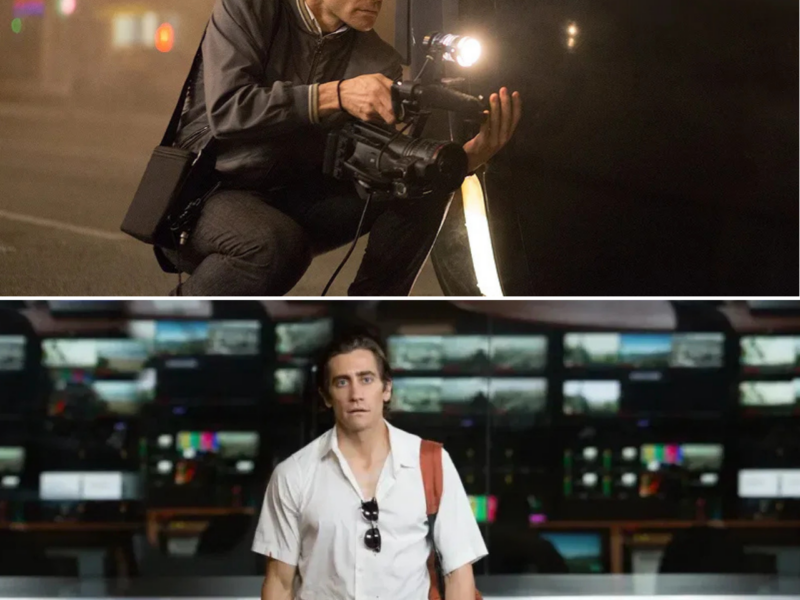
Playing the chilling, hollow-eyed sociopath Lou Bloom, Gyllenhaal prowls the dark, neon-lit streets of Los Angeles hunting for horrific crime scenes to sell to the highest-bidding news station. It’s dark, disturbing, and widely considered one of the greatest snubs in Oscar history. 🌙🔥
Ready to witness peak cinematic tension?👇👇👇
In an era dominated by high-budget franchises and formulaic streaming content, true psychological thrillers that genuinely unsettle and provoke thought are increasingly rare. Enter Nightcrawler, Dan Gilroy’s 2014 neo-noir tour de force, which has once again captured the public consciousness following its recent streaming arrival on Netflix. Anchored by what many critics consider the finest performance of Jake Gyllenhaal’s career, the film remains a chilling exploration of late-stage capitalism, modern media decay, and unchecked sociopathy.
A Descent Into the Los Angeles Underworld
Nightcrawler introduces audiences to Louis Bloom (Jake Gyllenhaal), a desperate, unemployed petty thief scraping by on the fringes of Los Angeles. Lean, hollow-eyed, and relentlessly articulate in the language of corporate self-help, Lou stumbles upon a subculture of freelance camera crews—known as “stringers”—who race across the city at night to capture graphic footage of accidents, fires, and violent crimes. They sell their grisly packages to morning news directors desperate for ratings.
Sensing an opportunity for upward mobility in a system with no moral compass, Lou buys a cheap camcorder and a police scanner. What follows is a terrifying rapid ascent. Lou is not merely an observer of tragedy; he becomes an active participant. As his ambition swells, he manipulates crime scenes, withholds vital evidence, and ultimately endangers his own naive assistant (played brilliantly by Riz Ahmed) to secure the most sensational, exclusive footage possible.
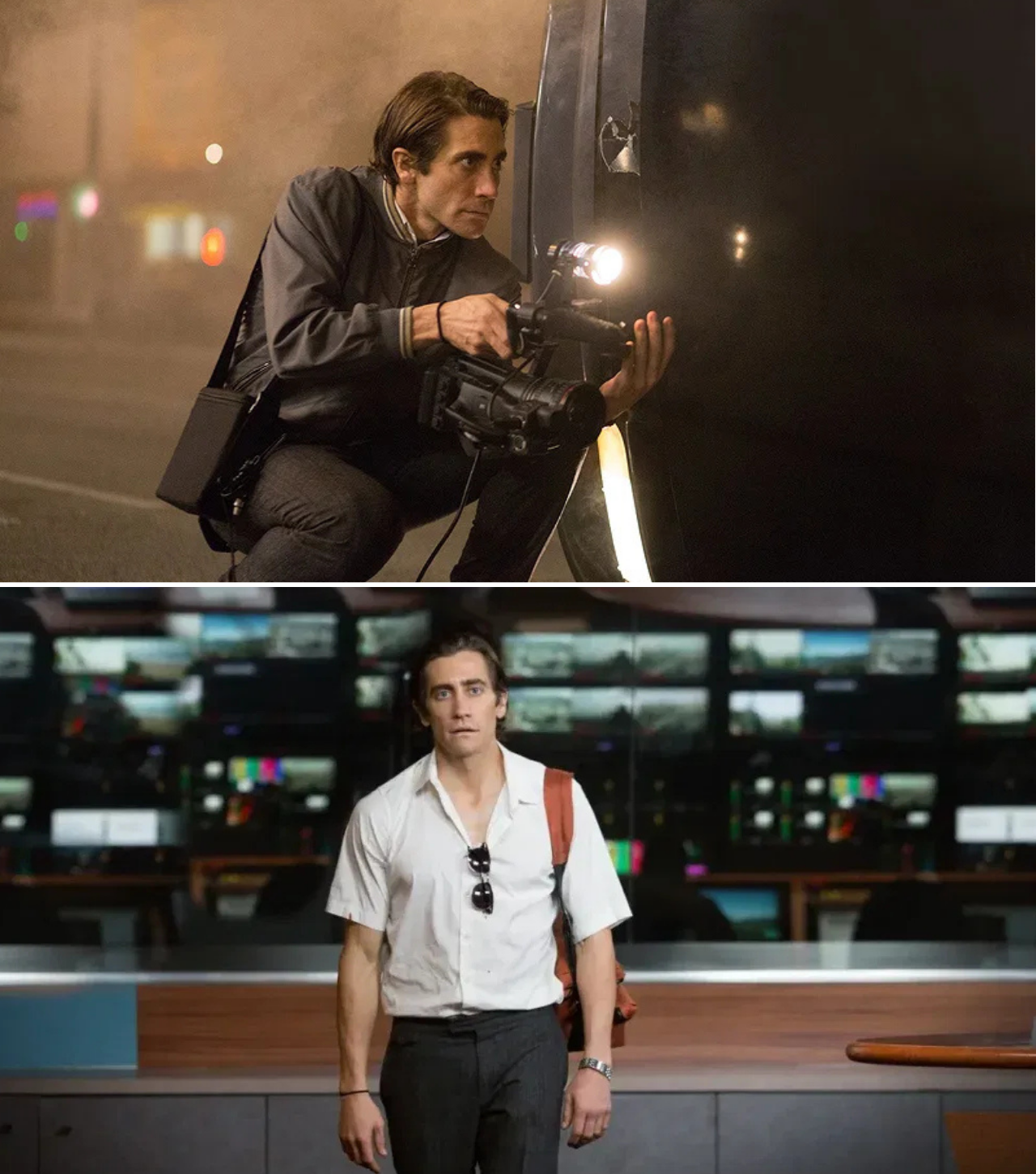
Gyllenhaal’s physical transformation—losing weight to create a gaunt, coyote-like appearance with wide, unblinking eyes—creates an unforgettable visual manifestation of a predator hunting in the concrete jungle.
A Critical Darling and an Historic Oscar Snub
Upon its original theatrical release, Nightcrawler was met with universal critical acclaim. Bolstered by a sharp, biting screenplay by Gilroy, the film currently holds an elite 95% approval rating on Rotten Tomatoes across more than 275 reviews, alongside a strong 86% audience score. Critics lauded the film for its dark, thought-provoking tension and its unflinching critique of sensationalist journalism.
Despite the widespread praise, the film’s awards season run became infamous for one major oversight: Jake Gyllenhaal’s glaring omission from the Best Actor category at the 87th Academy Awards. While Gyllenhaal earned nominations at the Golden Globes, BAFTAs, and Screen Actors Guild Awards, the Academy recognized only Dan Gilroy’s original screenplay. To this day, film historians and fans routinely cite Gyllenhaal’s exclusion as one of the most egregious Best Actor snubs of the decade.
The Symbiotic Symbiosis of Media and Monster
What elevates Nightcrawler from a standard genre thriller into a timeless masterpiece is its razor-sharp societal commentary. Lou Bloom is the logical extreme of the American entrepreneurial myth—a self-made man who treats human suffering purely as transactional currency. He speaks entirely in corporate buzzwords and internet self-help doctrines, weaponizing productivity culture against a society that birthed him.
He finds his ideal counterpart in Nina Romina (Rene Russo), a veteran morning news director at a flailing local TV station whose golden rule is simple: “If it bleeds, it leads.” The chemistry between Gyllenhaal and Russo is electric, highlighting a parasitic symbiosis where the media demands blood, and Lou is more than happy to supply it.
Why It Still Resonates Today
More than a decade after its initial release, Nightcrawler feels even more prophetic in the age of viral clickbait, citizen journalism, and algorithms that reward shock value above all else. Lou Bloom’s chilling ascent anticipates a digital landscape where algorithmic engagement values sensationalism over truth, making his hollow mantra of corporate success feel uncomfortably close to home.
For viewers discovering or revisiting the film on Netflix, Nightcrawler offers an intense, 118-minute masterclass in tension. It is a film that refuses to offer easy comforts or moral redemptions, leaving audiences face-to-face with a protagonist who is entirely devoid of empathy—and terrifyingly effective because of it.
As Gyllenhaal continues to balance blockbuster escapism with daring dramatic choices, Nightcrawler remains the benchmark of his artistic fearlessness. For anyone looking for a sharp, uncompromising, and deeply unnerving cinematic experience, Netflix’s latest addition is an absolute must-watch.