Lindsay Clancy Trial Hits New Crisis as Jury Remains Deadlocked After Six Days
THE LINDSAY CLANCY TRIAL JUST TOOK A SHOCKING TURN — AND NOW EVERYTHING IS HANGING BY A THREAD.
After six days of deliberations, the jury still cannot agree on Lindsay Clancy’s fate. Then came an extraordinary courtroom development: her defense asked the judge to remove a juror over an alleged failure to follow the instructions on “reasonable doubt” — a request the judge rejected.
But that may be only the beginning.
Behind the courtroom doors, 12 jurors are wrestling with one of the most disturbing questions in the entire case: was Lindsay Clancy criminally responsible for the deaths of her three children, or was she experiencing a devastating psychiatric crisis that left her unable to understand what she was doing?
And now, with the possibility of a hung jury and mistrial looming, Patrick Clancy and the shattered families on both sides could be facing a legal outcome nobody wanted to imagine.
Six days. No verdict. One deeply divided jury.
So what happens if they still can’t agree? And why did the dispute over one juror suddenly become so important?
The latest courtroom developments — and what they could mean for the Clancy family — are here. 👇
Lindsay Clancy Trial Hits New Crisis as Jury Remains Deadlocked After Six Days
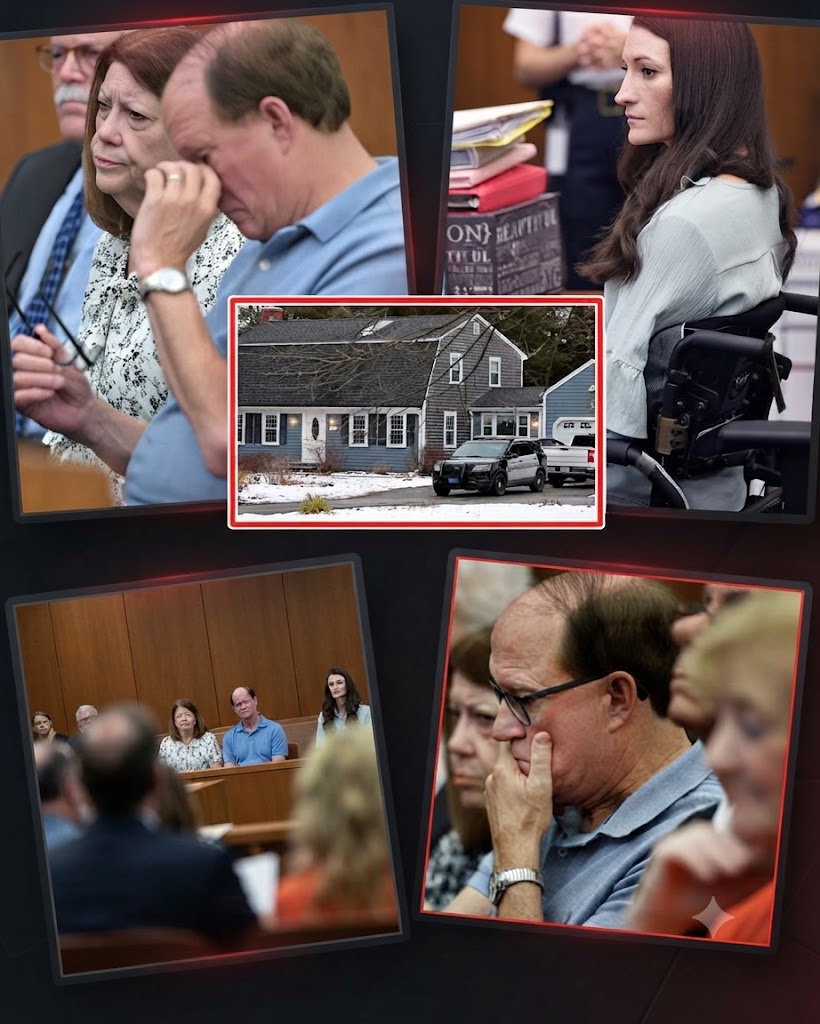
The Lindsay Clancy murder trial has entered a dramatic new phase, with jurors unable to reach a unanimous verdict after six days of deliberations — and a dispute over one alleged holdout juror now threatening to push the case toward a possible mistrial.
For Patrick Clancy and the families surrounding one of Massachusetts’ most closely watched criminal cases, the agony that began in January 2023 has not ended inside the courtroom.
Instead, the trial has reached an extraordinary impasse.
As of Thursday, Sept. 3, jurors had spent six days deliberating over the fate of Lindsay Clancy, the Massachusetts mother accused of killing her three young children, Cora, 5, Dawson, 3, and Callan, 8 months, before attempting to take her own life.
The jury has twice formally told Judge William Sullivan that it could not reach a unanimous decision. On Thursday, the situation escalated when Clancy’s defense attorney, Kevin Reddington, argued that one juror was refusing to follow the judge’s instructions concerning reasonable doubt.
The judge declined to remove the juror.
The jury was sent home without a verdict and is expected to return Friday.
The development has transformed an already emotionally charged trial into a legal cliffhanger, with a mistrial now a very real possibility if jurors remain unable to agree.
A Case That Was Never Simply About Whether the Children Were Killed
One of the unusual aspects of the Clancy trial is that the central dispute has not been whether Lindsay Clancy caused the deaths.
Her defense has acknowledged that she killed her children.
The question for jurors has instead been whether she should be held criminally responsible for those acts.
Clancy’s attorneys have argued that she was experiencing postpartum psychosis and was suffering from a severe psychiatric crisis when the killings occurred. They have pointed to her deteriorating mental health, treatment history and medications as evidence that she had become detached from reality.
Prosecutors have offered a fundamentally different interpretation.
They argue that Clancy understood what she was doing and deliberately carried out the killings. The prosecution has pointed to evidence including her actions before the deaths, cellphone data and other circumstances that prosecutors say demonstrate planning rather than psychosis.
That conflict — mental illness versus criminal responsibility — has been at the heart of the five-week trial.
Reuters reported that more than 80 witnesses and roughly 300 exhibits were presented during the proceedings.
Patrick Clancy’s Role Has Added Another Layer of Emotion
Patrick Clancy has been one of the most emotionally significant figures in the proceedings.
He was the person who returned home on Jan. 24, 2023, after leaving to pick up food and medication. His testimony included an emotional account of discovering what had happened and the 911 call that followed.
WBUR reported that the seven-minute emergency call was played in court, with Patrick heard trying to communicate with Lindsay before discovering his children.
His testimony placed the jury directly inside the aftermath of the tragedy.
Yet Patrick’s public position toward Lindsay has also complicated the way many outsiders understand the case.
He has publicly forgiven his former wife, while maintaining the devastating reality of losing all three children.
That distinction has become particularly important because the courtroom debate is not simply about punishment. It is also about what happened to Lindsay psychologically, whether the healthcare system failed to recognize the severity of her condition, and how society should respond when severe postpartum mental illness intersects with criminal law.
The case therefore continues to divide observers who otherwise agree on the basic facts of the tragedy.
The New Legal Drama: One Juror
The most startling development came during the sixth day of deliberations.
According to Reuters and CBS Boston, the jury indicated that it remained deadlocked. Reddington then asked the judge to remove one juror, alleging that the juror was not properly applying the court’s instructions on reasonable doubt.
Judge Sullivan rejected the request.
That decision does not mean the judge has determined which side the juror supports. Importantly, the exact substance of the jury’s deliberations remains confidential, and reports about an alleged split should not be treated as an official verdict or definitive indication of how the other jurors intend to vote.
Nevertheless, the dispute demonstrates just how deeply divided the jury may be.
The judge reiterated the legal standard and instructed the jurors to continue their deliberations. They were ultimately sent home without reaching a verdict.
The possibility of a mistrial now hangs over the case.
What Would a Hung Jury Mean?
A deadlocked jury would not mean Lindsay Clancy had been found innocent.
It would mean that the current jury could not reach the unanimous decision required for a verdict.
Legal experts quoted by PEOPLE have said that, given the gravity of the charges, prosecutors would be highly likely to consider a retrial if the judge eventually declares a mistrial.
Former federal prosecutor Neama Rahmani told PEOPLE that a retrial could potentially benefit prosecutors because they would have the opportunity to reassess and refine their presentation after seeing how the first jury responded to the evidence.
But nothing has been decided.
The immediate question remains whether the jurors can break their impasse.
The Online Reaction Has Become Its Own Story
Outside the courtroom, the Clancy case has developed a massive online following.
A Reddit megathread devoted to the trial has attracted extensive discussion as users debate the evidence, the competing psychiatric explanations and the likelihood of a hung jury.
The tone varies sharply.
Some commenters argue that the prosecution failed to establish beyond a reasonable doubt that Clancy understood the wrongfulness of her actions. Others remain skeptical of the postpartum-psychosis defense and believe the evidence demonstrates intentional conduct.
One Reddit discussion following the first deadlock quickly filled with predictions that the jury would ultimately become hung. Other users debated whether jurors might instead compromise around a lesser charge.
But online discussions should be treated carefully.
Reddit comments, TikTok videos and other social-media speculation are not evidence presented to the jury. They often reflect deeply personal reactions rather than established facts.
That distinction has become especially important in the Clancy case because social media itself has become part of the broader controversy.
TikTok Has Played an Unusual Role
The trial has attracted an enormous TikTok audience, with people dissecting courtroom testimony, discussing psychiatric evidence and offering their own interpretations of the case.
At one point, Clancy’s defense team even sought to call Emily Thorndike, a former McLean Hospital employee who had posted a critical TikTok about how the psychiatric facility had been portrayed during the trial.
CBS Boston reported that Thorndike had followed the case online and challenged some of the positive descriptions of McLean’s care. Prosecutors objected to her involvement, questioning both relevance and impartiality.
The episode illustrated how the boundaries between courtroom evidence and online commentary have increasingly blurred.
The defense has used social-media material in an attempt to support its broader argument about psychiatric treatment, while online communities have continued to debate the case independently.
Meanwhile, legal observers have repeatedly stressed that jurors are required to base their decision on evidence admitted in court and the judge’s instructions — not on what they encounter online.
Another Legal Battle Is Also Continuing
The criminal trial is not the only legal fight surrounding the Clancy family.
Patrick Clancy filed a wrongful-death lawsuit against healthcare providers involved in Lindsay’s treatment. The lawsuit alleges failures in diagnosis and treatment and argues that medical care contributed to the circumstances leading to the children’s deaths.
The allegations in the civil litigation remain disputed and have not been established as findings of fact.
Lindsay Clancy has also pursued legal claims concerning her psychiatric treatment.
Those lawsuits are significant because they offer another avenue for examining the healthcare decisions that preceded the January 2023 tragedy — independently of the criminal jury’s decision about Lindsay’s responsibility.
The existence of the civil litigation also means that the legal consequences of the tragedy could continue long after the criminal trial eventually concludes.
The Bigger Question: Can the Jury Reach a Verdict?
The Clancy case has now reached a point few observers expected when testimony began.
The jury has spent more than 30 hours considering evidence in a case involving three children, a mother’s psychiatric state, competing expert testimony and deeply emotional accounts from family members.
The legal choices before jurors are also unusually consequential.
Depending on their findings, the possible outcomes include convictions for first-degree murder, second-degree murder or manslaughter, as well as findings related to lack of criminal responsibility. The consequences range from life imprisonment to psychiatric commitment.
But the jury has so far been unable to agree.
That means the next session could become one of the most consequential moments in the entire case.
Jurors could finally reach a unanimous verdict.
They could remain divided.
Or the court could ultimately be forced to declare a mistrial, opening the door to another round of litigation and potentially another trial.
For Patrick Clancy and everyone affected by the deaths of Cora, Dawson and Callan, none of those outcomes can undo what happened.
What remains unresolved is the legal question that has consumed the courtroom for weeks: whether Lindsay Clancy should be held criminally responsible for the deaths of her three children, or whether the psychiatric condition described by her defense was severe enough to make her legally incapable of understanding or controlling her actions.
After more than three years of investigation, hearings and trial proceedings, the answer may now depend on whether 12 jurors can finally agree.
And as they return to deliberate, the entire case remains suspended between a verdict and the possibility that the courtroom will have to start the process all over again.