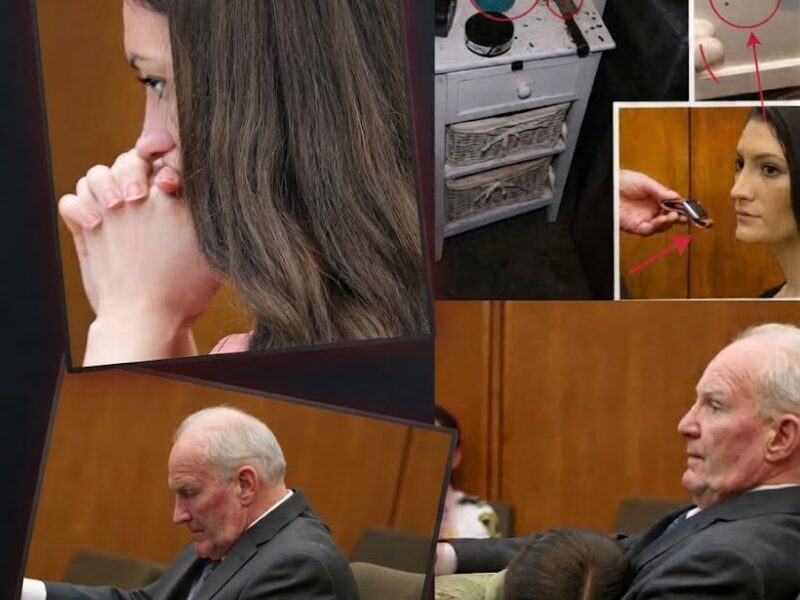
Lindsay Clancy Trial Hits Breaking Point as Deadlocked Jury Raises New Questions About Her Fate
🚨 THE LINDSAY CLANCY TRIAL JUST EXPLODED.
6 DAYS. NO VERDICT. And now a shocking courtroom dispute over a juror has left everyone asking the same question: why can’t they agree on Lindsay Clancy’s fate?
What happened inside that courtroom — and what the jury’s latest move could mean next — is leaving people stunned. The details are hard to ignore. 👇
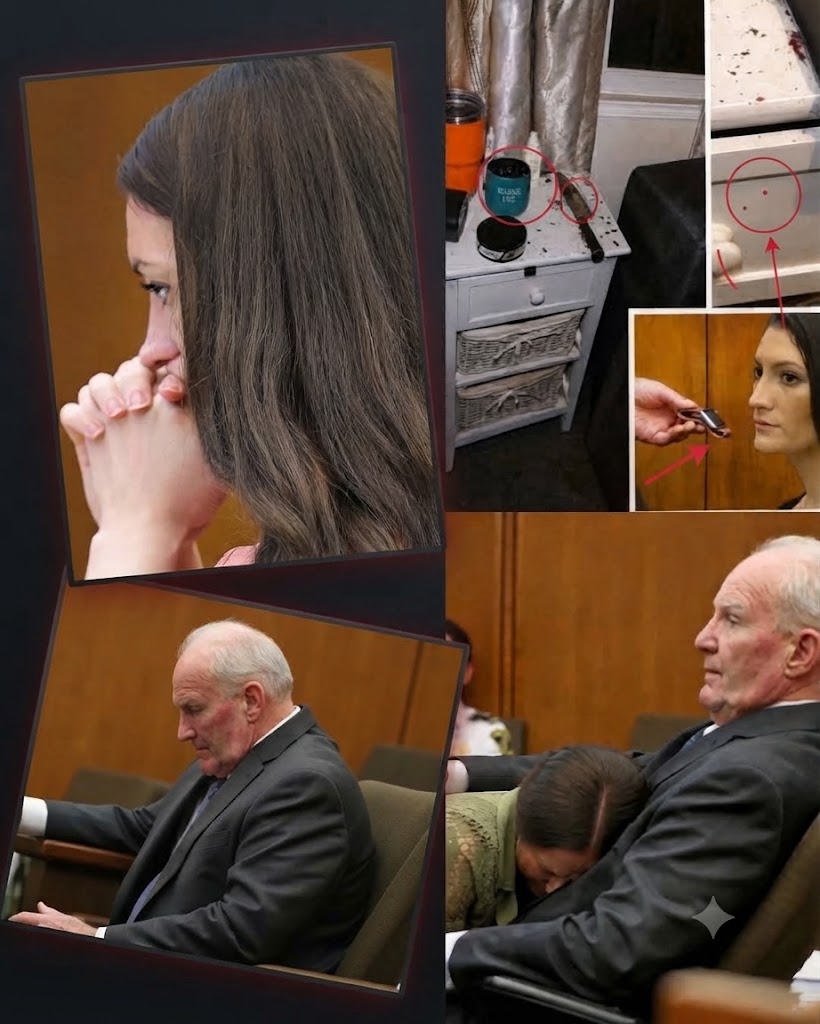
Lindsay Clancy Trial Hits Breaking Point as Deadlocked Jury Raises New Questions About Her Fate
The Lindsay Clancy murder trial has reached a dramatic impasse, with jurors unable to agree on a verdict after more than 36 hours of deliberations — and a dispute over one juror has now pushed the courtroom drama into another unexpected chapter.
Clancy, a 36-year-old former labor and delivery nurse from Massachusetts, is accused of killing her three children, 5-year-old Cora, 3-year-old Dawson and 8-month-old Callan, at the family’s Duxbury home on Jan. 24, 2023.
The central issue has never simply been whether Clancy committed the killings. Her defense has acknowledged that she killed the children.
Instead, jurors must decide whether Clancy was criminally responsible for her actions.
Her attorneys argue that she was experiencing severe postpartum psychosis and was unable to understand the nature or wrongfulness of what she was doing. Prosecutors, meanwhile, argue that Clancy intentionally killed her children and understood the consequences of her actions.
Now, after six days of deliberations, the jury remains deadlocked.
And that deadlock has produced one of the most extraordinary moments of the trial.
A Jury That Cannot Agree
The 12-person jury began deliberating Aug. 27 after weeks of testimony involving more than 80 witnesses and roughly 300 exhibits.
By Thursday, Sept. 3, jurors had twice indicated that they were struggling to reach a unanimous decision.
According to Reuters, Clancy’s attorney Kevin Reddington then asked Judge William Sullivan to remove a juror whom he accused of refusing to properly apply the court’s instructions concerning reasonable doubt.
The judge rejected the request.
Instead, Sullivan reminded the jurors of their legal obligations and allowed deliberations to continue. The jury was then sent home and scheduled to return Friday.
The development immediately became one of the biggest talking points surrounding the case.
But legally, the disagreement is not itself evidence that one side is winning.
A jury reaching an impasse does not mean Clancy will be convicted, nor does it mean she will be acquitted. It simply means that, at least for now, the jurors have been unable to reach the unanimous decision required in the case.
If the deadlock continues, the judge could eventually declare a mistrial.
That could open the door to another trial.
What Patrick Clancy Told the Court
One of the most emotionally significant witnesses was Lindsay Clancy’s former husband, Patrick Clancy.
His testimony provided jurors with a detailed account of the night the children were killed and the devastating discovery that followed.
According to testimony reported by WBUR and other outlets, Patrick had left the family home to pick up medication and dinner. When he returned, he found Lindsay outside after her suicide attempt and the children unresponsive inside the home.
He made the emergency call that became one of the most emotionally difficult pieces of evidence presented at trial.
The 911 recording was played for jurors in July. Clancy became visibly overwhelmed as the recording was heard in court, while several jurors were also emotional. Judge Sullivan ultimately called a recess.
Patrick has also publicly expressed forgiveness toward Lindsay.
That position has become one of the most unusual aspects of the case.
Rather than portraying his former wife simply as a monster, Patrick has described her as someone suffering from a devastating mental illness. His position has resonated with supporters of Clancy, while others watching the case have struggled to reconcile his compassion with the deaths of his three children.
His testimony has therefore become central not only to the factual record but also to the public debate surrounding the case.
The Battle Over Postpartum Psychosis
At the heart of the trial is a complicated psychiatric question.
The defense says Clancy experienced postpartum psychosis after the birth of her youngest child. Her attorneys argue that the condition was compounded by serious mental-health problems, medication issues and inadequate treatment.
Family members testified about changes in Clancy’s behavior and her deteriorating mental state in the months before the killings.
Reuters reported that prosecutors presented digital evidence showing Clancy had searched online for subjects including postpartum psychosis and suicidal ideation in the days before the killings.
The prosecution has interpreted other evidence differently.
Prosecutors argue that Clancy was capable of planning and understanding her actions. They have pointed to evidence they say indicates preparation rather than an uncontrolled psychotic episode.
That disagreement has produced sharply conflicting expert testimony.
Some defense witnesses described Clancy as experiencing psychosis and losing contact with reality. Prosecution witnesses challenged that interpretation and argued that she understood what she was doing.
The jury therefore faces an unusually difficult question: where does severe mental illness end and criminal responsibility begin?
Why Social Media Has Made the Case Even More Explosive
Outside the courtroom, the debate has become almost as intense as the trial itself.
TikTok, Reddit and other social platforms have produced thousands of discussions about Clancy’s mental health, Patrick Clancy’s role, the medical treatment she received and the evidence presented at trial.
Some online communities have rallied around Clancy, emphasizing postpartum mental illness and what they see as failures in the American mental-health system.
Others strongly reject that interpretation, arguing that mental illness can help explain a crime without eliminating responsibility for it.
Reddit discussions have also highlighted how dramatically opinions differ across platforms. Some users have criticized what they describe as TikTok-based speculation and conspiracy theories surrounding Patrick Clancy. Others have questioned whether the public has been given enough context about Clancy’s medical history.
That polarization has become a recurring theme throughout the trial.
The Atlantic recently examined the unusually intense interest the case has generated, particularly among women who see aspects of Clancy’s experience reflected in broader concerns about postpartum mental health and maternal care.
At the same time, social-media speculation has sometimes gone far beyond what has been established in court.
That is particularly important when discussing Patrick Clancy.
Online accusations and theories are not equivalent to evidence, and reporting from the trial has not established that Patrick was responsible for the children’s deaths.
What About the Viral “Hot Mic” Claim?
A number of social-media posts have recently circulated a dramatic allegation that a prosecutor was caught on a hot microphone saying, “Tell her to shut her mouth!” during an explosive courtroom moment.
The claim has been used online to suggest that prosecutors lost control of the proceedings.
However, while versions of the allegation can be found circulating on social media, I could not find reliable reporting from major trial coverage confirming that this alleged hot-mic exchange occurred as described.
There was, however, a genuine courtroom confrontation during the deliberation crisis.
Defense attorney Kevin Reddington became involved in a heated dispute with Judge Sullivan after the jury raised concerns about a juror’s interpretation of the reasonable-doubt instruction. Multiple mainstream reports confirmed that exchange.
That distinction matters.
The actual courtroom drama is substantial enough without adding an unverified viral detail.
No Verdict Has Been Reached
The current legal reality is straightforward but potentially historic for the case.
There is still no verdict.
The jury can consider multiple outcomes, including murder-related convictions, lesser offenses and a finding that Clancy was not criminally responsible because of mental illness.
A first-degree murder conviction could result in life imprisonment without parole.
A finding of not guilty by reason of lack of criminal responsibility would not simply mean Clancy walks out of court. She could instead be committed to a psychiatric facility under Massachusetts law.
And if the jury remains permanently deadlocked, a mistrial becomes a possibility.
In that situation, prosecutors could potentially pursue a retrial. Legal analysts have suggested that a retrial would be plausible given the extraordinary seriousness of the allegations and the amount of evidence already presented.
A Case Bigger Than One Verdict
The Clancy trial has become about more than a single defendant.
It has forced difficult questions into the national spotlight: How should the criminal justice system handle severe postpartum psychiatric disorders? When does mental illness eliminate criminal responsibility? How should doctors respond when a new mother reports frightening psychological symptoms? And how much responsibility should society place on a medical system when a psychiatric crisis escalates?
But the case has also demonstrated the dangers of turning a complex criminal proceeding into a social-media morality battle.
For supporters, Clancy represents a mother destroyed by an untreated psychiatric crisis.
For critics, the evidence shows a woman who knowingly made catastrophic decisions.
For the jury, however, the question is narrower.
They are not being asked to decide which social-media narrative they prefer.
They must decide whether the evidence proves criminal responsibility under the law.
For now, they have not reached that conclusion.
As deliberations continue, the entire case hangs in the balance — with the possibility of a verdict, a continued deadlock or eventually a mistrial.
And after weeks of testimony, emotional courtroom scenes and fierce public debate, the most consequential question remains unanswered:
Was Lindsay Clancy responsible for her actions — or was she experiencing a psychiatric break so severe that she could not legally understand what she was doing?
The jury’s answer could determine not only Clancy’s future, but also reignite a much broader American conversation about postpartum psychosis, psychiatric care and criminal responsibility.