A66 Horror Crash: 37 Previous Convictions and Organised Crime Links Deepen Questions Over Deadly Pursuit
THE A66 HORROR CRASH JUST GOT EVEN MORE DISTURBING — FOUR OF THE FIVE YOUNG MEN IN THE PASSAT HAD 37 CONVICTIONS BETWEEN THEM. 😱🚨💔
And among the offences were assaults on police officers, vehicle theft, drug offences and dangerous driving — while investigators now probe possible links to serious organised crime. 👇🔥
A66 Horror Crash: 37 Previous Convictions and Organised Crime Links Deepen Questions Over Deadly Pursuit
The investigation into the fatal A66 crash in northeast England has taken another disturbing turn after police confirmed that four of the five young men who died in the Volkswagen Passat had accumulated 37 previous convictions between them.
The revelation has added another layer to a tragedy that already claimed seven lives, including two serving police officers.
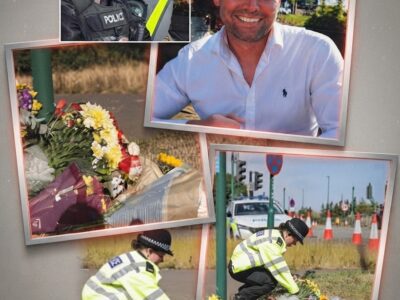
PC Matthew Blades, 37, and PC Tom Clough, 38, died in the early hours of Saturday, August 22, when a Volkswagen Passat carrying five young men travelled the wrong way along the A66 near Middlesbrough and collided head-on with their marked Cleveland Police vehicle.
All five occupants of the Passat also died.
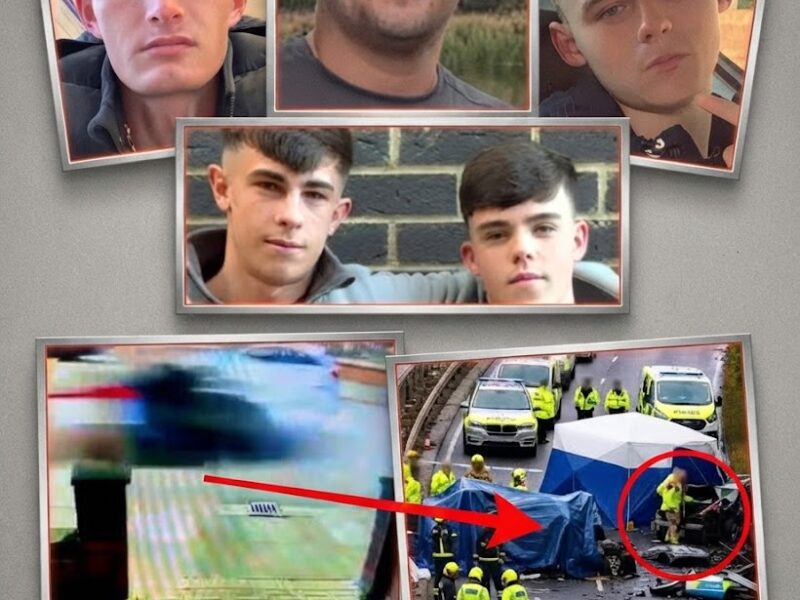
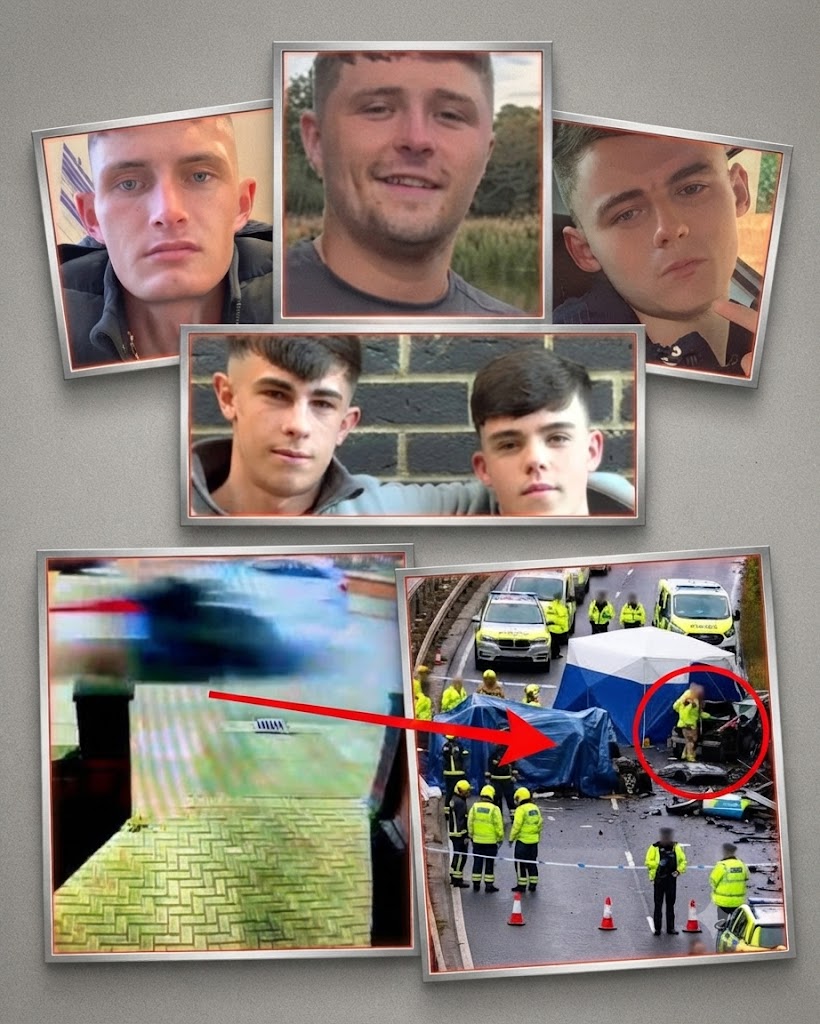
The five have been identified as Cole Robert Worthy, 17, Theo Rae, 17, Makai Saddington, 18, and Michael Robert Cahill and Jakub Matusiak, both 23. Four of the five — Worthy, Rae, Saddington and Matusiak — had previous convictions. Cahill had none.
The crash is now being investigated alongside a wider police operation involving alleged serious organised criminality in the Teesside area.
As of Wednesday, Cleveland Police said 17 people had been arrested in connection with the investigation, including people suspected of participating in an organised crime group, firearms offences, drug-related offences and other alleged crimes.
Authorities have repeatedly urged the public not to jump to conclusions while investigators establish exactly what happened in the minutes and hours before the collision.
What happened on the A66?
The fatal collision happened at approximately 3:39 a.m. on Saturday near South Bank in Middlesbrough.
According to police and subsequent reporting, the Passat had been pursued by Cleveland Police before entering the A66 travelling in the wrong direction.
The vehicle then collided with the marked police car carrying PC Blades and PC Clough.
The BBC reported that the police pursuit had ended before the crash and that the police vehicle was in the area when the collision occurred.
Other reports have focused on the extremely high speed of the Passat in the moments before the crash and on questions surrounding the pursuit.
The Independent Office for Police Conduct, or IOPC, launched an investigation into the circumstances surrounding the collision.
That investigation is particularly important because the crash involved a police pursuit and resulted in the deaths of two officers.
Rather than relying on speculation about what happened, investigators are expected to examine evidence including police communications, vehicle data, CCTV, eyewitness accounts and the precise sequence of events leading to the collision.
The 37 convictions
The disclosure of the four men’s previous convictions has attracted considerable attention because of the number involved.
According to information reported by The Independent, the four had pleaded guilty to 37 offences between October 2023 and June 2026.
The offences varied considerably.
Theo Rae had accumulated 12 shoplifting offences between October 2023 and May 2024. His record also included theft of a vehicle, three offences involving theft from vehicles, two aggravated vehicle-taking offences and possession of cannabis.
Makai Saddington had pleaded guilty to possession of a Class C drug and possession of a knife in a public place. His convictions also included four offences involving assaults on police officers and a racially aggravated intentional harassment offence.
Cole Worthy had convictions involving driving offences, abusive language and failing to surrender to custody.
Jakub Matusiak had pleaded guilty to driving without a licence and driving without insurance.
The figures provide important context, but they do not by themselves establish what each individual was doing immediately before the fatal crash.
Nor do previous convictions establish guilt for any other suspected offence under investigation.
That distinction is particularly relevant as detectives examine whether the events leading to the collision were connected to wider criminal activity.
The most serious element: alleged organised crime
The criminal histories are only one part of the developing investigation.
Cleveland Police has said the five men in the Passat may have been associated with serious and organised criminal activity.
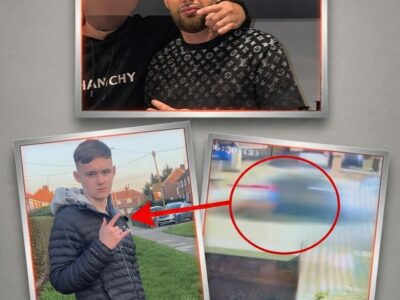
Police also believe the Passat occupants were associated with another vehicle that was reportedly seen being driven dangerously and ramming properties in Middlesbrough earlier that morning.
The investigation subsequently expanded significantly.
Five additional arrests announced Tuesday brought the total number of people arrested to 17.
Those arrested included a 16-year-old boy, an 18-year-old and a 21-year-old on suspicion of participating in an organised crime group. A 55-year-old was arrested on suspicion of assisting an offender, while a 23-year-old was arrested over an allegation involving threats to kill.
Earlier arrests included allegations involving firearms and drugs.
Two people had already appeared in court in connection with separate allegations. One, 19-year-old Kai Beattie, was charged with possession of a firearm with intent to endanger life. Another, 26-year-old Cameron George, was charged with drugs offences and possession of criminal property.
Police have not suggested that every person arrested is directly responsible for the fatal crash.
The arrests are part of a broader investigation into criminal activity surrounding the events.
The tragedy behind the statistics
While the investigation has increasingly focused on criminal histories and organised crime, the A66 collision remains first and foremost a tragedy involving seven deaths.
PC Blades and PC Clough were both serving Cleveland Police officers.
Their families have described them as devoted and highly regarded members of their communities.
PC Blades, 37, was remembered as a family man and football coach, while PC Clough, 38, had previously served in the military before joining the police.
His family described him as their “hero” and remembered his sense of humour and willingness to help others.
Tributes have poured in for the two officers, while their colleagues have spoken about the devastating impact of losing them in the line of duty.
A fundraising campaign for their families has also attracted significant public support.
By Wednesday, reports indicated that more than £1 million had been raised for the families of the two officers.
The five young men who died in the Passat have also been mourned by relatives and friends.
The competing emotions surrounding the tragedy have contributed to a highly charged atmosphere in the local community.
A controversial memorial
That tension became particularly visible after a gathering was held in memory of Jakub Matusiak.
According to reports, hundreds of people attended the gathering, where masked youths reportedly lit flares and fireworks.
The event prompted criticism from members of the public who felt that such a display was inappropriate given that two police officers had died in the same crash.
Others have argued that relatives and friends are entitled to mourn the people they knew, regardless of their previous convictions.
The controversy illustrates one of the most difficult aspects of the case.
The five people in the Passat were both victims of the collision and, according to police records, four had previous convictions.
Those two facts can exist simultaneously.
The criminal histories may be relevant to understanding the circumstances surrounding the crash, but they do not erase the grief experienced by their families.
At the same time, the deaths of the two police officers have understandably generated profound anger and sympathy across the region.
Questions about dangerous driving and social media
The A66 crash has also reignited debate over dangerous driving among young people and the role of social media.
Some reports have highlighted videos allegedly connected to people involved in the wider investigation, including footage appearing to show high-speed driving.
That has led to renewed concern over the online glorification of reckless driving.
The British government has called on social-media companies to tackle content that appears to celebrate dangerous driving, particularly videos designed to generate attention through high-speed stunts and so-called joyriding.
The issue is not unique to Middlesbrough.
Police and road-safety campaigners have increasingly warned that videos depicting dangerous driving can turn reckless behaviour into entertainment, particularly when young people compete for online attention.
But authorities face a difficult task in determining whether social-media content played any direct role in the A66 crash.
At this stage, it would be premature to claim that online activity caused the collision.
Investigators must establish the facts surrounding the specific vehicle, its occupants and the decisions made in the minutes before the crash.
The pursuit question
Perhaps the most consequential unanswered question concerns the police pursuit.
The Passat had been followed by police before the fatal collision, but the exact sequence of events remains under investigation.
The BBC reported that the pursuit had ended before the crash.
That distinction could prove important.
The IOPC investigation is expected to examine the actions and decisions of police officers involved in the pursuit, alongside the behaviour of the Passat occupants.
Such investigations routinely consider whether police policies were followed, what information officers had available at the time, how the pursuit developed and whether any decisions could have altered the eventual outcome.
It is essential, however, not to confuse an investigation with an allegation of wrongdoing.
The deaths of two police officers do not automatically mean the pursuit was improperly handled, just as the criminal histories of the Passat occupants do not automatically explain why the vehicle entered the A66 in the wrong direction.
Those questions require evidence.
A community struggling to process seven deaths
The A66 tragedy has now become more than a fatal road collision.
It has triggered a criminal investigation, a police-conduct investigation, debate over dangerous driving, scrutiny of social-media platforms and a wider conversation about serious organised crime in the Teesside area.
Yet at the centre of all of it are seven families dealing with an unimaginable loss.
PC Matthew Blades and PC Tom Clough died while serving as police officers.
Five young men — Cole Worthy, Theo Rae, Makai Saddington, Michael Cahill and Jakub Matusiak — also lost their lives.
The revelation that four of the five had accumulated 37 convictions has understandably intensified public scrutiny.
But investigators still have to separate what is known from what remains unproven.
What is established is that a Volkswagen Passat travelled the wrong way along the A66 and collided with a marked police vehicle, killing seven people. Four of the five Passat occupants had previous convictions, and Cleveland Police is investigating possible links to serious organised criminality.
What remains to be determined is the full chain of events that led to the crash.
As detectives continue their work and the IOPC examines the police response, the most important unanswered questions are likely to concern those final minutes: why the Passat was being pursued, why it entered the A66 in the wrong direction, what happened immediately before the collision, and whether any earlier events were connected to the wider criminal investigation.
Until those questions are answered, the A66 tragedy remains a case where the known facts are already deeply disturbing — but where some of the most consequential details are still being established.