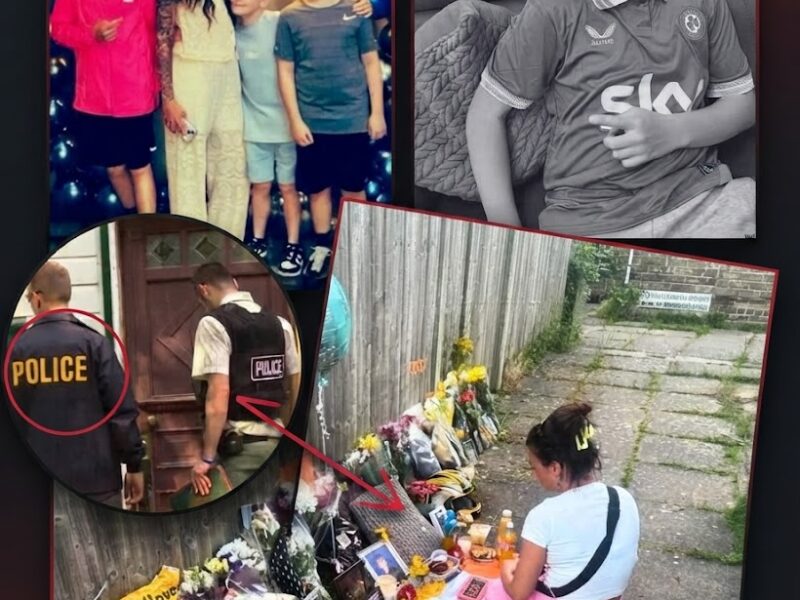
14-Year-Old Leo Gurr Dies After Fleeing Home During Police Visit — Mother Demands Answers Over Bodycam Footage
💔 A 14-YEAR-OLD BOY RAN FOR HIS LIFE — AND HIS MOTHER SAYS THE POLICE BODYCAM STORY DOESN’T ADD UP.
Leo Gurr had autism and a heart condition. After officers arrived at his home, he fled barefoot. He was later found collapsed — and died.
Now his mother wants answers about what officers did, what their cameras captured, and what happened before Leo’s final moments. Read the full story 👇
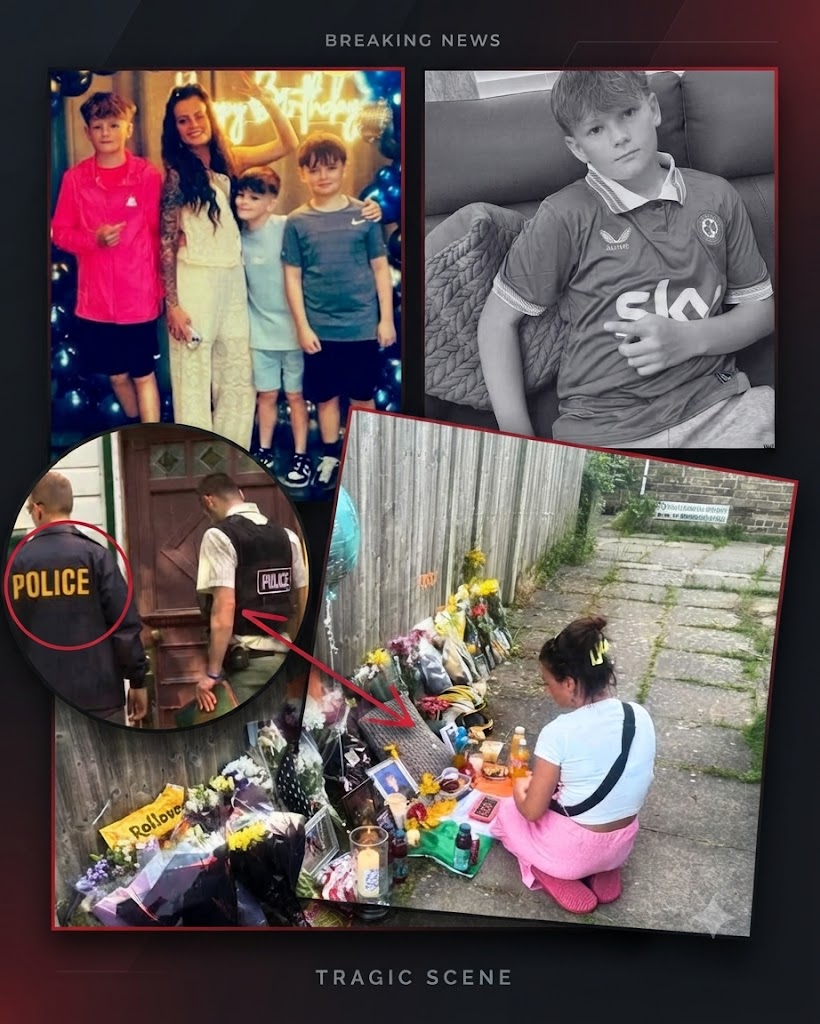
14-Year-Old Leo Gurr Dies After Fleeing Home During Police Visit — Mother Demands Answers Over Bodycam Footage
The death of 14-year-old Leo Gurr in Southampton has raised difficult questions for his family about what happened during a police visit to their home shortly before he collapsed and died.
Leo, who had autism and a known heart condition, ran barefoot from his family home on June 21 after officers arrived to make enquiries connected to an earlier assault allegation. He was found collapsed in an alleyway near the property more than an hour later.
His mother, Shannon Gurr, believes the encounter may have caused her son severe distress and is particularly questioning the way officers approached the house and what happened to their body-worn video recordings.
Police, however, have rejected suggestions that officers acted improperly. Hampshire and Isle of Wight Constabulary said an internal review found no evidence of criminality or misconduct, while the Independent Office for Police Conduct (IOPC) agreed that no further investigation or action was required. The coroner’s investigation into Leo’s death remains ongoing.
The police visit that preceded Leo’s death
According to reports, officers went to the Gurr family’s home in Binstead Close shortly after 11 a.m. on June 21.
The visit was connected to enquiries into an alleged assault at a nearby park several weeks earlier. Shannon has said her son had been mistakenly identified in connection with the incident and was subsequently cleared.
Leo was at home with his two younger brothers when officers arrived.
Shannon says she was contacted and returned home shortly afterwards. She says she told officers that Leo was frightened and would come out once he had calmed down.
Instead, according to his mother, Leo became increasingly distressed and fled through the back of the property without putting on shoes.
That detail has become one of the central parts of the family’s account of the tragedy.
Shannon has said Leo’s autism and ADHD could contribute to a fight-or-flight response when he was frightened or overwhelmed. She also says his heart condition made emotional stress particularly concerning.
She has questioned why officers did not contact the family beforehand or use a less intimidating approach.
Leo had a serious medical history
Leo’s family says his heart condition had been diagnosed earlier in 2026 following an incident involving a minibus while he was riding an e-scooter.
His mother says the condition resulted in an official medical care plan and changes to his lifestyle. She has also argued that police records contained information about his medical condition.
Shannon believes that information should have been considered before officers approached the home.
That allegation, however, remains a claim made by the family rather than an established finding that police ignored a known medical warning.
The precise medical cause of Leo’s death has also not been publicly established.
Hampshire Police said a file had been prepared for the coroner, who would investigate the circumstances and determine the cause of death.
Leo was found collapsed nearby
After running from the property, Leo was not immediately located by his family.
At approximately 12:17 p.m., members of the public found him collapsed in an alleyway near Binstead Close and called emergency services.
Police said they were contacted at 12:29 p.m. by South Central Ambulance Service, which was already treating Leo.
Paramedics and an air ambulance crew attempted to save him, but he was pronounced dead.
His family later described Leo as a “larger-than-life character” who was always laughing and loved motorbikes and pushbikes.
In a tribute released through Hampshire Police, his family said the loss had left them devastated and thanked neighbours and emergency crews who attempted to help him.
For his mother, however, grief has been accompanied by a demand for a clearer explanation of exactly what happened during those crucial minutes.
The bodycam question
One of the most contentious issues involves the officers’ body-worn video.
Shannon says she was shown footage from the police visit and believes it captured officers knocking on the property, calling Leo’s name and appearing to see him inside.
She has questioned why the cameras were subsequently deactivated and believes the footage should provide a complete account of the encounter.
Hampshire Police has given a different explanation.
The force said officers activated their body-worn cameras at the front door. When there was no answer and they moved away from the property, the cameras were deactivated in accordance with normal procedure.
Police also said there was no information available to officers indicating that Leo was inside the property.
The force said body-worn video was later activated again when officers met members of Leo’s family after telephone contact had been established.
The issue was specifically considered during the subsequent review.
That distinction is important because the available evidence does not establish that officers deliberately switched off their cameras to conceal what happened. The allegation comes from Leo’s mother, while the police explanation is that the deactivation followed normal procedure.
What did the police investigation find?
Following Leo’s death, Hampshire and Isle of Wight Constabulary made a mandatory referral to the IOPC because there had been police contact with him shortly before his death.
The IOPC decided that it did not need to direct an investigation, saying the information available did not indicate that police action or inaction may have caused or contributed to Leo’s death.
Hampshire Police subsequently carried out a Death or Serious Injury review through its Professional Standards Department.
According to the force, investigators found no evidence that any officer had committed a criminal offence or behaved in a way that would justify disciplinary proceedings.
The review also considered the use and content of body-worn video.
The IOPC later reviewed the findings and agreed with the conclusions.
Two officers nevertheless received individual learning points as part of their continuing professional development, although the review did not identify wider organisational changes that were considered necessary.
That conclusion has not ended the family’s concerns.
Shannon has indicated that she intends to pursue further answers and potentially make a complaint.
Online reaction has been sharply divided
The case has also generated strong reactions online.
Posts discussing Leo’s death have attracted expressions of sympathy from members of the public, alongside demands that the police be held accountable.
One widely circulated social-media post described the incident as evidence that police had “scared” Leo to death. Comments included calls for accountability and condolences to his family.
But other commenters have challenged that interpretation, arguing that visiting a home to speak with a potential witness or suspect does not by itself demonstrate wrongdoing and that Leo’s death should not automatically be attributed to the police.
Those conflicting reactions highlight one of the central difficulties surrounding the case: the sequence of events is established, but the causal relationship between the police visit, Leo’s distress, his subsequent flight and his death has not been established publicly.
Social-media claims that police “knew” they were directly putting Leo in danger, or that officers deliberately disabled their cameras to hide evidence, should therefore be treated as allegations rather than proven facts.
A family still waiting for answers
For the Gurr family, the tragedy is ultimately about much more than a police procedure.
Leo was the eldest of three brothers. His family described him as energetic, funny and deeply loved.
His enthusiasm for motorbikes and bicycles was a major part of his personality. His family said they hoped he was still “riding that back wheel” wherever he was.
His death has left them trying to understand how a routine police enquiry could be followed so quickly by an unimaginable loss.
The family wants answers about the officers’ approach, the information available to them about Leo’s medical condition, what the bodycam recordings show and whether anything could have been done differently.
Those are questions that cannot be settled by social-media speculation.
The coroner’s investigation remains the key process for establishing the medical circumstances surrounding Leo’s death. Hampshire Police has said its file has been prepared for the coroner, who will examine the circumstances and determine the cause of death.
Until that process is complete, it remains unproven that the police encounter caused Leo’s death.
What is beyond dispute is the devastating sequence that his family has been left to live with: a 14-year-old boy with significant medical vulnerabilities became frightened during a police visit, ran from his home barefoot, collapsed nearby and died despite emergency efforts to save him.
And while investigators have so far found no evidence of police misconduct, his mother’s questions about those final moments have not gone away.
For Shannon and Leo’s father, Lee, the search for answers is now part of the process of trying to understand what happened to their son — and whether anything about that day could have been different.