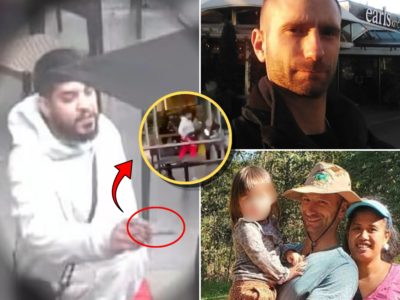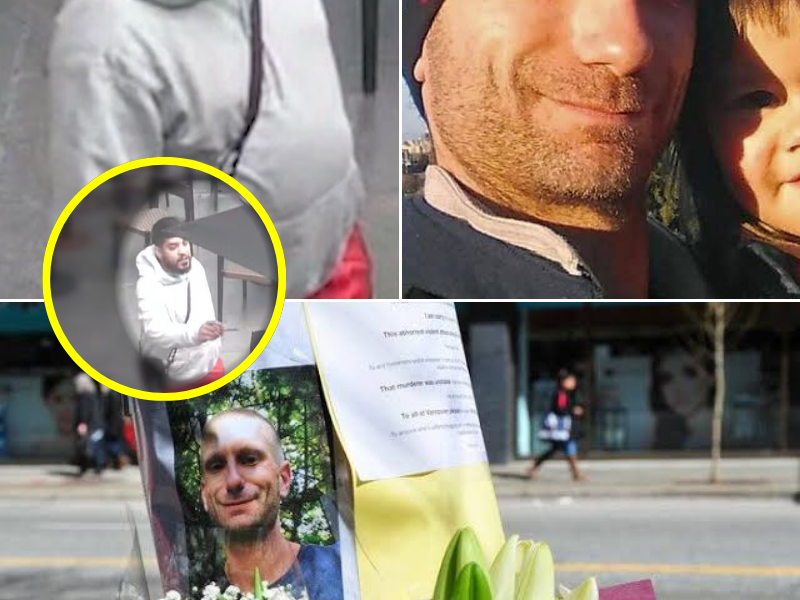
Anatomy of a Verdict: How a Vancouver Coffee Shop Stabbing Trial Shook the Public with a Manslaughter Ruling
The ordinary rhythm of an afternoon outside a downtown Vancouver coffee shop shattered in a matter of seconds, transforming a routine errand into a horrific crime scene that horrified onlookers and shocked the nation. Paul Schmidt had been pushing his toddler daughter in a stroller when an innocuous dispute quickly escalated into a violent confrontation outside the establishment. Within moments, Schmidt had suffered six fatal stab wounds during a frantic altercation captured vividly on surveillance and cell phone footage. What followed was a high-stakes legal battle in the B.C. Supreme Court that ultimately centered on a single, highly contentious question: whether the fatal attack constituted second-degree murder, or a deadly, panic-driven overreaction born from mental illness and a sudden physical struggle.
The trial placed the chaotic final moments under intense judicial microscope, laying bare the sequence of events that led to the bloodshed. Evidence presented before Justice Kathleen Ker established that Schmidt had approached Inderdeep Singh Gosal, who was smoking near the entrance, triggering a heated verbal exchange that rapidly turned physical. CCTV footage reviewed by the court showed that Schmidt was the initial aggressor, physically confronting Gosal and throwing him to the ground during a violent struggle that lasted a mere twenty-eight seconds. Pinned and facing a physical disadvantage, Gosal pulled a knife from his pocket and delivered the six strikes that ended Schmidt’s life in front of shocked pedestrians and his young family member.
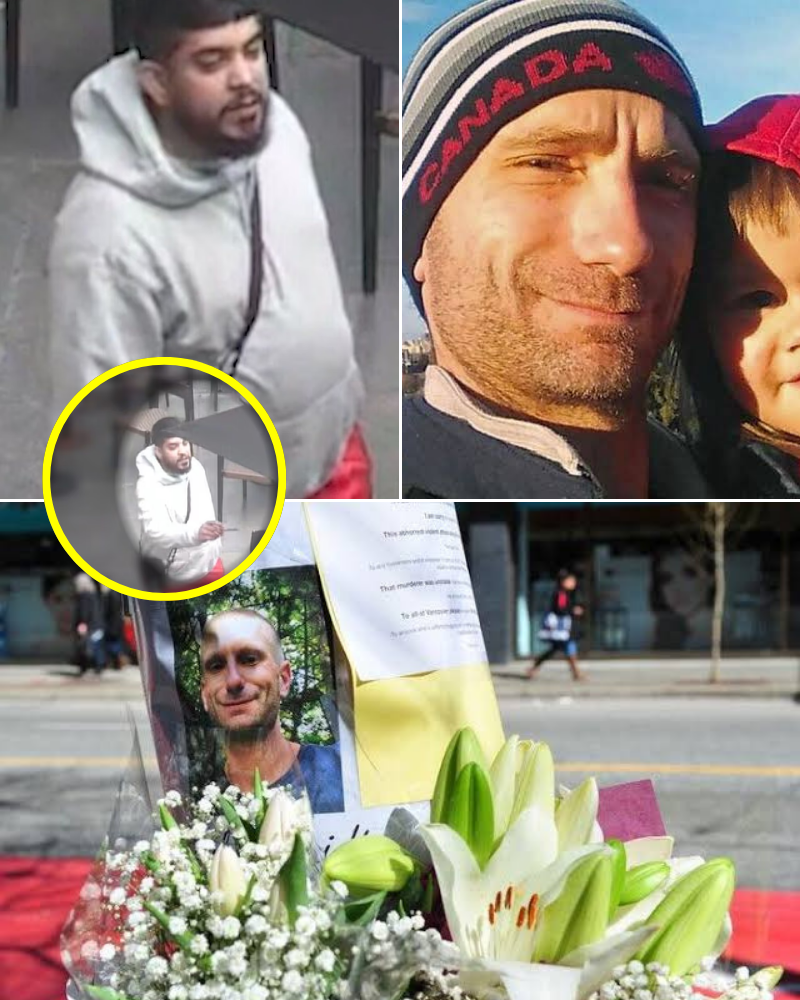
The defense argued heavily that Gosal suffered from severe, unmanaged schizophrenia, testifying that he had stopped taking his prescribed medication months prior and was operating under a distorted perception of reality. Medical experts and defense counsel maintained that the rapid escalation represented a tragic overreaction driven by panic and psychological impairment rather than a calculated, premeditated intent to kill. Conversely, Crown prosecutors pushed for a conviction of second-degree murder, contending that Gosal was fully aware of his actions and that repeatedly plunging a blade into a victim demonstrated a clear subjective foresight of death. They pointed to inconsistencies in Gosal’s post-arrest statements and argued that his mental state did not negate his core criminal accountability.
In delivering her verdict, Justice Ker walked through the complex web of evidence, balancing the chilling physical reality of the six stab wounds against the mitigating context of the sudden physical brawl. The court ruled that because Schmidt initiated the physical altercation and gained the upper hand in the scuffle, reasonable doubt existed regarding whether Gosal formulated the specific, deliberate intent required to sustain a murder conviction. Citing the chaotic dynamics, the brief duration of the struggle, and the interplay of mental impairment and fear, the judge ultimately downgraded the charge, finding Gosal guilty of the lesser offense of manslaughter.
The controversial outcome sent immediate shockwaves through the community, reigniting fierce public debates over how the legal system draws the boundary line between murder and manslaughter. For grieving family members and outraged observers, the reduction of the charge felt like a severe miscarriage of justice that failed to reflect the brutal finality of losing a father on a public sidewalk. Legal analysts, meanwhile, noted that the case highlights the immense difficulty judges face when evaluating criminal intent inside fast-moving, high-adrenaline confrontations complicated by psychiatric disorders. As the judicial process moves toward sentencing, the haunting memory of a father attacked while tending to his child remains an enduring symbol of a tragedy where no legal verdict could ever truly restore balance.