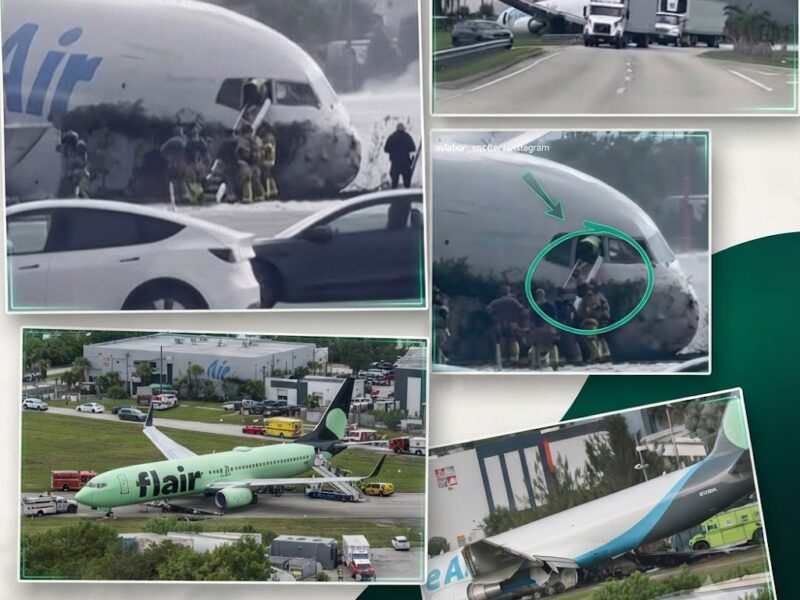
“PUT YOUR GAME FACES ON”: CHILLING DISPATCH AUDIO REVEALS FIRST RESPONDERS COUNTING THE DEAD AFTER AMAZON CARGO JET’S CATASTROPHIC MIAMI RUNWAY OVERRUN
🚨 “PUT YOUR GAME FACES ON, THE PLANE IS ON FIRE!” — Chilling new dispatch audio exposes the absolute chaos on the tarmac in the devastating first seconds after an Amazon cargo jet barreled off the runway at Miami International Airport.
As 200 emergency responders swarmed the horrific scene, a grim reality quickly set in. Radio exchanges captured the exact moment first responders began tallying the casualties—dropping chilling code updates while battling raging flames and trapped victims.
But what emergency crews discovered just feet away from the wreckage—and the bizarre detail about a nearby staging area that federal investigators are now scrambling to look into—has left aviation experts completely stunned.
Why did this flight fail to stop, and what was waiting right in the crosshairs of the disaster?
👇 Uncover the shocking audio breakdown, the victim toll, and the strange twist investigators are refusing to answer questions about:
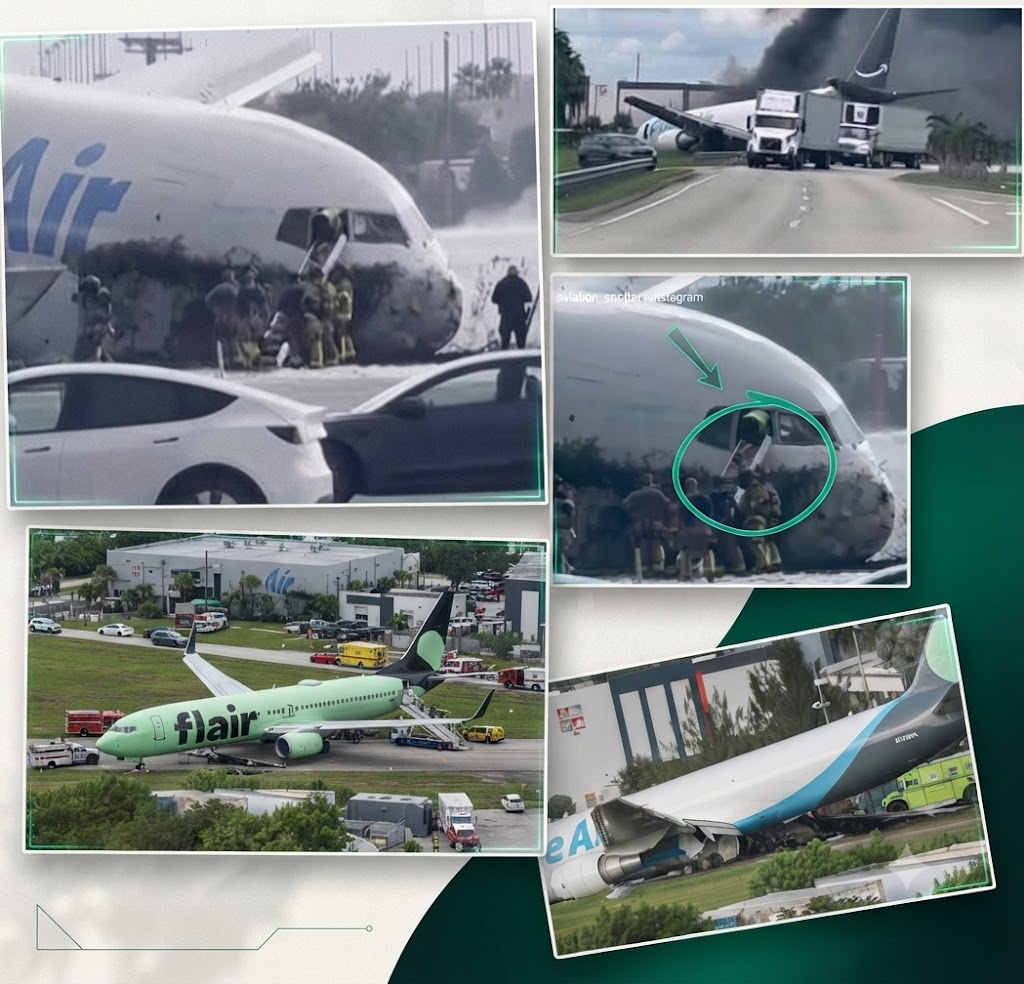
Newly leaked emergency dispatch audio has pulled back the curtain on the harrowing initial moments following the catastrophic crash of an Amazon Prime Air cargo jet at Miami International Airport, revealing a chaotic scene where first responders were forced to immediately transition from fighting a massive inferno to counting the dead.
The disaster unfolded Sunday afternoon when a Boeing 767 cargo aircraft operating flight 7598—traveling from San Juan, Puerto Rico—overran the airport’s diagonal runway. The heavy jet crashed through the airport perimeter, crossing over 67th Avenue and plowing directly into multiple vehicles on the roadway before erupting in thick black smoke and intense flames.
The incident left five people dead and five others injured, dealing a devastating blow to individuals caught in the vehicle traffic outside perimeter boundaries as well as trapping flight crew members inside the wreckage.
“Put Your Game Faces On”
Audio recordings captured by Broadcastify and shared via emergency networks highlight the terrifying urgency faced by initial units on the scene. With more than 60 emergency units and approximately 200 personnel mobilized, the first wave of firefighters arrived to an active, volatile inferno.
“Guys, the plane’s on fire, the plane’s on fire, put your game faces on,” a first responder can be heard shouting over the radio channel.
As crews grappled with what Miami-Dade Fire Rescue Chief Raied ‘Ray’ Jadallah described as a “very complex situation” involving a severe engine compartment fire and leaking fuel, the grim task of triage began. Utilizing standard color-coded triage metrics—where black denotes deceased victims and red signifies critical injuries requiring immediate life-saving care—rescuers radioed back updates that underscored the unfolding tragedy.
“Rescue 12. So far we have four black, two reds,” one responder stated over the dispatch line, capturing the precise moment personnel realized the catastrophic human toll of the overrun. Firefighters also faced immense logistical hurdles, momentarily running low on water supply while working feverishly to extract individuals trapped beneath crushed vehicles and rescuing the pilot and co-pilot from the compromised cockpit.
Questions Mount Over Runway Conditions and Strange Proximity
As the National Transportation Safety Board (NTSB) and the Federal Aviation Administration (FAA) launch a full-scale joint investigation, public scrutiny has intensified over the structural layout and environmental factors surrounding the crash site.
Flight-tracking data indicates the Boeing 767 touched down at roughly 167 knots (approximately 192 mph) amid severe weather conditions that included thunderstorms and heavy tailwinds ranging between 20 and 30 knots. Investigators are actively reviewing whether the aircraft landed too far down the runway to achieve a safe stop, alongside examining the plane’s speed, braking mechanisms, and mechanical integrity.
Adding fuel to online speculation across platforms like X (formerly Twitter) and Reddit, aviation observers and local spotters pointed out another jarring detail: the aircraft came to a halt dangerously close to a staging area and parking lot containing dozens of unreleased Tesla Cybercabs. While federal authorities have concentrated entirely on the structural and human cost of the accident—noting the absence of an Engineered Materials Arresting System (EMAS) crushable bed at the runway end—the bizarre proximity of the robotaxis has triggered widespread questions regarding unauthorized airport storage or testing protocols.
Community and Institutional Response
In the wake of the tragedy, expressions of grief and pledges of cooperation have poured in. Amazon released a formal statement expressing deep sorrow for the victims and confirming its active collaboration with local and federal investigators.
“Right now, our absolute priority is the safety, well-being, and care of everyone involved,” an Amazon spokesperson shared via social media.
NTSB Chairwoman Jennifer Homendy described the crash site as a scene of “utter devastation,” noting that the vehicles struck—including a cleaning company van carrying workers—were completely torn apart by the impact. As forensic teams continue downloading data from the recovered flight data and cockpit voice recorders, communities in Miami and aviation safety advocates alike are left demanding answers as to how a routine cargo flight culminated in such unprecedented disaster on public roads.