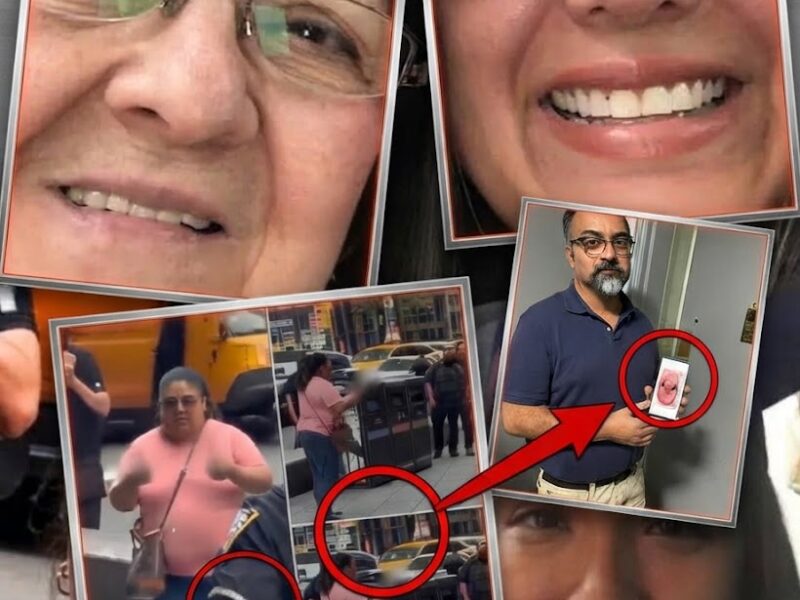
Four Minutes in Times Square: What Happened Before Police Opened Fire on Pamela Cisneros
FOUR MINUTES. THREE TASERS. TWO KNIVES. THEN EVERYTHING CHANGED.
For nearly four minutes, NYPD officers stood face-to-face with Pamela Cisneros in the middle of Times Square.
They repeatedly told her to put the knives down.
She didn’t.
Three officers tried Tasers.
They appeared to have no effect.
Then Pamela allegedly moved toward the officers — and the confrontation suddenly reached its final seconds.
But now, the biggest questions aren’t only about what happened.
They’re about what happened during those four minutes.
Could the situation have ended differently?
Why didn’t the Tasers stop her?
And what exactly happened in the moments immediately before officers made their final decision?
New details are putting those four minutes under a microscope…
👇 See what happened during the tense standoff — and why the police response is now being investigated.
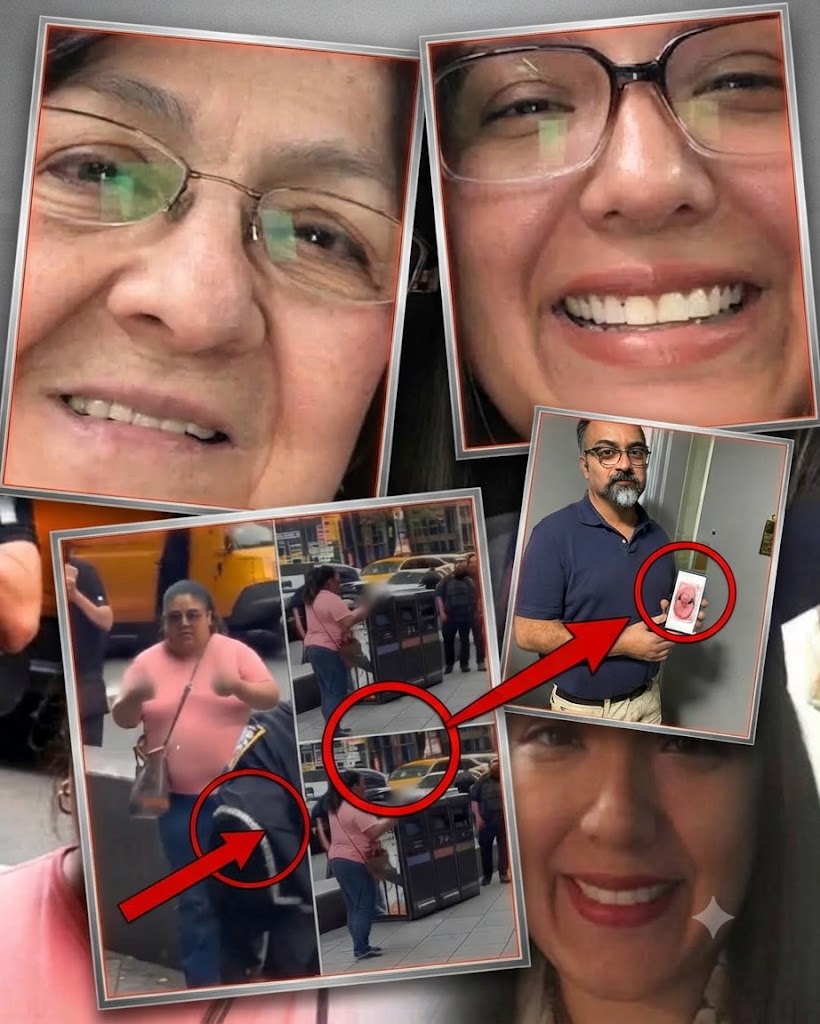
Four Minutes in Times Square: What Happened Before Police Opened Fire on Pamela Cisneros
The confrontation lasted roughly four minutes.
In that short stretch of time, New York City police officers tried to persuade Pamela Cisneros to put down the knives she was carrying. Three officers deployed Tasers, but they appeared to have no effect. Then, according to authorities, Cisneros moved toward the officers while still holding the weapons.
Two officers fired their service weapons.
Cisneros was taken to Bellevue Hospital, where she was pronounced dead.
Now, those four minutes are becoming one of the most closely examined parts of the Times Square tragedy.
The New York Attorney General’s Office has opened an investigation into the police-involved death, while officials, law-enforcement experts and members of the public debate whether the confrontation could have ended differently.
A confrontation that began after two attacks
The police encounter came moments after Cisneros allegedly attacked two strangers in the heart of Midtown Manhattan on Aug. 31.
Authorities identified Cisneros as a 49-year-old Queens woman. Police said she first attacked 68-year-old Tak Kam near West 41st Street and Seventh Avenue. Shortly afterward, she allegedly attacked Erin Piacenti, a 32-year-old Bank of America vice president who was returning home from work.
Piacenti later died from her injuries. Kam survived and was hospitalized before being reported in stable condition. Police described the attacks as random and unprovoked and said there was no indication that terrorism was involved.
After the attacks, Cisneros moved toward the area around West 42nd and West 43rd streets.
That was where officers encountered her.
According to the Attorney General’s preliminary account, Cisneros was holding a knife in each hand when officers confronted her at approximately 4:26 p.m.
They ordered her to drop the knives.
She did not comply.
What followed would last approximately four minutes.
Four minutes of commands
Police Commissioner Jessica Tisch said officers repeatedly attempted to get Cisneros to surrender.
Videos of the encounter show officers forming a semicircle around her while pedestrians and vehicles remained nearby. Cisneros could be seen holding knives in both hands as officers attempted to control the situation from a distance.
The Attorney General’s Office says three officers discharged Tasers during the confrontation.
The Tasers had no apparent effect.
According to the preliminary account, Cisneros then allegedly moved toward the officers while continuing to hold the knives.
Two officers fired their service weapons, striking her.
She was transported to Bellevue Hospital, where she was pronounced dead.
The sequence appears straightforward on paper.
But the questions surrounding those four minutes are anything but simple.
Why didn’t the Tasers stop her?
One of the most discussed details has been the apparent failure of the Tasers.
A retired NYPD detective who previously worked as a Taser instructor explained that conducted-energy weapons do not necessarily stop a person every time they are deployed.
According to Artur Sadowski, the electrical circuit generally needs effective contact from the probes to produce the intended muscular effect. Clothing, poor probe placement or a failure to establish the necessary circuit can reduce their effectiveness.
That means the fact that multiple Tasers were deployed does not necessarily mean Cisneros was successfully incapacitated and simply continued moving.
The available accounts indicate that the officers tried the less-lethal option, but it did not produce the desired result.
That detail is important because it helps explain why the situation escalated so quickly.
It also raises another question: what options remained once those attempts failed?
The question of distance
Several law-enforcement experts who reviewed video of the encounter said the officers’ decision to use their firearms was justified by the immediate threat posed by a person carrying knives who was moving toward them.
But some experts also criticized aspects of the officers’ positioning and tactics.
The New York Times reported that experts questioned why the surrounding area had not been more effectively cleared and expressed concern that pedestrians and other officers could potentially have been in the line of fire.
That does not necessarily mean the final use of force was unjustified.
Instead, it highlights the distinction between two separate questions:
Was the decision to use firearms reasonable once Cisneros moved toward officers?
And:
Could the preceding moments have been handled differently to reduce the risk of reaching that point?
Those questions can have different answers.
One does not automatically settle the other.
Could mental-health professionals have changed the outcome?
The case has also reopened a larger debate in New York over how police respond to people experiencing apparent mental-health crises.
Cisneros had a documented history of mental-health struggles, according to police and members of her family.
Her brother, Patrick Peralta, told reporters that she had been receiving treatment and that the family believed she had been doing better. Her father also described years of serious difficulties and previously said she had attempted to jump in front of a subway train in 2019.
That history has prompted questions about whether a mental-health professional might have been able to de-escalate the situation.
Mayor Zohran Mamdani has previously advocated for greater use of mental-health professionals in crisis responses and has discussed changing how the city handles people experiencing mental-health emergencies.
But whether such an intervention would have changed the Times Square encounter remains unknown.
There is no evidence establishing that a different responder would necessarily have produced a different outcome.
The circumstances were changing rapidly, in a crowded public location, after two people had already been attacked.
What police say happened
The NYPD has defended the officers involved.
Commissioner Tisch said officers spent approximately four minutes attempting to get Cisneros to drop the knives before the final escalation.
Officials have also pointed to the fact that she allegedly continued moving toward officers after multiple attempts to stop her with Tasers.
Mayor Mamdani similarly defended the officers and said their intervention prevented the situation from becoming even worse.
From the department’s perspective, the central issue was immediate danger.
Officers were confronted by an armed person who had allegedly just attacked two strangers and who, according to police accounts, refused repeated commands to surrender.
But the official explanation does not end the investigation.
It begins it.
Why the investigation matters
On Sept. 2, New York Attorney General Letitia James’ Office of Special Investigation announced that it had opened an investigation into Cisneros’ death.
Under New York law, OSI reviews incidents in which a police or peace officer may have caused a person’s death.
The office emphasized that the facts released at this stage are preliminary and may change as investigators examine evidence.
That evidence is expected to include body-camera footage, witness accounts, physical evidence and other information surrounding the encounter.
The body-camera footage is particularly significant because the four-minute confrontation cannot be fully understood from a few seconds of publicly circulating video.
A short clip can show the final movement.
It cannot necessarily show everything that happened before it.
That distinction matters in a case where the precise sequence of commands, Taser deployments, movements and firearm use is central to determining what happened.
The internet has already reached its own conclusions
Even before investigators complete their work, social media users have begun drawing competing conclusions.
Some argue that the officers had little choice once Cisneros continued approaching them with knives.
Others question whether the officers could have created more distance, cleared the area or used additional de-escalation tactics.
The debate has become particularly intense because the incident happened in one of the busiest public spaces in New York, where any additional movement could potentially put other people at risk.
Online discussions have also focused heavily on the apparent Taser failure and on whether police should have used other methods before resorting to firearms.
But social-media reactions should not be confused with investigative findings.
The Attorney General’s Office has not yet issued a final determination.
The four minutes that remain unanswered
The most important unanswered questions are therefore not necessarily about what happened in the final seconds.
They are about everything that happened before them.
How many commands were given?
What exactly did officers say?
How did Cisneros respond?
Where were the officers and bystanders positioned?
Exactly when were the Tasers deployed?
Did any of the probes make effective contact?
How quickly did Cisneros move toward officers?
And what did each officer see immediately before the firearms were discharged?
Those details could determine how the encounter is ultimately understood.
For now, the publicly available evidence establishes a basic sequence: officers encountered an armed Cisneros, attempted to make her surrender for roughly four minutes, deployed Tasers without apparent effect, and then fired after she allegedly moved toward them with the knives.
Everything beyond that requires caution.
A tragedy now under two separate lenses
The Times Square incident is being examined from two directions at once.
The first is the human tragedy.
Erin Piacenti lost her life after allegedly being attacked by a stranger while simply making her way home. Tak Kam survived his injuries. Cisneros herself also died after the confrontation with police.
The second is the question of whether the final police encounter was unavoidable.
Experts interviewed after the incident largely agreed that the armed advance created a serious threat, while some raised concerns about tactics and positioning during the preceding minutes.
Those questions will not be settled by a viral video or a social-media argument.
They will depend on the full evidence.
And that is why the four minutes before the final shots may ultimately prove just as important as the few seconds that followed.
For now, New York is still waiting for the investigation to determine exactly what happened — and whether anything in those four minutes could have changed the ending.