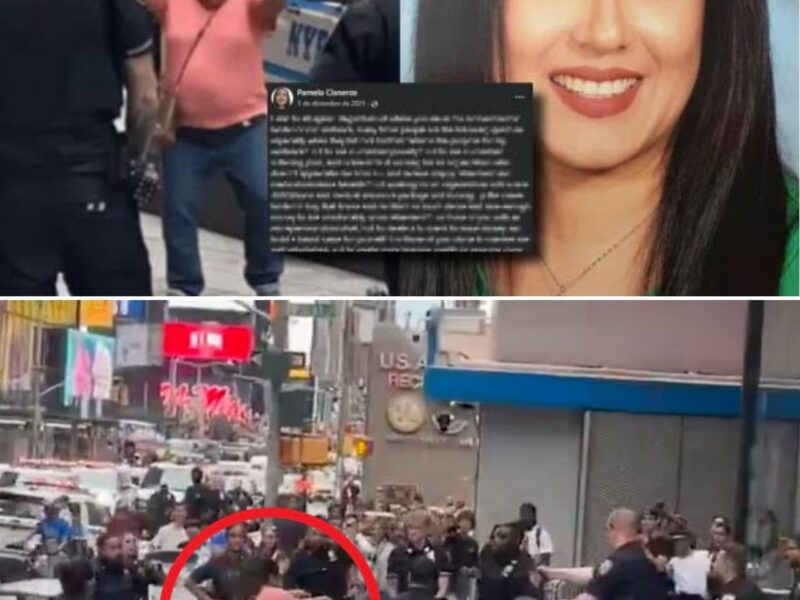
Pamela Cisneros Was Also a Victim of America’s Mental-Health Crisis, Some Now Argue
“SHE WAS ALSO A VICTIM.”
Pamela Cisneros’ family says she battled serious mental-health problems for years — yet appeared stable shortly before the Times Square tragedy.
Now, many are asking: Did America’s mental-health system fail her long before that day?
Her story is sparking a painful debate about a crisis affecting countless families across the country. 👇
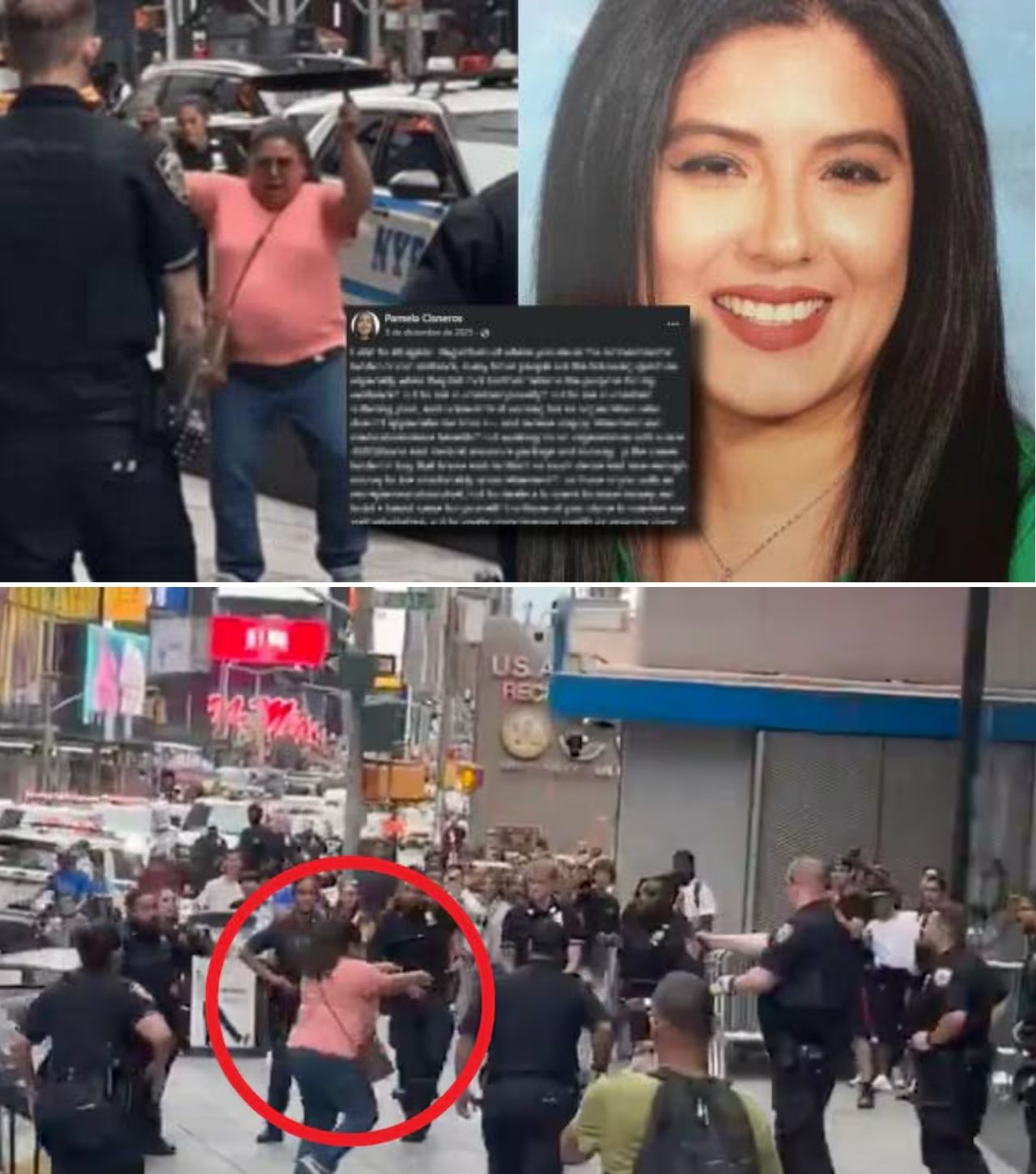
Pamela Cisneros Was Also a Victim of America’s Mental-Health Crisis, Some Now Argue
The Times Square tragedy has left New York mourning a young mother while raising another uncomfortable question far beyond the crime itself: What happens when someone struggling with serious mental-health problems falls through the cracks of the system?
Pamela Cisneros, 49, has been identified by police as the woman who allegedly attacked two people near Times Square on Aug. 31 before being shot by NYPD officers. Erin Piacenti, 32, a Bank of America vice president and new mother, later died from her injuries, while another victim, a 68-year-old man, survived.
Police described the attacks as random and unprovoked. Officers later confronted Cisneros on Seventh Avenue, where she was holding two knives. According to the New York Attorney General’s Office of Special Investigation, officers ordered her to drop the weapons and three officers deployed Tasers without apparent effect. She allegedly moved toward officers while holding the knives, after which two officers discharged their firearms. Cisneros was taken to a hospital and pronounced dead.
But as more details about Cisneros’ life have emerged, the story has taken on another dimension.
Her relatives say she had struggled with mental-health problems for years. Her brother, Patrick Peralta, said he believed she may have had bipolar disorder, although he was not certain of the exact diagnosis. He also said she had received treatment and that the family had not seen signs suggesting she would suddenly become violent.
That contrast has become one of the most disturbing elements of the case.
“She never showed any aggressiveness”
According to accounts from her family, Cisneros had experienced serious mental-health difficulties for many years, including a history of suicidal behavior. Her relatives described periods when treatment appeared to bring greater stability.
Her father also said she had been receiving regular medication injections and appeared to be doing relatively well shortly before the incident.
That is why her family’s reaction has been one of shock rather than recognition of someone they believed was destined to become violent.
Peralta has said he never knew his sister to be an aggressive person. In his account, the events in Times Square did not fit the woman he thought he knew.
The family has also raised questions about whether her treatment had remained consistent. However, suggestions that she may have stopped taking medication remain unconfirmed and should not be treated as an established explanation for what happened.
That distinction matters.
Mental illness by itself does not make someone violent, and millions of Americans living with mental-health conditions never commit violent acts. Experts and advocates have repeatedly warned against reducing complicated cases of violence to a diagnosis.
Still, the Cisneros case has forced attention onto another question: What happens when treatment, monitoring, family support and crisis intervention are not enough—or fail altogether?
A second victim in the same tragedy?
For some people following the case, that question has changed the way they view Cisneros.
Online discussions have included sympathy for the difficult circumstances surrounding her life and concern about the availability of effective mental-health care. The argument is not necessarily that Cisneros should be excused for what happened.
Rather, some believe two things can be true at the same time.
Erin Piacenti was an innocent victim whose life was devastatingly cut short.
And Pamela Cisneros may also have been someone whose own life had been deteriorating for years before the final confrontation.
That distinction is at the heart of the debate.
Piacenti, 32, had recently become a mother and had just returned to work from maternity leave when she was attacked. She was remembered by family and colleagues as a loving wife, mother and professional.
Her story makes the tragedy especially painful.
But Cisneros’ background raises a different kind of grief: the possibility that a person experiencing severe psychological distress was not adequately protected from herself—or from the consequences of a crisis that eventually became catastrophic.
America’s broader mental-health problem
The Times Square case arrives amid a long-running American debate over mental-health treatment.
Families frequently describe the difficulty of finding sustained care for relatives experiencing severe psychiatric symptoms. Emergency rooms can become temporary destinations rather than long-term solutions. Police officers are increasingly asked to respond to situations involving people experiencing psychological crises, even though officers are not mental-health professionals.
That creates a dangerous intersection.
A person may need medical intervention, while the immediate circumstances can simultaneously present a threat to other people.
Police then have seconds or minutes to determine what to do.
In Cisneros’ case, the NY Attorney General’s Office has opened an investigation into the circumstances surrounding her death. The preliminary account says officers attempted verbal commands and Tasers before two officers fired their weapons after Cisneros allegedly advanced toward them with knives. The investigation remains ongoing, and officials note that preliminary facts can change.
That investigation could ultimately provide a clearer picture of what happened during those final moments.
But it cannot answer the larger question by itself.
Could the tragedy have been prevented earlier?
This may be the question that stays with the public long after the Times Square investigation ends.
If Cisneros had a long history of mental-health difficulties, prior encounters with police and periods of instability, could an earlier intervention have changed the outcome?
There is currently no evidence proving that a particular intervention would have prevented the Times Square attack.
There is also no evidence that simply having a mental-health diagnosis inevitably leads to violence.
But the case illustrates why families often describe mental-health care as a continuum rather than a single appointment or medication.
Treatment requires continuity.
Crisis intervention requires resources.
Families need somewhere to turn when a relative begins deteriorating.
And police need alternatives when someone is experiencing a psychiatric crisis but has not yet committed a violent act.
When those pieces fail to connect, the consequences can be devastating.
Sympathy does not mean forgetting the victims
The growing sympathy for Cisneros online has also created an obvious tension.
Some people believe society should acknowledge the circumstances surrounding her mental-health struggles. Others worry that doing so risks shifting attention away from Erin Piacenti and the other person who was attacked.
Both concerns are understandable.
The most responsible interpretation may be that this tragedy should not be reduced to a simple story of “good versus evil.”
Piacenti did not choose to become part of this tragedy.
The other victim did not choose it either.
And Cisneros’ family clearly did not choose to watch someone they loved become involved in an incident that ended with her own death.
That complexity is precisely why the mental-health discussion matters.
The unanswered questions
Authorities still have important questions to answer about the attack itself, while Cisneros’ family is left with questions of a different kind.
What triggered the sudden escalation?
Was she receiving the treatment her family believed was helping her?
Did something change in the days before the attack?
Could another intervention have prevented the confrontation?
And perhaps most importantly: How many other Americans are currently struggling in silence, waiting until a crisis becomes impossible to contain?
Those questions cannot be answered simply by pointing to one diagnosis or one police encounter.
The Times Square tragedy was devastating because an innocent young mother lost her life and another person was seriously injured.
But the story of Pamela Cisneros has also exposed another painful reality: behind some of America’s most frightening public crises are families who may have been struggling privately for years.
That does not erase responsibility.
It does not diminish the victims.
But it may be a reason for society to look beyond the final four minutes of a tragedy—and ask what happened during the years that came before them.