Harry and Meghan Return to Britain With Their Children — But Their Security Fight Is Far From Over
🚨 THEY CAME BACK TO BRITAIN WITH THEIR TWO CHILDREN — AND THE STATE GAVE THEM A PHONE NUMBER.
Harry and Meghan are now living in Britain again, but their return has exposed a startling security dilemma: no regular state protection, despite warnings about the risks they could face.
A former royal protection officer called the arrangement “incredible” — and says private guards simply cannot see the intelligence or carry the weapons available to British police.
So what happens if the threat is already inside the information they cannot access? 👇
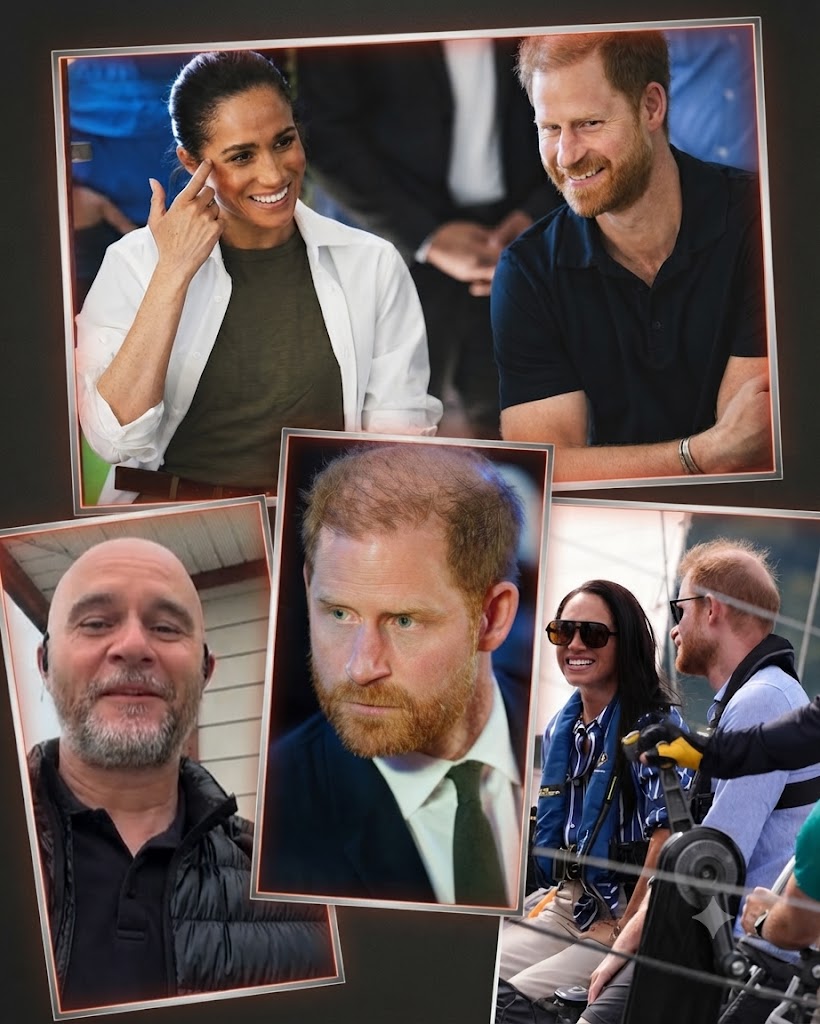
Harry and Meghan Return to Britain With Their Children — But Their Security Fight Is Far From Over
The Sussexes have returned to Britain with Archie and Lilibet, yet the family’s state protection remains unresolved — leaving Harry reliant on private security while a former royal protection officer questions whether that is enough.
Prince Harry and Meghan Markle have returned to Britain with their two children, beginning a new chapter for their family after more than six years living primarily in the United States.
But their homecoming has immediately revived one of the most contentious issues surrounding the Duke and Duchess of Sussex: security.
Harry and Meghan are not returning as working members of the Royal Family. They have instead established themselves as private individuals while maintaining their commercial and charitable interests.
That status has significant consequences when it comes to police protection.
Despite Harry’s return with Meghan, Prince Archie and Princess Lilibet, the family has not been given regular state-funded police protection.
Instead, they have been provided with the contact details for a police liaison officer.
To former royal protection officer Scott Hamer, that is nowhere near enough.
Speaking to ITV News, Hamer described the arrangement as “incredible” and bluntly argued that a telephone number is not protection.
“I have been involved in protection for 25 years,” Hamer said, describing the decision as extraordinary.
His comments have reignited the debate over whether Harry’s current security arrangements properly reflect the risks he faces — and whether the distinction between private and state protection becomes increasingly complicated when the person involved remains the son of the reigning monarch.
A Family Has Returned. The Old Security Arrangement Has Not.
Harry and Meghan arrived back in Britain in late August with Archie and Lilibet, after announcing plans to relocate their family from California.
The move marks a significant change.
The couple stepped down as senior working royals in 2020 and subsequently moved to North America, where they became responsible for their own security.
Their return is not a return to royal duties.
They are expected to live at a private, non-royal residence outside London, while their children begin school in Britain.
The family is also expected to retain links to the United States and continue its existing charitable and commercial activities.
But moving back to Britain creates an obvious security question that did not exist in quite the same way when the family was living permanently in California.
They will now spend considerably more time in the country where Harry’s family remains one of the most recognizable institutions in the world.
And that is where the dispute over protection becomes particularly important.
Why Harry Lost Automatic Police Protection
When Harry and Meghan stopped being working royals, their automatic royal protection was removed.
The Royal and VIP Executive Committee, known as RAVEC, is responsible for assessing the security requirements of high-profile individuals and determining whether state protection is justified.
The system is based on threat and risk rather than simply royal status.
That distinction has become central to Harry’s legal and public campaign.
Harry has argued that his circumstances remain sufficiently dangerous to warrant police protection while in Britain.
The Home Office, meanwhile, has maintained that decisions about protection must be made through the established security process.
The dispute eventually reached the courts.
Harry has also argued that his security arrangements changed after he stepped away from royal duties and that he was not being treated fairly.
The government has rejected the suggestion that protection can simply be purchased.
That principle is important.
Even though Harry and Meghan are willing and able to pay for private protection, private security does not automatically provide the same capabilities as a police protection operation.
The Difference Between Private Guards and the State
This is the part of the dispute that has attracted renewed attention following the family’s return.
Harry and Meghan employ private security personnel.
Those guards can protect the family physically, monitor surroundings and coordinate movements.
But they do not have the same access to government intelligence as British security and police agencies.
ITV reported that private protection personnel cannot access intelligence from MI5 and MI6 and cannot carry guns while operating in Britain.
That distinction is not merely technical.
A private security team may be able to see an immediate physical threat.
What it may not know is whether intelligence agencies have identified a developing threat before it becomes visible.
MI5’s official role is to protect the UK against national-security threats, while MI6 — formally the Secret Intelligence Service — gathers intelligence overseas. The two agencies work with police and other government bodies but have distinct missions.
That means the security question surrounding Harry is not simply:
“How many bodyguards does he have?”
It is also:
“What information do those bodyguards have?”
A Security Report Raised More Questions
The debate intensified in July when ITV News reported on a confidential security assessment prepared for Harry by his private security company.
The report concluded that the Duke faced an elevated risk from terrorist plots while in Britain.
According to ITV, the assessment identified at least six plots involving jihadist and extreme-right-wing threat actors and referred to an al-Qaeda document calling for Harry’s assassination.
The report also said that Metropolitan Police were aware of hundreds of potential stalkers targeting members of the Royal Family, with a significant number identified as threats against Harry, Meghan and their children.
But there is an important caveat.
The document was commissioned by Harry’s own security firm.
It is therefore a private threat assessment rather than an independent public finding by MI5 or RAVEC.
That distinction matters when evaluating the claims.
Still, the report was serious enough to be submitted to the committee responsible for deciding whether Harry should receive state-backed protection.
Its conclusion was that UK authorities were better positioned to deal with the most serious residual threats because private security personnel could not carry lethal weapons in Britain.
The “Phone Number” Controversy
Against that backdrop, the family’s current arrangement sounds unusually stark.
Rather than receiving a permanent police protection detail, Harry and Meghan have reportedly been given the number of a police liaison officer.
The officer provides a point of contact between the family and police.
But Hamer argues that this should not be confused with physical protection.
“A phone number is not protection,” the former royal protection officer told ITV.
His argument is straightforward.
If an immediate threat develops, calling a liaison officer is not equivalent to having armed protection officers already positioned around the family.
The government, however, does not appear to view the matter in those terms.
The security system is designed to assess threats and vulnerabilities and allocate protection accordingly.
RAVEC’s decision therefore reflects its assessment of the family’s current security requirements rather than simply Harry’s position within the Royal Family.
Harry’s Children Change the Emotional Dimension
The debate has become more sensitive because Harry and Meghan are no longer discussing security solely in relation to themselves.
Archie and Lilibet are now living and attending school in Britain.
That means the family’s movements will inevitably include school runs, family activities and ordinary daily routines.
Harry has previously argued that he cannot simply accept a security arrangement that he believes places his wife and children at unnecessary risk.
His concerns have been especially prominent because his children are sixth and seventh in the line of succession, while Harry himself remains fifth.
That does not automatically give them state-funded protection.
But it does add another layer to the discussion.
The question is no longer simply whether a former working royal deserves protection.
It is whether the threat environment changes when that former working royal returns to Britain permanently with two young children.
Public Opinion Is Divided
The dispute has also become a political and public-relations problem.
Supporters of Harry’s position argue that security should be determined entirely by threat level.
If a credible threat exists, they say, the identity or popularity of the person involved should not determine whether police protection is available.
Critics take the opposite position.
They argue that Harry voluntarily stepped away from royal duties and should not expect taxpayers to finance a level of protection that comes with royal responsibilities.
Recent polling cited by ITV has indicated substantial public opposition to taxpayers funding security for the Sussexes.
The debate therefore mixes two separate questions.
One is how dangerous Harry and his family actually are.
The other is who should pay for protecting them.
Those questions are related, but they are not identical.
Britain’s Broader Security Environment
The controversy is also unfolding against a broader security backdrop.
In May 2026, the UK’s national terrorism threat level was raised from “substantial” to “severe”, meaning an attack is considered highly likely.
MI5 said the country was facing threats from multiple ideological sources, including Islamist terrorism and extreme-right-wing terrorism.
That does not mean Harry or Meghan are necessarily facing an imminent attack.
Nor does the national threat level itself establish that the Sussex family requires armed police protection.
But it explains why the issue of threat assessment has become particularly sensitive.
Security decisions must account for both specific threats and the wider environment.
What Happens Next?
For now, Harry and Meghan have returned to Britain without the level of state protection the Duke has spent years arguing for.
Their private security team remains responsible for protecting them during their everyday lives.
Police remain available to respond to criminal or security incidents, and the family has a designated police liaison contact.
But the fundamental disagreement remains unresolved.
Harry’s position is essentially that the threat to his family requires access to state-backed capabilities that private security cannot replicate.
The government’s position is that protection must be determined through the established risk-assessment system rather than guaranteed because of royal lineage.
And that leaves one uncomfortable question hanging over the Sussexes’ new life in Britain.
What happens if a threat emerges that the family’s private security team cannot see coming?
That is the central issue behind the argument.
It is not simply about bodyguards, guns or taxpayer money.
It is about the difference between protecting someone from a threat you can see — and knowing that the threat exists before it arrives.
For Harry and Meghan, that distinction has now become part of everyday life in Britain.
For the government, it remains a question of risk, precedent and public resources.
And with Archie and Lilibet now living in the UK too, the pressure to get that balance right is unlikely to disappear anytime soon.