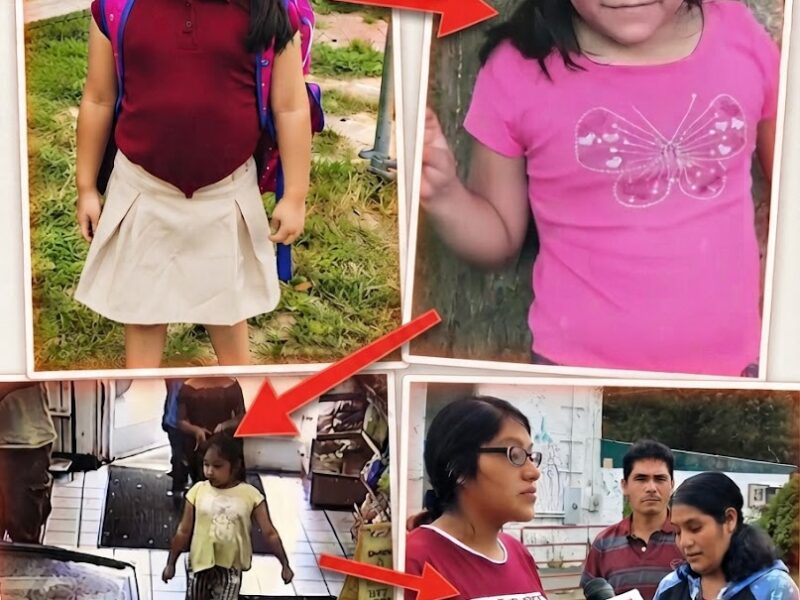
Dulce Maria Alavez Has Been Missing for Nearly Seven Years. Investigators Still Want Answers
SEVEN YEARS. NO ANSWERS. NO TRACE OF DULCE. 💔
Dulce Maria Alavez was only 5 when she vanished from a New Jersey playground — leaving behind the ice cream and scooter she had been using moments earlier. A witness reported seeing a man near a red van, but nearly seven years later, Dulce has still not been found.
Was she taken by a stranger? Did someone know more than they ever told investigators? And after all these years, could Dulce still be alive somewhere?
The FBI still wants answers — and one missing clue could change everything. 👇
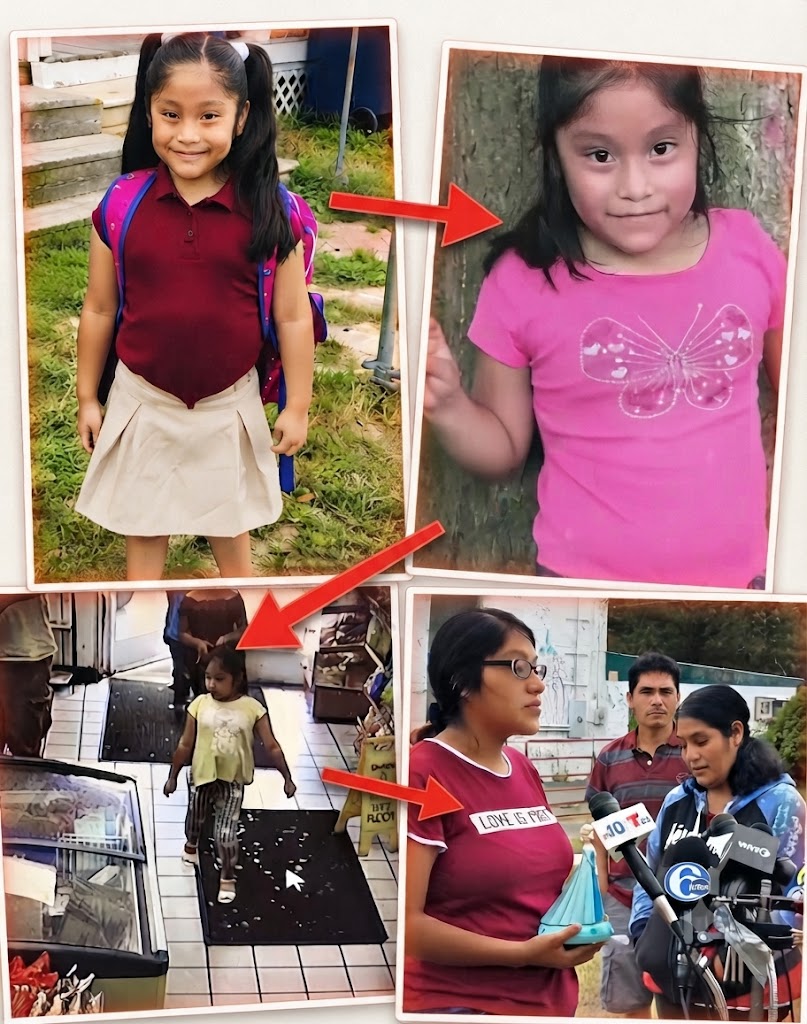
Dulce Maria Alavez Has Been Missing for Nearly Seven Years. Investigators Still Want Answers
BRIDGETON, N.J. — Nearly seven years after 5-year-old Dulce Maria Alavez disappeared from a New Jersey park, one of the state’s most closely watched missing-child cases remains unresolved.
Dulce vanished on Sept. 16, 2019, while playing at Bridgeton City Park with her 3-year-old brother. Her mother, Noema Alavez Perez, was nearby in a vehicle with another family member.
Within hours, police launched a major search.
An Amber Alert followed the next day. Local and state law enforcement agencies, the FBI, search teams, K-9 units and volunteers scoured the park and surrounding areas. Investigators collected tips, reviewed surveillance footage and pursued possible sightings.
But Dulce was never found.
There has been no confirmed sighting of her since that September afternoon, no arrest in connection with her disappearance and no publicly confirmed discovery of remains.
The FBI’s current missing-person profile continues to list Dulce as missing and asks anyone with information, photographs or video connected to the case to come forward. The agency is offering a reward of up to $5,000 for information leading to her whereabouts.
The afternoon Dulce disappeared
Dulce was five years old when she disappeared.
According to the account given by her mother, Noema Alavez Perez had taken Dulce and her younger brother to Bridgeton City Park after getting ice cream.
The children went toward the playground while their mother remained near the vehicle with another family member.
The distance was relatively short — roughly 30 yards, according to contemporary reports.
Then, in a matter of minutes, everything changed.
Dulce’s younger brother returned crying and pointed toward an area near some buildings.
When her mother went looking for Dulce, the little girl was gone.
Her ice cream was reportedly left behind.
Authorities were contacted and began searching the park that evening. By the following day, the investigation had expanded dramatically.
Contemporary reporting said dozens of officers participated in the initial search, while helicopters, dogs and specialized search teams were deployed around the park and nearby waterways.
The red van theory
One of the most important early leads came from witness information.
Authorities investigated reports that a man had been seen near a red van around the time Dulce disappeared.
Early investigators described a possible suspect as a light-skinned Hispanic male, approximately 5-foot-6 to 5-foot-8, with a thin build and acne. He was reportedly wearing red pants, a black shirt and orange sneakers.
Police also sought information about a red van with sliding doors and tinted windows.
That description became one of the most recognizable elements of the case and fueled the initial theory that Dulce may have been abducted.
CBS News reported in September 2019 that investigators believed Dulce had been taken by a man who left in a van. At the time, authorities said they had no evidence explaining exactly what happened to her after she disappeared.
The FBI later added Dulce to its high-profile list of kidnapped and missing persons.
The agency’s current poster, however, is careful with the language. It identifies her as a missing person and asks for information that could establish her whereabouts.
A massive search — but no breakthrough
The scale of the initial search was enormous.
Investigators searched Bridgeton City Park and nearby areas repeatedly. Teams examined waterways and surrounding terrain, while detectives followed tips coming from the public.
The FBI became heavily involved, including personnel specializing in child-abduction investigations.
Authorities also asked anyone who had photographs or videos taken at the park on Sept. 16, 2019, to submit them to investigators.
That request remains active.
The FBI currently maintains an online submission page specifically for photographs, videos, electronic communications and other digital information connected to Dulce’s disappearance.
That is significant because seemingly ordinary footage can sometimes become important years later.
A person walking through the park.
A vehicle passing through a nearby road.
A photograph taken in the background of an unrelated family gathering.
A surveillance recording that investigators did not initially know existed.
Any of those pieces could potentially provide investigators with a new lead.
The mystery surrounding Dulce’s mother
From the beginning, Noema Alavez Perez became the subject of intense public scrutiny.
Her account of what happened attracted attention because Dulce was only a short distance away when she disappeared.
That scrutiny was not limited to social media. News reports from the first days of the investigation documented the family’s frustration with rumors and suspicion.
But publicly available law-enforcement information does not identify Noema as a suspect in Dulce’s disappearance.
Early reporting stated that authorities considered the family cooperative with the investigation. The FBI’s current public materials likewise do not identify Dulce’s mother as a suspect or person of interest.
That distinction matters, particularly because the case has generated years of online speculation.
A missing-child investigation can produce enormous amounts of unofficial information, and theories shared online are not the same as evidence established by investigators.
Years of theories and unanswered questions
As the years passed without a confirmed sighting, the case became fertile ground for speculation.
Online discussions have repeatedly revisited the red van, the witness descriptions, the timing of Dulce’s disappearance and the question of how someone could leave the park with a child without being detected.
Those discussions have kept Dulce’s name in the public consciousness, but they have not produced a publicly confirmed breakthrough.
The most reliable information remains what investigators can establish through evidence and verified witness testimony.
And there is still a fundamental question at the heart of the case:
What happened to Dulce after she disappeared from the playground?
Authorities have never publicly established the answer.
Could Dulce still be alive?
This is perhaps the most emotionally difficult question surrounding the investigation.
There has never been a public confirmation that Dulce died.
There has also been no confirmed evidence establishing that she is alive.
That leaves investigators with an unresolved missing-person case rather than a publicly established death.
The FBI continues to publish Dulce’s information as a missing-person case and asks for information about her whereabouts. The agency’s current materials include an age-progressed image intended to help people recognize what Dulce might look like as she grows older.
That does not mean investigators have confirmed that she is alive.
It means authorities have not closed the possibility and continue seeking information that could determine what happened.
For a case nearly seven years old, that distinction is crucial.
What the FBI is still asking for
The FBI’s current request is remarkably specific.
Anyone who has photographs, video, electronic communications or other digital information connected to Dulce’s disappearance can submit those materials to the agency.
The FBI specifically asks for information related to the time Dulce disappeared from Bridgeton City Park on Sept. 16, 2019.
The agency’s current poster also provides a tip line and lists the reward at up to $5,000 for information leading to Dulce’s whereabouts.
The continued request for information is a reminder that cold missing-person cases do not necessarily end simply because years have passed.
Technology changes.
People who were silent may eventually decide to speak.
Old photographs can be rediscovered.
And investigators can revisit evidence with tools that were unavailable when the case first began.
Nearly seven years later
On Sept. 16, 2019, Dulce was a five-year-old girl playing at a neighborhood park.
Today, the case remains open and her whereabouts remain unknown.
The early search generated enormous public attention, including an Amber Alert, a large law-enforcement operation and widespread media coverage. The FBI ultimately made Dulce part of its high-profile missing-person effort.
Yet despite the enormous effort, the central mystery remains.
There has been no confirmed recovery of Dulce.
There has been no publicly announced arrest connected to her disappearance.
And there has been no definitive public explanation of what happened after she disappeared.
For her family, those unanswered questions have stretched across nearly seven years.
For investigators, the case remains dependent on information — particularly information that may have been overlooked, forgotten or never reported.
What happens next?
The most realistic path toward a breakthrough remains the same one investigators have emphasized for years: new information.
A witness who remembers something differently.
A photograph or video from that afternoon.
Information about a vehicle.
A person who recognizes Dulce from an age-progressed image.
Or a previously unknown piece of evidence that can finally establish where she went.
Until such evidence emerges, the disappearance of Dulce Maria Alavez remains one of New Jersey’s most haunting unsolved missing-child cases.
The FBI is still asking the public to help answer the question that has remained unanswered since Sept. 16, 2019:
Where is Dulce Maria Alavez?