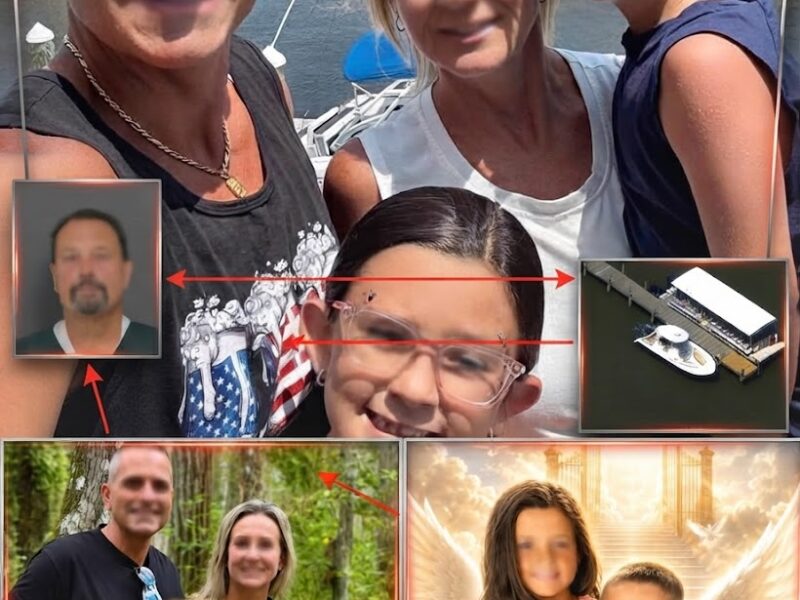
The Stephen Schneider Timeline Is Being Rebuilt Online — But What Is Actually Confirmed?
🔎 THE STEPHEN SCHNEIDER TIMELINE IS GETTING REBUILT ONLINE — BUT NOT EVERYTHING PEOPLE ARE SHARING IS ACTUALLY CONFIRMED.
One timeline says the marker was lit. Another online theory questions the visibility. Then there’s the “three beers” statement, the reported 0.16 BAC, the late-night blood test and now the newly released 911 call.
So which parts are actually in the record — and which details did the internet quietly fill in itself? 👇
We broke the Schneider timeline into FACT, ALLEGATION & INTERNET THEORY. The differences are impossible to ignore. 🔥
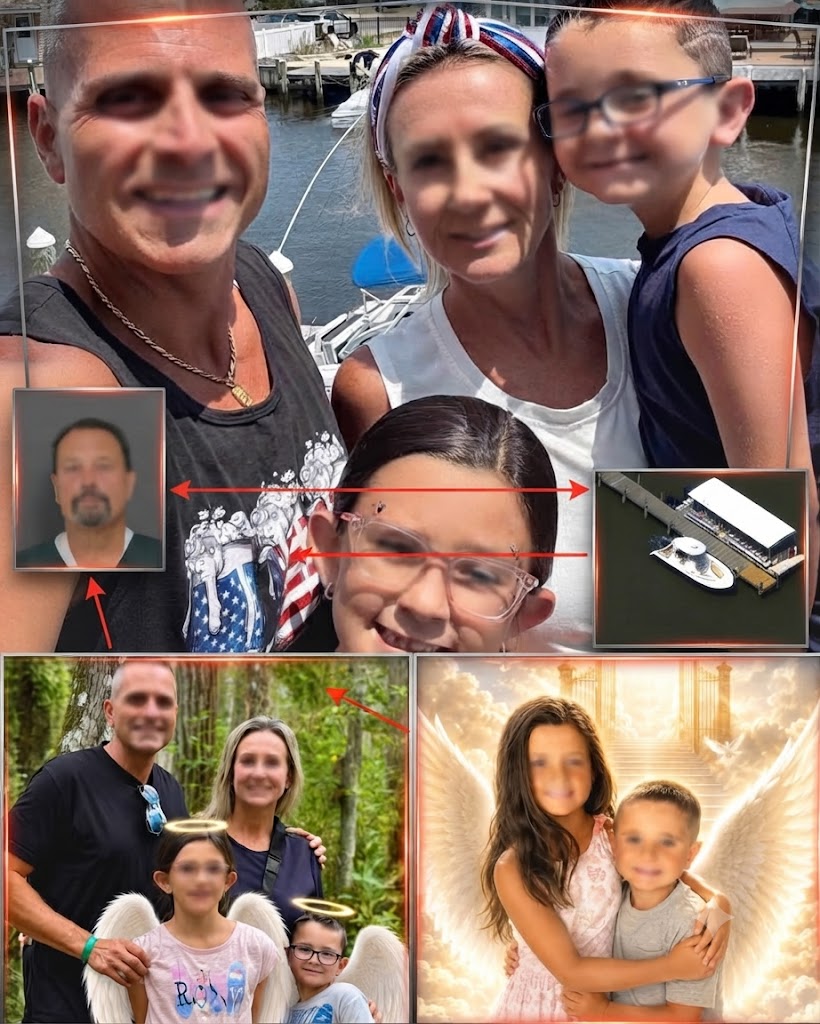
The Stephen Schneider Timeline Is Being Rebuilt Online — But What Is Actually Confirmed?
The Stephen Schneider case has become more than a criminal investigation.
It has become an online timeline.
Across Reddit, social media and independent websites, people following the case have been taking individual details — the family dinner, the boat ride, the channel marker, the reported three beers, the 0.16 blood alcohol level, the blood draw, the 911 call and Schneider’s eventual arrest — and trying to reconstruct exactly what happened on the night of July 19.
That process has produced some legitimate questions.
It has also produced something more dangerous: a growing gap between what authorities have actually reported and what the internet has pieced together from incomplete information.
That distinction matters.
Because in the Schneider case, some details are established by police or court reporting. Others are allegations made by prosecutors. And still others have become theories repeated online without clear confirmation.
Here is what the timeline currently tells us.
1. CONFIRMED: The crash happened shortly after 9 p.m.
The starting point is not controversial.
New Jersey State Police said troopers responded shortly after 9 p.m. on July 19 to a boat crash in the Berkeley Township area of Barnegat Bay.
Schneider, 64, was operating a Tidewater Custom 280, reported by CBS New York as a 30-foot vessel.
The boat struck an Intracoastal Waterway channel marker.
Two children aboard the vessel — 9-year-old Mya Bella Golabek and 7-year-old Sigmund Golabek — were thrown into the water.
Schneider and his wife, Laurie, found the children unresponsive. They were taken to a hospital and later pronounced dead.
That is the foundation of the case.
Everything else comes afterward.
2. CONFIRMED: The children were wearing life jackets
Court-document reporting later provided more detail about the circumstances aboard the boat.
The children were reportedly wearing life jackets when the crash occurred.
That detail has become important in discussions about the force of the collision because both children were nevertheless ejected into the water.
But it is also important not to let a single detail become a conclusion.
Wearing a life jacket does not guarantee survival in a high-impact collision or subsequent emergency.
The public record establishes that the children were wearing them.
It does not, by itself, explain why the impact proved fatal.
3. ALLEGED: Schneider was traveling around 20 mph
According to reports based on the probable-cause affidavit, Schneider told investigators that he was traveling at approximately 20 mph before the collision.
He reportedly said that he saw the channel marker only at the last second.
That statement is important, but its status needs to be understood correctly.
It is Schneider’s reported account to investigators.
It is not an independent reconstruction establishing that the boat was definitely traveling exactly 20 mph.
That distinction is frequently lost in online discussions.
A statement from a suspect can be evidence.
But it remains a statement that investigators and attorneys can test against physical evidence.
4. CONFIRMED BY AUTHORITIES: The marker was reported to be functioning
This is where the internet timeline begins to diverge.
Reports from News 12 said officials indicated that the channel marker was functioning and its lights were working.
That fact matters because it makes the question of visibility more complicated.
If the marker was illuminated, why did Schneider reportedly see it only at the last second?
Possible explanations include visibility conditions, angle of approach, speed, attention, glare or impairment.
But none of those possibilities should automatically be treated as the answer.
The established fact is simply that authorities reported the marker was functioning.
5. ALLEGED: Schneider had consumed three beers
According to reporting based on the affidavit, Schneider told police that he had consumed three beers over approximately two hours before the crash.
The drinks were reportedly two Guinnesses and one Miller Lite.
This detail quickly became one of the most discussed pieces of the case.
Why?
Because it later collided with another number.
6. CONFIRMED AS A PROSECUTION CLAIM: The reported BAC was approximately 0.16
Prosecutors said Schneider’s blood alcohol concentration was approximately 0.16.
That is about twice New Jersey’s legal limit for operating a vessel.
NBC Philadelphia and other outlets reported the prosecution’s assertion during the detention proceedings.
The 0.16 figure became a major turning point in public discussion.
Suddenly, the timeline was no longer simply:
Crash → investigation → arrest.
It became:
Three beers → crash → blood draw → 0.16 → criminal charges.
And that sequence is what sent online investigators into overdrive.
7. THE INTERNET THEORY: “Three beers can’t equal 0.16”
This is one of the biggest online debates surrounding the case.
A Reddit thread discussing Schneider’s reported statement attracted hundreds of votes and a large number of comments. Users debated the three-beer account, the reported BAC, the timing and what could theoretically explain the numbers.
Some commenters essentially concluded that Schneider must have consumed more alcohol than he reported.
Others pointed out that the public does not have enough information to perform a reliable forensic reconstruction.
Both reactions are now part of the online narrative.
But only one should be presented as fact:
The prosecution reported a 0.16 BAC, while Schneider reportedly told police he had consumed three beers.
The conclusion that he definitely drank more is an inference.
It may eventually become relevant evidence.
But at this point, it remains an inference.
8. THE TIMELINE GAP: Crash → Blood Test
Another detail has become increasingly important online: the timing of the blood sample.
The reported crash occurred shortly after 9 p.m.
The toxicology sample was collected later that night/early the following morning.
That creates a chronological gap between the collision and the measurement.
Online commenters have attempted to use that gap to estimate what Schneider’s BAC might have been at the exact moment of impact.
That is where the internet timeline can become misleading.
A later blood alcohol measurement is not automatically identical to a person’s BAC at the moment of a crash.
The relationship depends on factors including when alcohol was consumed, absorption, metabolism and the precise timing of the blood draw.
So the timeline establishes that the test occurred after the crash.
It does not, by itself, establish exactly what Schneider’s BAC was at the instant the boat struck the marker.
9. CONFIRMED: The emergency response began immediately
The newly released 911 recordings provide another important timestamp.
Laurie Schneider called 911 after the crash.
The recording captures the family trying to locate the children, with Stephen in the water searching for one of them.
The New York Post reported that the family attempted rescue efforts and CPR before the children were taken to the hospital.
That recording is valuable precisely because it was created during the emergency rather than days or weeks later.
But even the 911 call has limits.
It tells investigators what the family was saying and doing after the crash.
It does not independently establish exactly what happened in the seconds before impact.
10. CONFIRMED: Schneider was later arrested and charged
The investigation eventually resulted in Schneider’s arrest.
New Jersey State Police announced charges including two counts of reckless vessel homicide/death by vessel, operating a vessel under the influence and reckless operation of a vessel.
He voluntarily surrendered to authorities on August 14, according to police reporting.
That transformed the case from a fatal boating investigation into an active criminal prosecution.
But an arrest is not a conviction.
And a criminal charge is an allegation that still has to be proven in court.
11. CONFIRMED: Schneider was released pending trial
On August 19, a judge granted Schneider conditional release.
Prosecutors had argued for detention and cited the reported 0.16 BAC.
The defense argued for release.
The judge ultimately allowed Schneider to await trial outside custody, with restrictions that include prohibitions on operating a boat or motor vehicle while he completes a court-ordered assessment.
One unusual aspect of the hearing was the family’s position.
The parents of the children reportedly supported Schneider’s release.
That decision generated another wave of online debate.
But again, the timeline matters.
The judge’s release decision was not a finding that Schneider was innocent.
It was a pretrial decision.
12. THE INTERNET THEORY: “The marker wasn’t actually lit”
This may be the most important example of how the online timeline can drift away from the confirmed record.
Some websites and social posts have recently pushed the claim that the navigation marker may have been unlit and that this could fundamentally change the case.
One such article went as far as framing the issue as possible “new evidence.”
But there is a problem.
The established reporting available from local news sources says officials indicated that the marker was functioning and illuminated.
That does not mean every detail of the marker’s visibility has been publicly resolved.
It means something more limited:
There is currently no solid basis for presenting “the marker was definitely dark” as an established fact.
That is exactly the kind of distinction an online timeline needs.
13. ALLEGED VS. CONFIRMED: The difference matters
The Schneider case contains several statements that are easy to accidentally upgrade from allegations into facts.
For example:
“Schneider was driving drunk.”
That is the prosecution’s allegation.
More precise:
“Prosecutors allege Schneider was operating the boat while impaired, citing a reported BAC of approximately 0.16.”
Another example:
“He was driving 20 mph when he hit the marker.”
More precise:
“Schneider reportedly told investigators he was traveling around 20 mph.”
And:
“The marker was impossible to see.”
That is not established.
The public record says the marker was reportedly functioning.
These distinctions may sound like semantics.
They are not.
They determine whether a story is reporting evidence or manufacturing certainty.
14. What Reddit is actually doing
Reddit’s role in this case is particularly interesting.
The community has effectively become a crowd-sourced timeline.
Users are collecting court-document details, news reports and previous statements, then comparing them against one another.
The discussion around the three beers and 0.16 BAC is a good example.
People are not simply reacting emotionally.
Some are trying to reconstruct the night minute by minute.
But the same process can create confirmation bias.
Once a theory becomes popular, every new detail can be interpreted as supporting it.
A number becomes “proof.”
A missing detail becomes “suspicious.”
A disagreement between reports becomes “evidence something is being hidden.”
That is where a timeline can quietly turn into a conspiracy theory.
15. What we still do NOT know
Despite the enormous amount of online discussion, several important questions remain unresolved publicly.
What was Schneider’s exact BAC at the moment of impact?
Exactly when was his last drink?
What were the precise conditions at the helm?
What was his exact speed?
How far away was the channel marker when it became visible?
What was the boat’s precise course?
What does the complete toxicology evidence show?
And what additional physical evidence has investigators obtained from the boat and crash scene?
Those questions are more important than any viral calculation.
The timeline, stripped down
If the case is reduced to what can currently be established, the sequence looks roughly like this:
July 19, shortly after 9 p.m. — The boat crashes into a channel marker in Barnegat Bay. Two children are thrown into the water.
Immediately afterward — Schneider and Laurie Schneider search for the children and emergency services are contacted.
Later that night/early morning — A blood sample is obtained for toxicology.
After the investigation develops — Schneider’s reported statement about three beers and the prosecution’s reported 0.16 BAC become key pieces of the case.
August 14 — Schneider surrenders to police and is charged.
August 19 — A judge grants conditional pretrial release.
August 27 — 911 recordings from the aftermath are publicly reported, giving the public a new window into the immediate response.
And now the internet is attempting to fill in the spaces between those confirmed points.
The real “Internet Timeline Theory”
The most fascinating thing about the Schneider case may ultimately be how the story itself is being constructed online.
There are three separate timelines.
Timeline No. 1: The official record.
Police reports, court documents, toxicology evidence and recorded emergency calls.
Timeline No. 2: The prosecution’s theory.
Alcohol impairment, reckless operation and the circumstances of the fatal collision.
Timeline No. 3: The internet’s reconstruction.
Reddit calculations, social-media theories, conflicting interpretations and attempts to connect details that may or may not actually be connected.
The third timeline can be useful.
It can uncover questions journalists and investigators may want answered.
But it can also create facts that never existed.
That is why the most important question right now may not be “What does the internet think happened?”
It may be:
“Which parts of the story can actually be proven?”
What comes next
Schneider remains free under court-ordered conditions while the criminal case proceeds.
His next scheduled court appearance is September 15, according to current reporting.
Between now and then, additional court filings, expert analysis, toxicology information or physical evidence could change the timeline again.
And that is precisely why the online reconstruction remains unfinished.
For now, the public has a series of confirmed events, a number of prosecution allegations and an expanding collection of theories.
Some theories may eventually be supported.
Others may disappear.
And some may turn out to have been nothing more than the internet trying to fill an information gap.
In a case this emotionally charged, that distinction matters.
Because when thousands of people are reconstructing the same night from fragments, the most viral version of the timeline is not necessarily the most accurate one.