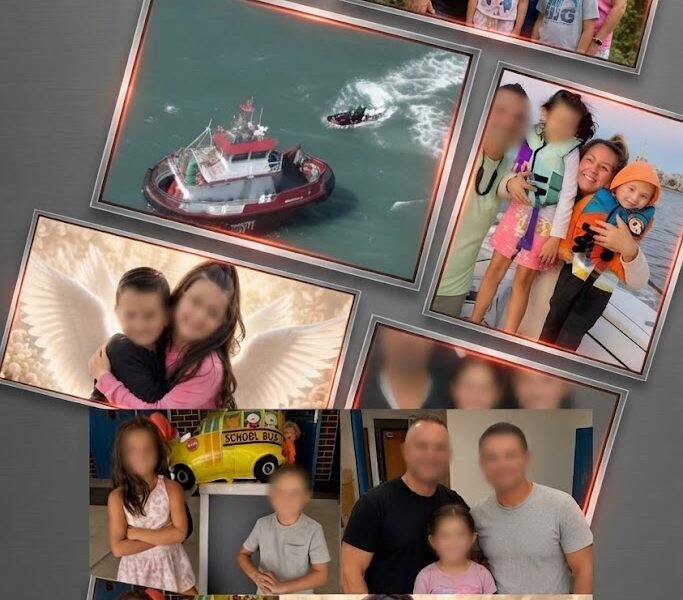
The Channel Marker Was Reportedly Lit. So Why Did Stephen Schneider Say He Saw It At The Last Second?
🚨 THE MARKER WAS LIT — SO WHY DID STEPHEN SCHNEIDER SAY HE SAW IT AT THE LAST SECOND?
A 30-foot boat was moving around 20 mph through Barnegat Bay when it slammed into Channel Marker 39 — yet authorities say the marker’s lights were working normally.
Now one question is pulling people back into the final seconds before the crash: How could a lit navigation marker appear only at the last moment? 👇
The answer could come down to visibility, speed, impairment — or details the public still hasn’t seen. 🔥
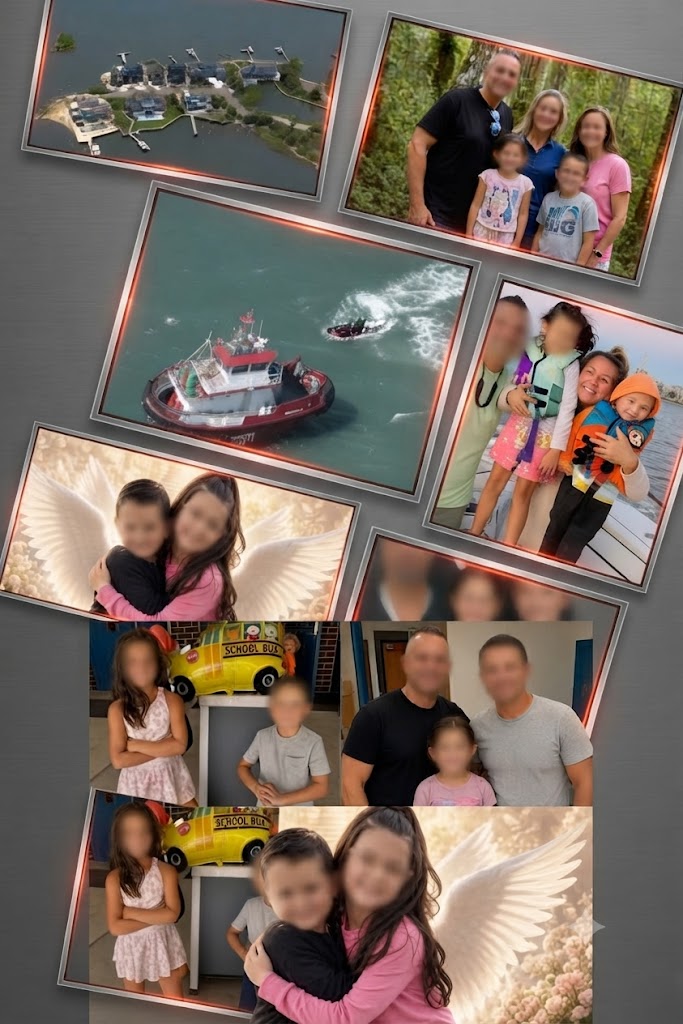
The Channel Marker Was Reportedly Lit. So Why Did Stephen Schneider Say He Saw It At The Last Second?
A single navigation marker has become one of the most intriguing details in the Stephen Schneider boat-crash case.
Authorities say the marker that Schneider’s boat struck on Barnegat Bay was illuminated and functioning normally on the night of July 19. Schneider, however, reportedly told investigators that he was traveling at about 20 mph and saw the marker only at the last second.
That seemingly simple contradiction has become a focal point for people trying to understand what happened in the moments before the crash.
Was the marker difficult to see despite being illuminated? Was the boat moving too quickly for Schneider to react? Did darkness, glare or the angle of approach play a role? Or did alleged alcohol impairment affect his ability to detect and respond to a hazard that was otherwise visible?
The public record does not currently provide a definitive answer.
What it does establish is that a Tidewater Custom 280 struck Intracoastal Waterway Channel Marker 39 shortly after 9 p.m., sending Schneider’s two grandchildren into the water. Both children later died.
Schneider has been charged with two counts of reckless vessel homicide, operating a vessel under the influence and reckless operation of a vessel.
The final seconds are now under a microscope
According to court-document reporting by ABC7 New York and 6ABC, Schneider told investigators he was traveling approximately 20 mph when he saw the day marker at the last second.
That statement is significant because Channel Marker 39 was not described by authorities as an unlit obstacle floating unexpectedly in the darkness.
News 12 reported shortly after the crash that Berkeley Township officials said the marker was fully functioning and its lights were working that night.
The result is an obvious question:
If the marker was illuminated, why did the operator reportedly not see it until the final moment?
There is no single answer that can responsibly be drawn from the currently available evidence.
A marker can be functioning and illuminated while visibility is nevertheless affected by surrounding conditions.
At night, reflections from the water, ambient lighting, the angle of approach, visual distractions and the operator’s line of sight can all influence how quickly a navigational aid is perceived.
Speed can also reduce the amount of time available to react.
And prosecutors have another factor they say is relevant: alcohol.
The alcohol evidence remains central
Prosecutors have said Schneider’s blood alcohol concentration was approximately 0.16, roughly twice New Jersey’s legal limit for operating a vessel.
Schneider reportedly told police that he had consumed three beers over approximately two hours before the crash.
That evidence gives prosecutors a potential explanation for why a navigation marker could have gone undetected until late.
If an operator is impaired, prosecutors could argue, his ability to maintain a proper lookout, recognize hazards and react quickly may be compromised.
But the marker question is still relevant even with the alcohol evidence.
The fact that prosecutors allege impairment does not automatically explain every physical detail of the collision.
A criminal case still requires the evidence to establish the relevant elements of the charges.
That means investigators and attorneys can examine both the operator’s condition and the environment in which the collision occurred.
“Lit” does not necessarily mean “impossible to miss”
This distinction is important because some online discussion has treated the statement that the marker was lit as if it automatically proves the marker should have been obvious.
That is too simplistic.
An illuminated navigation marker is designed to help boaters identify hazards and waterways after dark. But its visibility from a moving vessel depends on more than whether the bulb is technically operating.
The relevant questions could include:
What was the exact visibility from Schneider’s helm?
What was the boat’s heading?
How far away was Marker 39 when it first became visually detectable?
Was the marker partially obscured?
What was the ambient light around the bay?
Was there glare or reflection on the water?
How much time did Schneider have to react once he saw it?
Was the boat actually traveling at approximately 20 mph?
Was Schneider maintaining a proper lookout?
Those are fact-specific questions.
The currently available public record does not answer all of them.
Another Barnegat Bay crash has added context
The Marker 39 question is also being discussed against the backdrop of a particularly dangerous summer on Barnegat Bay.
News 12 reported that another fatal crash involving a boat and a channel marker occurred in the area later that summer. In that separate case, a 28-year-old man died after a boat struck a marker, and authorities launched an investigation.
The incidents are not being described by authorities as connected.
But their similarity has inevitably prompted broader discussion about nighttime navigation on the bay.
A local towboat operator told News 12 that becoming disoriented on the bay at night can make it possible for a boater to strike a marker unexpectedly.
That does not establish that Schneider was disoriented.
It does, however, provide context for why visibility and navigation conditions can become relevant in a nighttime collision.
The internet is asking a different question
Online discussion has increasingly focused on the phrase “at the last second.”
Rather than simply asking whether Schneider was allegedly impaired, people are trying to reconstruct what he could physically see from the helm.
Some commenters interpret the late sighting as evidence of impaired attention or reaction time.
Others argue that nighttime boating is inherently more difficult and that a lit marker can still become difficult to perceive depending on conditions.
The more speculative corners of the internet have gone further, with some posts suggesting the marker may not have been properly illuminated.
But that claim currently goes beyond the strongest public evidence.
The reporting from News 12 and other established outlets says the marker’s lights were working.
A handful of newer websites have presented the possibility that the marker was not adequately lit as if it were an emerging factual finding. Those reports should be treated cautiously because they do not provide the same level of documentation as the established news coverage.
At this point, “Was the marker actually lit?” is a question worth investigating — not an established fact that it was not.
The newly released 911 call adds another piece
The recent release of 911 recordings has made the marker’s location even more prominent.
During the emergency call, Laurie Schneider can be heard trying to establish exactly where the boat was after the crash.
At one point, she asks whether they are near Channel Marker 39 while Stephen is in the water searching for one of the children.
That moment is important because it independently places Marker 39 at the center of the immediate aftermath.
But the call does not answer the more difficult question of what Schneider could see before the collision.
It tells us where the family believed they were after the crash.
It does not tell us why the boat struck the marker.
That distinction is likely to remain important as the investigation develops.
What the defense could argue
If the defense decides to make visibility a major part of its strategy, it would not necessarily need to claim that the marker was completely dark.
It could instead challenge whether the marker was sufficiently visible under the actual conditions that night.
That could involve evidence about:
the marker’s position;
its lighting system;
maintenance records;
weather and visibility;
the boat’s heading;
the precise location of impact;
the speed of the vessel;
and the view available from the helm.
If expert testimony eventually establishes that the marker should have been visible from a considerable distance, that could strengthen the prosecution’s argument that the operator failed to maintain an adequate lookout.
If experts identify unusual visibility problems, the defense could use that evidence to argue that the collision was more complicated than a simple failure to see an obvious hazard.
Neither scenario has been established yet.
The 20-mph detail could become important
Speed is another piece of the puzzle.
Schneider reportedly told investigators that he was traveling around 20 mph.
At that speed, even a relatively short delay between recognizing an obstacle and reacting to it can matter.
A boat does not stop instantly.
The question therefore is not simply:
“Was the marker visible?”
It is:
“When did it become visible to the operator, and how much time did he have to react?”
Those are very different questions.
A marker could technically be visible hundreds of feet away but remain difficult for an operator to recognize against the nighttime background.
Conversely, if evidence shows it was highly conspicuous from a long distance, the “last second” account could become more difficult for the defense to explain.
That is why reconstruction of the final seconds may become important.
The children were seated at the front
Court documents also indicate that the children were seated toward the front of the boat and were wearing life jackets.
When the vessel struck the marker, both were thrown into the water.
The physical evidence from the vessel could therefore help investigators reconstruct the force and direction of the collision.
Where exactly did the boat make contact?
What part of the vessel was damaged?
What was the boat’s heading?
How were the children positioned immediately before impact?
And how does that physical evidence compare with Schneider’s description of the crash?
Those questions could provide a more objective framework for evaluating competing accounts.
What the evidence currently says
For now, the publicly documented facts are relatively clear.
The crash occurred around 9 p.m. on July 19.
Schneider was operating a Tidewater Custom 280.
The vessel struck Channel Marker 39 while traveling through the Intracoastal Waterway.
Schneider reportedly told investigators he was traveling about 20 mph and saw the marker only at the last second.
Authorities and local officials said the marker’s lights were functioning.
Prosecutors say Schneider’s BAC was approximately 0.16.
And two children were thrown from the boat and later died.
What remains unclear is the exact chain of events between the moment Schneider approached the marker and the instant of impact.
That is where the visibility question comes in.
A question — not yet a conspiracy
The most tempting version of this story would be to claim:
“The marker wasn’t lit, so the entire case is falling apart.”
There is currently no solid public evidence to support that conclusion.
The opposite claim — that the marker was illuminated, therefore the collision can only be explained by alcohol — is also too simplistic.
The marker, the boat, the speed, the nighttime conditions and Schneider’s alleged impairment all form part of the same factual puzzle.
The court will ultimately have to consider the evidence as a whole.
And that is precisely why Channel Marker 39 has become such an interesting detail in the case.
What happens next
Schneider remains charged with two counts of reckless vessel homicide, operating a vessel under the influence and reckless operation of a vessel. He has been released under conditions while the case proceeds, and his next scheduled court appearance is September 15.
By then, additional information could emerge about the boat, the marker, toxicology and the reconstruction of the crash.
For now, one sentence continues to stand out:
He reportedly saw the marker at the last second.
But if the marker was illuminated and functioning, the real question is not simply whether it was there.
It is when it became visible, how clearly it could be seen, how fast the boat was moving — and what was happening inside the helm during those final seconds.
Those details may ultimately determine whether the “Marker 39 mystery” becomes a meaningful issue in court or simply another unanswered question from a tragedy on Barnegat Bay.