The Hours Between The Crash And The Blood Test Are Now Under A Microscope In The Stephen Schneider Case
⏱️ THE CRASH HAPPENED. HOURS LATER, THE 0.16 BAC WAS RECORDED. NOW PEOPLE ARE ASKING WHAT HAPPENED IN BETWEEN.
Stephen Schneider reportedly told police he had consumed three beers before the boat crash — yet prosecutors say his blood alcohol level later measured about 0.16.
So how much can that number actually tell us about what his BAC was when the boat struck the marker… and why has the timing of the blood test become such a huge point of discussion online? 👇
The hours between the crash and that blood draw may be more important than they first appeared. 🔥
The Hours Between The Crash And The Blood Test Are Now Under A Microscope In The Stephen Schneider Case
The most talked-about number in the Stephen Schneider boat-crash case may be 0.16.
But increasingly, people following the case online are focusing on another number: the time on the clock.
According to court-document reporting, Schneider’s boat struck a channel marker in Barnegat Bay shortly after 9 p.m. on July 19. Prosecutors later cited a blood alcohol concentration of approximately 0.16, while Schneider reportedly told investigators that he had consumed three beers over roughly two hours before the crash.
The timing matters because the blood sample was collected several hours after the collision.
That has prompted online observers to ask a deceptively simple question:
What does a 0.16 BAC measured hours after the crash actually tell us about Schneider’s condition when the boat hit the marker?
The question is legitimate.
But some of the conclusions being drawn online go much further than the publicly available evidence allows.
The timeline begins around 9 p.m.
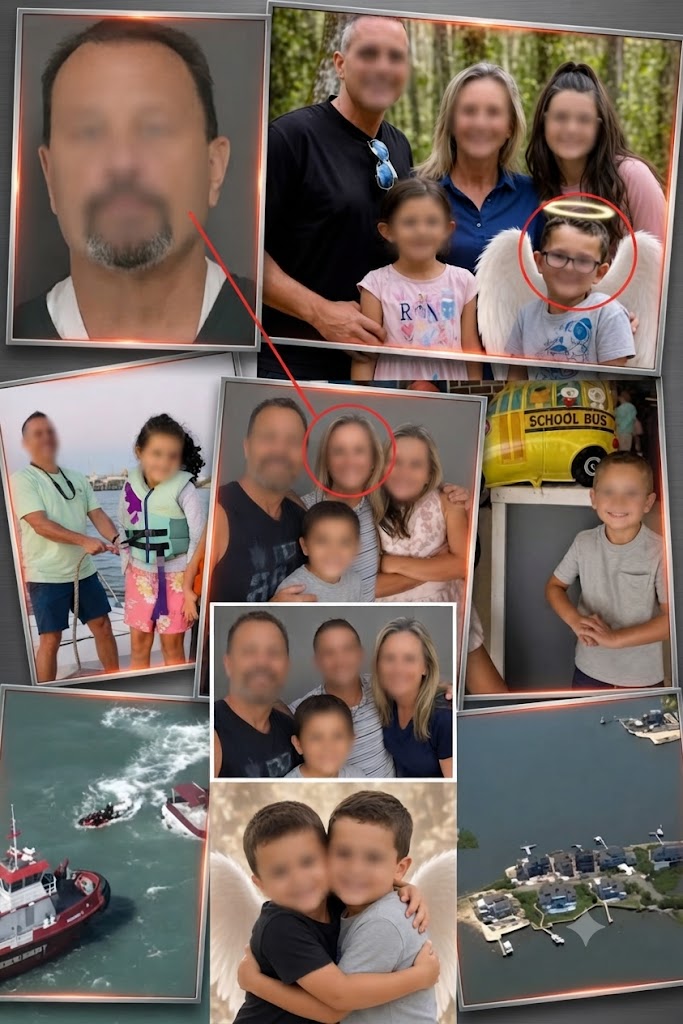
The fatal crash happened on July 19 as Schneider was operating a Tidewater Custom 280 on Barnegat Bay.
His grandchildren, 9-year-old Mya Bella Golabek and 7-year-old Sigmund Paul Golabek, were aboard.
Authorities say the boat struck an Intracoastal Waterway channel marker, throwing both children into the water.
Both were wearing life jackets, according to reporting on court documents, but they were later found unresponsive and transported to a hospital, where they were pronounced dead.
Schneider was subsequently charged with two counts of reckless vessel homicide, operating a vessel under the influence and reckless operation of a vessel.
The alcohol evidence quickly became a central component of the case.
The “three beers” statement
According to reports based on the affidavit and court documents, Schneider told police he had consumed three beers over approximately two hours before the crash.
The beers were reportedly identified as two Guinnesses and one Miller Lite.
That detail has attracted enormous attention because prosecutors say a later blood test showed a BAC of approximately 0.16.
New Jersey’s legal limit for operating a vessel is 0.08.
That puts the reported measurement at approximately twice the legal threshold.
Prosecutors have used the result to support their allegation that Schneider was significantly impaired while operating the boat. (abc7ny.com)
But there is a crucial piece of context.
The reported blood alcohol measurement was not necessarily taken at the exact moment the boat hit the marker.
The clock matters
A Reddit discussion about the case has focused heavily on the timing.
According to details cited in the thread, the crash occurred shortly after 9 p.m., while the blood sample was sealed at approximately 12:45 a.m. — several hours later. (reddit.com)
That creates a gap of several hours between the incident and the toxicology evidence being collected.
For internet sleuths, that gap has become an invitation to start calculating.
Some users have attempted to estimate what Schneider’s BAC might have been at 9 p.m. based on the later reported result.
Others have questioned whether the three-beer statement is compatible with the reported BAC.
Some commenters argue that the number makes Schneider’s account difficult to believe.
Others caution that there are too many unknown variables to make a reliable conclusion from publicly available information.
The second group has an important point.
A later BAC is not automatically the crash-time BAC
Alcohol does not behave like a static number that remains unchanged after a person stops drinking.
Blood alcohol concentration can rise for a period after drinking and then decline as the body metabolizes alcohol.
That means the timing of drinking, the timing of the crash, the timing of the blood draw and the stage of absorption all matter.
There is therefore a difference between saying:
“The blood test showed 0.16.”
and saying:
“Schneider’s BAC was exactly 0.16 when the boat crashed.”
The first is a reported toxicology finding.
The second would require an analysis of timing and other evidence.
That distinction is particularly important because online discussions sometimes treat the two statements as interchangeable.
They are not.
Why Reddit started doing the math
The discrepancy between the reported three beers and the 0.16 BAC has made the case unusually attractive to online investigators.
A prominent Reddit discussion has users debating the possible amount of alcohol consumed, the strength of the beers, body weight, food consumption and the time between the last drink and the blood draw. (reddit.com)
The thread is revealing not because Reddit has solved the toxicology question, but because it shows how the public is trying to make sense of the numbers.
One side effectively asks:
“How could three beers result in 0.16?”
The other responds:
“You don’t have enough information to calculate that accurately.”
Both reactions are understandable.
But only forensic evidence can determine what the toxicology result means in this particular case.
The size of the beers matters
One of the simplest problems with online calculations is that “a beer” is not a standardized unit of alcohol.
A 12-ounce beer at one alcohol percentage is not equivalent to a larger serving with a higher alcohol percentage.
Guinness products can also vary in alcohol content depending on the specific product.
Miller Lite has a different alcohol content from many other beers.
That means even if investigators accept the reported three-beer account, the exact quantities and serving sizes could matter.
Restaurant records, receipts, witness statements or other evidence could potentially provide additional context.
The public record currently does not establish all of those details.
Food and timing also matter
Schneider was reportedly with family before the boat trip.
If alcohol was consumed during dinner, food intake could influence how quickly alcohol was absorbed.
Again, that does not prove anything about the case.
It simply illustrates why a back-of-the-envelope internet calculation cannot substitute for a forensic analysis.
The same applies to the question of when the final drink was consumed.
If the last drink occurred shortly before departure, the relationship between the drinking period, the crash and the blood draw could look different than if the final drink occurred much earlier.
Without a complete timeline, calculations remain speculative.
What prosecutors are actually arguing
The prosecution’s position does not depend solely on an internet calculation.
According to reports on the court proceedings, prosecutors presented the approximately 0.16 BAC as evidence that Schneider was impaired. They also pointed to the circumstances of the crash and the alleged reckless operation of the boat. (nbcphiladelphia.com)
The state does not have to rely on social-media arithmetic.
The toxicology result, witness evidence, physical evidence from the boat, Schneider’s own statements and the circumstances of the collision can all form part of the prosecution’s case.
The defense, meanwhile, can challenge the interpretation of that evidence.
That could include questions about the timing of the blood test and what the result establishes about Schneider’s condition at the exact time of the crash.
The 911 call adds another timestamp
The newly released 911 audio provides an additional chronological reference.
The recording captures Laurie Schneider calling for help after the collision, while Stephen was in the water searching for one of the children.
According to the New York Post, the family attempted to locate and rescue the children before emergency responders transported them to the hospital. (nypost.com)
That audio does not answer the BAC question.
But it helps establish the sequence of events following the crash.
When investigators reconstruct the timeline, every minute can matter.
Crash.
Emergency call.
Search and rescue.
Medical response.
Transport.
Testing.
The longer the timeline becomes, the more important it is to distinguish what was measured when from what is being inferred about an earlier moment.
The internet is connecting two separate questions
Online discussion has increasingly merged two issues:
Did Schneider consume more alcohol than he reported?
and
What was his BAC at the moment of impact?
Those are not necessarily the same question.
If prosecutors establish that his BAC was approximately 0.16 through a valid blood test, that is evidence in the case.
But determining whether his reported three beers can explain that number requires more information.
And determining his exact BAC at the time of the crash may require forensic reconstruction.
A person could theoretically have a different BAC at the crash than at the time of a later blood draw.
That is precisely why the timeline matters.
The “four-hour mystery” should not become a false smoking gun
Some social-media posts have framed the time gap as if it automatically undermines the prosecution’s case.
There is no basis for that conclusion from the public information currently available.
A delay between an incident and a blood draw is not unusual enough by itself to invalidate toxicology evidence.
Nor does it automatically prove that a person’s BAC was lower at the time of the crash.
The significance of the delay depends on the entire evidentiary record and expert interpretation.
The same caution applies in the opposite direction.
The reported 0.16 result should not automatically be treated as proof that Schneider consumed a specific number of additional drinks.
That would also require evidence.
The channel marker remains part of the equation
The BAC question cannot be completely separated from the physical circumstances of the crash.
Schneider reportedly told investigators that he was traveling around 20 mph and saw the channel marker only at the last second.
Authorities said the marker was illuminated and functioning.
That creates another timeline question:
At what point should Schneider have been able to see the marker, and what happened between that moment and impact?
If prosecutors argue that alcohol impairment affected his ability to maintain a proper lookout, the visibility issue could become part of the same narrative.
The defense could challenge whether the marker was as visible from the helm as authorities suggest or examine other factors affecting navigation.
Again, the public does not yet have every piece of evidence.
Why the distinction matters in court
Criminal cases are not decided by whether a story “sounds suspicious.”
They are decided by evidence.
The internet can identify inconsistencies, ask useful questions and sometimes draw attention to details that deserve closer examination.
But a Reddit calculation cannot establish a defendant’s BAC at a particular moment.
A TikTok video cannot substitute for toxicology testimony.
And a viral post cannot determine whether an explanation is scientifically valid.
Those questions ultimately belong to investigators, experts, attorneys and, if the case goes to trial, a jury.
What happens next
Schneider remains charged with two counts of reckless vessel homicide, operating a vessel under the influence and reckless operation of a vessel.
He has been released under conditions while the case proceeds, and his next scheduled court appearance is September 15. (nbcnewyork.com)
The next stage could bring additional information about the toxicology testing, the timing of the blood draw, the boat’s movements and the events immediately preceding the collision.
Until then, the reported 0.16 BAC remains one of the strongest and most controversial pieces of evidence in the case.
But the more interesting question may not simply be “Was it 0.16?”
It may be:
“What was the number when the boat hit the marker?”
And answering that requires something the internet does not yet have — the complete forensic timeline.
For now, the gap between the crash and the blood draw remains exactly that: a gap in time that deserves examination, but not a gap that can responsibly be filled with speculation.