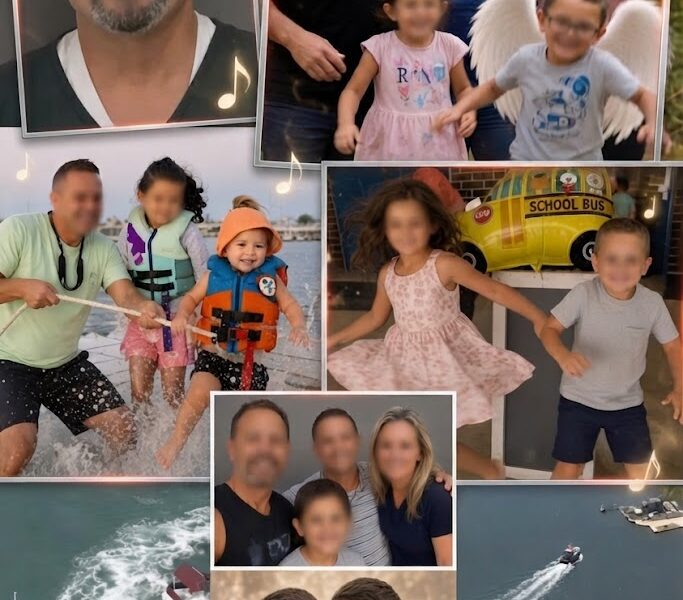
The Boat At The Center Of The Stephen Schneider Case Is Raising A Different Set Of Questions
🚤 THE BOAT IS NOW BECOMING A QUESTION OF ITS OWN.
Stephen Schneider was reportedly traveling around 20 mph when his 30-foot Tidewater Custom 280 struck a channel marker he says he saw only at the last second — but police say the marker’s lights were working.
So what exactly happened from the helm to the impact… and could the boat, visibility, speed or navigation conditions become a bigger part of this case than anyone first expected? 👇
The details surrounding that boat — and those final seconds — are raising a whole new set of questions. 🔥
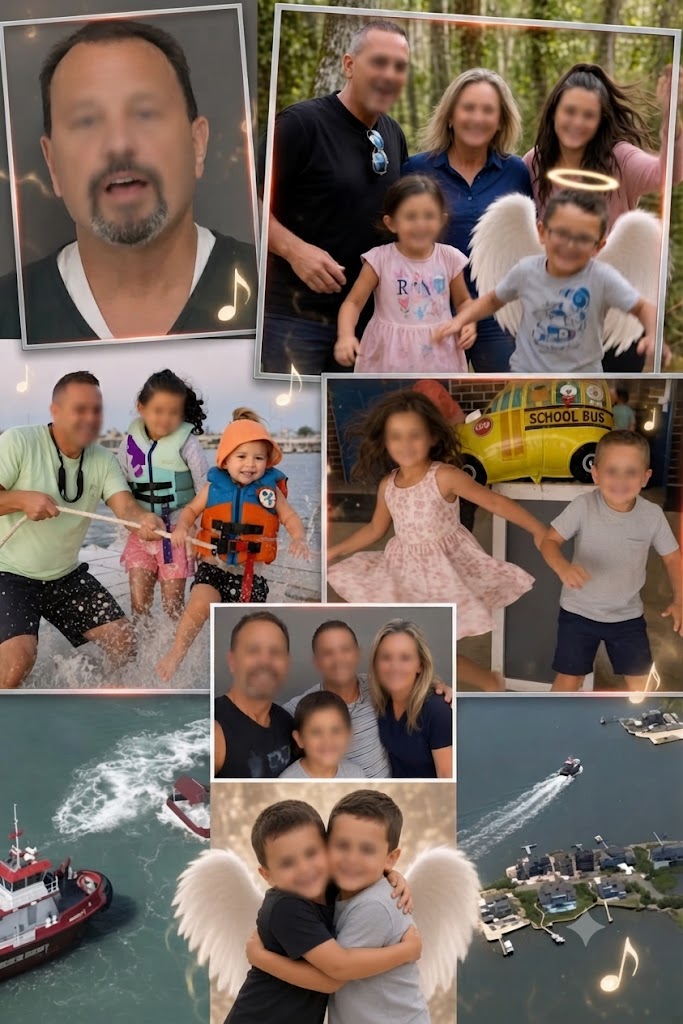
The Boat At The Center Of The Stephen Schneider Case Is Raising A Different Set Of Questions
The Stephen Schneider case has largely been framed around one question: Was alcohol responsible for a fatal nighttime boat crash that killed two children?
But as more details from the investigation emerge, another part of the story is drawing attention — the boat itself, the conditions surrounding its operation and what Schneider says he could see from the helm in the seconds before impact.
On July 19, Schneider was operating a 30-foot Tidewater Custom 280 through the Intracoastal Waterway in Barnegat Bay when the vessel struck a channel marker, according to New Jersey State Police. His two grandchildren, 9-year-old Mya Bella Golabek and 7-year-old Sigmund Paul Golabek, were thrown into the water.
Both children were wearing life jackets, according to court-document reporting, but were later pronounced dead at a hospital.
Schneider has since been charged with two counts of reckless vessel homicide, operating a vessel under the influence and reckless operation of a vessel.
The prosecution has emphasized alcohol impairment, including a reported blood alcohol concentration of approximately 0.16.
But another detail in the case could also matter: Schneider reportedly told investigators that he was traveling at roughly 20 mph and saw the channel marker only at the last second.
Police have said the marker’s lights were functioning properly.
That combination — a large boat, nighttime navigation, a reportedly illuminated marker and an operator who says he saw it only moments before impact — has created a second line of questions surrounding the crash.
What happened to the boat?
The basic sequence is not in dispute.
Shortly after 9 p.m. on July 19, Schneider was operating the Tidewater Custom 280 when it struck an Intracoastal Waterway channel marker.
The impact threw both children from the front of the vessel into the water.
The grandparents subsequently found the children unresponsive, and emergency responders transported them to a nearby hospital.
Early reports from New Jersey State Police described the crash as an ongoing investigation.
The boat’s size is significant because this was not a small recreational craft.
The Tidewater Custom 280 involved in the crash was reported as approximately 30 feet long.
Yet despite its size, the vessel struck a fixed navigational marker in the waterway.
That does not, by itself, indicate a mechanical problem.
It does, however, make the circumstances surrounding the impact an important part of understanding what happened.
Schneider’s account of the final seconds
According to court documents reported by ABC7 New York, Schneider told investigators that he was traveling approximately 20 mph when he saw the marker at the last second.
That statement has become particularly important because authorities say the marker’s lights were operating normally.
The resulting question is straightforward:
If the marker was illuminated, why was it apparently detected so late?
There are multiple possible explanations, and the public record does not currently establish which one applies.
Visibility can be affected by darkness, glare, weather, reflections on the water, the angle of approach and the amount of visual attention being given to the navigation path.
Speed also matters.
At approximately 20 mph, a boat is moving considerably faster than many casual observers might imagine when picturing a nighttime trip on the bay.
The distance traveled between the moment an obstacle becomes visible and the moment a boat reaches it can shrink rapidly.
But there is another factor prosecutors are emphasizing: alleged alcohol impairment.
The alcohol evidence changes the interpretation
The prosecution says Schneider’s blood alcohol concentration was approximately 0.16 — twice New Jersey’s legal limit for operating a vessel.
Schneider reportedly told police that he had consumed three beers over about two hours before the crash.
That evidence gives prosecutors a straightforward argument.
If Schneider’s ability to perceive, process and react to hazards was impaired, then the fact that he saw the marker only at the last second could be interpreted as part of the alleged impairment.
But that is ultimately a question for the evidence and the court.
It is not possible to determine from the publicly available information alone exactly why Schneider failed to avoid the marker.
The distinction is important.
The fact that the marker was illuminated does not prove that it was easy to see from every angle.
Likewise, the fact that Schneider reportedly saw it late does not independently prove that alcohol was the reason.
Those are questions investigators and attorneys will have to address using the full body of evidence.
Was the boat’s navigation equipment relevant?
Some online reports published in late August have circulated claims that Schneider told investigators the boat’s radar and infrared or low-light camera were operating during the trip.
However, those claims have not been independently confirmed in the major news reports reviewed for this story.
That distinction matters because online coverage of the case has increasingly mixed court-document details with unsourced or lightly sourced interpretations.
If investigators can establish that navigation equipment was operating immediately before the collision, the issue could become relevant to reconstruction of the crash.
But even then, the presence of radar or a low-light camera would not automatically mean the channel marker should have been detected.
Different systems have different capabilities, limitations and operating conditions.
Nor would their presence rule out human error or impairment.
For now, the strongest publicly confirmed facts remain simpler: Schneider was operating a Tidewater Custom 280, the vessel struck a channel marker, he reportedly said he saw it at the last second, and police said the marker lights were functioning.
The position of the children may also matter
Court-document reporting adds another important physical detail.
Mya and Sigmund were reportedly seated toward the front of the boat and were wearing life jackets.
The force of the collision was enough to eject both children into the water.
That makes the physical characteristics of the impact potentially important to understanding what happened.
Investigators can examine factors such as the point of impact, the direction of travel, the boat’s speed, the children’s seating positions and the damage sustained by the vessel.
Such evidence can help establish how the collision unfolded.
But again, none of those details by themselves establish criminal liability.
The prosecution must ultimately connect the alleged reckless operation and alcohol impairment to the deaths.
The internet is focusing on the “last second”
That phrase — “last second” — has become particularly compelling for online audiences.
Reddit discussions about the case have repeatedly returned to the same basic question: how could a boat traveling through a marked waterway collide with a navigational aid?
Some commenters focus on the reported alcohol evidence.
Others are more interested in the navigation conditions.
That divide reflects the two competing ways the crash is increasingly being viewed online.
One interpretation is essentially:
The boat hit a lit marker because the operator was impaired.
The other asks:
What exactly could the operator see from the helm, and what were the navigation conditions immediately before impact?
At this stage, there is no public evidence establishing a mechanical failure or a defective marker.
In fact, police have said the marker’s lights were functioning.
That makes it important not to turn an unanswered question into a conspiracy theory.
The 911 recording adds another piece
The release of the 911 audio has also given the public more information about what happened after the collision.
In the recording, Laurie Schneider tells the dispatcher that one child is on the boat while her husband is in the water trying to retrieve the other.
She also tries to identify their location near channel marker 39.
The recording does not reveal why the boat hit the marker.
But it reinforces the importance of the location.
It also helps establish the immediate aftermath: the family knew they were near a channel marker and was struggling to locate the children in the water.
That information can potentially be compared with other evidence as investigators reconstruct the sequence of events.
What could the defense do with the boat evidence?
For the defense, physical and navigational evidence could offer an opportunity to challenge the prosecution’s interpretation of the crash.
That does not necessarily mean arguing that the boat malfunctioned.
A defense strategy could instead focus on whether the state can prove beyond a reasonable doubt exactly how the collision occurred and whether alcohol impairment was the legally relevant cause.
Questions could include:
How visible was the marker?
What was the precise course of the vessel?
What was the actual speed?
What were the lighting and water conditions?
What navigation equipment was available?
Where was Schneider looking?
And what did he have time to do after the marker became visible?
Those questions are not evidence of innocence. They are the kinds of questions that can become relevant when a criminal case turns on the circumstances immediately preceding a collision.
The prosecution has another piece of evidence
The prosecution, meanwhile, has the reported toxicology result.
Prosecutors have said Schneider’s BAC was approximately 0.16.
They also have his reported statement that he had consumed three beers.
And authorities say the channel marker was illuminated.
Taken together, prosecutors could argue that the circumstances point toward impaired operation rather than an unexplained navigational accident.
The defense will have an opportunity to challenge that interpretation.
At this point, neither side has presented its entire case to a jury.
The bigger question
The fascination with the boat itself should not obscure the human tragedy at the center of the case.
Mya and Sigmund were aboard their grandparents’ boat after a family dinner. They were wearing life jackets. A collision with a channel marker sent them into the water, and both later died.
Now prosecutors allege that alcohol impairment played a role in the crash.
But the precise mechanics of those final seconds remain important.
A 30-foot boat was moving through a marked waterway at night.
A channel marker was reportedly illuminated.
The operator says he saw it only at the last second.
And the vessel struck it with enough force to eject two children.
That is the physical sequence investigators will have to explain.
What comes next
Schneider has been released under conditions while the criminal case proceeds, and his next scheduled court appearance is September 15.
The case is still developing.
As additional court records, expert analysis, toxicology evidence or physical evidence from the boat become public, the unanswered questions surrounding the collision may become clearer.
For now, the boat itself does not provide a simple alternative explanation for what happened.
There is no confirmed public evidence that the Tidewater Custom 280 malfunctioned.
There is no confirmed evidence that the channel marker malfunctioned.
And there is no public evidence establishing that a navigation system failed.
What is known is that the boat struck the marker, the marker was reportedly functioning, and Schneider says he saw it only at the last second.
That narrow gap between what the operator could see and what the investigators say was there to be seen may become one of the most closely examined parts of the case.
And as the September court date approaches, the question may be less about whether the boat itself was defective — and more about exactly what happened at the helm during those final seconds.