Labour Minister Anna Turley Under Fire Over A66 Tribute After Critics Say Her Words Put Fallen Police Officers “On a Par” With Other Crash Victims
🚨 A LABOUR MINISTER’S TRIBUTE HAS EXPLODED INTO A POLITICAL FIRESTORM.
Anna Turley said she was paying respects to “the seven people” killed on the A66 — but critics say those words blurred a line that should never have been blurred: two police officers on duty… and five people in the car travelling the wrong way.
Then Turley revealed who she says asked her to word the tribute that way — and now even that explanation is being challenged. 👇
🔥 So was this an innocent condolence message… or a political mistake that went far too far?
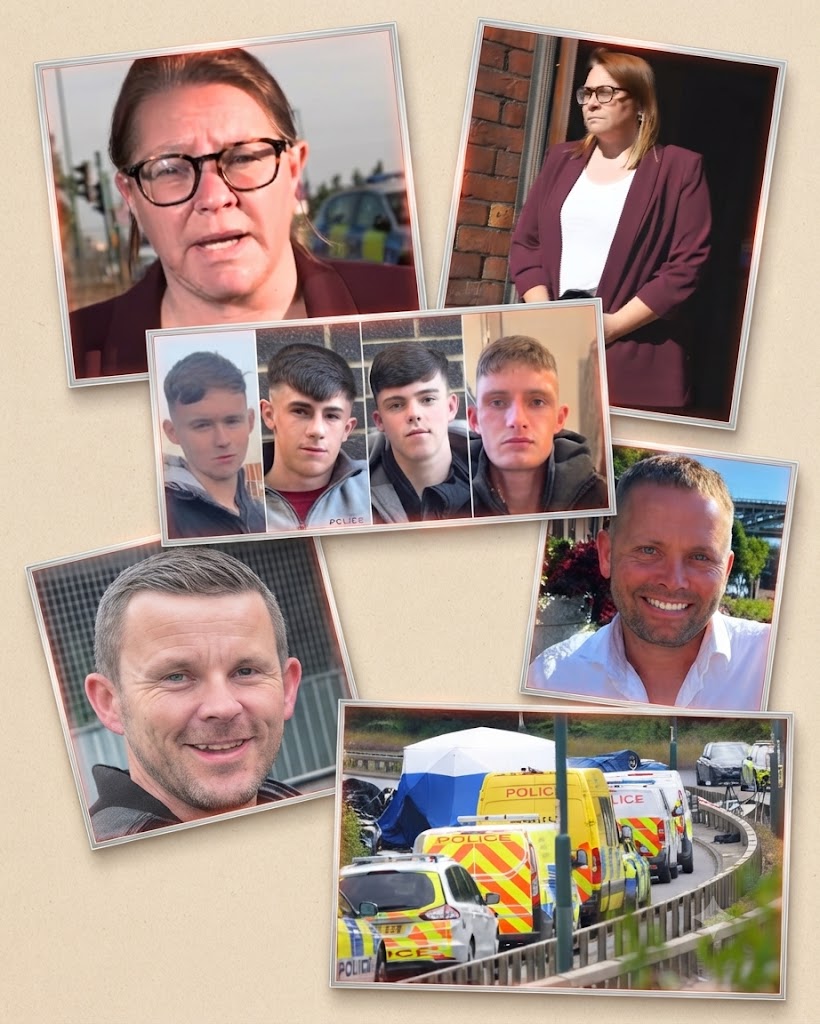
A political row has erupted in Britain over the wording of a tribute posted by Labour Home Office minister Anna Turley following the A66 crash that killed seven people, including two Cleveland Police officers.
Turley, the Labour MP for Redcar, visited South Bank after the August 22 collision and said she had gone to lay flowers and pay her respects “on behalf of our whole community” to the seven people whose lives had been cut short.
The wording triggered criticism from Conservative shadow justice secretary Nick Timothy, who argued that the statement appeared to place the two officers — PC Matthew Blades and PC Tom Clough — on the same moral footing as the five people travelling in the Volkswagen Passat.
Turley has rejected that interpretation, saying there was “no moral equivalence” in her statement and that, at the time she posted it, the identities of the five occupants of the Passat had not yet been made public.
She also said Cleveland Police had specifically asked her to pay tribute to all those who had died.
That claim has now become a second flashpoint in the dispute.
A tragedy involving seven deaths
The controversy is unfolding against the backdrop of one of the most serious road tragedies in the region in years.
PC Matthew Blades, 37, and PC Tom Clough, 38, were killed shortly after 3:39 a.m. on August 22 when their marked police vehicle collided head-on with a Volkswagen Passat travelling in the wrong direction along the A66 near South Bank, Middlesbrough.
The five occupants of the Passat also died.
They were subsequently identified as Michael Robert Cahill, 23; Jacob Matusiak, 23; Makai Saddington, 18; Theo Rae, 17; and Cole Robert Worthy, 17.
The circumstances surrounding the collision have since become the subject of both a police investigation and an investigation by the Independent Office for Police Conduct.
The IOPC has said the Passat had been involved in a police pursuit before entering the A66 against the flow of traffic. The pursuit was abandoned before the fatal collision, with investigators examining the precise sequence of events and the police response.
The tragedy has therefore generated two very different strands of public discussion: grief for seven people who died, and anger over the circumstances that led to the deaths.
It is that distinction that now sits at the heart of the political argument.
What Anna Turley actually said
Turley’s original statement was posted shortly after the crash, before the five occupants of the Passat had been publicly identified.
She wrote that she had gone to South Bank to lay flowers and “pay my respects” on behalf of the wider community to the seven people whose lives had been “so tragically cut short.”
She separately paid tribute to Blades and Clough, describing them as officers who had been serving the community and should have returned home from their shifts.
The wording was not initially the focus of the public response.
Instead, the immediate political and community reaction centered overwhelmingly on the deaths of the two police officers.
Cleveland Police described Blades and Clough as brave officers serving their communities, while political leaders across the country issued condolences to their families and colleagues.
But once the identities and backgrounds of the five men in the Passat became known, Turley’s reference to “the seven people” was revisited.
That is when the controversy began to grow.
Nick Timothy challenges the wording
The most prominent criticism came from Nick Timothy, the Conservative MP and shadow justice secretary.
Writing on X, Timothy argued that a Home Office minister should have drawn a clearer distinction between the two police officers and the five people in the Passat.
His criticism was not that Turley should ignore the fact that the five men had families who were grieving.
Rather, his argument was that describing all seven simply as people whose lives had been tragically cut short could be interpreted as erasing the fundamentally different circumstances surrounding their deaths.
The criticism quickly spread across political social media.
The Times subsequently described the dispute as a question over whether Turley’s wording placed the officers “on a par” with the five men in the Passat.
The controversy has also produced a predictable political divide.
Supporters of Timothy’s position argue that public officials — particularly ministers responsible for policing and the Home Office — have a responsibility to recognize the difference between people killed while serving the public and those whose actions allegedly preceded the fatal collision.
Supporters of Turley, meanwhile, argue that a constituency MP expressing condolences to every bereaved family immediately after a mass-fatality event is neither an endorsement of anyone’s conduct nor a judgment about moral responsibility.
That distinction has become central to Turley’s defense.
Turley: “There was no moral equivalence”
Turley responded directly to Timothy in a letter.
She rejected the suggestion that she had equated the seven victims.
“There was no moral equivalence,” was the substance of her defense, according to reports of the exchange.
She also pointed out that the five occupants of the Passat had not yet been publicly identified when she made her original statement.
That timing is significant.
At the point Turley laid flowers and published the message, the public knew that seven people had died, including two serving police officers.
But the identities and criminal backgrounds of the five other people had not yet been fully established publicly.
Turley therefore argued that critics were judging her original words using information that became available only later.
She also said Cleveland Police had specifically requested that she pay tribute to all victims in any public message.
That assertion has become one of the most contentious aspects of the dispute.
The police-request question
According to Turley, Cleveland Police wanted her to acknowledge all seven people who had died.
The police force has reportedly declined to confirm or deny that account when contacted by the BBC.
That has left an awkward gap between the minister’s explanation and what the public has been able to independently establish.
Critics have seized on that uncertainty.
Timothy has questioned whether a police force would actually instruct a government minister on the wording of a political tribute.
The Times reported that Cleveland’s police and crime commissioner disputed the claim that the police had directed Turley’s statement, adding fuel to the political dispute.
However, there is an important distinction between saying the police requested a particular wording and saying they simply encouraged officials to offer condolences to bereaved families.
The publicly available information does not establish precisely what was said between Turley and Cleveland Police.
Until further evidence emerges, the dispute therefore remains unresolved.
What was known when the tribute was made?
This question could ultimately be more important than the political rhetoric surrounding it.
The crash occurred in the early hours of Saturday.
Turley’s statement followed shortly afterward, when authorities were still dealing with the immediate aftermath and notifying families.
At that stage, the IOPC investigation had begun, but the full circumstances of the crash were not yet publicly established.
Police later confirmed that the Passat had been travelling against the direction of traffic after a pursuit.
The IOPC said officers had obtained initial accounts from police personnel, the incident log and in-car footage, while further evidence was still being collected.
That means any immediate statement from a local politician was necessarily being made before the investigation had reached its conclusions.
Turley has emphasized precisely that point.
Critics, however, respond that she could have avoided the controversy simply by directing the tribute specifically toward Blades and Clough, or by acknowledging the tragedy without describing all seven deaths as a collective loss.
Neither position establishes that Turley intended to make a moral judgment.
But it explains why the wording has become politically explosive.
Community reaction has been sharply divided
Online discussion has mirrored the political divide.
A Reddit discussion about the controversy produced sharply contrasting responses.
Some users argued that Turley’s original message was a normal response from a local MP faced with a mass-fatality incident.
Others said the distinction between the police officers and the occupants of the Passat was so significant that the wording should have reflected it.
One highly upvoted line of discussion argued that the two officers were innocent people killed while doing their jobs, while another group accused critics of turning a tragedy into political point-scoring.
The argument is not simply about Turley.
It reflects a much broader question about how public officials should speak after tragedies where the victims may have been on opposing sides of an alleged criminal event.
Should every death be acknowledged as a human tragedy?
Or does doing so risk creating a false equivalence between those who died while serving the public and those whose actions allegedly created the danger?
There is no universally accepted answer to that question.
The wider A66 investigation makes the debate more sensitive
The controversy has also intensified because the crash is no longer being treated simply as a tragic traffic accident.
Police have arrested people as part of a wider investigation into events surrounding the crash, including suspected organised-crime offences. By August 25, 17 people had reportedly been arrested.
Authorities have also examined the role of dangerous-driving culture and social-media content.
Prime Minister Andy Burnham condemned the glorification of dangerous driving online after the crash, while the government called on technology companies to remove material that celebrates reckless driving. Reuters reported that authorities had found no evidence that the fatal crash itself was filmed for TikTok, despite concerns about similar online trends.
That broader context has made the question of language even more politically sensitive.
The government is simultaneously asking social-media platforms to distinguish between content that documents events and content that glorifies dangerous criminal behavior.
At the same time, one of its own ministers is facing criticism over whether her language was sufficiently clear about the circumstances of the deaths.
The police officers remain at the center of the public tribute
Whatever happens to the political dispute, the public response to Blades and Clough has been extensive.
Their families, colleagues and police organizations have paid tribute to them as dedicated officers who died while on duty.
The Guardian reported that both men were remembered as committed members of the Cleveland community, while official tributes emphasized the fact that they had been working when they were killed.
Fundraising for their families has also drawn substantial public support.
Meanwhile, memorial gatherings for the five young men have generated their own controversy, including reports of flares, masked youths and disorder at some vigils. That has further complicated an already deeply emotional local debate.
What happens next?
For now, there is no indication that the Turley controversy will disappear quickly.
The underlying A66 investigation remains active, while the IOPC continues examining the police pursuit and the events immediately preceding the collision.
At the political level, the dispute has become a proxy argument over policing, criminal responsibility and how Labour ministers should speak about victims when a tragedy involves alleged criminal conduct.
Turley’s defense rests largely on timing and intent: she says she did not yet know the identities of the five people in the Passat, that she was responding to an unfolding tragedy, that she separately honored the two officers and that Cleveland Police had asked her to acknowledge all seven.
Her critics focus on the wording itself and argue that a senior Home Office minister should have been more explicit about the distinction between the two officers and the occupants of the Passat.
Neither side has produced evidence that conclusively settles the argument over what Cleveland Police specifically asked Turley to say.
What is clear is that seven people died on the A66, but the circumstances surrounding those seven deaths were dramatically different.
That difference is precisely why a few words in a condolence message have now become the subject of a national political fight.
And until the A66 investigation establishes the full chain of events, the most important questions remain factual rather than political: what happened during the pursuit, why did the Passat enter the carriageway in the wrong direction, and could anything have prevented the collision?
Those answers will matter far more than any social-media argument.
For now, however, Anna Turley’s tribute has opened a very different investigation — one into the language politicians use when tragedy, criminality and public service collide.