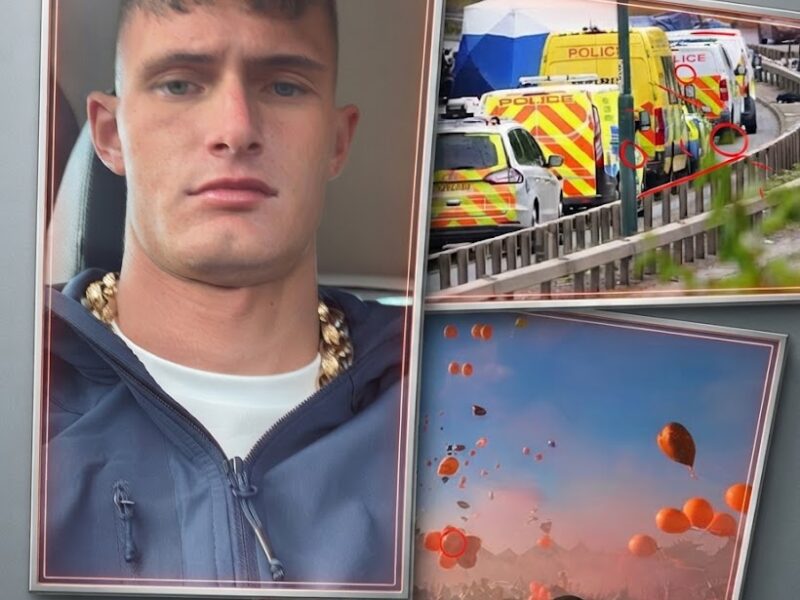
‘Give Him the Send-Off He Deserves’: Michael Cahill Memorial Sparks Safety Fears Before Cars Are Set Ablaze at Chaotic Gathering
🚨 THE MEMORIAL THAT LOCALS FEARED… ENDED IN BURNING CARS.
Michael Cahill’s mother asked mourners to bring “bikes, jeeps, cars, quads” to give her son the “send-off he deserves” — a plan that had already alarmed residents and prompted calls for police intervention.
Then the gathering happened… and videos from the field appeared to show cars being driven recklessly, flares lighting up the night — and multiple vehicles going up in flames. So how did a grieving tribute turn into this? 👇
🔥 The footage is raising even bigger questions about what happened after the A66 tragedy.
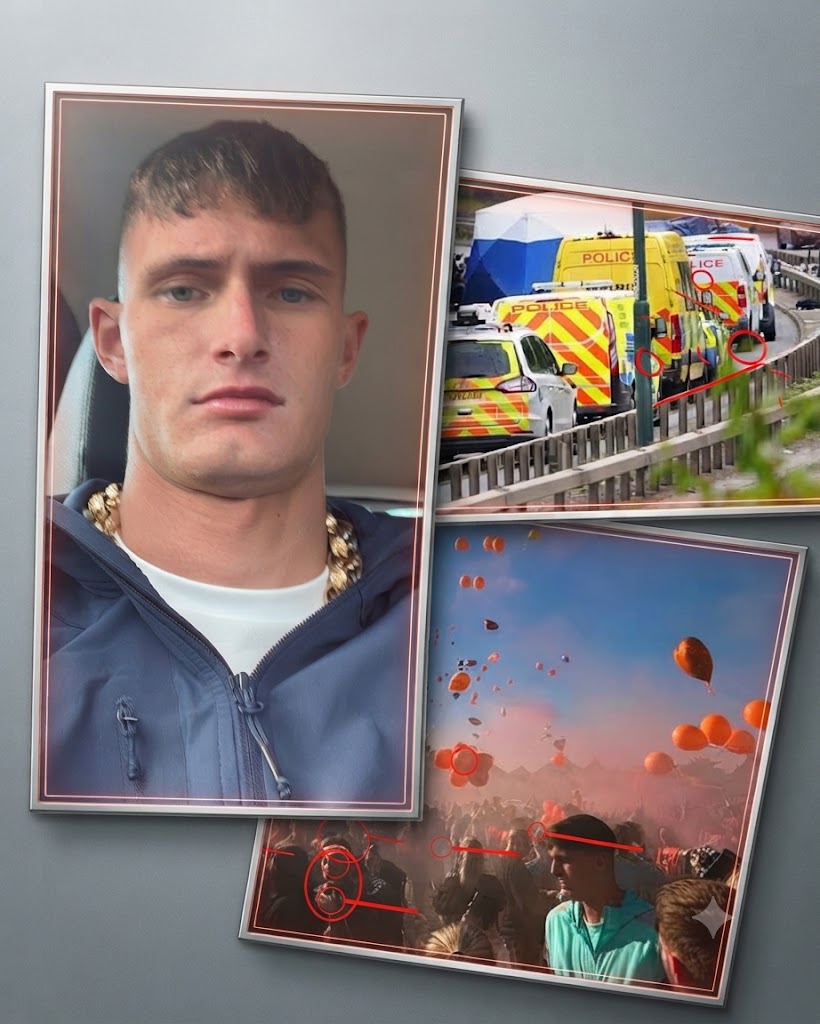
A memorial planned for Michael Cahill, one of the five young men killed in the devastating A66 crash, has become the latest flashpoint in an increasingly tense week across Teesside.
Cahill’s mother, Kelly, had appealed to friends and relatives to attend a balloon-release tribute and encouraged people to arrive with “bikes, jeeps, cars, quads” to give her 23-year-old son the “send-off he deserves.”
The invitation immediately raised concerns among some local residents, who questioned whether a large gathering involving off-road vehicles could safely take place on the proposed public land near Peterlee, County Durham.
Some residents reportedly called for police intervention.
But what happened next was even more dramatic.
Videos circulating online after the gathering appeared to show cars being driven around a field, blue flares being set off and several vehicles being set alight.
At least five vehicles were reported burnt out in footage examined by LADbible, while other reports described multiple cars being torched during the gathering near Haswell.
The events have added another extraordinary chapter to the aftermath of the A66 crash, which killed seven people — including two police officers — and has already triggered a major criminal investigation and a huge public debate over dangerous driving, policing and memorial culture.
Importantly, there is no evidence that Kelly Cahill ordered or participated in the burning of the vehicles. Her publicly reported message asked people to bring vehicles to the memorial; responsibility for any subsequent criminal behavior would rest with those who carried it out.
The tragedy behind the memorial
Michael Robert Cahill, 23, was one of five people travelling in a Volkswagen Passat involved in the fatal A66 collision on August 22.
The Passat entered the A66 near South Bank, Middlesbrough, travelling against the flow of traffic.
It then collided head-on with a marked Cleveland Police vehicle carrying PC Matthew Blades, 37, and PC Tom Clough, 38.
All seven people died.
Police have said the Passat had been involved in a pursuit shortly before the crash. The pursuit was discontinued when the vehicle entered the A66 travelling in the wrong direction, with the fatal collision occurring approximately 10 seconds later. The police vehicle carrying Blades and Clough was not part of that pursuit.
The Independent Office for Police Conduct is investigating the circumstances surrounding the collision.
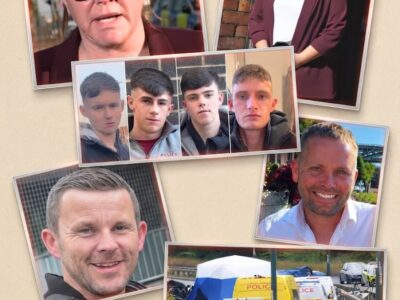
The five people in the Passat were later identified as Cahill, Jakub Matusiak, Makai Saddington, Theo Rae and Cole Worthy.
The two officers have been widely praised by colleagues, political leaders and their families.
Their deaths have also generated an enormous public fundraising response, with donations for their families surpassing £1 million according to reports circulating this week.
At the same time, friends and relatives of the five men in the Passat have organized their own memorials.
Those gatherings have already generated controversy.
From balloons to vehicles
Kelly Cahill publicly mourned her son following the crash, writing that she wanted him to “be at peace” and expressing the hope that she would eventually meet him again.
She later announced a change to the plans for his memorial.
The event was to involve a balloon release on a field opposite the White House hotel and wedding venue near Peterlee.
Then came the unusual request.
Cahill urged mourners to attend with “bikes, jeeps, cars, quads.”
The intention, according to the message reported by multiple outlets, was to give Michael the “send-off he deserves.”
For grieving families, public memorials can be an important way of processing sudden loss.
But the choice of location and the emphasis on vehicles immediately raised practical concerns.
Residents reportedly questioned whether the field could accommodate a large number of off-road vehicles.
One resident cited in reports said access to the land involved a locked gate and barriers and questioned whether dozens of bikes and quad bikes could safely operate there.
Another resident said they understood the family’s desire to commemorate Michael but questioned whether the proposed gathering was the appropriate way to do so.
The resident also reportedly hoped police would intervene, particularly given that two Cleveland officers had died only days earlier in the A66 crash.
At that stage, however, the concerns were still predictions.
The gathering had not yet happened.
That changed on Thursday night.
The memorial descends into chaos
Footage subsequently shared online appeared to show a very different scene from a conventional remembrance ceremony.
Videos showed balloons being released while groups of people gathered around vehicles in a field near Haswell.
Other footage appeared to show cars being driven aggressively across the grass.
Blue flares and smoke were visible in the darkness.
Then came the fires.
LADbible reported that at least five vehicles were left burnt out after the gathering, while footage showed vehicles engulfed in flames.
Other reports described at least three cars being set alight and footage showing people watching and filming the fires.
The Daily Mail’s reported footage showed young people gathering around vehicles while cars were driven around the field, with several later left burning.
The scenes were a dramatic escalation from the concerns expressed by local residents before the event.
What had begun as a request for people to bring vehicles to a memorial had become, according to footage circulating online, an event involving dangerous driving behavior and vehicle fires.
It is not clear from the available reporting who started the fires, why the vehicles were burned or whether the cars had been deliberately brought to the gathering for that purpose.
Those questions would require a police investigation.
The footage is now part of the story
The emergence of video clips has added another layer to an already highly social-media-driven case.
The A66 tragedy itself has been followed by a flood of online material involving the people who died, their friends and the events surrounding the crash.
Earlier footage linked by media reports to Makai Saddington appeared to show high-speed driving and police pursuits.
The IOPC has separately been examining police vehicle footage, incident logs and witness accounts to reconstruct the final moments before the A66 collision.
Police have also stressed that there is no evidence the activities immediately before the crash were filmed specifically for TikTok.
Now the memorial itself has generated another wave of online footage.
That creates an unusual situation for investigators.
Social media can provide potentially useful evidence of what occurred at a gathering, but individual clips often lack context.
A video may show a vehicle burning without showing who started the fire.
Another may show people driving across a field without establishing who owned the vehicle or whether police were present.
The footage therefore raises questions but does not, by itself, answer them.
Why residents were worried
The concerns expressed before the memorial were not necessarily about the act of remembering Michael.
They were primarily about scale, vehicles and location.
A large gathering of cars, bikes and quad bikes creates obvious logistical issues.
There are questions about access, traffic, noise, emergency access, fire risk and the safety of people standing around moving vehicles.
The concerns were especially sensitive because the event took place only days after a catastrophic road collision in which seven people died.
The irony was not lost on residents.
The original A66 tragedy involved a vehicle travelling in the wrong direction at a time when police were responding to incidents in the area.
The proposed memorial explicitly encouraged people to bring multiple types of vehicles.
And the event ultimately produced footage of vehicles being driven around and cars burning.
But it would be wrong to suggest the memorial itself caused the A66 crash or that every person attending the event behaved dangerously.
A memorial gathering can contain hundreds of people with completely different intentions.
Some may simply have wanted to remember a friend.
Others may have arrived because they knew the deceased.
And some may have participated in behavior that had nothing to do with the family’s intentions.
A community already under extraordinary pressure
The memorial controversy is unfolding against a much broader crisis in Teesside.
The A66 crash was followed by other serious incidents, including a fatal house fire in Grangetown that killed seven-year-old Valentina Foster and her aunt Natalie McDonald.
Police have been investigating possible links between some incidents and organized crime, although authorities have repeatedly warned against speculation about connections that have not been established.
More than 200 additional officers have reportedly been deployed to the area amid the wider security situation.
That heightened police presence has inevitably changed the atmosphere around local gatherings.
The region is already dealing with grief from the A66 crash, anger over dangerous driving and concern about wider criminal activity.
Against that background, a memorial featuring large numbers of vehicles was always likely to attract scrutiny.
The earlier Matusiak memorial
The Cahill memorial also followed an earlier gathering for another of the men killed in the Passat, Jakub Matusiak.
That event reportedly attracted around 200 people.
Videos and reports showed masked youths, motorcycles, flares and fireworks.
Some residents described the behavior as disrespectful, particularly given that the crash had also killed two police officers.
Cleveland Police maintained a relatively low-key presence during the gathering, while local officials urged people to mourn peacefully.
That earlier event is important context for understanding why the announcement of another vehicle-heavy memorial generated such concern.
Residents were not reacting to the invitation in isolation.
They had already seen what one previous gathering had reportedly looked like.
Balloons have become controversial too
Even the balloon releases have attracted criticism.
Balloon releases are often used as symbolic memorial gestures, but environmental groups and local authorities have increasingly warned about the consequences of releasing balloons into the environment.
The issue has therefore become another point of tension surrounding memorials for the five men.
For relatives, balloons can represent a final goodbye.
For environmental campaigners, they create litter and potential risks to wildlife.
The argument illustrates the difficult balance between personal grief and public space.
What we still don’t know
Several questions surrounding the Haswell gathering remain unanswered.
Who organized the event beyond the family announcement?
How many people attended?
Were authorities formally notified?
Who owned the vehicles that were brought to the field?
Who set the cars on fire?
Were the vehicles deliberately destroyed or did the fires begin accidentally?
Were any arrests made?
And did police or firefighters attend while the gathering was underway?
At the time of writing, the publicly available reports do not provide definitive answers to all of those questions.
That is why the distinction between what the videos show and what they prove is important.
The footage appears to show vehicles burning.
It does not automatically establish who caused the fires.
Likewise, Kelly Cahill’s invitation clearly encouraged mourners to bring vehicles.
It does not establish that she wanted anyone to drive dangerously or set cars alight.
A memorial that has become part of a much bigger debate
The reaction to the Cahill memorial says something about the unusual position the Teesside community now finds itself in.
Seven people died in one collision.
Two were police officers who were carrying out their duties.
Five were in the vehicle travelling the wrong way along the A66.
Their families are now grieving separately but simultaneously.
Meanwhile, police are investigating the circumstances of the crash and a wider series of incidents across the region.
That makes every subsequent public gathering more politically and emotionally charged.
A memorial is normally an opportunity for people to grieve.
But in this case, the presence of vehicles, the earlier controversy surrounding other memorials and the subsequent appearance of burning cars have transformed the gathering into another story in its own right.
The challenge for authorities now is to distinguish grief from disorder — and legitimate remembrance from criminal behavior.
For Kelly Cahill, the original intention appears to have been straightforward: to give her son a final farewell surrounded by people who knew him.
But the images that emerged afterward have ensured that the memorial will be remembered for something far beyond balloons.
At least five vehicles were reportedly left burned out. Videos showed flares, vehicles and crowds gathered in the field. And a community already shaken by seven deaths is once again asking the same difficult question: where does remembrance end and dangerous behavior begin?
The answer will ultimately depend not on social-media speculation, but on what police establish about the people involved and the events that unfolded that night.
For now, the A66 tragedy has produced yet another disturbing aftershock — one that began with a grieving mother asking friends to bring their vehicles to a final farewell, and ended with the sight of cars burning in a field.