Jamie Varley’s Ex Reveals Alleged Warning Signs Years Before Preston Davey’s Adoption — From Controlling Behaviour to Alleged Violence
🚨 “I WISH I’D STOPPED HIM.” — JAMIE VARLEY’S EX HAS NOW REVEALED THE WARNING SIGNS HE SAYS EVERYONE MISSED.
Years before Varley was approved to adopt baby Preston, his former partner Adam says he had already witnessed rage, controlling behavior, alleged violence and disturbing manipulation behind closed doors.
Friends reportedly warned Adam about the relationship — but he says he was trapped in a cycle he struggled to escape. Now, after Varley’s conviction for murdering Preston, his ex is left asking the question that haunts him most: could those early red flags have saved a child’s life? 👇
🔥 The chilling story of what Adam says he saw years before Preston ever entered Varley’s life.
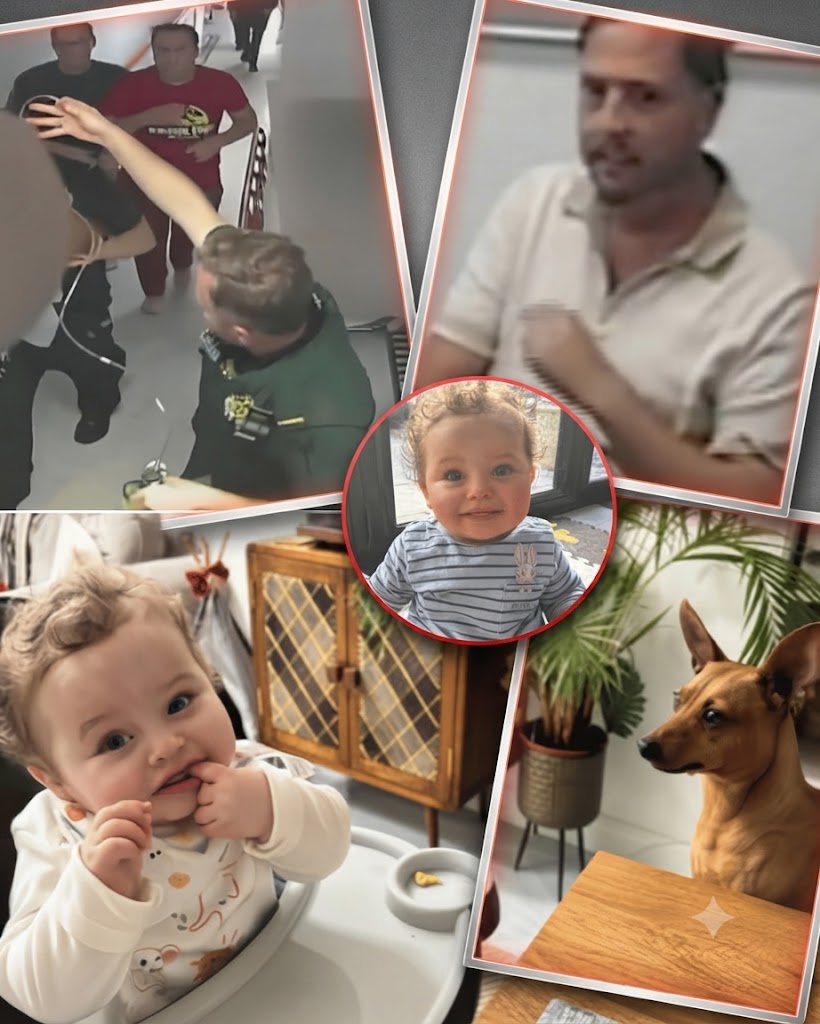
Years before Jamie Varley was approved to adopt a baby boy who would later be murdered in his care, a former partner says he had already witnessed a side of the former teacher that left him frightened and, eventually, trapped in an abusive relationship.
Adam, who dated Varley for approximately two years while they were students at Manchester Metropolitan University between 2011 and 2013, has now described what he says were years of manipulation, controlling behavior, alleged physical violence and increasingly disturbing incidents behind closed doors.
His account has emerged after Varley was convicted of murdering and sexually abusing 13-month-old Preston Davey.
In June, Varley was given a whole-life order, meaning he will spend the remainder of his life in prison. His former partner, John McGowan-Fazakerley, was sentenced to 25 years after being convicted of causing or allowing Preston’s death, along with child-cruelty and sexual-assault offences.
Adam’s account is not evidence that Varley’s later crimes could have been predicted with certainty.
Nor does it establish that authorities involved in the adoption process had access to the allegations he now describes.
But his testimony raises an uncomfortable question: how easily can a person’s history of alleged abusive behavior remain hidden when they later present themselves as a suitable parent?
The relationship that Adam says changed dramatically
According to Adam’s account, he met Varley while the two were studying at university.
At first, he said, Varley appeared charming and charismatic.
That impression did not last.
In an interview published by The Sun, Adam described what he says became a pattern of manipulation and abuse during their relationship.
He alleged that Varley could shift rapidly between being affectionate and becoming angry or hostile, creating what Adam characterized as a “Jekyll and Hyde” personality.
Adam also said that friends became sufficiently concerned about the relationship that they warned him about Varley.
The relationship nevertheless continued for around two years.
That detail is significant because abusive relationships are often not defined by constant hostility.
Instead, periods of affection, apologies and apparent normality can exist alongside intimidation and controlling behavior.
Adam says that dynamic made it difficult for him to leave.
Alleged violence behind closed doors
The most serious allegations made by Adam concern physical violence.
He has described episodes in which he says Varley became enraged and physically aggressive.
Because those allegations concern events more than a decade ago and were not the subject of the criminal trial involving Preston, they should be treated as Adam’s allegations, rather than established facts.
There is no public evidence that Varley was prosecuted or convicted for the alleged conduct Adam has described.
That distinction is especially important given the seriousness of the later Preston case.
The allegations nevertheless provide a disturbing retrospective account of the man Varley was, according to his former partner, long before he entered the adoption process.
Adam says that what initially appeared to be an intense relationship gradually became something much more controlling.
He describes fear, manipulation and a sense that Varley was capable of switching suddenly from charm to aggression.
The alleged fake suicide attempts
One of the more disturbing elements of Adam’s account involves what he says were staged or threatened suicide attempts.
According to The Sun, Adam alleges that Varley used apparent suicide crises as a means of controlling him and preventing the relationship from ending.
Adam also described alleged stalking behavior involving fake online profiles.
The reported behavior, if accurate, would represent a pattern of psychological manipulation rather than a single isolated incident.
Again, these are allegations made by Adam and were not findings in the Preston murder trial.
But they are significant because Adam says they formed part of a wider cycle.
He was not simply describing someone who occasionally lost his temper.
He was describing a relationship in which he says fear and emotional pressure gradually became normalized.
Why did Adam stay?
Perhaps the most revealing part of Adam’s account is his explanation of why he did not simply walk away.
From the outside, leaving an abusive relationship can appear straightforward.
Inside one, it can be considerably more complicated.
Adam says Varley’s manipulation left him struggling to break free.
The alleged suicide threats, emotional pressure and alternating periods of affection and aggression reportedly contributed to that situation.
That pattern is consistent with what specialists in domestic abuse describe as coercive dynamics, although no clinical or professional assessment of Varley’s historical behavior has been made public.
Adam has also expressed regret.
He now looks back at his experience with the knowledge that Varley would eventually be convicted of murdering a child he had adopted.
That hindsight has led him to ask whether speaking out earlier might somehow have changed what happened.
There is, however, no way to know whether such a report would have altered Varley’s future.
More than a decade later, Preston entered Varley’s life
The timeline makes the contrast particularly striking.
Adam’s relationship with Varley ended around 2013.
Almost a decade later, Varley and McGowan-Fazakerley began the process of becoming adoptive parents.
Preston Elijah Davey had been born in June 2022.
When he was only five days old, he was placed into emergency foster care.
For the first nine months of his life, his foster carers described him as healthy and happy, according to Lancashire Police.
An adoption panel approved Varley and McGowan-Fazakerley’s adoption of Preston on March 23, 2023.
The baby subsequently moved into their care at the end of March or beginning of April.
Within just a few months, he was dead.
What happened after Preston entered the home
Unlike Adam’s allegations from the university years, the evidence concerning Preston was extensively examined in court.
Lancashire Police said that all the criminal offences against Preston occurred during the approximately four months he was in Varley and McGowan-Fazakerley’s care.
Prosecutors presented evidence of physical cruelty, sexual abuse and the creation and distribution of indecent images.
The child suffered approximately 40 injuries, including bruising and a healing fracture.
Varley was convicted of murder, serious assault, child-cruelty offences and offences involving indecent images of children.
The jury also heard evidence suggesting that Preston’s condition had deteriorated well before the fatal day.
That makes the story of the earlier warnings around Varley especially significant — not because they prove what happened later, but because the case revealed that multiple warning signs appeared during the short period Preston was in the couple’s care.
The first signs appeared within weeks
According to Lancashire Police, Varley began sending messages to friends complaining about Preston relatively soon after the adoption.
The messages included descriptions of the baby as annoying and admissions that the couple were struggling to cope.
Other evidence presented during the trial showed that Varley and McGowan-Fazakerley were struggling with the demands of caring for the child.
The Guardian reported that messages included comments about exhaustion, sleepless nights and the difficulty of caring for a baby who cried frequently.
Those comments, considered individually, would not necessarily indicate criminal behavior.
Many new parents struggle with sleep deprivation.
Many find the transition to parenthood overwhelming.
The significance came from what happened alongside those complaints.
Medical encounters raised questions
Preston was seen by medical professionals multiple times before his death.
ITV reported that the baby had been taken to hospital three times during the weeks before he died and was seen by numerous professionals.
On May 25, Varley took Preston to Blackpool Victoria Hospital, saying the baby was experiencing breathing difficulties and had suffered a seizure.
Police were contacted by safeguarding staff at the hospital and detectives from the Child Protection Team attended.
However, medical staff did not identify concerns about a potential non-accidental injury at that stage.
It was the only occasion before Preston’s death that police were contacted by hospital staff in relation to him, according to Lancashire Police.
The subsequent investigation found evidence that Preston had already suffered physical cruelty.
An abandoned emergency call
Another episode occurred earlier in May.
At 9:43 p.m. on May 11, McGowan-Fazakerley made a 999 call that lasted only four seconds.
Before the call ended, Varley could reportedly be heard saying “put it down.”
Police called the number back.
A male voice reportedly said the emergency call had been made by mistake and that they had intended to call the non-emergency 111 service.
McGowan-Fazakerley subsequently contacted 111 from Varley’s parents’ home, saying Preston was experiencing breathing problems and was unable to hold his head properly.
An out-of-hours medical call was arranged.
But according to Lancashire Police, the couple did not seek medical attention for Preston, and neither mentioned the reported health concerns to the health visitor the following day.
The episode became one of several details examined during the trial.
The disturbing bath video
One of the clearest examples of what happened inside the home came from video recovered from Varley’s phone.
On July 24, 2023 — only three days before Preston’s death — Varley recorded the baby alone in a bath for more than 14 minutes.
Lancashire Police said Preston was not in his bath seat and appeared distressed, whimpering at points as he unsuccessfully tried to get out.
The video became part of the prosecution evidence.
It was not simply a record of poor supervision.
It demonstrated that an adult had recorded the child’s distress rather than immediately intervening.
The final hours
On July 27, Varley recorded another video showing Preston lying on a bed struggling to breathe.
Lancashire Police said the prosecution case was that Preston had already been assaulted earlier that day.
A second assault subsequently caused an obstruction to his airway.
Police said Varley was the only person present in the house during both assaults.
It was not until 6:24 p.m. that Varley and McGowan-Fazakerley arrived at Blackpool Victoria Hospital with Preston unconscious and in cardiac arrest.
He was pronounced dead at 7:20 p.m.
The initial explanation that Preston had accidentally drowned was subsequently contradicted by the medical evidence.
A post-mortem examination revealed approximately 40 separate injuries, including injuries to his mouth, throat, bowel and bladder and a healing fracture to his arm.
A pattern that investigators eventually uncovered
The court case revealed a disturbing progression.
Preston arrived in the couple’s care apparently healthy.
Within weeks, there were messages describing frustration and difficulty coping.
There were unexplained injuries.
There were hospital contacts.
There was an abandoned 999 call.
There were videos and images documenting abuse.
There was a serious incident involving the baby’s breathing.
And eventually there was the fatal assault.
The question now being asked is whether enough of those individual warning signs should have triggered stronger intervention.
That is different from saying that social workers or doctors could have known the future.
Safeguarding decisions are made using information available at the time.
And the information available in April or May 2023 was inevitably different from the complete picture revealed by a criminal investigation years later.
Where Adam’s story fits
This is where Adam’s account creates a disturbing retrospective layer.
He says the behavior he witnessed was not something that suddenly appeared in 2023.
According to him, Varley had already demonstrated controlling and allegedly violent behavior when they were university students.
Friends had reportedly warned Adam.
He says he experienced manipulation and alleged abuse.
And now he says he wishes he had stopped Varley before he ever became responsible for a child.
But there is an important limitation.
There is no evidence publicly establishing that the adoption agencies or authorities involved in Preston’s placement knew about Adam’s allegations.
Nor is there evidence that Adam’s relationship with Varley would have been relevant to the adoption assessment nearly a decade later.
The adoption process itself involved assessments and an adoption panel.
Lancashire Police confirms that Varley and McGowan-Fazakerley were approved by an adoption panel on March 23, 2023.
Whether that process should have uncovered additional concerns is a matter for safeguarding review and public scrutiny.
It should not be answered simply by assuming that every allegation made after a horrific crime was necessarily knowable beforehand.
The ‘ordinary couple’ problem
Perhaps the most troubling element of the case is how normal Varley and McGowan-Fazakerley appeared to people around them.
The Guardian reported that neighbors described them as an ordinary couple and that people who knew them believed Preston appeared happy before moving into their home.
That outward normality is important.
Abuse does not always announce itself.
A person can have a respectable career, a stable home and apparently loving relationships while concealing profoundly disturbing behavior.
That makes safeguarding particularly difficult.
It also explains why Adam’s story has resonated so strongly.
His account suggests that at least one person who knew Varley intimately says he saw a very different side of him.
Varley is now imprisoned for life
There is no longer any question about the outcome of the Preston case.
After a seven-week trial at Preston Crown Court, Varley was convicted of murder and multiple related offences.
He was given a whole-life order in June.
McGowan-Fazakerley received a 25-year sentence, with Lancashire Police stating that he must serve two-thirds of the sentence before release considerations.
The convictions brought a legal conclusion to the central question of who was responsible for Preston’s death.
But they have also prompted wider questions about adoption assessment, safeguarding and the ability of institutions to recognize hidden abusive behavior.
What Adam’s warning really tells us
The most responsible interpretation of Adam’s story is not that he “knew” Varley would become a killer.
He could not have known that.
It is that he says he witnessed behavior he considered abusive and frightening long before the murder.
His regret comes from looking backward with information that did not exist at the time.
That is a very human reaction to an unimaginable tragedy.
But it also raises an uncomfortable safeguarding question.
When someone has a history of alleged controlling or violent behavior that remains hidden from institutions, how can the system possibly assess the risk they may pose to someone vulnerable?
There is no simple answer.
A past allegation does not automatically predict future murder.
At the same time, institutions cannot protect children from information they never receive.
The road ahead
Preston’s death has already exposed serious questions about what happened during the four months he lived with Varley and McGowan-Fazakerley.
The baby was seen by healthcare professionals.
Police were contacted.
There were reports of breathing difficulties.
There were injuries.
There were videos.
And yet the abuse continued until Preston was killed.
The new account from Adam adds another, much earlier chapter — one that allegedly began at university more than a decade before Preston entered the adoption process.
Whether that history should have been known to anyone involved in Varley’s later life is unclear.
What is clear is that Adam now lives with a painful form of hindsight.
He says he wishes he had been able to stop Varley.
Preston was only 13 months old when his life ended.
The child had spent his first nine months in foster care, where professionals described him as healthy and happy.
He was placed with prospective adoptive parents in the hope of finding a permanent family.
Four months later, he was dead.
And after Varley’s conviction, the story of his former partner has added another disturbing question to an already devastating case:
Were the warning signs invisible — or were they simply never connected until it was far too late?
That is ultimately a question for safeguarding investigators, not social-media speculation.
But Adam’s account ensures that the story of Preston Davey will no longer begin with the adoption.
For him, the warning signs began years earlier.