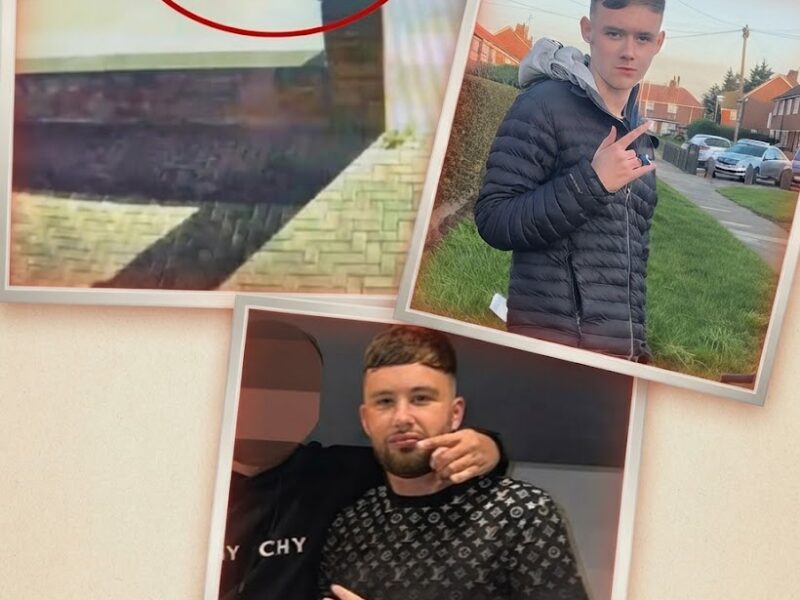
A66 Crash’s Chilling Family Connection Emerges: Victim’s Uncle Was Jailed Months Earlier After 100MPH Wrong-Way Police Chase on Same Road
🚨 THE A66 HORROR HAS JUST TAKEN AN EVEN MORE DISTURBING TURN.
One of the young men killed in the crash had an uncle who was jailed just months earlier after a 100MPH wrong-way police chase — on the SAME A66 road.
Different night. Different car. But almost the same terrifying decision… so how deep does this family connection really go? And what happened on that stretch of road before seven people lost their lives? 👇
🔥 The chilling details are raising questions nobody expected.
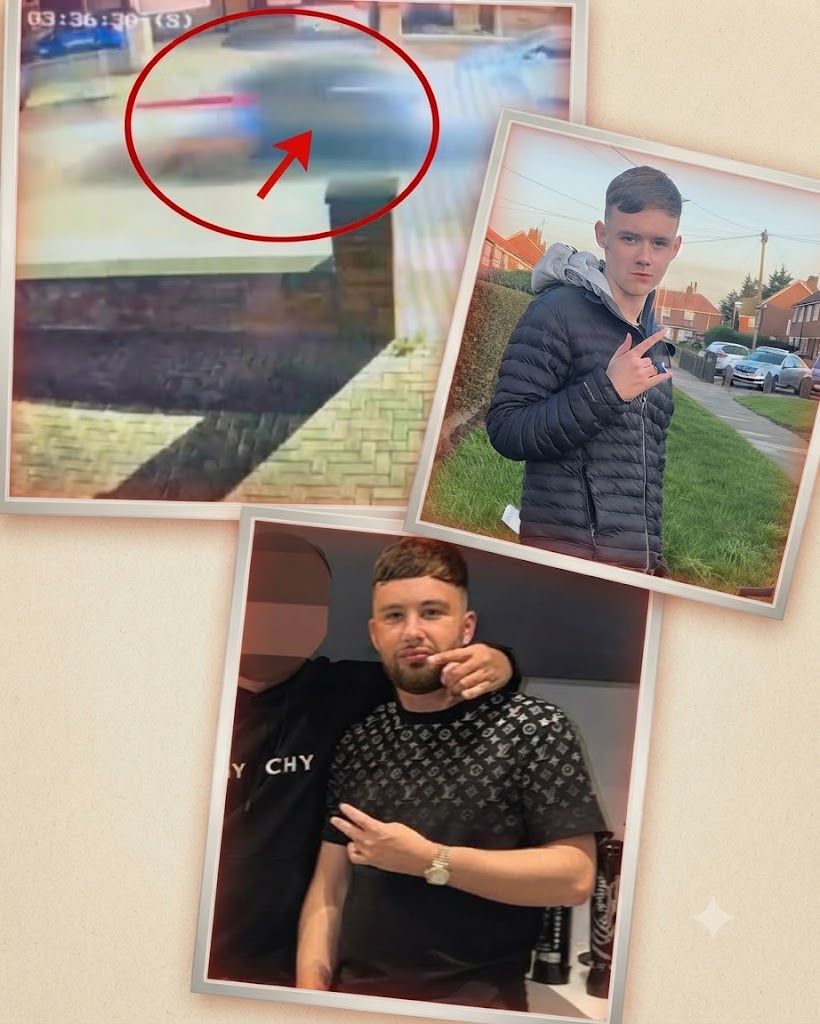
The devastating A66 crash that killed seven people, including two Cleveland Police officers, has taken another unsettling turn after details emerged about a relative of one of the young men who died.
Makai Saddington, 18, was one of five people travelling in a Volkswagen Passat that collided head-on with a marked police vehicle on the A66 near South Bank, Middlesbrough, in the early hours of August 22.
Two police officers, PC Matthew Blades, 37, and PC Tom Clough, 38, were also killed.
Now it has emerged that Saddington’s uncle, Aaron Saddington, 23, was sentenced to 20 months in prison in June after a separate incident on the same A66, during which he drove at speeds approaching 100mph on the wrong side of the dual carriageway while attempting to evade police.
The parallel has drawn renewed attention online and in British media because both incidents involved the same fundamental danger: a vehicle travelling against oncoming traffic during an encounter with police.
But investigators have not suggested that Aaron Saddington’s earlier offence caused, influenced or was directly connected to the fatal August crash.
The significance of the earlier case is therefore one of striking coincidence and family context — rather than an established causal link.
The fatal crash
The August 22 collision happened at approximately 3:39 a.m. near South Bank.
According to information released by Cleveland Police and the Independent Office for Police Conduct, officers had been pursuing the Volkswagen Passat shortly before the collision. The pursuit was subsequently abandoned, but the Passat entered the A66 travelling in the wrong direction.
The police vehicle carrying PC Blades and PC Clough was travelling correctly along the road when the two vehicles collided.
All seven people in the two vehicles died at the scene.
Cleveland Police later identified the five occupants of the Passat as Cole Robert Worthy, 17; Theo Rae, 17; Makai Saddington, 18; Jakub Matusiak, 23; and Michael Robert Cahill, 23.
The IOPC has said the pursuit ended roughly 10 seconds before the fatal collision, and investigators are examining police logs, in-car footage and statements from officers involved.
That timing has become one of the most closely scrutinized elements of the investigation.
The uncle’s earlier A66 incident
Against that background, the case involving Aaron Saddington has attracted attention.
Court reporting indicates that Saddington was sentenced in June 2026 after pleading guilty to dangerous driving, driving while disqualified and driving without insurance.
The incident occurred on May 6, when he attempted to evade police after officers responded to reports of erratic driving.
According to reports of the court proceedings, he entered the A66 travelling in the wrong direction and reached speeds of around 100mph, placing oncoming motorists at serious risk.
He was eventually stopped and arrested.
The court subsequently imposed a 20-month prison sentence.
The details were reported again this week following the death of his nephew, with multiple outlets highlighting the extraordinary similarity between the two incidents.
The comparison is difficult to ignore.
In May, a 23-year-old relative allegedly used the wrong side of the A66 while attempting to escape police.
Three months later, an 18-year-old relative died after the Volkswagen he was travelling in entered the same road against the flow of traffic during a police-related incident.
Yet the available evidence does not establish that the two events were connected beyond the family relationship and the road itself.
That distinction matters as the investigation continues.
Who was Makai Saddington?
Makai Saddington’s background has also become part of the growing scrutiny surrounding the crash.
Court records reported by ITV News show that he had appeared before Teesside Magistrates’ Court earlier in 2026 and admitted offences involving police officers.
ITV reported that Saddington admitted three counts of assaulting a police officer in March. Further proceedings in July involved another alleged assault on a police officer and a separate offence involving racially or religiously aggravated intentional harassment, alarm or distress.
The Independent separately reported that Saddington was awaiting trial over allegations including assaulting a police officer and causing racially aggravated alarm or distress before his death.
Those details have generated intense debate online.
Some social-media users have focused heavily on the criminal histories of the five young men in the Passat, while others have urged people not to reduce the victims to their previous offences.
That tension was particularly visible in discussions surrounding public tributes.
A Reddit discussion about the case included sharply divided reactions, with some users arguing that the previous offences should have carried stronger consequences, while others questioned whether information about criminal records should be emphasized while the wider investigation remains active.
Social media adds another layer
The A66 investigation has also become part of a much broader debate about dangerous-driving content on social media.
The BBC has reported that a TikTok account believed to have belonged to Saddington contained footage from 2025 apparently showing him and others involved in dangerous driving.
BBC Verify examined a 1-minute-34-second clip in which a car was driven across footpaths and parkland in Middlesbrough. Another video reportedly showed a joyride with a speedometer displaying 100mph. The material has since been deleted.
Other reports have described videos apparently showing police pursuits or high-speed driving.
Those clips have become particularly controversial because they appear to predate the fatal crash.
However, it is important to separate what the footage demonstrates from what it does not.
The existence of previous dangerous-driving videos does not prove that the same behavior directly caused the August 22 collision. Nor does it establish why the Passat entered the A66 in the wrong direction that night.
Those questions remain part of the investigation.
A wider criminal investigation
The crash itself has also opened a much larger investigation.
Cleveland Police have said the circumstances surrounding the incident have potential links to serious and organised criminal activity.
By August 25, the number of people arrested in connection with the investigation had reached 17. Those arrests involved allegations ranging from participation in an organised crime group to firearms, drugs and other offences.
That broader investigation has added another layer of complexity.
Reports have linked the Passat and events immediately preceding the pursuit to a series of incidents in Middlesbrough, while authorities have been examining whether organised criminal activity played a role.
But again, police investigations into possible connections are not the same as established findings.
Officials have urged caution while detectives and the IOPC continue to piece together what happened.
The community reaction
The crash has triggered grief, anger and controversy across Teesside.
The two officers killed, PC Matthew Blades and PC Tom Clough, have been remembered by their families and colleagues as dedicated public servants.
Blades was a father of two, while Clough had served in the military before joining Cleveland Police. Their deaths have generated widespread support for their families, with a fundraiser receiving substantial public donations.
At the same time, tributes for the five young men have attracted controversy.
Hundreds attended vigils, while some memorial events involved flares and other displays that drew criticism.
The contrasting reactions underline the difficulty of the story.
Seven people died in a single collision.
Two were police officers carrying out their duties.
Five were young men travelling in the vehicle that entered the road in the wrong direction.
And behind each of those deaths are families now dealing with an irreversible loss.
Why the family connection matters — and why it doesn’t
The revelation involving Aaron Saddington is undoubtedly striking.
A relative of one of the crash victims was convicted only months earlier after driving at extreme speed on the wrong side of the same road while fleeing police.
That is a remarkable parallel.
But it would be misleading to suggest that the earlier case explains the later tragedy.
There is currently no publicly established evidence that Aaron instructed, encouraged or otherwise influenced Makai’s actions on August 22.
Nor is there evidence that the two incidents were part of the same operation.
What the connection does provide is a disturbing piece of context in a case already dominated by questions about dangerous driving, police pursuits, criminal behavior and the influence of online culture.
It also illustrates why investigators and journalists are examining the wider circumstances surrounding the young people involved rather than treating the collision as an isolated road accident.
What happens next?
The A66 investigation is far from over.
The IOPC continues to examine the police response and the circumstances surrounding the pursuit. Investigators are reviewing footage, police communications and other evidence to establish precisely what happened during the crucial minutes before the collision.
At the same time, Cleveland Police’s wider investigation into suspected organised crime continues, with arrests already extending beyond those directly involved in the crash.
The controversy over dangerous-driving videos is also unlikely to disappear.
Following the crash, the UK government called on social-media companies to remove content that glorifies reckless driving and warned that tougher regulatory action could follow if platforms fail to act.
For now, the most striking revelation may be the simplest one: months before seven people died on the A66, another member of the same family had already been sentenced for an extraordinarily similar act on that very road.
Whether that similarity is merely a tragic coincidence, a window into a wider culture of dangerous driving, or something investigators will eventually place within a broader pattern remains unknown.
What is certain is that the A66 has now become the center of a case involving seven deaths, multiple criminal investigations, questions about police pursuits, social-media culture — and a family connection that has made an already disturbing story even harder to ignore.