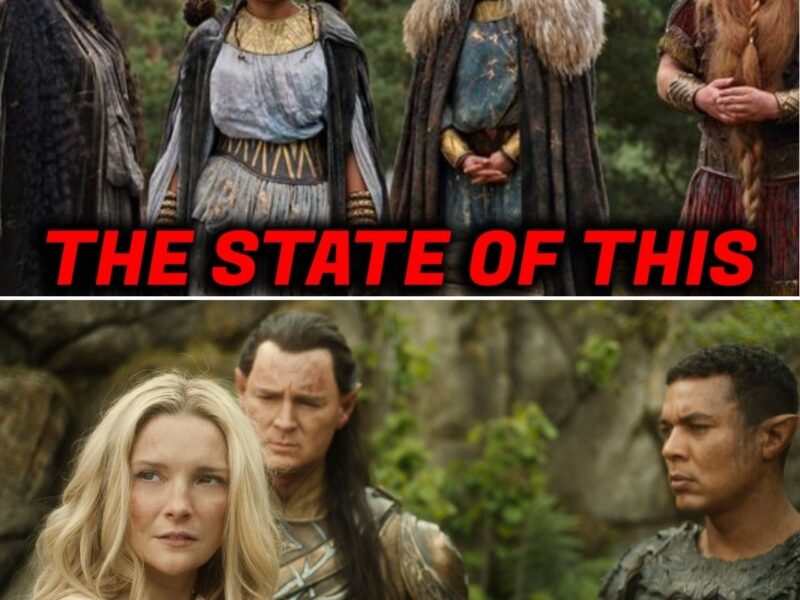
WTF Were Amazon Thinking With The Rings of Power? Season 3 Has One Massive Problem to Solve
🚨 WTF WERE AMAZON THINKING WITH THE RINGS OF POWER?! 😳
Season 3 is coming with Sauron, the One Ring, Nazgûl origins and a darker Middle-earth — so why are Tolkien fans STILL asking the same brutal question: how did a show with this much money end up losing so much of its original hype?
The new footage looks bigger. The stakes look darker. But the fandom reaction is raising a completely different problem… 👀
👇 Click to see why The Rings of Power may have a MUCH bigger problem than its next season.
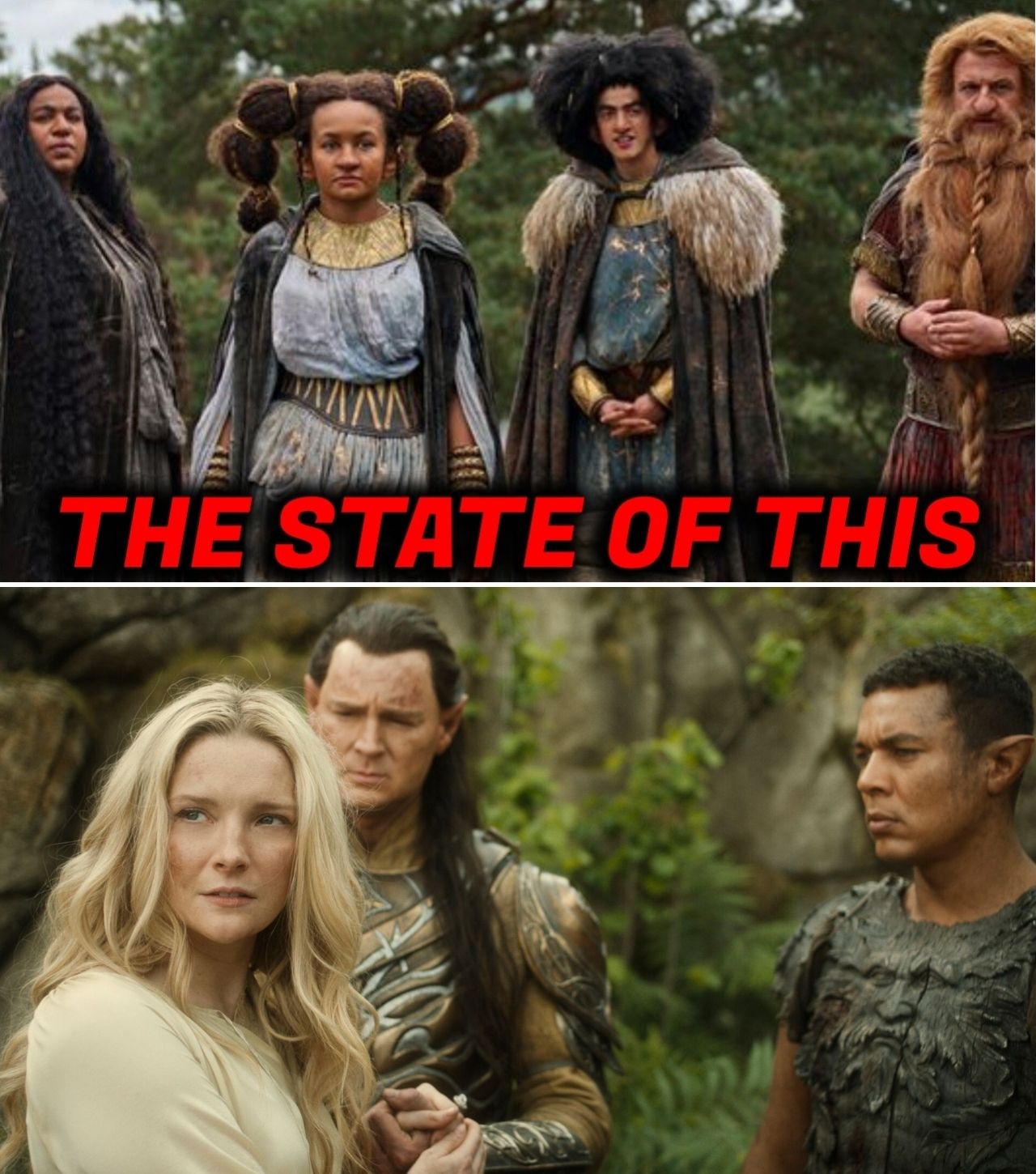
WTF Were Amazon Thinking With The Rings of Power? Season 3 Has One Massive Problem to Solve
Amazon’s The Lord of the Rings: The Rings of Power is heading back to Middle-earth with its biggest storyline yet.
Season 3 will premiere November 11, 2026, with the first four episodes arriving together before the remaining episodes are released weekly. The new season jumps forward five years after the fall of Eregion and places Sauron’s rise at the center of the story as he works toward forging the One Ring.
On paper, this is exactly the kind of material that should have Tolkien fans counting down the days.
Sauron.
The One Ring.
Barad-dûr.
The early roots of the Nazgûl.
The return of Celeborn.
Gandalf.
A Middle-earth heading toward all-out war.
And yet, instead of universal excitement, the online reaction has produced a much more uncomfortable question:
What exactly happened to the enormous hype surrounding this show?
Because the problem facing The Rings of Power heading into Season 3 may not be its budget, its visual effects or even its cast.
It may be that a portion of the audience simply stopped caring.
Season 3 Is Finally Moving Toward the Story Fans Expected
There is no question that Amazon is making Season 3 look more consequential.
The official synopsis describes a Middle-earth five years after the fall of Eregion, with Sauron’s armies spreading across the world and the Dark Lord operating from his newly completed Barad-dûr.
His objective is now unmistakable.
The One Ring.
The remaining Elves, Dwarves, Men and Wizards must attempt to unite against him before he achieves complete domination.
That represents a significant tonal shift from some of the more fragmented storytelling that defined the show’s first two seasons.
Season 3 is putting the central mythology directly on the table.
Amazon’s own promotional material confirms that the season will explore Sauron’s attempt to forge the One Ring and will introduce new characters connected to the wider Second Age story, including Celeborn and Khamûl.
The season will also feature the Nazgnagôl, described as early Second Age ring-servants of Sauron who eventually become associated with the Nazgûl of the Third Age.
In other words, Amazon is no longer teasing the mythology.
It is moving directly into it.
So why isn’t everyone celebrating?
Because the Hype Has Changed
When The Rings of Power premiered in 2022, the scale of the production was one of its defining selling points.
Amazon had invested enormous resources into bringing Tolkien’s world to television.
The promotional campaign was massive.
The franchise was one of the most recognizable properties in entertainment.
And the prospect of returning to Middle-earth created huge expectations.
But the reception became increasingly complicated.
Some viewers praised the visuals, music and performances while criticizing the pacing and storytelling.
Others argued that the series took too many liberties with Tolkien’s chronology and mythology.
By Season 2, the conversation had shifted.
There were still dedicated fans defending the show, and some viewers considered the second season a substantial improvement.
But the cultural momentum surrounding the series was no longer comparable to the frenzy that accompanied its launch.
That distinction is now visible in online communities.
A recent Reddit discussion asked bluntly whether The Rings of Power still exists, with one highly upvoted commenter arguing that the show’s original hype had largely disappeared and that there was little ongoing discussion, deep-dive analysis or character fandom around it.
That is not an objective measurement of the show’s entire audience.
Reddit represents only a portion of viewers.
But it is revealing because the complaint is not simply “the show is bad.”
It is:
Nobody seems to be talking about it anymore.
For a franchise of this size, that is a serious warning sign.
The Tolkien Problem Has Never Really Gone Away
The most persistent criticism has involved the relationship between the series and Tolkien’s original writings.
The Rings of Power is set during the Second Age, thousands of years before The Hobbit and The Lord of the Rings.
Amazon does not possess the full rights to every Tolkien text describing that period.
That has forced the television series to construct a version of the Second Age using the material it has access to, while filling gaps through original storytelling.
That creative approach was always going to be controversial.
Some viewers accept it as the necessary reality of adapting Tolkien’s mythology for television.
Others believe the changes undermine the identity of the source material.
That argument has never disappeared.
In fact, some recent Reddit discussions remain dominated by complaints about Tolkien accuracy, characterization, dialogue and the show’s interpretation of Middle-earth. One particularly hostile discussion argued that the series prioritizes visual spectacle while failing to capture what those users consider the deeper themes and mythology of Tolkien’s work.
Those comments represent one side of the fandom, not an objective verdict.
But they demonstrate that the central argument surrounding the series remains remarkably consistent.
Season 3 has to prove that the show can become more than expensive Middle-earth imagery.
The Visuals Are Not the Problem
This is where the situation becomes particularly awkward for critics.
It is difficult to argue that The Rings of Power looks cheap.
The Season 3 footage is visually ambitious.
Sauron’s rise, the construction of Barad-dûr, battles across Middle-earth and the introduction of new creatures and characters all suggest that Amazon continues to spend heavily on the production.
The official Season 3 materials emphasize a darker tone and a world increasingly dominated by Sauron’s forces.
The show has always possessed that strength.
Its cinematography, production design, costumes, environments and visual effects have frequently been praised even by people who dislike its writing.
That creates a difficult question:
How do you fix a show whose biggest weakness isn’t how it looks?
You cannot simply increase the budget.
You cannot add another giant battle.
You cannot make Sauron look more intimidating.
If the problem is narrative investment, the solution has to happen at the character and story level.
Season 2 Did Have Defenders
It would be misleading to suggest that everyone hated Season 2.
They did not.
In fact, some fans on Reddit argued that the second season was substantially better than the first.
A discussion about the show’s future included viewers who said they genuinely enjoyed Season 2 and believed the series had improved across multiple areas.
That is an important counterpoint.
The story of The Rings of Power is not simply “Season 1 bad, Season 2 bad, everyone hates it.”
The audience is fragmented.
Some people believe the series has steadily improved.
Some enjoyed individual storylines while remaining frustrated with others.
Some abandoned it after Season 1.
Others watched Season 2 and are now interested in seeing where Season 3 goes.
And there is a smaller but very committed group that continues to defend the adaptation.
The problem is not necessarily that the show has no fans.
The problem is that the fandom appears to be much less unified than Amazon would probably want.
Then Comes the One Ring
Season 3 could change that.
The One Ring is arguably the most recognizable object in Tolkien’s entire universe.
For decades, audiences have associated it with Sauron, Mordor and the central mythology of Middle-earth.
Now the television series is finally approaching the creation of the Ring itself.
That gives the writers an enormous storytelling opportunity.
Sauron is no longer merely manipulating events from the shadows.
He is building toward the moment that will define the history of Middle-earth.
The official synopsis specifically places his efforts to create the One Ring at the heart of the season.
That could give the show a much stronger narrative spine.
Instead of jumping between disconnected storylines, the season has an obvious destination.
Everyone knows what Sauron wants.
The question is how he gets there.
And, perhaps more importantly, what everyone else does when they realize what is happening.
The Harfoots Are Gone — And That Is Significant
One of the more revealing changes is what Season 3 is not doing.
The Harfoots will not appear in the new season.
Amazon’s official information confirms their absence, while Gandalf becomes a more prominent part of the story.
That could be interpreted as evidence that the series is becoming more focused.
The early seasons spent considerable time developing storylines far away from the central Sauron-and-Rings narrative.
Season 3 appears to be narrowing the battlefield.
Elves.
Dwarves.
Men.
Wizards.
Sauron.
The One Ring.
That is a much clearer pitch.
And it may be exactly what some frustrated viewers have wanted.
The Gandalf Question Is Still Complicated
Gandalf’s presence also brings another layer of controversy.
Daniel Weyman returns as the Stranger, whose identity was revealed at the end of Season 2.
Season 3 now places Gandalf alongside the major conflicts of Middle-earth.
For fans who enjoy the show’s interpretation, this could be an opportunity to deepen the character.
For Tolkien purists, however, the chronology and mythology surrounding the Wizards have been another source of debate.
Again, the issue is not simply whether the character is entertaining.
It is whether viewers believe the adaptation is capturing the spirit of Tolkien while constructing a story that television audiences can follow.
That is an extraordinarily difficult balancing act.
The Cast Is Getting Bigger — But Bigger Isn’t Always Better
Season 3 is also introducing a significant group of new performers.
Jamie Campbell Bower will play Celeborn, Galadriel’s long-lost husband.
Zubin Varla joins as Khamûl.
Eddie Marsan plays Thrain.
Andrew Richardson plays Anarion.
Adam Young portrays Marnûkh.
Simon Pegg provides the voice of the Balrog.
At the same time, returning stars include Charlie Vickers as Sauron, Morfydd Clark as Galadriel, Robert Aramayo as Elrond and Daniel Weyman as Gandalf.
That is a substantial ensemble.
But it raises the same concern that has followed the series since its beginning.
More characters mean more storylines.
More storylines mean more screen time.
And more screen time is not automatically more drama.
One of the biggest challenges for Season 3 will therefore be making all these characters feel connected to a central story rather than simply giving viewers another collection of expensive subplots.
The Fan Reaction Could Be the Real Test
The most revealing reaction to Season 3 may not come from professional critics.
It may come from whether fans start talking again.
That sounds trivial.
It isn’t.
Successful franchises generate conversations naturally.
People debate characters.
They analyze scenes.
They create theories.
They argue about lore.
They make memes.
They produce videos.
They write long posts explaining why a particular character matters.
A recent Reddit discussion suggesting that The Rings of Power no longer generates much of that activity is therefore worth paying attention to, even if it cannot be treated as a scientific measurement of viewership.
The show doesn’t necessarily need everyone to love it.
It needs people to care.
Anger is engagement.
Praise is engagement.
Arguments over Tolkien lore are engagement.
Silence is much harder to overcome.
Amazon Is Betting on the Story Finally Becoming Bigger Than the Controversy
Season 3 arrives at a crucial moment.
The series is already established.
Amazon has committed to continuing the story.
The production has finished filming Season 3, and the release date is locked for November 11.
The first four episodes will launch together, followed by two episodes on November 18 and the final two on November 25.
Reports have also indicated that the show is expected to complete a five-season plan, although the exact long-term future remains dependent on Amazon’s decisions and the series’ performance.
That makes Season 3 particularly important.
It is far enough into the story that the show can no longer rely on introductions.
The audience knows the characters.
The audience knows Sauron.
The audience knows the Rings.
Now the story has to deliver.
So, WTF Were They Thinking?
That question may actually have two answers.
If the question is why Amazon spent so much money on The Rings of Power, the answer is obvious: The Lord of the Rings is one of the most valuable fantasy properties in entertainment history.
If the question is why the series has struggled to generate the same cultural phenomenon as Peter Jackson’s films, the answer is much harder.
The films had a relatively focused narrative.
The television series has an enormous ensemble.
The films had Tolkien’s completed stories as their foundation.
The television series has to construct a large portion of its Second Age narrative around limited source material and adaptation choices.
The films arrived as a singular cinematic event.
The television show has to maintain audience interest across years of episodic television.
Those are fundamentally different challenges.
Season 3 Has One Chance to Change the Conversation
The good news for Amazon is that Season 3 may finally possess the ingredients necessary to do exactly that.
Sauron is at the center.
The One Ring is being forged.
Barad-dûr is rising.
The Nazgûl mythology is beginning to emerge.
Middle-earth is heading toward war.
Galadriel is dealing with the consequences of everything that happened before.
Gandalf is becoming more important.
And the story has moved closer to the mythology audiences have been waiting to see.
The bad news is that none of that guarantees success.
The visuals can be spectacular.
The battles can be enormous.
The budget can remain massive.
But if audiences still don’t become emotionally invested in the characters and story, the same criticisms will return.
And this time, the “it’s just setting things up” defense becomes harder to make.
Season 3 is no longer just setting the table.
The One Ring is finally on the table.
Now Amazon has to prove that it knows what to do with it.
The premiere on November 11 will provide the first real answer.
Until then, the biggest question surrounding The Rings of Power isn’t whether Amazon can make Middle-earth look spectacular.
It already can.
The question is whether it can finally make Middle-earth feel important again.