Even the Queen of Country Was Nervous: What Dolly Parton Feared Before Meeting Queen Elizabeth II
EVEN DOLLY PARTON WAS “SCARED TO DEATH” — THE QUEEN OF COUNTRY ONCE REVEALED WHAT TERRIFIED HER MOST ABOUT MEETING QUEEN ELIZABETH II. 👑💔
She had performed before millions, but one tiny royal detail had her panicking backstage — until the late Queen did something that instantly changed everything. 👇🔥
Dolly Parton spent more than six decades performing in front of enormous audiences, commanding stages with her trademark confidence, humor and unmistakable style.
But there was one audience that made even the Queen of Country nervous.
It was the real queen.
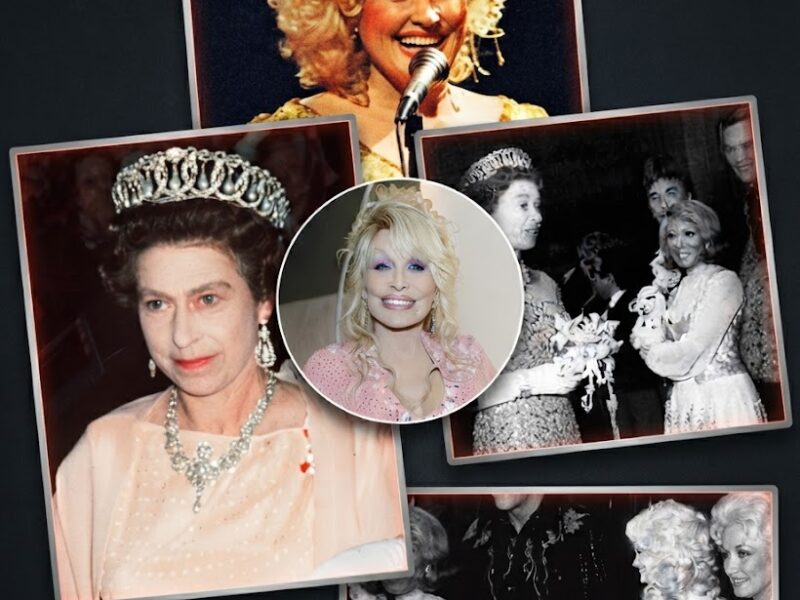
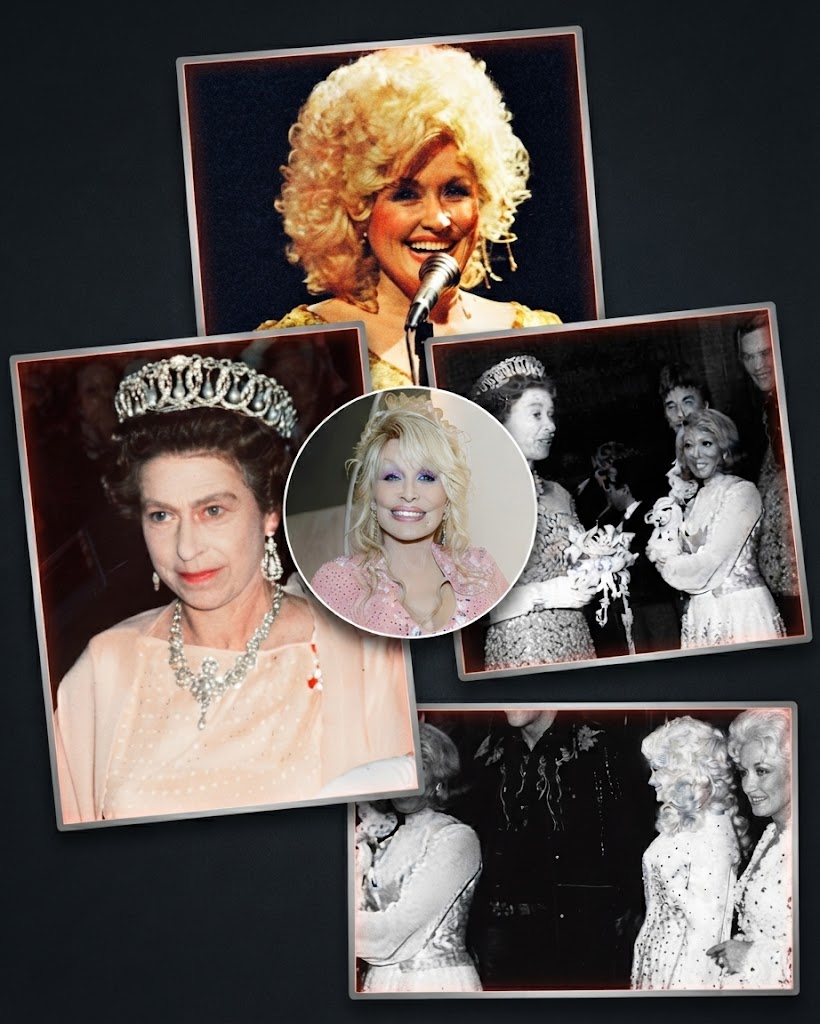
In 1977, Parton was invited to perform for Queen Elizabeth II during the monarch’s Silver Jubilee celebrations in Glasgow, Scotland. The country star was already a major performer at the time, but meeting the British monarch presented an entirely different kind of challenge.
Parton later revealed that she was particularly worried about one thing: getting the royal etiquette wrong.
She was afraid she would not know how to curtsy properly.
“I was scared to death that I was not going to know how to curtsy, that I wasn’t going to bend right,” Parton recalled in a 2023 interview with Insider.
Yet the encounter ultimately turned into one of the most warmly remembered moments of her career.
Rather than encountering an intimidating monarch obsessed with protocol, Parton found Queen Elizabeth to be warm, kind and remarkably reassuring.
And decades later, the story offered a revealing glimpse of the woman behind the larger-than-life Dolly Parton persona.
The secret was revealed on the flight
Parton’s appearance at the Royal Variety Show in Glasgow came as part of celebrations marking Queen Elizabeth II’s 25th year on the throne.
The event took place at the King’s Theatre in Glasgow in May 1977 and featured an impressive lineup that included the Jackson 5, Scottish singer Sydney Devine and comedian Frankie Howerd.
But Parton’s management had apparently kept one crucial detail from her.
She did not initially know that she would be performing in front of the Queen.
According to Parton’s later recollection, she only discovered the full significance of the engagement while traveling to Britain.
“When they told me on the plane I was appearing in front of the Queen,” Parton recalled, “I just jumped up and down telling everyone.”
For a woman who would eventually become one of the world’s most recognizable entertainers, the reaction was surprisingly childlike.
Parton had grown up fascinated by stories of kings, queens, princes and princesses.
Now she was about to meet one herself.
She later described the experience as “one of the biggest thrills of my life.”
That excitement, however, quickly collided with nerves.
The curtsy that terrified Dolly
Parton’s biggest concern was not her singing.
She was not worried about forgetting lyrics or performing before a royal audience.
She was worried about how to curtsy.
Royal protocol can appear complicated to outsiders, particularly when meeting the monarch. For someone who had grown up in rural Tennessee rather than within British royal circles, the idea of getting the formal greeting wrong was understandably intimidating.
Parton later explained that she was worried she would bend incorrectly or make some other embarrassing mistake.
The fear was almost comical in hindsight.
Here was a performer who had spent years building confidence on stage, singing in front of packed arenas and appearing on television.
Yet the prospect of making one incorrect movement in front of Queen Elizabeth had her genuinely frightened.
“I was scared to death,” she recalled.
But what happened next changed the entire atmosphere.
Queen Elizabeth made the nerves disappear
When Parton finally met the Queen backstage, she discovered that the monarch was not nearly as intimidating as she had imagined.
According to Parton’s recollection, Queen Elizabeth was “very warm” and “very sweet.” She also believed the Queen understood that formal protocol was simply part of the job.
Parton explained that although there were rules about bowing and royal etiquette, she felt the Queen herself was not overly concerned if someone made a mistake.
“She didn’t care about that,” Parton said of the protocol, describing it as something the Queen simply had to observe. If someone made a mistake, Parton recalled, the monarch was understanding.
That observation appears to have reassured Parton enormously.
The moment that had seemed so intimidating suddenly became a personal meeting between two women.
One was a young American country superstar.
The other was Britain’s long-serving monarch.
And instead of rigid formality dominating the encounter, Parton remembered warmth.
When two queens met
The meeting has since acquired an almost fairy-tale quality.
Parton was already being referred to as the “Queen of Country.”
Queen Elizabeth was, of course, the reigning queen of the United Kingdom.
But Parton’s own recollections suggest that she did not approach the meeting as if the two were equals in status.
She was starstruck.
She had grown up imagining the world of royalty through fairy tales, with crowns, jewels and palaces representing a world far removed from her own childhood in Tennessee.
Now she was backstage with the woman who represented that world in real life.
Parton later recalled simply being amazed by the opportunity to meet “the Queen of England.”
The contrast between Parton’s childhood and the setting could hardly have been greater.
She was born into a large, poor family in the Smoky Mountains of Tennessee and grew up in a small home.
By the time she met Elizabeth, she had already begun building the extraordinary career that would eventually make her an international icon.
But despite all that success, the little girl fascinated by fairy tales was still there.
And meeting the Queen brought that childhood dream unexpectedly to life.
The performance itself
Parton’s appearance was part of a major celebration for Elizabeth’s Silver Jubilee.
She performed alongside other major acts, including the Jackson 5, during the Royal Variety Show.
The event was a snapshot of popular entertainment in the late 1970s, bringing together American music stars and British performers for a celebration of the monarch.
Parton’s career was also at an important turning point.
She was working to expand her reach beyond traditional country music and establish herself as a broader entertainment star.
Contemporary reporting from TIME in 1977 documented Parton’s ambitions as she experimented with a more crossover-oriented sound while maintaining her country identity.
That makes the Royal Variety appearance particularly significant in retrospect.
Parton was not yet the global entertainment institution she would eventually become.
She was still building the empire.
Yet she was already important enough to be invited to perform for the Queen during one of the most significant ceremonial celebrations of Elizabeth’s reign.
A memory Parton carried for decades
The encounter remained meaningful to Parton long after the Silver Jubilee.
Following Queen Elizabeth’s death in 2022, Parton publicly remembered the monarch and shared a photograph of the pair together.
She praised Elizabeth’s grace and strength and offered her thoughts and prayers to the royal family.
That later tribute showed that the meeting had not simply been another celebrity photograph.
Parton remembered the Queen warmly.
And her recollections of their encounter consistently emphasized the same qualities: kindness, warmth and generosity.
That is perhaps the most revealing part of the story.
Parton could have remembered the occasion primarily for the spectacle.
Instead, she remembered how the Queen made her feel.
The royal relationship continued
Parton’s relationship with the British Royal Family did not end with Queen Elizabeth.
In 2023, while visiting Britain to promote her album “Rockstar,” Parton revealed that she had been invited to tea with Catherine, Princess of Wales.
The invitation was flattering, but Parton ultimately declined because her schedule was already packed with promotional commitments.
She later joked that the Princess was not promoting her album, suggesting that her busy schedule made the meeting difficult to fit in.
Parton also expressed hope that she could meet Catherine and her children another time and even invited the royal children to visit Dollywood in Tennessee.
The anecdote showed how different Parton’s attitude toward royalty had become.
The young woman who had once been terrified of curtsying incorrectly before Queen Elizabeth had eventually developed enough confidence to joke about scheduling tea with the Princess of Wales.
But the warmth she associated with the late Queen remained part of her memories of Britain.
The story takes on new meaning after Parton’s death
Parton’s death on August 25, 2026, at the age of 80 has prompted renewed interest in the moments that shaped her extraordinary life.
Her death followed a brief battle with cancer, according to her representatives, and triggered an international wave of tributes.
Among the tributes was an extraordinary gesture from Britain.
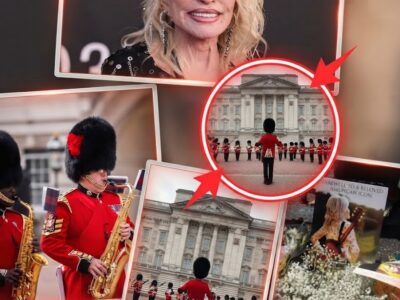
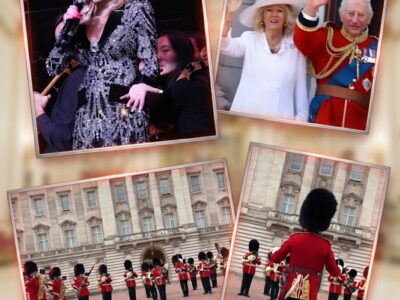
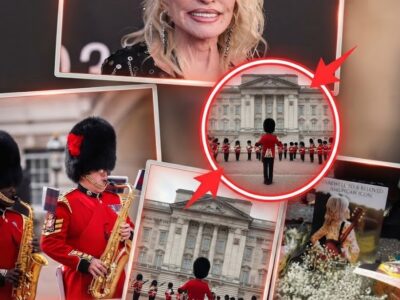
The day after Parton’s death, the Band of the Coldstream Guards performed “9 to 5” during the Changing of the Guard ceremony at Buckingham Palace.
The official Royal Family social-media accounts shared footage of the performance and remembered Parton for the joy, comfort and inspiration she had brought to millions.
The tribute also highlighted her Imagination Library literacy initiative, which has distributed hundreds of millions of books to children.
There was therefore an unexpected full-circle quality to the story.
Nearly 50 years earlier, Dolly Parton had stood backstage at a royal event, nervously wondering whether she would perform the correct curtsy.
After her death, a British military band played her music outside Buckingham Palace.
The country singer who had once been intimidated by the monarchy had ultimately become an international cultural figure worthy of a royal farewell.
More than protocol
The story of Parton meeting Queen Elizabeth is ultimately less about royal etiquette than it is about human connection.
Parton was worried about making a mistake.
She imagined that the rules surrounding the monarch might be unforgiving.
Instead, she encountered someone she remembered as warm and generous.
That small interaction mattered because it revealed something Parton repeatedly emphasized throughout her career: people tend to remember how you make them feel.
Queen Elizabeth could have remained, in Parton’s eyes, a distant figure surrounded by ceremony.
Instead, the monarch made the country singer feel comfortable.
And Parton carried that memory for the rest of her life.
The legacy of two very different queens
There is something almost poetic about the way the story has come full circle.
Queen Elizabeth II represented a hereditary institution that had existed for centuries.
Dolly Parton built her own kind of royalty from a very different starting point — through songs, determination, humor and an extraordinary connection with audiences.
Yet both women became symbols of something larger than their official roles.
Elizabeth was remembered by Parton for her warmth and grace.
Parton herself has now been remembered by the Royal Family for the joy and inspiration she brought to millions.
And the unlikely connection between them began with a nervous young performer wondering whether she knew how to curtsy.
Years later, Parton would look back on that moment not with embarrassment, but with affection.
She had been “scared to death” of getting the protocol wrong.
The Queen simply made her feel at ease.
And that may be the detail that best captures the encounter between country music royalty and actual royalty.
One queen was nervous.
The other knew how to make her smile.