THE BLACK SUITCASE ENIGMA: The Physical Evidence Shattering the ‘Sudden Impulse’ Narrative in Pattaya Homicide
A 46-year-old Australian man check into a short-term Pattaya rental with nothing but standard travel luggage. Yet, less than 24 hours later, security cameras capture him wheeling out a massive, heavy-duty industrial suitcase containing the body of 17-year-old Cake. Where did that specific, oversized container come from? 🕵️♂️🚨
This single physical discrepancy is currently turning international murder investigations upside down. He claims her tragic death was an “accidental reaction” during a sudden, chaotic argument over money. But if this was just a sudden panic, how do you explain the presence of a specialized disposal unit that he couldn’t possibly fit on his commercial flight? As forensic teams start tracking local retail receipts and security footage from nearby hardware stores, a chilling alternate theory is emerging—one that suggests her fate was sealed long before she ever stepped into his room.
The dark truth behind the “Mystery Suitcase,” the retail footprints investigators just uncovered, and the undeniable evidence of calculated premeditation they aren’t letting the public see 👇🔥
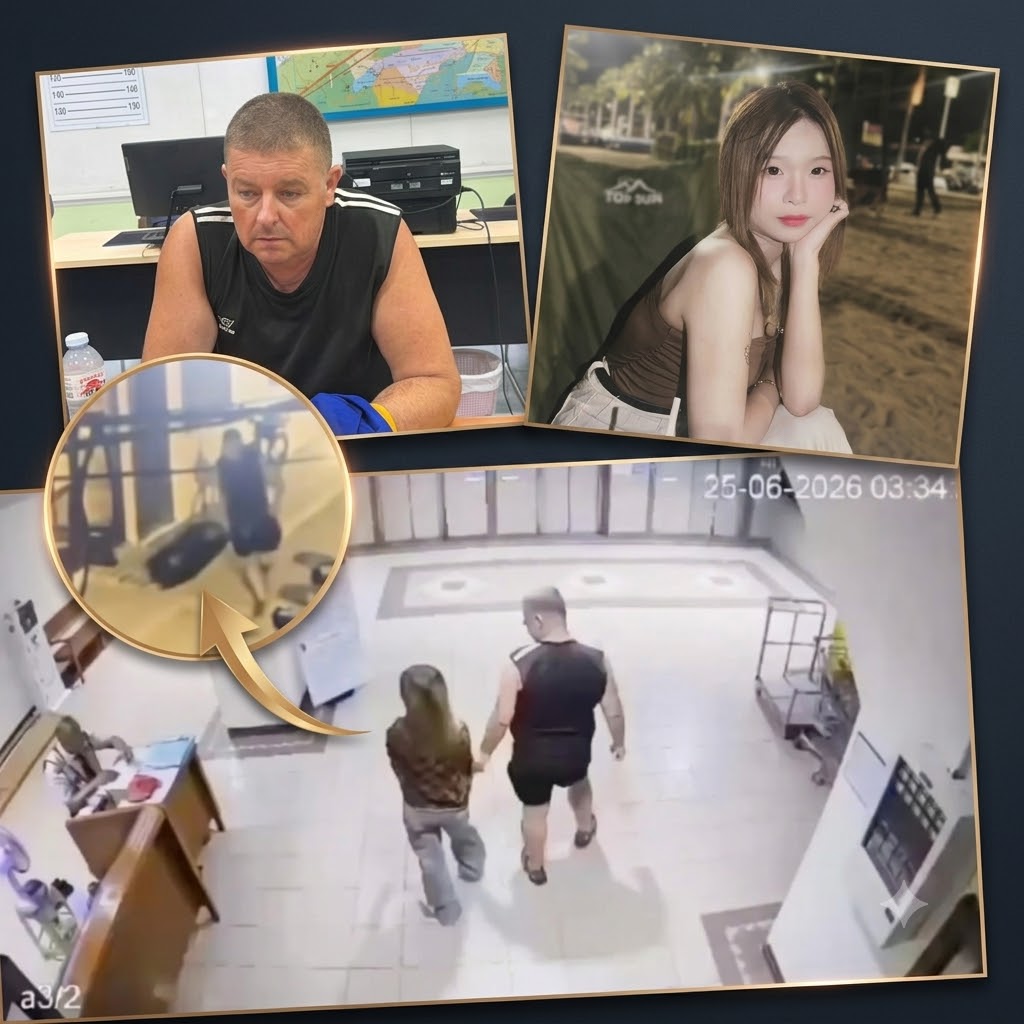
In the geometry of a crime scene, some objects simply do not belong. As the Pattaya City Police Department builds its case against 46-year-old Australian national Simon Peter Carman for the brutal murder of 17-year-old Tunchanok Donhomla (“Cake”), a critical piece of physical evidence has shifted the focus of the entire investigation.
It is not the DNA under the victim’s fingernails, nor is it the blood splatters found in the high-rise condominium. Instead, it is the weapon of concealment itself: a massive, reinforced, heavy-duty black utility suitcase.
Carman has adamantly maintained to Thai interrogators that Cake’s death was the tragic outcome of a sudden, volatile argument over a financial dispute that erupted in the early hours of June 25. He claims he acted in self-defense, panicking only after the teenager had ceased breathing. However, independent forensic analysts and digital investigative units are pointing to the sheer physical reality of that black suitcase—arguing that its presence in a temporary holiday rental turns a case of manslaughter into an undeniable instance of first-degree premeditated murder.
The Travel Logistics Anomaly
The core of the premeditation argument lies in basic travel logistics. Intelligence reports gathered from border control and aviation records indicate that Carman entered Thailand through Suvarnabhumi Airport acting as a typical short-term tourist. He checked into his Pattaya condominium carrying standard, soft-shelled airline luggage meant for personal clothing and electronics.
Yet, the container captured on the building’s lobby CCTV at 9:25 PM on Thursday night was entirely different. It was an oversized, rigid, commercial-grade utility chest—the kind typically used by industrial technicians to transport heavy machinery or specialized equipment. It was a container large enough to accommodate a human body without forcing the joints, a detail that immediately raised red flags for seasoned homicide detectives.
THE APARTMENT RETAIL TIMELINE (Suspected Premeditation)
-------------------------------------------------------------
June 24, 4:00 PM  | Carman checks into Pattaya condo with standard luggage.
June 24, 7:30 PM  | CCTV captures a man matching Carman's description at a local mega-store.
June 25, 3:35 AM  | Cake enters the condominium with Carman.
June 25, 9:25 PM  | Carman exits the lobby with the body concealed inside the new suitcase.
-------------------------------------------------------------
The Crucial Window: The suitcase was allegedly acquired BEFORE the victim arrived.
On specialized true-crime research forums, investigators have raised a fundamental question: Why would a casual male tourist, traveling alone on a budget scooter, possess a newly acquired, heavy-duty industrial storage chest in his bedroom? The container’s dimensions and weight make it impossible to transport as standard airline baggage without incurring massive oversize penalties—penalties that Carman’s travel records show he never paid.
The Mega-Store Footprint
The investigation took a dramatic turn when leaks from the Pattaya police department suggested that detectives had begun canvassing large wholesale warehouses and hardware mega-stores along the Sukhumvit road artery.
According to local reports, digital sleuths tracking the specific model and branding of the suitcase identified it as a product sold almost exclusively at major Thai construction and home-supply outlets. Surveillance footage currently being reviewed by the prosecution allegedly shows a man matching Carman’s build purchasing that exact model of heavy-duty storage unit on the evening of Wednesday, June 24—several hours before he met Cake on Jomtien Beach.
If these retail receipts and store camera angles are validated in court, Carman’s “sudden impulse” and “self-defense” legal strategies are effectively dead. Under Section 289 of the Thai Criminal Code, murder by premeditation carries a mandatory sentence of life imprisonment or execution by lethal injection, with zero opportunity for judicial leniency or royal pardons.
“If you buy the coffin before you meet the victim, you cannot claim it was an accident,” a retired international prosecutor noted on a legal analysis thread. “The acquisition of an optimized disposal container prior to the crime is the ultimate hallmark of a calculated predator. It proves he didn’t just panic after a fight; he created an environment where a body could be efficiently moved.”
The Blind Item Speculation: Did He Have an Accomplice?
The logistical difficulty of the crime has also fueled intense speculation on digital boards regarding the potential involvement of a third party. The utility chest, when loaded with a human body, would weigh well over 60 kilograms. CCTV footage shows Carman struggling to balance the massive box on the pillion seat of a standard 125cc rented motorbike.
Some amateur sleuths argue that loading, strapping, and securing such an awkward, heavy object onto a small scooter using only basic bungee cords without tipping the bike over is incredibly difficult for a single individual acting under the influence of extreme panic. This has led to the emergence of “blind item” theories on alternative communication channels, hinting that local networks or associates within the expatriate underbelly of Pattaya may have assisted Carman in sourcing the trunk or helping him secure it to the vehicle.
While police have stated they are currently treating Carman as a lone actor, they have not ruled out questioning the local retail staff who sold the item, as well as checking if anyone accompanied him during the purchase.
The Legal Tightrope
As the 84-day detention clock ticks away for the Thai prosecution team, the physical evidence of the black suitcase remains the crown jewel of the indictment. Royal Thai Police officials have publically emphasized their commitment to delivering a watertight case, fully aware that the international community is dissecting every procedural move.
For the family of Tunchanok Donhomla, the suitcase is a symbol of absolute cruelty—a premeditated cage that stripped a young girl of her life and dignity. For Simon Peter Carman, the industrial box he thought would carry away his dark secret has instead become the very anchor pulling him toward a definitive, lethal judgment under Thai law.