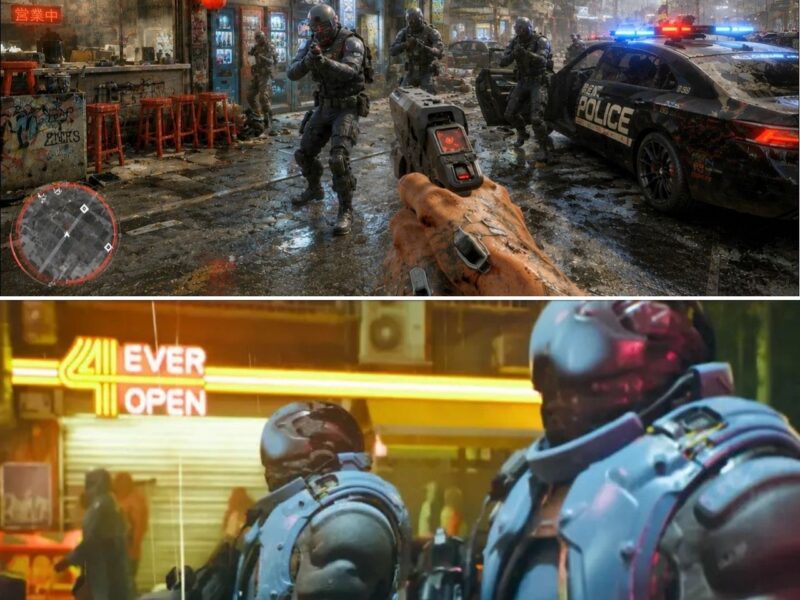
This New Game Looks Like Cyberpunk Meets GTA — But There’s One Brutal Rule: Nobody Is Safe
🚨 THIS NEW GAME JUST MADE CYBERPUNK 2077 LOOK A LOT LESS ALONE…
Imagine Cyberpunk meets GTA — but the city actually remembers what you do.
You can shoot your way through a mission… sneak past everyone… or make decisions that permanently change who is alive, who helps you, and what parts of the world remain available.
And here’s the part that has gamers REALLY talking:
EVERY NPC CAN DIE.
Yes — even characters you might need later.
Kill the wrong person and you could permanently lose an entire service, weapon vendor, questline… or something you didn’t even know you needed.
But that’s NOT even the craziest thing about this new open-world game…
Because the developers have built the entire city around one terrifying idea:
There are no rules.
And after seeing the new gameplay, gamers are already asking if this could be the open-world RPG we’ve been waiting for… 👇🔥
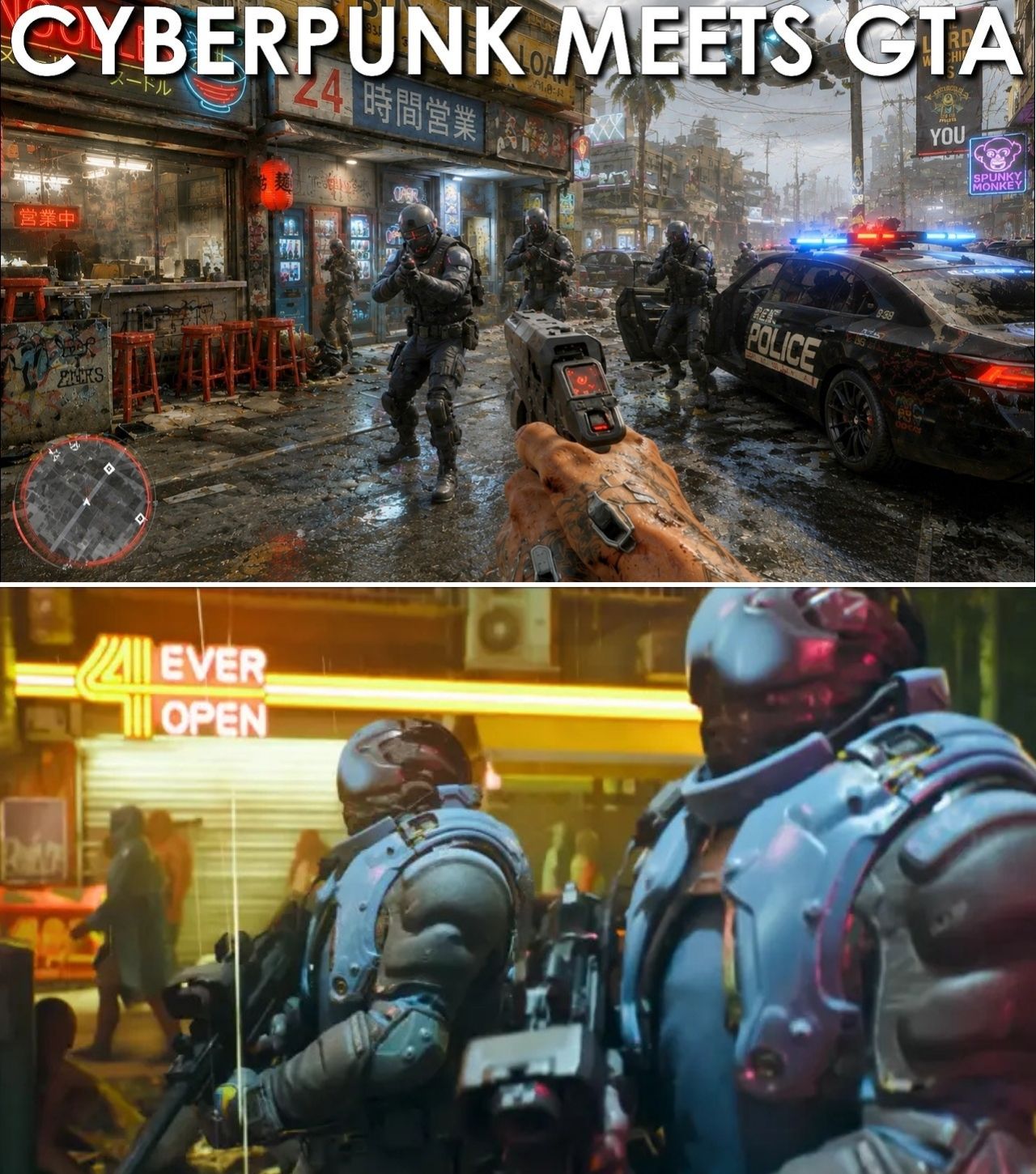
This New Game Looks Like Cyberpunk Meets GTA — But There’s One Brutal Rule: Nobody Is Safe
A new open-world cyberpunk RPG is turning heads after its latest gameplay reveal, promising a dense city, explosive first-person combat, stealth, meaningful choices and a world where even important NPCs can permanently die.
What if Cyberpunk 2077 and Grand Theft Auto had a much more ruthless cousin?
That’s the question gamers are asking after the latest gameplay footage of Neon Giant’s upcoming open-world RPG shooter.
The Swedish studio behind The Ascent returned to the spotlight at Gamescom 2026 with a new look at its ambitious project, showing off the fictional city of Port Desire and a gameplay philosophy built around freedom, density and consequences.
At first glance, the comparisons are obvious.
There’s the neon-soaked cyberpunk atmosphere.
The dense urban environment.
The guns.
The vehicles.
The first-person perspective.
The open-world structure.
The criminal underworld.
But there is something potentially much more interesting happening underneath the surface.
The developers aren’t simply trying to create another giant sandbox.
They’re trying to create a world where the player can permanently change it.
And that includes killing people who may have been useful later.
Welcome to a City Where Nobody Is Safe
The game takes place in Port Desire, a sprawling cyber-noir city where law and order have effectively collapsed.
Players take control of Grey Harker, a former soldier who has returned to a life of violence after attempting to leave his military past behind.
The official description paints Port Desire as a city that “doesn’t belong to anyone,” with competing interests fighting for control.
The latest gameplay trailer showcased the city’s dense architecture, combat systems, stealth mechanics and the various ways players can approach missions.
And that word — dense — is important.
Neon Giant has repeatedly talked about a philosophy of “density over scale.”
Instead of creating the largest possible map and filling it with empty space, the studio wants Port Desire to feel packed.
Buildings are stacked vertically.
Streets contain multiple layers.
Industrial areas connect with residential districts.
Natural environments collide with dense urban development.
And the city itself is supposed to feel like an active part of the game rather than simply a backdrop.
Push Square highlighted this design philosophy earlier this year, noting that Neon Giant’s Unreal Engine 5 approach is focused on creating a highly detailed, vertically structured world rather than simply chasing enormous map size.
That could be one of the game’s biggest advantages.
It’s Not Trying to Be Another Giant Empty Open World
Modern open-world games have developed a familiar problem.
Bigger doesn’t always mean better.
A map can be hundreds of square kilometers and still feel strangely empty.
Neon Giant appears to be taking the opposite approach.
The developers want Port Desire to feel compressed, layered and alive.
That means players may spend less time driving across enormous distances and more time discovering what is actually happening around them.
A recent Creative Bloq analysis of the Gamescom footage described the city as the real star of No Law, highlighting the density of its architecture, its vertical design and the way the environment is intended to function as part of gameplay.
That philosophy could make the game feel closer to a traditional immersive sim than a conventional open-world blockbuster.
And that’s where things become particularly interesting.
You Can Apparently Kill Anyone
One of the most talked-about features revealed around the Gamescom showing is also one of the most dangerous.
Every NPC can potentially be killed.
According to GamesRadar’s recent report, Neon Giant says players can kill NPCs throughout the game.
There is, however, an important catch:
Death is permanent.
If you kill a shopkeeper, weapons vendor or another useful character, they don’t simply respawn five minutes later.
They’re gone.
And the consequences can remain with you.
That changes the traditional open-world formula dramatically.
In most games, important NPCs are effectively immortal.
You can shoot them.
You can run them over.
You can start a fight.
And after the mission ends, everything goes back to normal.
Not here.
The developers are essentially telling players:
You can do whatever you want.
But you have to live with it.
That’s Where the GTA Comparison Starts Breaking Down
This is where calling the game “Cyberpunk meets GTA” becomes slightly misleading.
Grand Theft Auto gives players enormous freedom, but much of that freedom exists inside a carefully controlled sandbox.
You can cause chaos.
You can steal vehicles.
You can shoot civilians.
You can create massive police chases.
But the game knows which characters and systems are important to the story.
No Law appears to be pushing that philosophy considerably further.
The world is supposed to react to the player’s actions.
If you eliminate someone important, the game doesn’t necessarily protect you from your own decision.
Instead, you may simply have to find another way forward.
And that creates a very different kind of freedom.
The Developers Want Players to Make Their Own Stories
The idea isn’t entirely new.
Games such as Baldur’s Gate 3, Fallout and immersive sims have experimented with reactive worlds for years.
But Neon Giant appears to be applying that philosophy to a modern cyberpunk open world.
GamesRadar previously reported that the developers describe the game’s narrative as “opt-in.”
The basic idea is that players can engage with the story as deeply as they want.
You can investigate.
You can develop relationships.
You can follow quests.
Or you can simply explore the city and cause chaos.
The developers have even discussed a philosophy where if 100 people play the game, there should potentially be 100 different stories.
That’s an ambitious promise.
And potentially a dangerous one.
Because the more freedom a game provides, the more difficult it becomes to control the experience.
Imagine Killing a Quest NPC by Accident
This is probably where the game’s concept becomes most fascinating.
Imagine finding a weapons dealer.
You don’t know they’re important.
Maybe they look like another hostile NPC.
You get into a firefight.
They die.
Hours later, you discover that this was one of the few characters who could provide a particular weapon or service.
In most games, the developers would simply reload the situation or make the NPC invincible.
Here, you may have to live with the mistake.
GamesRadar reported that the game will provide warnings before players kill certain important NPCs, but the ultimate decision remains with the player.
That creates an unusual tension.
Not:
“Can I win this fight?”
But:
“Should I actually pull the trigger?”
For an open-world RPG, that’s a much more interesting question.
And Yes, You Can Still Go Full Action Hero
The freedom doesn’t mean the game is a slow-paced stealth simulator.
The Gamescom footage showed plenty of shooting.
Heavy weapons.
Explosions.
Close-range combat.
Destruction.
And aggressive firefights through Port Desire.
The developers have deliberately designed the game so players can approach situations in dramatically different ways.
You can sneak.
You can manipulate the environment.
You can take a more tactical approach.
Or you can simply start shooting.
A Gamescom hands-on report from Mein-MMO described seeing the same section played in both stealth and aggressive action styles, illustrating the flexibility Neon Giant is aiming for.
That flexibility could become one of the game’s defining characteristics.
The Cyberpunk 2077 Comparison Is Obvious — But Not Because of CD Projekt Red
The visual similarities are unavoidable.
Neon lights.
Dense streets.
Futuristic technology.
Criminal organizations.
Weapons.
Augmented-looking environments.
A morally questionable protagonist.
But No Law appears to be taking a different route aesthetically.
Instead of simply copying the rain-soaked, dark neon style associated with Cyberpunk 2077, Port Desire can be surprisingly bright.
A previous Unreal Engine technology demonstration showed sunny streets, lush greenery and a city that doesn’t rely exclusively on the traditional dark cyberpunk palette.
That’s an interesting choice.
Cyberpunk doesn’t necessarily have to mean:
rain + darkness + neon + night.
It can also mean a society where advanced technology exists alongside poverty, corruption, violence and social collapse.
Port Desire appears to be leaning into that broader interpretation.
Unreal Engine 5 Is Doing the Heavy Lifting
Technically, the game is being built using Unreal Engine 5.
Neon Giant has previously demonstrated its technology with detailed city environments designed to emphasize density, verticality and environmental interaction.
The goal is not simply to produce pretty screenshots.
The environment is supposed to support gameplay.
Buildings aren’t just decorative.
Streets aren’t just roads.
Vertical spaces aren’t simply there to make the skyline look impressive.
The city is designed around the player’s ability to move through and interact with it.
That is an important distinction.
If Neon Giant can make Port Desire feel like a place rather than a collection of missions, the game could have a major advantage.
The “Immersive Sim” Label Is Probably More Important Than “Cyberpunk”
This might actually be the better way to understand the game.
Cyberpunk is the setting.
Immersive sim is the philosophy.
The player is given a problem.
The game gives them tools.
Then the player decides what happens.
That philosophy is much closer to Deus Ex than a traditional open-world shooter.
And the latest gameplay footage has already led outlets to make that comparison.
Cinelinx specifically noted the new trailer’s Deus Ex-style qualities, particularly the emphasis on player choice and multiple approaches.
That could be great news for players who feel modern open-world games have become too scripted.
But Freedom Creates Its Own Problems
There is a reason most AAA developers don’t allow players to kill every important NPC.
It’s incredibly difficult to design around.
If a player kills a character before a major quest begins, the developers have to account for it.
If a player destroys a shop, the game needs an alternative.
If someone dies who was supposed to provide crucial information, the player needs another way to discover it.
Every additional possibility creates more development work.
That makes Neon Giant’s ambition particularly impressive.
The studio is not one of the industry’s largest developers.
And according to a recent Inven Global report, the development team behind No Law consists of only 24 people, despite the game’s AAA ambitions.
That’s a remarkable number.
A 24-Person Team Is Attempting a AAA Open World
This may be the most interesting story surrounding the game.
Neon Giant is attempting to prove that a relatively small team can create an ambitious AAA-style open world without spending the kind of money associated with the industry’s largest productions.
Inven Global described No Law as a 24-person AAA open-world project and highlighted the studio’s ambition to demonstrate that this kind of game can be built without hundreds of millions of dollars.
That is an enormous gamble.
Because the game is attempting several difficult things simultaneously:
A large open world.
High-fidelity visuals.
Reactive NPCs.
Branching narrative.
First-person shooting.
Stealth.
RPG systems.
Multiple approaches.
And meaningful consequences.
Any one of those systems can consume enormous development resources.
Combining all of them is another matter entirely.
The Biggest Question Isn’t Whether It Looks Good
It does.
The Gamescom trailer has already made that clear.
The bigger question is whether all these systems actually work together.
A beautiful city doesn’t matter if it feels empty.
Reactive NPCs don’t matter if their deaths barely affect anything.
Multiple approaches don’t matter if stealth is poorly implemented.
Branching choices don’t matter if the endings all feel identical.
And a huge arsenal doesn’t matter if combat becomes repetitive.
The game’s ambition is its greatest selling point.
It is also its greatest risk.
There Is One Thing the Game Has Already Achieved
People are talking about it.
The Gamescom trailer quickly attracted attention precisely because it doesn’t look like another anonymous open-world shooter.
Players immediately recognized familiar influences.
Cyberpunk 2077.
GTA.
Deus Ex.
Atomfall.
The Ascent.
But the combination is unusual enough to create its own identity.
A GamesRadar analysis described the game as resembling Cyberpunk 2077 meets Atomfall, particularly because of its open-ended narrative philosophy.
That is probably a better description than simply calling it “Cyberpunk GTA.”
Because the game isn’t really trying to be another GTA.
It’s trying to create a city where the player can make a mess and then actually has to deal with the consequences.
The Community Is Already Watching Closely
The reaction around the Gamescom trailer has been increasingly positive, particularly among players looking for something beyond the standard AAA open-world formula.
On Reddit, players have been circulating the official gameplay trailer while highlighting the game’s cyberpunk setting, open-world RPG structure and the fact that it is being developed as a single-player experience.
The latter point is worth emphasizing.
This isn’t being positioned as a live-service multiplayer game.
There are no obvious plans to turn Port Desire into another endless online ecosystem.
The goal is a single-player RPG where the player creates their own story.
That alone makes it increasingly attractive to a segment of gamers tired of always-online releases.
The Release Is Still Some Distance Away
No Law is currently planned for 2027 on PC, PlayStation 5 and Xbox Series X|S.
There is not yet a specific release date.
That gives Neon Giant time to polish the systems that could make or break the game.
And it probably needs that time.
Because if the developers really want every NPC death, major choice and alternative approach to matter, the final months of development could be extremely important.
If It Works, This Could Be Something Special
The most exciting possibility is not that No Law becomes “the next Cyberpunk.”
It doesn’t need to.
Cyberpunk 2077 already exists.
What the industry needs is another game willing to embrace player agency.
A game where the player can make a stupid decision and actually suffer for it.
A game where killing someone isn’t just a temporary animation.
A game where the world doesn’t magically reset because the developers need you to complete a quest.
A game where the player can look at a mission and think:
“What happens if I do this completely differently?”
That’s the promise of No Law.
But There Is Still a Long Road Ahead
The trailers are impressive.
The technology is promising.
The city looks dense.
The combat looks aggressive.
The stealth systems appear flexible.
The NPC philosophy is ambitious.
And the Gamescom reaction suggests Neon Giant may have something genuinely interesting on its hands.
But none of that guarantees a great final game.
The history of open-world RPGs is filled with ambitious projects that couldn’t deliver on every promise.
The more freedom No Law offers, the more opportunities there are for things to go wrong.
And that’s why 2027 will be the real test.
For Now, One Question Is Enough
Forget whether this is a Cyberpunk 2077 killer.
Forget whether it can replace GTA.
Those comparisons generate clicks, but they’re not really the point.
The more interesting question is whether Neon Giant can actually create a city where your decisions matter as much as the developers claim.
Because if you can kill the wrong person…
Lose access to a vendor…
Destroy a questline…
Change the way characters react to you…
And still somehow finish the game…
Then No Law may offer something modern open-world games desperately need.
Not a bigger map.
Not more icons.
Not another 200-hour checklist.
But a world that actually feels like it belongs to the player.
And after the latest Gamescom gameplay reveal, that possibility is exactly why gamers are starting to pay attention.