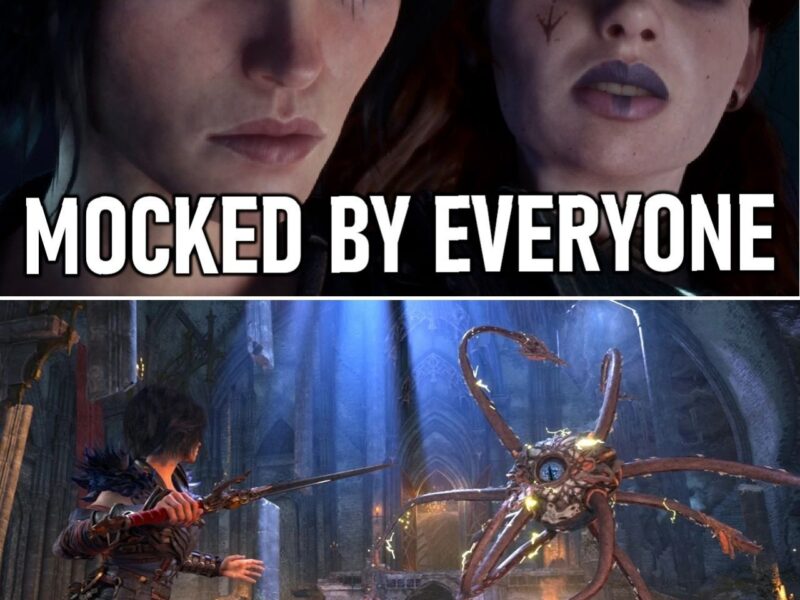
Warlock Is Already Being Called “Woke” — But Are Gamers Really Rejecting This New D&D Game?
🚨 THE NEW D&D GAME IS ALREADY BEING CALLED “WOKE” — AND GAMERS ARE FIGHTING OVER IT.
One female protagonist.
No character choice.
A legendary D&D world — but a very different kind of hero.
And suddenly, parts of the gaming community are asking:
Why can’t we choose our own character? Why does “Warlock” have a female lead? And is this another franchise being pushed in a direction longtime fans never asked for?
But here’s where things get REALLY interesting…
Because while some gamers are already furious, others are looking at the exact same footage and saying:
“This actually looks incredible.”
So is this another “woke game” disaster waiting to happen…
Or are gamers once again fighting over a game they haven’t even played yet? 👇🔥
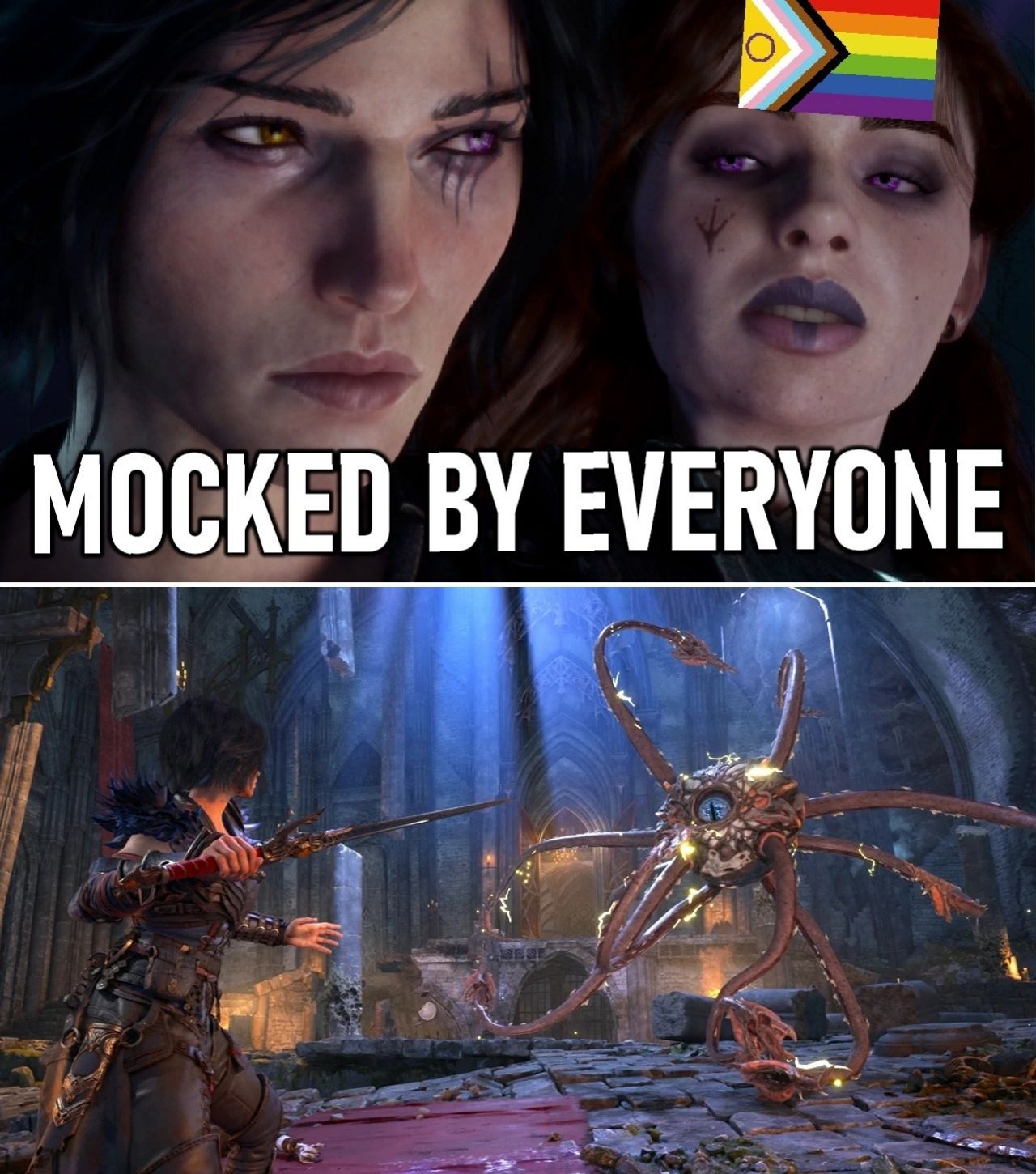
Warlock Is Already Being Called “Woke” — But Are Gamers Really Rejecting This New D&D Game?
The new Dungeons & Dragons action RPG has barely shown its first extended gameplay, yet online debate has already shifted from spells and combat to its female protagonist, character customization and accusations of “woke” game design.
A new Dungeons & Dragons video game just received its biggest gameplay reveal yet.
And somehow, one of the loudest conversations isn’t about the magic.
It isn’t about the monsters.
It isn’t even about the open world.
It’s about who players are allowed to be.
Warlock: Dungeons & Dragons, the upcoming single-player action-adventure from Invoke Studios and Wizards of the Coast, made a major appearance during Gamescom Opening Night Live this week, showing nearly 10 minutes of gameplay and introducing players to Kaatri, the game’s central protagonist.
The response has been anything but unanimous.
Some gamers are impressed by the combat, spell systems and darker D&D setting.
Others are already criticizing the decision to make Kaatri a fixed female protagonist with no apparent option to create or select a different character.
And in the increasingly polarized world of gaming discourse, that criticism has quickly acquired a familiar label:
“Woke.”
But the reality is considerably more complicated than the headline.
The Game Behind the Controversy
Warlock: Dungeons & Dragons is being developed by Invoke Studios and published by Wizards of the Coast.
It is scheduled for release in 2027 on PC, PlayStation 5 and Xbox Series X|S. Steam currently lists it as a single-player, third-person action-adventure with an open-world setting inspired by D&D.
Unlike Baldur’s Gate 3, which uses turn-based combat, Warlock is designed around real-time action.
Players control Kaatri, an experienced warrior who makes a dangerous pact with the witch Tasha in an attempt to find someone she has lost.
That pact gives Kaatri access to forbidden magic.
And apparently, a lot of it.
The official gameplay reveal emphasizes spells, rituals and magical abilities that can be used not only to fight enemies but also to manipulate the environment, solve puzzles and discover alternate ways through the world.
That is the game developers actually want people talking about.
The internet had other ideas.
“Why Can’t We Choose Our Character?”
The most visible criticism currently centers on Kaatri.
According to the game’s official Steam community page, several users have explicitly questioned why the game has a female protagonist with no alternative character option.
One post complains that the lack of character choice makes the game less immersive, while another asks why a female lead was selected at all. Other comments question the title itself, with users asking why a character who is a woman is being called a “Warlock.”
Those comments are real.
But they represent one portion of the audience, not the entire community.
And that’s an important distinction.
The official D&D subreddit produced a very different picture.
The gameplay reveal thread accumulated more than 2,000 upvotes, with many commenters discussing Tasha, Darkon and the game’s lore rather than attacking the protagonist.
So the claim that “everyone hates it” simply doesn’t match the available evidence.
The actual situation is closer to:
Some gamers strongly dislike the creative direction. Others are extremely interested.
But Why Is the Protagonist Such a Big Deal?
Part of the answer lies in what D&D traditionally represents.
Tabletop Dungeons & Dragons is fundamentally built around player-created characters.
Players normally decide:
Who they are.
What they look like.
What class they play.
What abilities they use.
What alignment they follow.
And, depending on the campaign, what kind of personality and history they bring to the adventure.
So when a D&D video game removes that customization and gives everyone the same protagonist, some players naturally feel that something important has been taken away.
That’s a legitimate design criticism.
It doesn’t necessarily have anything to do with politics.
A player can simply prefer character creation.
Baldur’s Gate 3 reinforced that expectation.
Larian’s RPG allowed players to create their own characters or choose from several predefined Origin characters, giving the audience enormous control over their identity and story.
Warlock is doing something different.
The Developers Are Telling a More Focused Story
Kaatri isn’t an empty player avatar.
She has an established history.
She’s an experienced warrior.
She has a specific emotional objective.
And her relationship with Tasha is central to the story.
That allows the developers to write a more focused narrative around a particular character rather than building every major plot point around an anonymous player-created protagonist.
GamesRadar reported that the developers see Warlock as a distinctly different experience from Baldur’s Gate 3, despite both being D&D games. Creative director Jeffrey Hattem specifically described Larian’s game as great while emphasizing that Warlock is pursuing a different narrative and gameplay direction.
That distinction is important.
Warlock isn’t trying to replace Baldur’s Gate 3.
It’s trying to do something else with the license.
And the Game Is Much Darker Than Some Fans Expected
The setting is Darkon, a Domain of Dread within Ravenloft.
That means horror and supernatural themes are baked into the game’s identity.
Kaatri makes a pact with Tasha, a powerful witch, to gain forbidden abilities.
The official description emphasizes sacrifice, dangerous magic and the possibility that Kaatri may lose part of herself in pursuit of what she wants.
The gameplay itself reflects that.
There are grotesque creatures.
Dark environments.
Violent combat.
Magical rituals.
And an atmosphere considerably closer to gothic fantasy than the traditional bright heroic-fantasy image some people associate with D&D.
Steam currently lists the game with frequent violence or gore, strong language and partial nudity.
So this isn’t exactly a sanitized fantasy adventure.
Then Why Are People Calling It “Woke”?
The accusation appears to be driven primarily by a combination of factors rather than one specific ideological statement from the developers.
The first is the fixed female protagonist.
The second is the lack of character selection.
The third is the game’s association with Wizards of the Coast, a company that has faced its own controversies within the tabletop community.
And the fourth is the broader cultural argument surrounding female protagonists in major AAA games.
That doesn’t mean Warlock itself has been proven to contain a particular political agenda.
In fact, the developers’ public descriptions of the game focus overwhelmingly on gameplay, magic, exploration and storytelling rather than political messaging.
Calling the game “woke” is therefore an interpretation made by some players, not an established description of the game’s content.
That’s an important distinction.
The “Warlock Is a Woman” Argument Is Also More Complicated
Some community comments have questioned the game’s terminology because Kaatri is female.
That argument reflects a common misconception about D&D terminology.
In the tabletop game, warlock is a character class, not simply a synonym for “male witch.”
The class is defined by a pact with a powerful patron.
Gender does not determine whether a character can be a warlock.
The official game makes that relationship central to Kaatri’s identity.
She is a warrior who becomes a warlock after making a pact with Tasha.
So the basic premise isn’t breaking D&D rules.
It’s actually using the class in a fairly direct way.
The Gameplay Is Receiving a Very Different Reaction
While social-media arguments have focused heavily on the protagonist, people who are discussing the actual gameplay have identified several elements that could make Warlock stand apart.
The magic system is one.
The developers want spells to function as more than simple combat attacks.
The official reveal describes combinations of spells and rituals that can be used to create different solutions to environmental problems.
For example, one demonstrated sequence involves manipulating the environment to make lightning-based attacks more effective.
Other abilities include familiar D&D-inspired tools such as Eldritch Blast, Mage Hand and Tentacle of the Deeps.
That is where the game starts to look considerably more interesting than the culture-war debate surrounding it.
It Wants Magic to Be a Tool, Not Just a Weapon
This could become the game’s biggest strength.
In many action RPGs, spells essentially function like different guns.
Fire spell.
Ice spell.
Lightning spell.
Big explosion.
Repeat.
Warlock appears to be trying to make magic more systemic.
A spell might open a route.
Another could manipulate an object.
A ritual might change environmental conditions.
A combat ability could interact with another magical effect.
That approach potentially gives players more freedom to experiment.
GamesRadar’s recent gameplay coverage highlighted precisely this distinction, describing the game’s magic as something that can be used in combat, exploration and problem-solving rather than simply as a collection of attacks.
If the final game delivers on that promise, it could become much more interesting than the current “female protagonist” argument suggests.
The D&D Community Doesn’t Look Unified Against It
The reaction on Reddit is particularly revealing.
The official gameplay thread in r/DnD received more than 2,000 upvotes, with discussion focusing heavily on the choice of Tasha, the Ravenloft setting and the game’s interpretation of the Warlock class.
Another thread on r/PCGaming showed a much more mixed reaction.
Some users said the game looked good.
Others called the trailer boring.
Some compared the visual design to Hogwarts Legacy.
Others complained about the camera.
Several commenters expressed excitement about the combat.
One player described it as something worth watching and waiting for reviews before deciding.
That’s a much more nuanced picture than:
“Gamers hate it.”
They don’t.
They’re arguing about it.
And those are two very different things.
The Hogwarts Legacy Comparison Is Another Interesting Warning Sign
One of the criticisms appearing in the PCGaming discussion is that Warlock looks somewhat like a reskinned Hogwarts Legacy.
That’s actually a more meaningful criticism from a gameplay perspective.
If the game’s combat, exploration and quest design feel too familiar, then its D&D setting alone may not be enough to distinguish it.
The developers have to prove that the magic systems actually create a unique experience.
A recognizable license can attract players.
It cannot guarantee that they will stay.
There Are Also Concerns About the Developer
Some Xbox community reactions have pointed out that Invoke Studios’ team has roots in the team behind Dark Alliance, a previous D&D game that received a poor critical reception.
That’s another legitimate reason for skepticism.
Dark Alliance was not the comeback D&D fans wanted.
So some players are understandably approaching the new project cautiously.
But again, this has nothing inherently to do with “wokeness.”
It’s a question of development history and confidence.
The Game Is Still More Than a Year Away
Perhaps the most important fact being lost in the online argument is that Warlock isn’t finished.
Steam lists the release window as 2027.
The Gamescom footage is therefore not a review.
It’s not a final build.
It’s not evidence that the entire game will be great.
And it’s certainly not evidence that it will be terrible.
The developers still have time to improve visuals, animation, performance, combat balance and narrative pacing.
That matters because some of the current complaints are specifically about presentation.
Kaatri Herself Is Already Becoming a Marketing Focus
Invoke Studios and Wizards aren’t hiding their protagonist.
In fact, they’re leaning into her.
The official Warlock website has launched a “Kaatri Cosplay World Tour”, beginning at Gamescom 2026, with planned stops in other locations through 2027.
That’s a fairly clear indication that Kaatri isn’t simply a temporary face for the marketing campaign.
She is the identity of the game.
And that means the studio has little reason to retreat from the character simply because a segment of the audience wants a customizable protagonist.
The question is whether enough players connect with her.
That’s Where the Game Will Ultimately Be Judged
Not on Twitter.
Not on Reddit.
Not on YouTube thumbnails.
And not by whether someone calls it “woke.”
Players will judge it by the actual experience.
Is Kaatri a compelling protagonist?
Does the story justify her fixed identity?
Does the magic system feel genuinely creative?
Does the world feel alive?
Are the quests memorable?
Is combat satisfying after 20 hours?
Does Darkon feel like a convincing D&D setting?
And most importantly:
Is it fun?
Those questions will determine whether Warlock succeeds.
The “Woke” Label May Actually Help the Game — At Least for Now
There is an ironic possibility here.
Calling a game “woke” before release can sometimes create enormous free publicity.
The controversy pushes people toward the trailer.
People who would never have heard of the game start watching it.
They read the comments.
They argue.
They share screenshots.
They make reaction videos.
The algorithm does the rest.
From a marketing perspective, outrage can be extraordinarily effective.
The danger is that the conversation can become disconnected from the actual product.
If Warlock becomes known primarily as “the woke D&D game,” the developers may find themselves fighting a battle they never intended to enter.
And That Could Become a Problem for Wizards of the Coast
D&D is an unusually passionate brand.
Its fans don’t simply play the game.
They know its history.
Its classes.
Its settings.
Its monsters.
Its lore.
They have spent decades building their own campaigns around it.
That means they are particularly sensitive to changes in the way the universe is represented.
The choice of Darkon and Tasha is therefore significant.
This isn’t just generic fantasy wearing D&D branding.
The developers are deliberately drawing from the game’s broader mythology.
And that may ultimately be the strongest argument against reducing the project to culture-war discourse.
There’s a lot more going on here.
A Different D&D Game May Be Exactly What the Franchise Needs
After Baldur’s Gate 3, any major D&D game faces an impossible comparison.
Larian’s RPG became one of the most successful and critically acclaimed games of its generation.
Trying to make “another Baldur’s Gate 3” would probably be a mistake.
Invoke Studios appears to understand that.
Warlock is real-time.
Third-person.
Action-focused.
More linear in character identity.
And centered around one specific class fantasy.
GamesRadar recently reported that the developers deliberately see their game as a very different interpretation of digital D&D.
That could be a smart move.
The worst possible outcome would be a cheap imitation of Baldur’s Gate 3.
A genuinely different D&D experience has a much better chance of establishing its own identity.
So Is “Everyone Hates It” Actually True?
No.
Not based on the evidence currently available.
There is definitely criticism.
Some gamers dislike the fixed female protagonist.
Some want character creation.
Some dislike aspects of the visual presentation.
Some are skeptical because of the development team’s history.
Some simply don’t like the gameplay.
But there is also substantial enthusiasm.
The D&D community has shown strong interest in the reveal.
Gaming outlets have generally described the gameplay as promising.
And the official Steam page has generated enough discussion to make it clear that people are already paying attention.
The more accurate headline would therefore be:
“Warlock Has Already Started a Major Fight Among Gamers.”
And that is arguably more interesting.
The Real Test Comes in 2027
For now, Warlock: Dungeons & Dragons is in a strange position.
It has a recognizable IP.
A controversial-by-default protagonist.
A promising magic system.
A dark fantasy setting.
A huge shadow cast by Baldur’s Gate 3.
And an online audience already arguing about what the game represents before anyone has played it.
That’s a lot of pressure for a game still in development.
But it also means the developers have something many new games struggle to achieve:
people are paying attention.
The “woke” debate will probably continue.
The character-creation debate will continue.
The Baldur’s Gate 3 comparisons will continue.
And every new trailer will give both sides another opportunity to argue.
Eventually, however, the conversation will have to move beyond politics.
Because when Warlock finally launches in 2027, there will be only one question that really matters:
Did Invoke Studios make a great D&D game?
If the answer is yes, today’s arguments about Kaatri may become little more than launch-week noise.
If the answer is no, every complaint currently circulating will suddenly look much more important.
For now, though, the verdict is still out.
The game isn’t universally hated.
It isn’t universally loved either.
It’s simply become the latest D&D game that gamers can’t stop arguing about.