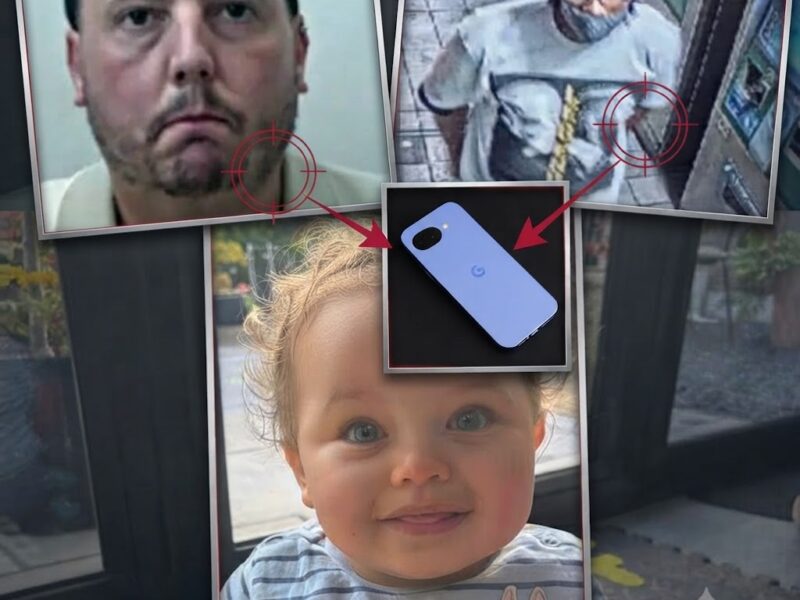
The Phone Footage That Became Crucial Evidence in the Preston Davey Case — What the Record Actually Shows
🚨 A PHONE VIDEO FROM PRESTON DAVEY’S FINAL MONTHS IS RAISING NEW QUESTIONS — AND THE TIMING IS CHILLING.
Evidence recovered from Jamie Varley’s phone showed that he repeatedly recorded Preston in the months before the toddler’s death, including footage documenting injuries and disturbing episodes that later became crucial evidence at trial.
But what was happening around the moments captured on that phone — and why did some of the footage only become fully understood after Preston was dead? The timeline is even more disturbing than the clip itself. 👇
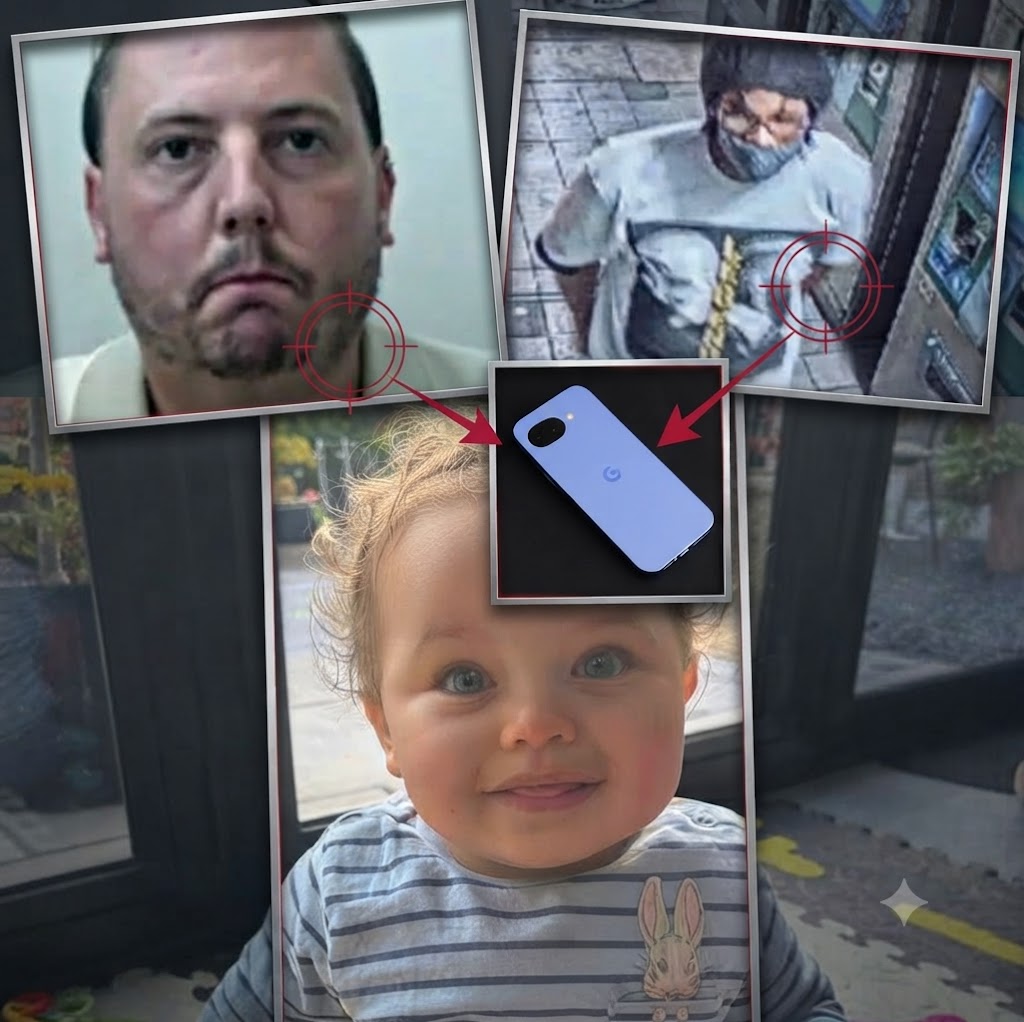
The discovery of videos and photographs on Jamie Varley’s mobile phone became one of the most disturbing elements of the Preston Davey investigation.
The material did not simply document a few isolated moments from the life of a toddler. According to evidence presented during the eight-week trial at Preston Crown Court, footage and images recovered from Varley’s phone — alongside material found on the phone of his partner, John McGowan-Fazakerley — helped investigators reconstruct what was happening to Preston during the four months before his death.
Now that Varley has been convicted of murder and sentenced to a whole-life order, renewed attention is being focused on the phone evidence and on what it revealed about the child’s final months.
But there is an important distinction between the verified court evidence and claims circulating online about a particular “leaked” video.
There is no reliable evidence that a newly leaked, previously unseen video has been publicly released. What can be established from police statements and reporting from the trial is that numerous videos and images were recovered from Varley’s phone after his arrest, and some were shown or discussed as evidence in court.
Because the material involves a murdered child, graphic or exploitative details are not reproduced here.
The phone became a digital record of Preston’s final months
Preston Davey was nine months old when he was placed with Varley and McGowan-Fazakerley for adoption in April 2023.
According to Lancashire Police, he had previously been described as a healthy and happy baby while living with foster carers.
That changed dramatically during his short time with the two men.
Police said Varley made his first video of Preston by April 17, 2023.
On April 23 and April 25, indecent images and videos were recorded and later recovered from his phone. One April 23 video showed bruising to Preston’s head, which investigators said indicated that the child had already suffered physical cruelty.
The significance of those files became much clearer after Preston’s death.
Rather than relying solely on witness memories or explanations given by the adults, investigators had digital evidence showing Preston at different points during the placement.
That chronology ultimately became central to the prosecution case.
More footage followed in May
The police investigation established that the recording did not stop.
On May 5, Varley made additional indecent images and a video involving Preston. Police said the video was shared with McGowan-Fazakerley through Snapchat.
There were also images taken on May 13 and images and videos recorded on May 16 from both men’s phones that investigators said indicated further physical cruelty.
Those dates are important because they establish that concerning material existed weeks before Preston’s fatal collapse.
The evidence therefore presented a picture of repeated incidents rather than one event occurring immediately before the child’s death.
It also demonstrated how smartphones can become an unexpected evidentiary archive in child-abuse investigations.
What might initially appear to be ordinary photographs or videos can become a timeline showing injuries, locations, behavior and changes in a child’s condition.
The May 11 emergency call
One of the most significant events occurred on May 11.
At 9:43 p.m., McGowan-Fazakerley made a 999 call that lasted only four seconds before being abandoned.
Before the call ended, police said Varley could be heard saying, “put it down.”
When police called the number back, a male reportedly said the emergency call had been made accidentally and that the intention had been to contact the non-emergency NHS 111 service.
At 10:16 p.m., McGowan-Fazakerley called 111 from Varley’s parents’ home.
He reportedly described Preston as having breathing problems and being unable to hold his head properly.
An out-of-hours medical call was arranged, but police said the pair did not seek medical treatment for Preston.
The following day, neither man reportedly mentioned health concerns to the health visitor.
That episode would later become particularly significant because the police investigation found further images and videos documenting Preston’s condition in the days that followed.
Then came the first hospital visit
On May 25, Varley took Preston to Blackpool Victoria Hospital.
He reportedly told medical staff that the child had experienced breathing difficulties and a seizure.
Doctors and nurses noticed bruising to Preston’s head.
A medical report described unexplained injuries that were inconsistent with an account given at the time, according to ITV News. Hospital safeguarding staff were informed, and social services and Lancashire Police became involved.
Yet medical staff did not ultimately regard the injuries as suspicious enough to classify them as non-accidental at that point.
Police detectives attended, but no further investigation followed from the hospital referral.
Later, images recovered from the men’s phones showed Preston in hospital on May 25 and May 26 with bruising to his head.
That digital evidence became significant in retrospect because investigators could compare what Preston looked like around medical appointments with material recorded away from the hospital.
The footage and the explanations did not always match
Preston returned to hospital on June 30.
This time, Varley and McGowan-Fazakerley brought him in with a rash, vomiting, diarrhea and a high temperature.
Medical staff again noticed bruising.
The men showed staff a video of Preston playing and apparently pulling a toy box onto himself as an explanation for the injury.
Varley reportedly remarked that staff might think they had been abusing Preston.
But investigators later established that the video had actually been recorded 12 days earlier.
That meant the footage could not explain the bruising observed on June 30.
It is an important example of why the phone evidence became so valuable.
Investigators could establish not merely what a video appeared to show, but when it had actually been created.
The metadata and chronological record allowed police to challenge explanations that otherwise might have been difficult to test.
The fractured arm
On July 6, Preston was taken to hospital again after suffering an injury to his arm.
An X-ray revealed a fracture around the elbow and a cast was applied.
During the subsequent investigation, different explanations emerged about how the injury had happened.
Varley reportedly gave differing accounts involving Preston’s cot, a car seat and catching him after a fall.
The postmortem later concluded that the injury was non-accidental.
By then, however, the digital evidence had become part of a much broader picture.
The court heard that Varley’s phone contained material documenting Preston at various stages during the placement, while evidence from both men’s devices helped prosecutors argue that the abuse had been continuing over time.
The final video
The most important piece of footage connected to Preston’s death was recorded on July 27, 2023.
At 4:45 p.m., Varley recorded a 35-second video showing Preston in severe respiratory distress.
Sky News reported that the footage showed the child struggling to breathe and taking an agonal gasp.
Police said the prosecution case was that Preston had already been assaulted earlier that day and then suffered a second assault that caused the obstruction of his airway.
Varley was the only person present in the house during those alleged assaults, according to Lancashire Police.
It was not until approximately 6:24 p.m. that Varley and McGowan-Fazakerley arrived at hospital with Preston.
Doctors attempted resuscitation for around 50 minutes.
He was pronounced dead at approximately 7:20 p.m.
He was only 13 months old.
The bathtub story collapsed under forensic evidence
Varley told investigators that Preston had drowned in a bath.
But the medical evidence did not support that explanation.
A postmortem examination concluded that Preston died from acute upper-airway obstruction and ruled out drowning.
Sky News reported that the examination found approximately 40 injuries, including bruising and other evidence consistent with repeated trauma.
During the trial, the court also heard that Preston’s hair was dry when he arrived at hospital — a detail prosecutors used to challenge the account that he had recently been submerged in a bath.
The combination of forensic evidence and the digital material from the phones ultimately proved devastating to the defendants’ accounts.
What did the jury hear about the phone material?
The phone evidence was not merely background information.
During the trial, jurors were shown videos and photographs recovered from Varley’s device.
Varley himself addressed some of the material while giving evidence.
According to ITV News, he denied taking photographs or videos as “trophies” of abuse but acknowledged feeling “disappointed” and “really ashamed” about some of the images.
He denied hurting or sexually abusing Preston.
He also rejected the prosecution’s suggestion that he had treated the child as a “plaything” for his own amusement.
The jury ultimately rejected his account.
On June 15, 2026, Varley was convicted of murdering Preston as well as multiple sexual and physical abuse offences.
McGowan-Fazakerley was convicted of causing or allowing Preston’s death and other offences.
Three days later, Varley received a whole-life order, meaning he will remain in prison for the rest of his life. McGowan-Fazakerley received a 25-year sentence.
Why the “new leaked video” claim needs caution
Since the convictions, social media posts have circulated claims about supposedly newly discovered or leaked videos from Varley’s phone.
Those claims should be treated carefully.
The existence of disturbing footage is not speculation. Police and court reporting confirm that extensive video and photographic material was recovered from Varley’s device.
But that does not mean every video now circulating online is authentic, newly released or even connected to the case.
Some footage discussed during the trial has subsequently been described online as “leaked,” even though it was actually evidence that had already been disclosed in court reporting.
The distinction matters.
It is especially important in a case involving a murdered child, where social-media accounts can easily turn legitimate evidence into sensationalized material stripped of its original context.
What the phone evidence ultimately revealed
The most significant aspect of the digital evidence is not necessarily one particular clip.
It is the pattern.
A video recorded in April.
More material in May.
Images documenting injuries.
Medical visits.
Additional footage in June.
The fractured arm in July.
And finally, the recording made on the afternoon Preston died.
Together, those pieces created a chronological record that prosecutors could compare with medical findings, witness testimony, messages and the defendants’ explanations.
That was powerful evidence because it reduced the investigation’s dependence on a single narrative.
The defendants could provide explanations.
But investigators could compare those explanations against timestamps, images, medical records and other evidence.
The broader safeguarding questions remain
The convictions answered the criminal question of responsibility.
But they did not answer every question surrounding Preston’s treatment.
ITV reported that Preston had been seen by numerous professionals before his death and had been taken to hospital three times. Police had also been contacted after the May hospital visit.
The case has consequently generated scrutiny over whether opportunities existed to identify the abuse sooner.
A safeguarding review and potential inquest are expected to examine the wider circumstances surrounding Preston’s death.
That process is separate from the criminal trial.
Its purpose is not to retry Varley or McGowan-Fazakerley, but to examine whether lessons can be learned about safeguarding, communication between agencies and the recognition of patterns of injury.
The haunting reality of the digital trail
Perhaps the most unsettling feature of the Preston Davey case is that investigators were eventually able to reconstruct so much of his final months from devices belonging to the adults responsible for him.
The phones contained dates.
The videos contained images.
Messages established timelines.
Medical records provided another layer of evidence.
And forensic examination ultimately demonstrated that Preston’s injuries were far more extensive than the explanations given by his carers suggested.
The public does not need to see graphic footage to understand its significance.
The verified record is already devastating.
Preston was a vulnerable child who entered an adoptive home after spending the first months of his life in foster care. Within months, he had suffered repeated abuse and ultimately died.
The phone evidence helped ensure that what happened to him could not simply disappear behind competing explanations.
And that may be the most important legacy of the digital trail: the recordings that were allegedly made in private eventually became some of the evidence that exposed what had been happening behind closed doors.