“Modern Warfare 4 Will Be the Last CoD Game”: Why Fans Are Suddenly Talking About the End of Call of Duty
MODERN WARFARE 4 COULD BE THE GAME THAT ENDS CALL OF DUTY AS WE KNOW IT. 💀
After years of annual releases, recycled mechanics, aggressive monetization and an increasingly divided fanbase, some players are asking the unthinkable: Could Modern Warfare 4 actually be the final CoD game worth buying?
The beta has only made the argument louder — some fans are calling it a return to form, while others say it feels like the same formula being recycled all over again…
And if the franchise keeps going down this road, what happens when players finally stop coming back every year?
The CoD community is already fighting over whether MW4 is a comeback… or the beginning of the end. 👇🔥
For a franchise that has survived nearly two decades of annual releases, Call of Duty is not supposed to be approaching an ending.
Yet as Call of Duty: Modern Warfare 4 heads toward its October launch, an increasingly familiar argument has resurfaced across the community: how much longer can Activision keep doing this?
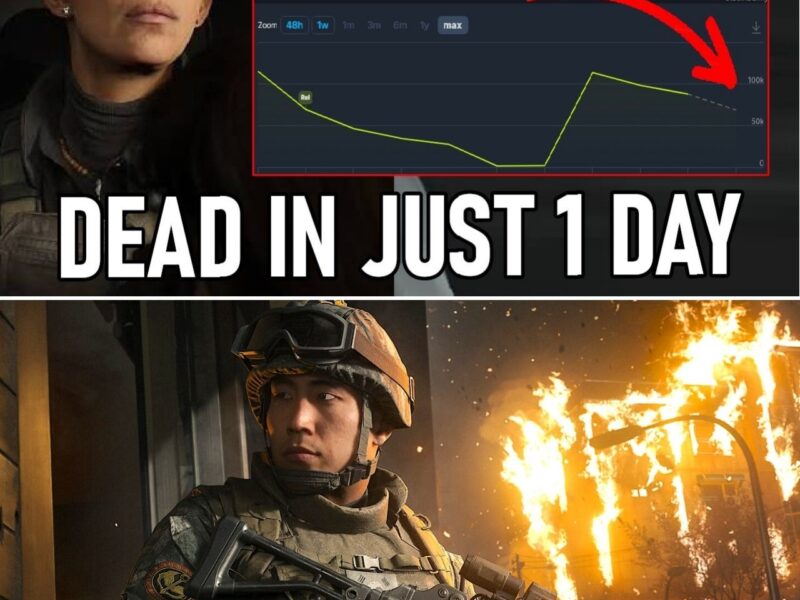
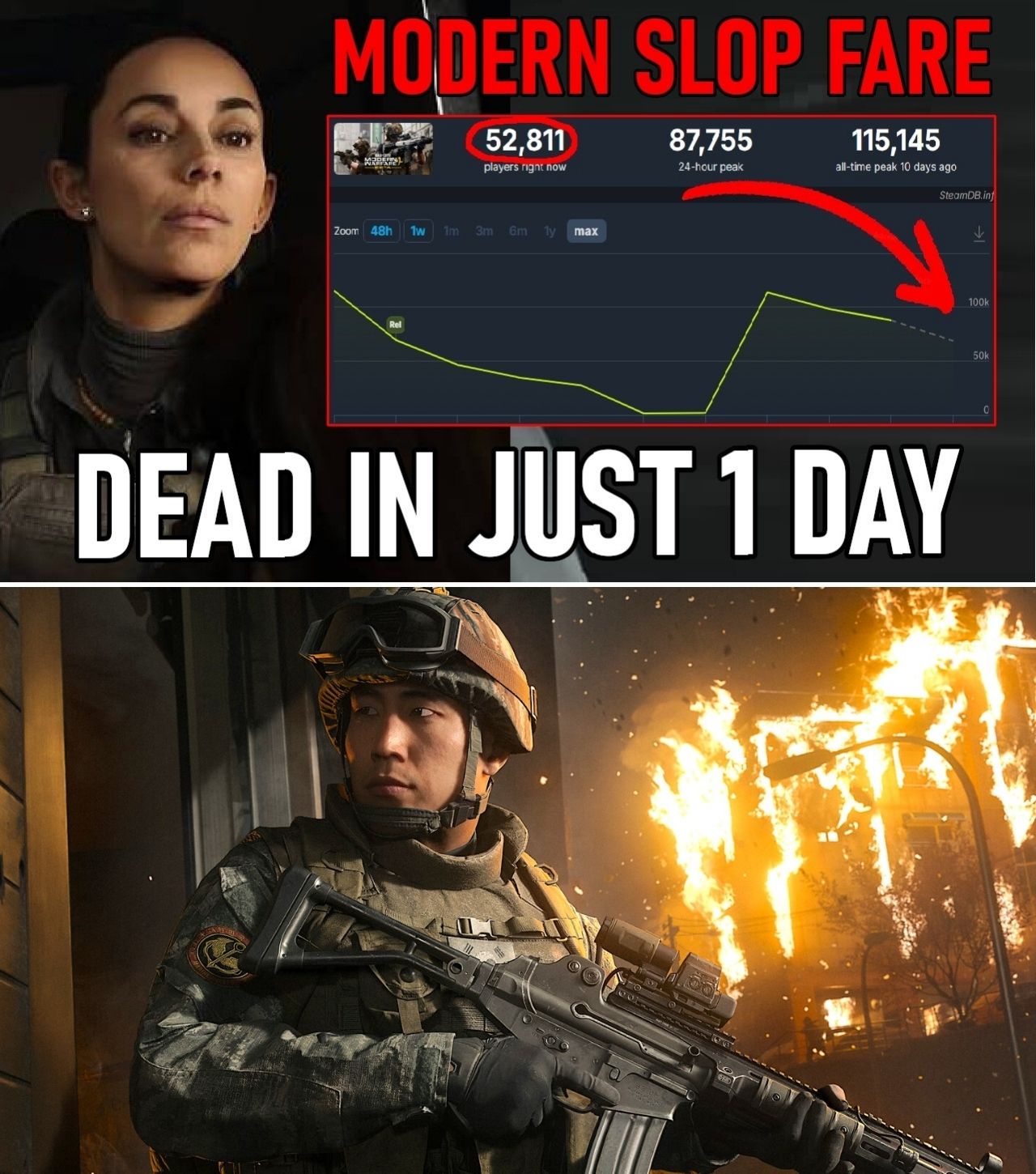
A provocative new wave of commentary — including the video titled “Modern Warfare 4 Will Be The Last CoD Game” — frames the upcoming game as a potential breaking point for the franchise.
That does not mean Activision has announced that Modern Warfare 4 will be the final Call of Duty game. Quite the opposite: Activision has officially positioned MW4 as the next major chapter in the franchise, with Infinity Ward leading development and a release scheduled for October 23, 2026.
But the “last CoD” argument is tapping into something real.
After years of yearly releases, overlapping mechanics, increasingly aggressive live-service integration and an audience that appears more divided than ever, some longtime players are questioning whether the traditional Call of Duty model can continue indefinitely.
And the recent MW4 beta has provided ammunition for both sides.
Some players say Infinity Ward has finally delivered a version of Call of Duty they can enjoy again.
Others argue that MW4 feels too similar to the games that came before it — raising the uncomfortable possibility that the biggest problem facing Call of Duty isn’t one bad release.
It is franchise fatigue.
Modern Warfare 4 is officially happening
Before getting into the controversy, one fact needs to be established.
Modern Warfare 4 is real.
Activision and Infinity Ward officially announced the game in May, confirming an October 23 release for PlayStation 5, Xbox Series X|S, PC and Nintendo Switch 2. It is also the first mainline Call of Duty title to skip PlayStation 4 and Xbox One entirely.
The campaign will continue the modern Modern Warfare storyline surrounding Captain Price, while introducing a conflict centered around the Korean Peninsula.
Activision describes the campaign as taking players through locations including Korea, New York, Paris and Mumbai.
Multiplayer is being presented as a more grounded experience emphasizing precise gunplay and player control.
And perhaps most importantly, DMZ is returning.
The extraction mode, originally introduced with Modern Warfare II, is being brought back as a major component of MW4. Activision describes it as a persistent combat sandbox built around missions, dynamic operations and player-driven encounters.
On paper, that is a substantial package.
But the community isn’t judging MW4 purely on the amount of content.
It is judging whether Call of Duty still feels fresh.
The beta changed the conversation
The MW4 beta has become particularly important because it gives players something concrete to evaluate.
The open beta included multiplayer maps and modes, Ground War, and even a Resurgence map for Warzone.
It also introduced campaign content into a Call of Duty beta for the first time, with the mission Entrenched available during the test.
The beta has produced a surprisingly divided reaction.
Some players genuinely enjoyed it.
One recent Reddit post from a player who had spent around 12 hours with the beta described the experience as extremely enjoyable, praising the gunplay, performance and streamlined interface while expressing confusion at the overwhelmingly negative online discourse.
Another player called the beta one of the most enjoyable Call of Duty experiences they had had in years.
That is hardly the picture of a franchise on its final legs.
But there is another side.
“It’s just more Call of Duty”
One of the most persistent criticisms is that MW4 simply doesn’t feel different enough.
A recent discussion on the MW4 subreddit argued that, despite differences in movement and design philosophy, the game ultimately feels too similar to Modern Warfare III, Black Ops 6 and Black Ops 7.
That criticism is particularly interesting because Call of Duty’s annual structure has traditionally depended on each development studio providing its own identity.
Treyarch has its Black Ops style.
Infinity Ward historically emphasized more deliberate gunplay and pacing.
Sledgehammer has developed its own interpretations of the formula.
But some players now feel those distinctions are becoming increasingly blurred.
One recent Reddit discussion argued that MW4 risks feeling less like a distinct Infinity Ward game and more like another variation of the modern Black Ops/Warzone formula. The complaint centered on movement, time-to-kill and pacing rather than simply graphics or content volume.
That is a potentially serious problem.
If every Call of Duty begins to feel interchangeable, why should players buy every annual installment?
The “last CoD” argument isn’t really about literally being the last
This is where the provocative headline needs context.
Nobody should interpret “Modern Warfare 4 Will Be The Last CoD Game” as an official prediction that Activision is shutting down Call of Duty after October.
There is no evidence of that.
In fact, Activision continues to invest heavily in the franchise.
MW4 is being supported across multiple platforms, including the unprecedented return of Call of Duty to Nintendo hardware through a native Switch 2 version.
The more interesting interpretation is that MW4 could be the last straw for some players.
In other words, not “Call of Duty is ending,” but:
“This could be the Call of Duty that makes me stop buying Call of Duty.”
That sentiment is considerably easier to find.
The franchise has a retention problem — at least among some longtime players
One recurring complaint across gaming forums is that players are tired of the annual cycle.
A new Call of Duty arrives.
Players grind multiplayer.
Warzone receives new content.
New weapons and operators appear.
Cosmetic bundles arrive.
Then another Call of Duty is announced.
For hardcore players, that cycle can remain compelling.
For casual or lapsed players, however, it can create the opposite reaction.
Why return every year when the previous game still works?
That is especially relevant when older Call of Duty games remain popular.
A recent PC Gamer feature examined why players were returning to a seven-year-old Call of Duty, highlighting the nostalgia and perceived quality of an earlier era of the franchise.
The nostalgia isn’t necessarily proof that older games were objectively better.
But it does show that some players increasingly view the franchise’s past through a more favorable lens.
Modern Warfare 2019 remains the elephant in the room
Few recent Call of Duty games have had the cultural impact of Modern Warfare (2019).
It rebooted the franchise’s most recognizable sub-series and introduced a grounded visual and gameplay style that many players still consider the benchmark for modern Call of Duty.
That comparison has followed MW4 throughout development.
One recent Reddit thread posted after the beta argued that MW2019 still felt superior in responsiveness, visual clarity and overall weapon handling. The post received significant engagement from players nostalgic for that particular design philosophy.
The problem for Infinity Ward is obvious.
It cannot simply remake Modern Warfare 2019 forever.
Players simultaneously demand innovation while frequently criticizing changes.
That puts Call of Duty developers in an almost impossible position.
Change too much, and longtime fans complain.
Change too little, and players accuse the studio of recycling the franchise.
The AI controversy isn’t helping
Another issue hanging over modern Call of Duty is the increasing use of AI-assisted development and AI-generated content.
The broader franchise has already faced community criticism surrounding the role of AI in recent releases.
During the MW4 beta period, a major Reddit discussion about AI in Call of Duty generated more than a thousand upvotes, with players debating whether Activision’s continued use of AI reflects an industry-wide reality or simply an unwillingness to invest in traditional content creation.
The important point is that online discussions frequently combine several separate grievances:
AI.
Microtransactions.
Recycled mechanics.
Annual releases.
Warzone integration.
SBMM.
Movement.
Map design.
And franchise fatigue.
None of these issues alone means Call of Duty is dying.
Together, however, they create a perception problem.
SBMM remains another flashpoint
The MW4 beta has also reignited arguments about skill-based matchmaking.
Activision and its developers continue to defend matchmaking systems as an important part of maintaining healthy online experiences.
But many high-skill players have long argued that strict matchmaking creates a negative environment where every match feels excessively competitive.
The MW4 beta once again brought the issue to the forefront, with developers making adjustments while players debated how matchmaking should work.
This is another example of the fundamental problem facing Call of Duty.
The player base is enormous.
Younger casual players want a welcoming multiplayer experience.
Competitive players want meaningful matches.
Content creators want high-skill gameplay.
Nostalgic players want the slower, simpler Call of Duty they remember.
Warzone players want movement and mechanics that support a constantly evolving battle royale.
Trying to satisfy all of them simultaneously is becoming increasingly difficult.
Yet there are reasons to be optimistic
The “Call of Duty is dead” narrative is also easy to exaggerate.
The MW4 beta has produced plenty of positive feedback.
One recent Reddit discussion described the game as genuinely fun, with players praising its responsiveness, gunplay, interface and map design.
Another player said the negativity surrounding the game sometimes feels exaggerated and argued that MW4 is significantly more enjoyable than the online discourse suggests.
That matters.
A vocal online audience does not necessarily represent the millions of people who will purchase and play the game.
Call of Duty remains one of gaming’s most recognizable brands.
And Activision is clearly still betting heavily on it.
The return of DMZ is particularly significant because it gives MW4 another pillar beyond traditional multiplayer and Warzone.
Nintendo could provide an unexpected boost
One of the most interesting developments surrounding MW4 is its arrival on Nintendo Switch 2.
Call of Duty has not appeared on a Nintendo platform since Call of Duty: Ghosts on Wii U in 2013.
MW4 changes that.
Infinity Ward is working with Digital Legends to develop a native Switch 2 version, and Activision has confirmed crossplay between Switch 2 and the other platforms.
That potentially opens Call of Duty to an entirely different audience.
Instead of shrinking, the franchise is actually expanding its reach.
And that makes the idea of MW4 being literally the final Call of Duty even harder to support.
Activision is clearly planning beyond MW4
The company’s current strategy also demonstrates that there is no obvious sign of an ending.
MW4 has a campaign.
Multiplayer.
Warzone integration.
DMZ.
Seasonal content.
A Switch 2 version.
PC support.
And a substantial anti-cheat operation.
Activision recently announced aggressive legal action against cheat sellers, saying it had issued more than 80 cease-and-desist orders, disrupted hundreds of reseller operations and shut down dozens of vendors.
That kind of investment doesn’t resemble a company preparing to abandon its flagship shooter.
The bigger question is whether the franchise can continue without exhausting its audience.
The annual-release model is the real target
This may be the most important point behind the “last CoD” argument.
Call of Duty does not necessarily need to stop existing.
It may simply need to stop feeling like something players have to buy every year.
If MW4 becomes a long-term platform that players enjoy for multiple years, Activision could potentially reduce the pressure surrounding annual releases.
If every new installment instead feels like another mandatory reset, the franchise could continue generating enormous revenue while simultaneously losing goodwill among longtime fans.
That is the paradox Call of Duty currently faces.
The series can be enormously successful and still have a passionate community that complains constantly.
In fact, the two often coexist.
What happens after Modern Warfare 4?
The immediate future is straightforward.
Modern Warfare 4 launches on October 23, 2026.
It will arrive on PS5, Xbox Series X|S, PC and Switch 2, with campaign early access beginning October 16 for eligible preorders.
The more interesting question comes afterward.
Will players continue buying every annual release?
Will Infinity Ward’s approach restore some of the identity that longtime fans believe the franchise has lost?
Will DMZ become a major long-term success?
Can Activision maintain a healthy balance between traditional multiplayer, Warzone and live-service monetization?
And perhaps most importantly:
Can Call of Duty make players excited about the next game rather than simply relieved that the current one is over?
That is why the claim that Modern Warfare 4 will be the last Call of Duty game is better understood as a warning than a prediction.
There is no evidence that Activision intends to end the franchise.
The company is doing the opposite.
But if enough longtime players decide that every new Call of Duty feels too familiar, too monetized or simply not worth another annual purchase, then MW4 could mark the end of something else:
the assumption that Call of Duty fans will automatically come back every year.
And that may ultimately be a much bigger threat to the franchise than any single bad review.