PlayStation Boycott Goes Indefinite as Sony Reminds Gamers: You Don’t Actually Own Your Digital Games
🚨 PLAYSTATION GAMERS JUST SAID: ENOUGH.
Sony is killing physical PlayStation game discs by 2028 — and right as gamers launch a boycott, Sony reminds everyone that the digital games they “buy” are actually licenses, not ownership.
Now the #PSBlackout protest has gone from a one-week boycott to calls for an indefinite blackout.
No purchases. No PSN. No PlayStation.
But here’s the question Sony REALLY doesn’t want gamers asking:
If you paid $70, $80 or more for a game… and Sony says you don’t actually own it, what exactly did you buy?
And once physical games disappear, what happens when the store closes, your account gets banned, or Sony decides you no longer have access?
The “buy vs. rent” debate just got VERY real. 👇
PlayStation Boycott Goes Indefinite as Sony Reminds Gamers: You Don’t Actually Own Your Digital Games
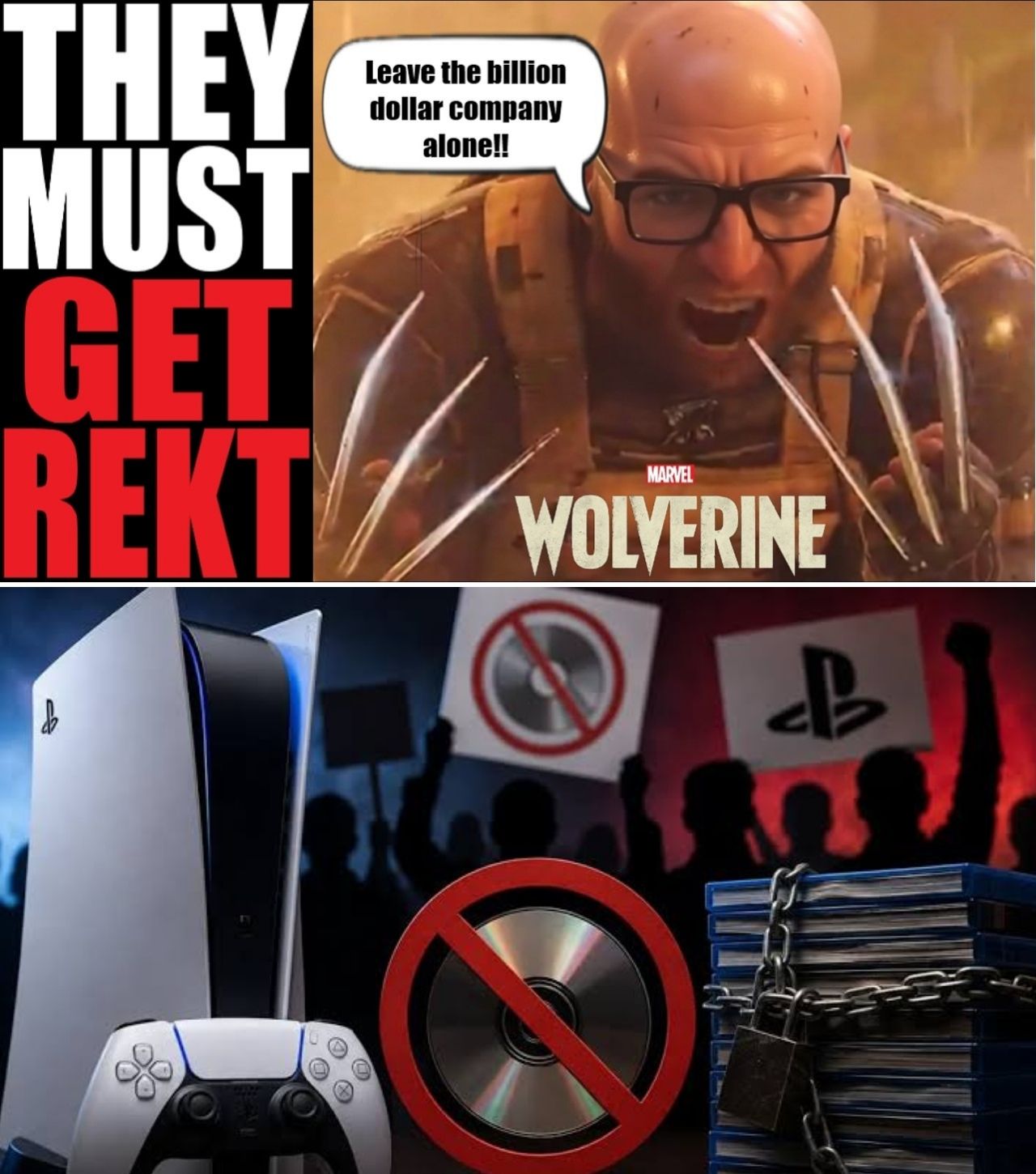
A growing PlayStation protest has escalated from a one-week blackout into calls for an indefinite boycott, just as Sony reminds users that digital games are licensed rather than owned — reigniting one of gaming’s biggest arguments over what consumers actually get when they pay for a game.
For years, gamers have complained that the industry is slowly turning video games from products into services.
Now that argument has reached a boiling point.
Sony is facing a growing consumer backlash over its decision to end physical PlayStation game-disc production by January 2028.
A community-led campaign known as #PSBlackout called on PlayStation users to stop playing, logging into PSN and making purchases between August 23 and August 30.
But the protest has since escalated.
Some participants are now calling for an indefinite boycott of PlayStation — a dramatic escalation that could theoretically continue through major releases that include GTA 6 and Wolverine.
And then Sony reminded its customers of something that has sent the gaming community into another frenzy:
The digital games you purchase are licensed to you. They aren’t legally transferred to you as property.
For gamers already furious about the disappearance of physical media, the timing could hardly have been worse.
“You Don’t Own the Game”
The controversial wording isn’t actually brand-new.
Sony’s current PlayStation Terms of Service explicitly state that intellectual-property rights in PlayStation content remain with Sony, its affiliates or licensors.
The agreement further says that references to words such as “own,” “ownership,” “purchase,” “sale,” “rent” or “buy” do not mean that ownership of the underlying content or software has been transferred to the user.
Instead, PlayStation content is generally provided under a non-exclusive, revocable license for personal use.
The U.S. version of Sony’s terms similarly says that content is licensed on a non-exclusive and revocable basis, subject to the agreement and other restrictions.
In other words, the viral phrase “gamers are renters now” is emotionally powerful, but it needs a little context.
Sony did not suddenly invent digital licensing this week.
The same basic principle has existed in digital gaming for years.
What changed is the public conversation around it.
Why the Timing Is Explosive
Sony’s reminder arrived at almost exactly the moment when gamers were already organizing against the company’s physical-media strategy.
Sony has confirmed that it intends to stop producing physical game discs for PlayStation by January 2028.
The company has defended the decision as part of the broader shift toward digital gaming.
Sony CFO Lin Tao acknowledged the emotional attachment many players have to physical media but said the company had evaluated the move carefully and was proceeding with the transition.
For Sony, the business logic is straightforward.
Digital games are easier to distribute.
There is no manufacturing process for individual discs.
There are no physical inventories sitting in stores.
There is no need to manufacture millions of copies months ahead of release.
And digital sales already dominate PlayStation’s software business.
According to data cited by The Verge, Sony’s physical game revenue was around $781 million in 2025, compared with approximately $6.5 billion from digital game sales and $8.4 billion from in-game purchases.
From a corporate perspective, the direction is obvious.
From a preservation perspective, gamers see something very different.
What Happens When the Disc Disappears?
This is the heart of the #PSBlackout argument.
Physical games give consumers something tangible.
You can keep the disc.
You can lend it.
You can sell it.
You can buy it secondhand.
You can display it.
And, depending on how the game was designed, you may still be able to play it decades later even if the original publisher has disappeared.
Digital games don’t provide exactly the same relationship.
Your purchase is tied to an account and governed by platform rules.
If your account is suspended or terminated, access to digital content can be affected.
Sony’s terms also reserve broad rights concerning account termination and access to PlayStation services.
That is what critics mean when they say the consumer isn’t really buying a traditional product.
They are buying permission to access software under certain conditions.
The “Renting Games” Argument Has a Catch
There is, however, an important distinction.
Saying that digital games are licensed rather than owned does not necessarily mean Sony can randomly wake up tomorrow and erase every game you’ve purchased.
The practical rights of consumers depend on the specific game, platform, jurisdiction, applicable consumer-protection laws and the circumstances surrounding account or service termination.
Sony’s own terms acknowledge that users may have rights under applicable local law that cannot be limited or waived.
So the viral claim that:
“Sony can take every game you bought whenever it wants”
is far too broad.
But the underlying concern is legitimate.
Digital ownership is fundamentally different from physical ownership.
And the disappearance of physical alternatives makes that difference much more important.
That’s Why #PSBlackout Exists
The current protest was organized by DoesItPlay, a community focused heavily on game preservation and consumer access.
The original campaign called for players to stay away from PlayStation from August 23 through August 30.
The message was deliberately simple:
No logins.
No gaming sessions.
No purchases.
The goal was to demonstrate that consumers still have leverage if they collectively refuse to participate.
The Guardian described the protest as part of a broader backlash against the industry’s move away from physical media, noting that gamers are increasingly concerned about preservation, access and the loss of consumer control.
But the campaign has gone further than its original organizers may have expected.
Some angry players have proposed making the blackout permanent.
The Indefinite Boycott Changes the Stakes
An indefinite boycott is dramatically different from a one-week protest.
A one-week blackout is largely symbolic.
An indefinite boycott potentially affects actual purchasing behavior.
That means cancelling subscriptions.
Avoiding digital purchases.
Refusing to preorder games.
Avoiding PlayStation Store sales.
And, most importantly, refusing to participate in the ecosystem that Sony wants to move toward.
Push Square reported that some protesters were escalating their campaign to an indefinite boycott, with calls for players to keep their consoles unplugged.
That is a much more difficult promise to keep.
Especially with games such as GTA 6 approaching.
GTA 6 Is the Ultimate Test
The timing of this protest is almost comically dramatic.
Rockstar’s Grand Theft Auto VI is currently scheduled for November 19, 2026 on PlayStation 5 and Xbox Series X|S.
That means PlayStation players who are furious about Sony’s physical-media strategy are potentially being asked to boycott the platform just months before the biggest game release in years.
That is where the protest runs directly into reality.
It’s one thing to say:
“I’m never buying another PlayStation game.”
It’s another thing to say:
“I’m willing to miss GTA 6.”
That is an enormous difference.
And protesters know it.
The Physical Disc Problem Isn’t Just About Nostalgia
Sony’s supporters argue that the physical-media transition is inevitable.
Most consumers already buy digitally.
Digital distribution is convenient.
Games can be downloaded immediately.
Players don’t need storage space for boxes.
Patches and updates are easier to distribute.
And modern games frequently require substantial downloads even when purchased physically.
Those are all legitimate arguments.
But physical-media advocates aren’t necessarily asking Sony to pretend the industry is still 2005.
They’re asking for an option.
The difference matters.
If consumers want digital convenience, they can buy digitally.
If someone wants a disc that can be resold, preserved or passed to another person, they want the ability to make that choice.
The fear is that once physical production disappears, that choice disappears permanently.
Game Preservation Is the Bigger Issue
This is where the argument becomes larger than Sony.
A physical game can become part of a collection.
A digital game depends much more heavily on infrastructure.
Servers.
Accounts.
Storefronts.
Licenses.
Authentication systems.
Operating systems.
Hardware compatibility.
And corporate decisions.
If a company eventually shuts down a storefront or stops supporting an old platform, players may discover that “buying” a game in 2026 doesn’t necessarily guarantee the same kind of access in 2046.
That’s one reason preservation groups are increasingly vocal about physical media.
The Guardian noted that the current protest reflects broader concerns about game preservation and consumer control rather than simply hatred of Sony.
But Sony Isn’t Alone
This is another point that often disappears in the online outrage.
Sony’s licensing language is not unique.
Other major digital gaming platforms use similar concepts.
Push Square pointed out that Steam, Xbox and Nintendo also operate under licensing models rather than traditional ownership of the underlying intellectual property.
That makes the current backlash somewhat ironic.
Gamers aren’t suddenly discovering that digital games are licensed.
They are confronting the implications more seriously because Sony is simultaneously moving toward eliminating the physical alternative.
That’s the critical distinction.
The controversy isn’t simply:
“Sony says you don’t own your digital games.”
It’s:
“What happens when the thing that gave consumers a different kind of ownership — physical media — disappears?”
That is a much stronger argument.
And Then There Is the Account Problem
Another concern raised by critics involves account bans.
A physical disc can generally be inserted into a compatible console regardless of whether the player remains in good standing with the publisher’s online services.
A digital purchase is much more closely tied to the user’s account.
Sony’s terms contain provisions concerning suspension and termination of accounts and PlayStation services.
That doesn’t mean Sony is routinely confiscating people’s game libraries.
It does mean the user’s relationship with their digital library is mediated through an account.
For consumers who value long-term ownership, that’s a meaningful difference.
The Industry Is Moving in One Direction
Sony isn’t making this decision in isolation.
Digital distribution has been steadily expanding across the entire industry.
Microsoft has embraced digital distribution.
PC gaming has been overwhelmingly digital for years.
Nintendo continues to sell physical software but also has a huge digital storefront.
Even physical console games increasingly ship with mandatory downloads, online requirements or large patches.
The economic incentives are simply too strong.
Sony’s own revenue figures demonstrate why.
Digital content and in-game purchases generate vastly more revenue than physical games.
From Sony’s perspective, continuing to manufacture discs indefinitely would mean maintaining a shrinking business because some consumers strongly prefer it.
From the consumer perspective, however, the question is not necessarily whether physical games are the majority.
It’s whether the minority that wants them should lose the option entirely.
The Boycott Faces a Massive Challenge
There is also a practical problem for #PSBlackout.
How do you measure success?
If millions of people unplug their consoles for seven days, does Sony change its strategy?
Probably not by itself.
A company making billions from digital content is unlikely to reverse a major long-term manufacturing strategy because of a short-term social-media campaign.
For a boycott to produce meaningful financial pressure, participation would need to be enormous and sustained.
And that is extremely difficult.
Players have competing incentives.
They want to play their games.
They want new releases.
They want online multiplayer.
They want discounts.
They want GTA 6.
They want Wolverine.
They want whatever the next major PlayStation exclusive turns out to be.
Consumer anger can be intense.
Consumer discipline is much harder.
Social Media Makes the Protest Look Bigger — and Smaller
This is another complication.
On X, Reddit, YouTube and gaming forums, the controversy can feel enormous.
Thousands of people can share the same complaint within hours.
A hashtag can trend.
A viral video can receive millions of views.
But social-media engagement isn’t the same thing as lost revenue.
The most important metric for Sony isn’t how many angry posts exist.
It’s how many people actually stop spending money.
That’s why the coming months will be revealing.
If the boycott remains primarily online, Sony may simply wait it out.
If significant numbers of consumers cancel subscriptions and stop purchasing digital games, the calculation becomes more complicated.
Sony Has Already Made Its Position Clear
For now, Sony doesn’t appear to be reversing course.
The company has acknowledged the emotional attachment to physical media but continues to argue that the market is moving toward digital content.
Physical production is scheduled to end by January 2028.
Manufacturing facilities are reportedly already being converted for other uses.
That suggests this is not a temporary experiment.
It is a strategic transition.
And that’s why the current protest matters.
The community isn’t simply arguing about one policy.
It is arguing about what the PlayStation ecosystem should look like for the next generation.
Gamers Are Really Asking a Bigger Question
The most important question isn’t whether a digital game is technically “owned.”
It’s:
What rights should a consumer have after paying full price for software?
Should they be able to keep playing indefinitely?
Should games remain downloadable after storefronts close?
Should publishers be required to provide offline versions?
Should consumers be able to transfer licenses?
Should physical media remain available for games that don’t require online servers?
And what happens to games that become impossible to access once a publisher shuts down its infrastructure?
Those questions don’t have simple answers.
But they are becoming increasingly urgent.
The “Renters” Argument Is Really About Control
Calling gamers “renters” is intentionally provocative.
But it captures a genuine emotional shift.
When you buy a physical game, there is a psychological sense of possession.
The object is sitting on your shelf.
You can hold it.
You can trade it.
You can sell it.
You can preserve it.
Digital gaming replaces that relationship with access.
That doesn’t necessarily make digital gaming bad.
For millions of people, convenience matters more than ownership.
But once digital becomes the only option, consumers lose the ability to choose.
That’s where the anger comes from.
What Happens Next?
The #PSBlackout campaign is currently scheduled around the August 23–30 protest window, but calls for an indefinite boycott have already appeared.
Whether that escalation becomes a genuine long-term movement remains to be seen.
Sony has little incentive to reverse a strategy that is financially aligned with where the industry is heading.
But gamers also have something companies cannot completely control:
Where they spend their money.
The coming months will therefore be less about hashtags and more about behavior.
Will players actually stop buying?
Will they cancel PlayStation Plus?
Will they refuse digital preorders?
Will physical-game collectors move toward other platforms?
Will publishers respond to demands for better preservation and consumer rights?
Or will GTA 6, Wolverine and the next wave of major releases simply overwhelm the boycott?
Those answers will determine whether #PSBlackout becomes a memorable protest or the beginning of something much larger.
For now, one thing is clear.
Sony’s move toward a digital-only future has forced gamers to confront an uncomfortable reality that the industry has been moving toward for years.
When you buy a digital game, you’re buying access under a license — not a physical object that can simply be yours forever.
And with physical PlayStation games scheduled to disappear by 2028, the debate is no longer theoretical.
The question is no longer whether gaming is becoming digital.
It already has.
The question is:
How much control are players willing to give up in exchange for the convenience?
That may be the real battle behind the PlayStation boycott.