The Saylor Hayes Case: A Missing Girl, a Massive Search and the Tracking Device Question That Changed the Investigation
🚨 THEY SEARCHED EVERYWHERE FOR THIS LITTLE GIRL… BUT ONE DETAIL MAY HAVE SENT THEM LOOKING IN THE WRONG PLACE.
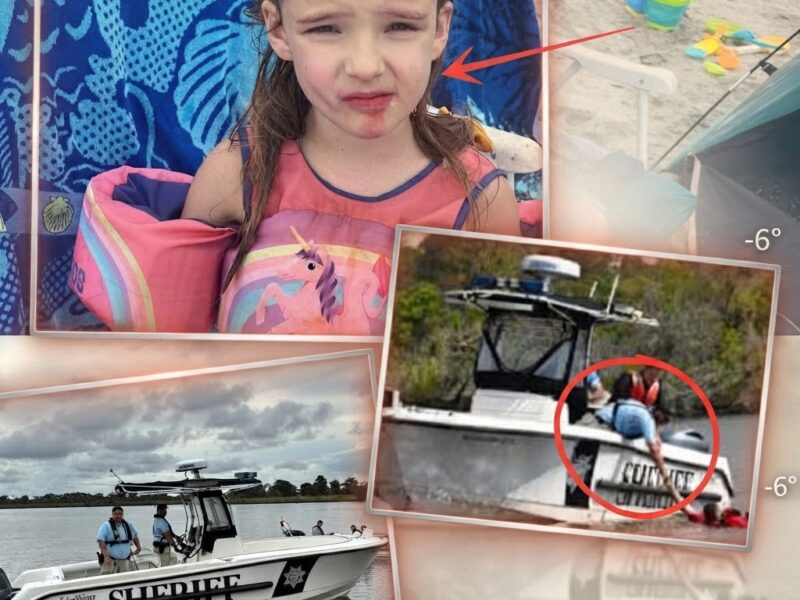
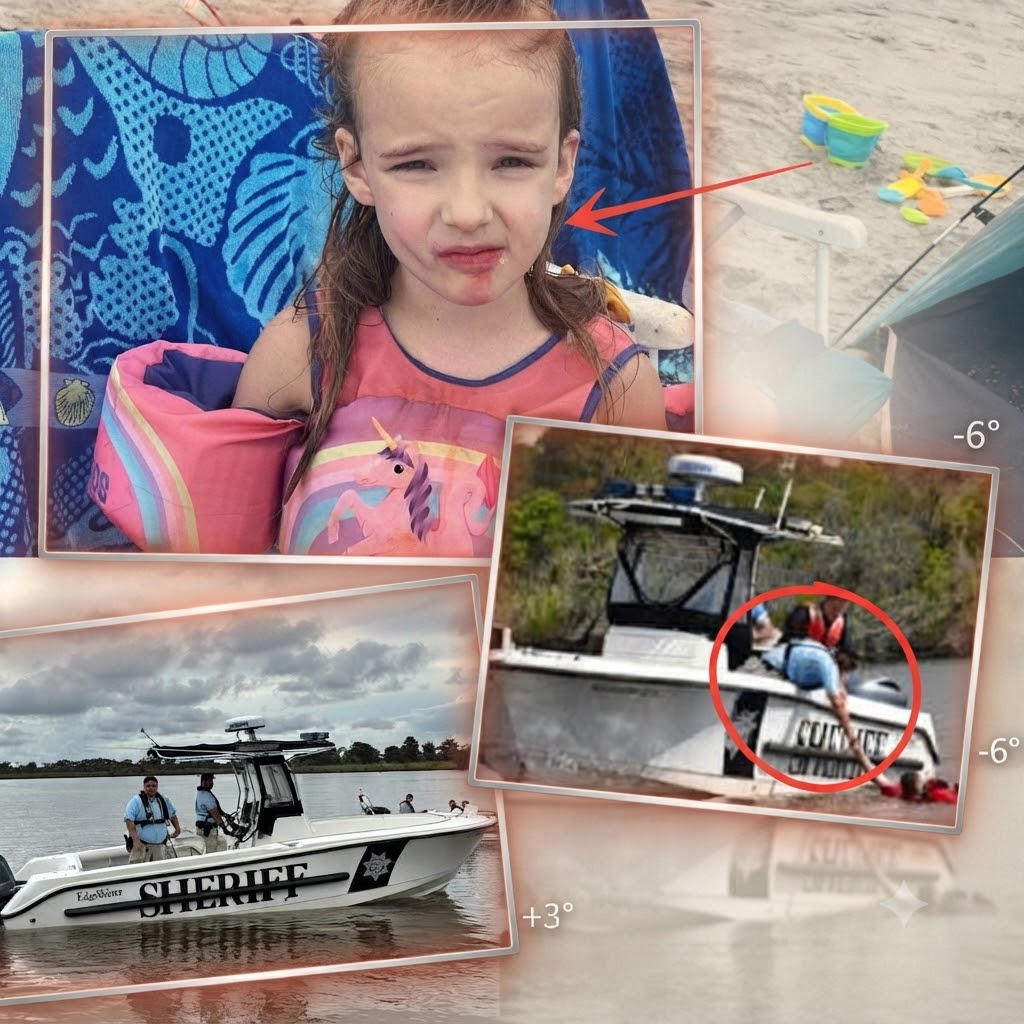
Five-year-old Saylor Hayes vanished from a Pawleys Island rental, triggering a massive search involving helicopters, divers, K-9s and dozens of rescuers.
Everyone thought the biggest question was simple:
Where was Saylor?
Then investigators uncovered something about the search itself that changed the entire case.
Something authorities believed would help them find her…
wasn’t actually where they thought it was.
And the people closest to Saylor may have known more about that detail than investigators initially realized.
By the time the truth began coming together, Saylor had already been found in the water.
Now her parents are facing charges — and investigators are examining what happened during the crucial hours when every minute mattered.
So what exactly went wrong?
And why did one seemingly small detail become such a major part of the investigation?
👇 The full story is even more disturbing than the first reports suggested.
The Saylor Hayes Case: A Missing Girl, a Massive Search and the Tracking Device Question That Changed the Investigation
Parents of 5-year-old Saylor Hayes have returned to South Carolina to face charges after investigators alleged they misled authorities during an intensive search for their autistic, nonverbal daughter. A preliminary autopsy now indicates pulmonary edema, consistent with drowning, while major questions remain about the hours before her disappearance.
PAWLEYS ISLAND, S.C. — What began as a frantic search for a missing 5-year-old girl in a South Carolina vacation community has evolved into a criminal investigation centered on the actions of her parents.
Saylor Hayes, a nonverbal child with autism from the Bristol, Virginia, area, disappeared Aug. 30 from a rental property in the Hagley Estates community of Pawleys Island. She was known to have a tendency to wander, or elope, and had been enrolled in a Project Lifesaver program designed to help authorities locate vulnerable people who may wander away.
The initial response was massive.
Law enforcement officers, firefighters, divers, K-9 teams, drones, boats and other agencies joined hundreds of local residents searching the area. Authorities also attempted to use Project Lifesaver equipment to locate Saylor’s transmitter.
But investigators later learned that the transmitter was not with her.
That discovery became one of the central elements of the criminal case now facing her parents.
A search that ended in tragedy
Saylor disappeared from the family’s rental home on Aug. 30. Authorities and volunteers searched surrounding properties, roads, docks and waterways as the hours passed.
The search included air, land and water operations. Divers examined nearby areas, drones were deployed and residents were asked to check security footage and their properties. The U.S. Coast Guard also became involved in the overnight effort.
Saylor’s attraction to water made the circumstances particularly urgent.
Her body was ultimately recovered around 9:45 a.m. Aug. 31 by agents with the South Carolina Department of Natural Resources in water near the area where she had last been seen.
At that stage, authorities had not publicly announced a cause of death.
That changed Friday.
According to the Georgetown County Coroner’s Office, a preliminary autopsy found pulmonary edema, or fluid in the lungs. The finding is consistent with drowning, although the final determination remains pending. No visible trauma was reported, and a more complete report is expected in the coming weeks.
The preliminary finding does not, by itself, answer how Saylor entered the water or establish criminal responsibility.
Those questions remain part of the investigation.
The tracking device became a crucial clue
One of the most troubling elements emerged after authorities examined what happened with Saylor’s Project Lifesaver transmitter.
Washington County Sheriff Blake Andis said Saylor had been enrolled in the program since June 2024. Project Lifesaver is designed to assist in locating people who are at risk of wandering because of cognitive conditions or other special needs.
During the initial search, authorities attempted to locate Saylor using the transmitter’s frequency.
The technology worked.
But investigators say it led them to the transmitter — not the missing child.
According to authorities, the device assigned to Saylor had been removed before the family left Virginia for the South Carolina trip. It was later located inside a vehicle at the family’s Virginia home.
That distinction is important.
There is no public evidence establishing that someone deliberately planted the device at the vacation property or intentionally left it behind as part of a scheme. What investigators allege is more specific: that the parents knew Saylor was not wearing the transmitter yet encouraged authorities to rely on the tracking technology during the search.
The allegation became a major part of the arrest warrants.
Authorities say the result was that search efforts were diverted away from the area where Saylor was ultimately recovered.
Why the allegation matters
For a missing child who was known to wander, the tracking device was potentially critical.
Sheriff Andis said that had Saylor been wearing her transmitter, investigators believe the technology could have helped locate her much sooner.
The system itself was functioning as designed. It detected the transmitter and led authorities toward its location.
The problem was that Saylor was somewhere else.
That revelation transformed what initially appeared to be a tragic disappearance into a case involving questions about supervision, preparation and the information provided to rescuers.
Authorities have charged Saylor’s parents, John Herb Hayes III, 70, and Geordyn Nichole Hayes, 31, with unlawfully placing a child at risk and willfully abandoning a child. They were arrested in Carter County, Tennessee, on Sept. 1 and later agreed to extradition to South Carolina.
As of Sept. 5, both had been returned to Georgetown County and were being held while awaiting a bond hearing.
The charges are allegations, not findings of guilt.
The family’s vacation raises further questions
According to the arrest warrants and reporting based on them, investigators believe Saylor was left unsupervised in close proximity to a body of water.
That detail has drawn significant attention because of her known history of wandering and attraction to water.
The combination of those circumstances — a vulnerable child, a waterfront environment and the absence of the tracking transmitter — has prompted questions about how the trip was planned and what precautions were taken.
Online discussion has reflected the same tension.
On Websleuths, users have debated the risks of choosing a waterfront vacation property for a child with a history of elopement and the practical limitations of Project Lifesaver outside a person’s normal area. Some participants have explicitly cautioned against jumping to conclusions about the parents while acknowledging that the circumstances raise difficult questions.
Another crime-discussion forum similarly focused on the revelation that the tracker was not on Saylor while authorities were initially attempting to locate it.
Those discussions are not evidence in the case, but they illustrate why the tracking-device revelation has become one of the most discussed aspects of the investigation.
The parents’ return to South Carolina
The case took another turn this week when John and Geordyn Hayes returned to South Carolina.
The couple appeared in court in Tennessee during the extradition process and waived their rights to additional extradition proceedings. They were subsequently transported back to Georgetown County.
Their arrest came only days after Saylor’s body was recovered.
Authorities have stressed that the charges are based on evidence gathered during the investigation rather than a conclusion that the parents directly caused their daughter’s death.
Georgetown County Sheriff Carter Weaver has described Saylor as a vulnerable child who depended on the adults responsible for her safety and protection.
The distinction could become important as prosecutors attempt to establish precisely what happened before, during and after Saylor disappeared.
Previous cases involving the parents
The investigation has also brought scrutiny to the parents’ prior encounters with the Virginia court system.
Recent reporting indicates that John and Geordyn Hayes had previously faced child-related charges. Geordyn Hayes was also arrested earlier in 2026 in connection with allegations involving another child.
Those records may form part of the broader background investigators examine, but prior allegations or arrests should not be treated as proof that the parents committed the conduct now alleged against them.
The current South Carolina case will ultimately depend on evidence concerning Saylor’s death and the circumstances surrounding her disappearance.
A devastating timeline
The known timeline is stark.
On Aug. 30, Saylor disappeared from the family’s rental home in Pawleys Island.
Authorities launched an extensive search involving multiple agencies and members of the local community.
Search teams attempted to use Project Lifesaver technology, believing the child was carrying her transmitter.
Investigators later determined that she was not.
On Aug. 31, Saylor’s body was recovered from nearby water.
On Sept. 1, her parents were arrested in Tennessee.
On Sept. 3, they appeared in court during extradition proceedings.
On Sept. 4, they were back in South Carolina custody.
And on the same day, preliminary autopsy information indicated pulmonary edema, consistent with drowning.
Each development has answered one question while creating another.
What happens next?
The investigation is far from over.
The final autopsy report could provide additional information about Saylor’s death. Investigators will also continue examining the circumstances surrounding the removal of the Project Lifesaver transmitter, the family’s movements before and after the disappearance, the supervision Saylor received and the information provided to search teams.
The prosecution will have to prove the charges beyond the allegations contained in the arrest warrants.
Meanwhile, Saylor’s case has prompted discussion beyond the criminal investigation. A petition has been launched calling for a safety board at Hagley Landing in her memory, with supporters arguing that greater awareness could help protect vulnerable children around the area’s waterways.
For now, the most consequential unanswered questions concern those critical hours before Saylor disappeared.
Why was a child known to wander not wearing the tracking transmitter?
What information did her parents give investigators during the search?
And could the search have unfolded differently if authorities had known immediately that the transmitter was not on Saylor?
Those questions are now at the center of a case that began with a desperate community search and has become a criminal investigation.
The answers will depend not on online speculation, but on the evidence investigators continue to gather.