Sony Says “Reasonable” PlayStation Buyers Know They Don’t Own Digital Games — And Gamers Are Furious
SONY JUST SAID THE QUIET PART OUT LOUD: YOU DON’T OWN YOUR PLAYSTATION GAMES. 😳
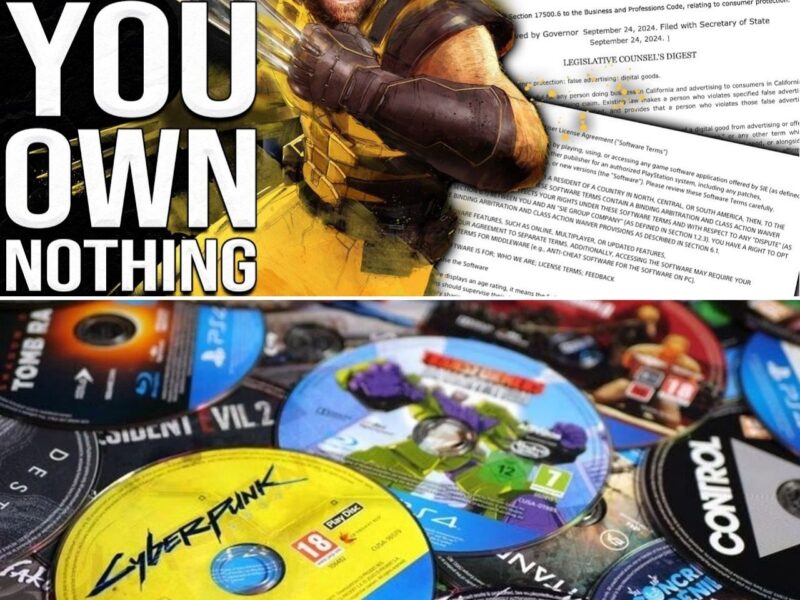
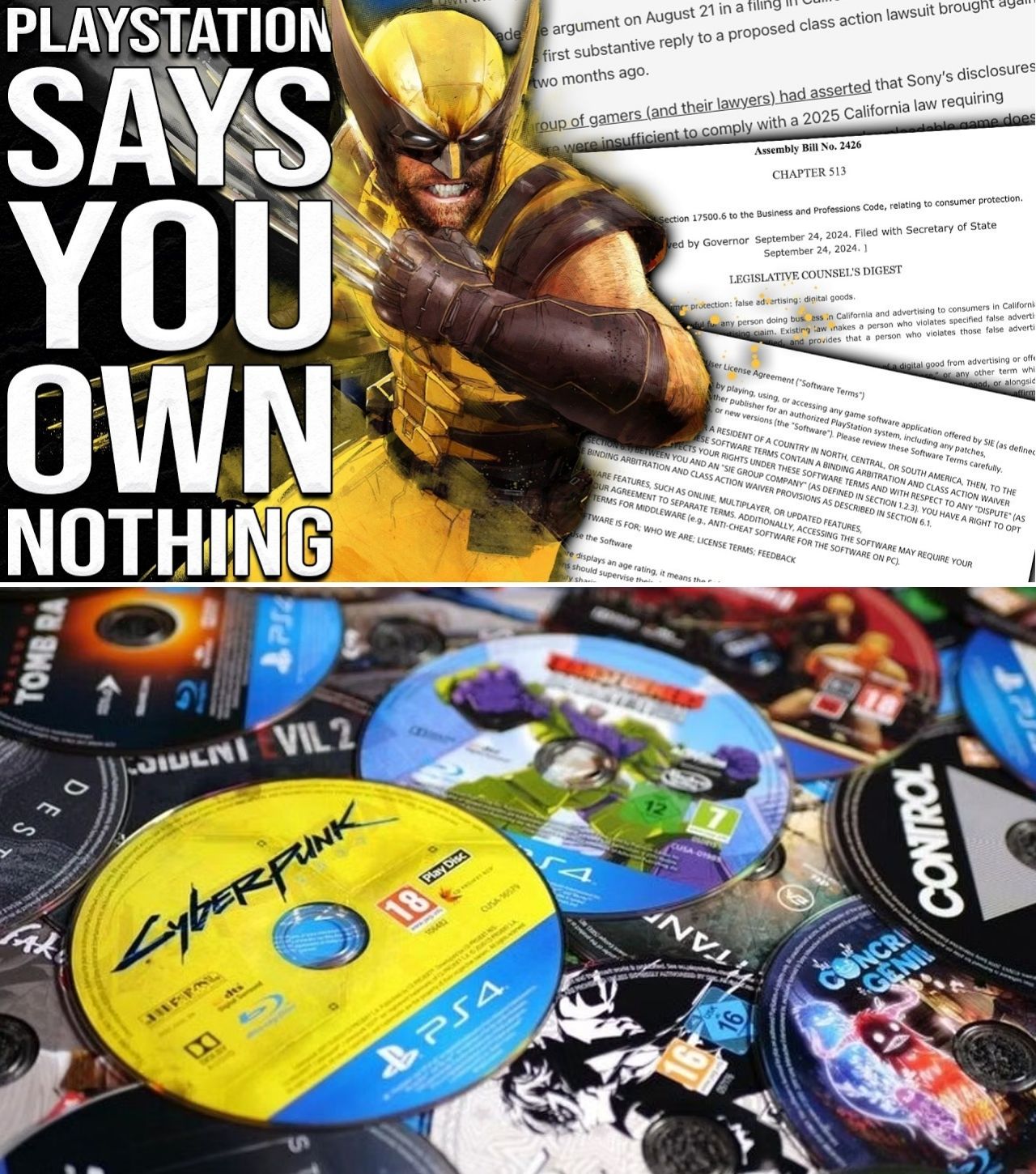
Sony is now arguing in court that “reasonable consumers” already understand that buying a digital game doesn’t mean owning it — just a license that can be revoked.
And the timing is brutal: PlayStation is preparing to eliminate physical discs for new games in 2028, meaning the very thing that gave players something they could physically keep, resell or lend is disappearing…
So what exactly are you paying for when you hit “BUY” on the PlayStation Store? And what happens to your $70+ library if Sony ever decides your license is no longer valid?
The answer is raising some VERY uncomfortable questions about the future of game ownership. 👇🔥
For years, gamers have casually referred to buying a game digitally.
They click Buy, pay the listed price, watch the download begin and then add the title to their PlayStation library.
But according to Sony’s own legal position, there is an important distinction hiding behind that familiar transaction: the customer does not actually own the software.
Instead, the customer receives a license to use it.
That distinction has suddenly become a major issue after Sony made the argument in a California court while defending itself against a proposed class-action lawsuit over how digital games are marketed on the PlayStation Store.
The controversy has arrived at an especially sensitive moment for PlayStation. Sony announced in July that it will stop producing physical game discs for new PlayStation releases beginning in January 2028, with new titles becoming digital-only. Sony says the decision reflects changing consumer preferences, noting that digital already represents the overwhelming majority of its full-game sales.
Now, as gamers debate what that means for ownership and preservation, Sony is simultaneously telling a court that consumers should already understand that digital purchases are licenses rather than traditional ownership.
For many players, the timing could hardly be worse.
Sony’s legal argument is unusually blunt
The immediate controversy stems from a proposed class-action lawsuit filed by four California PlayStation customers.
The plaintiffs argue that Sony’s use of terms such as “buy” and “purchase” on the PlayStation Store can give consumers the impression that they are actually acquiring ownership of the games they pay for.
California’s AB 2426, which addresses digital goods, requires sellers to make clear when consumers are obtaining a license rather than ownership under certain circumstances.
Sony is fighting the lawsuit and has argued that its existing agreements already make the distinction clear.
But one part of the company’s recent legal argument has attracted particular attention.
Sony’s lawyers reportedly argued that “reasonable consumers would not be misled” into believing they owned a digital game. The company’s position is that its Software Product License Agreement explicitly states that software is licensed rather than sold.
Sony even used an example involving Resident Evil Requiem.
The argument, as reported from the court filing, essentially asks how multiple consumers could purchase the same digital game if the first buyer actually owned the underlying copy.
In Sony’s interpretation, the fact that thousands or millions of people can purchase the same digital title demonstrates that what customers receive cannot be ownership in the traditional physical sense.
That may be legally logical.
But it has produced an obvious reaction from gamers:
If the PlayStation Store calls it a purchase, why shouldn’t consumers assume they purchased something?
Sony’s own terms are clear — if you read them
There is an important factual point that should not get lost amid the outrage.
Sony’s licensing language is not a secret.
PlayStation’s current Product Software License Agreement explicitly says that games and other software are “licensed to you, not sold.” It also states that users receive a limited, non-exclusive, non-commercial, non-transferable and revocable right to use the software.
Sony’s terms also state that the user receives no ownership rights or title to the software and that Sony and its licensors retain the intellectual-property rights.
The PlayStation Terms of Service go further, explaining that words such as “own,” “purchase,” “sale,” “sold,” “rent” or “buy” do not imply a transfer of ownership or intellectual-property rights. Digital content is generally licensed on a limited and revocable basis.
So the basic legal distinction is real.
The controversy is instead about how prominently that distinction is communicated to consumers.
The plaintiffs’ argument is essentially that burying the licensing language inside lengthy legal agreements is not the same thing as making the nature of the transaction obvious at the moment someone decides to spend $70 on a game.
That is now something a federal judge will have to consider.
Then came the physical-disc decision
The ownership debate might have remained relatively niche if Sony had not simultaneously announced its plans for physical media.
On July 1, Sony announced that production of physical discs for new PlayStation games would end in January 2028.
After that date, new games will be distributed digitally through the PlayStation Store and digital retail channels.
Sony described the change as a response to consumer trends and the broader entertainment industry’s shift away from physical media.
The company also made clear that games already released — or scheduled to release in disc format before the cutoff — are not affected.
That distinction is important.
Sony is not saying existing PS5 discs suddenly stop working in 2028.
Instead, the company is effectively saying that new PlayStation games released from January 2028 onward will no longer receive physical disc versions.
For collectors and preservation advocates, however, the implications are much bigger.
Why physical games matter to ownership advocates
A physical game disc provides something digital licensing does not: a tangible object that can generally be resold, traded, lent or collected.
The software itself may still require updates, patches or online services, particularly for modern games.
But the physical copy gives the consumer a separate object that exists outside the platform’s digital storefront.
A digital PlayStation purchase works differently.
Sony’s terms restrict users from selling, renting, leasing, lending, sublicensing or transferring the licensed content except where Sony expressly permits it.
That creates a fundamental difference between the two models.
If someone buys a physical game and later decides they no longer want it, they can potentially sell the disc.
If they purchase a digital copy through PlayStation Store, there is no equivalent resale market for the individual license.
The game remains attached to the user’s account under Sony’s rules.
That is one reason the 2028 decision has triggered such a strong response from preservation advocates.
The timing of Sony’s email made everything worse
Then came what many players considered almost comically bad timing.
In August, PlayStation users began receiving automated reminders containing Sony’s terms of service and related legal agreements.
The emails reiterated the company’s licensing framework.
This happened shortly before the PSBlackout, a community protest organized around concerns about Sony’s physical-media strategy and digital ownership.
Sony’s email was not necessarily intended as a statement about the controversy.
It was a routine terms-of-service communication.
But from the perspective of players already angry about the 2028 physical-disc announcement, receiving a reminder that their digital games are licensed rather than owned was almost guaranteed to attract attention.
Screenshots of the emails quickly circulated through Reddit and gaming communities.
The debate that followed was predictable.
Some players responded that Sony was simply being transparent about a system that has existed for years.
Others argued that the company was exposing exactly why consumers should be concerned about an increasingly digital-only future.
And then Sony went to court
The latest development has pushed the issue beyond social-media arguments.
In its response to the California lawsuit, Sony is not merely acknowledging that digital games are licensed.
It is defending the practice and arguing that consumers already understand it.
That is an important distinction.
Sony is not announcing a new rule saying that players suddenly lose ownership of their existing digital games.
The licensing structure has been part of PlayStation’s legal agreements for years.
What has changed is the level of public attention surrounding those terms.
The lawsuit alleges that Sony’s storefront language may not sufficiently communicate the distinction between buying a product and acquiring a revocable license.
Sony, meanwhile, argues that the relevant agreements and disclosures provide enough information for consumers to understand the transaction.
The court will ultimately have to decide whether those disclosures satisfy the applicable legal requirements.
The “what if Sony shuts it down?” question
This is where the online conversation often becomes more speculative than the available evidence allows.
There is currently no indication that Sony intends to randomly delete customers’ digital game libraries.
In fact, the company’s approach to older PlayStation Store platforms provides a useful example of the distinction.
Sony has announced closures affecting purchasing functionality on legacy platforms such as PS3 and PS Vita in certain markets, while previously purchased content remains downloadable for the foreseeable future.
So the immediate claim that “Sony can take every game away tomorrow” goes further than the evidence supports.
But the underlying concern is legitimate.
A digital license is inherently dependent on an ecosystem: an account, authentication systems, compatible hardware and the continued availability of the necessary platform services.
A physical copy gives consumers a degree of independence from that ecosystem.
That difference becomes more significant as physical releases disappear.
The preservation problem
Game preservation is perhaps the strongest argument against a completely digital future.
Modern games are increasingly dependent on patches, servers, downloadable assets and account authentication.
Even a physical disc may not contain a fully playable version of a modern game.
Nevertheless, physical media can serve as an important preservation artifact.
It can document what was released, provide access to software without relying entirely on a storefront and allow collectors to retain a tangible copy long after a particular game has disappeared from commercial sale.
Digital storefronts, by comparison, are controlled environments.
A publisher can remove a game from sale.
A licensing agreement can change.
Servers can eventually disappear.
And a consumer generally cannot transfer the digital license to another person simply by selling the “copy.”
Those issues have fueled wider debates across the gaming industry, not just around PlayStation.
The 2028 deadline has made the issue more urgent
Sony’s physical-media decision is therefore important because it changes the balance between the two models.
Today, PlayStation consumers can still choose.
They can buy a digital copy.
They can purchase a physical disc when one exists.
They can shop at different retailers.
They can potentially buy used copies.
From 2028 onward, new games will no longer be produced on physical discs for PlayStation consoles.
Sony says consumers will still be able to purchase digital games from retailers as well as the PlayStation Store, but those retail transactions will still deliver digital licenses rather than conventional physical copies.
That distinction could become increasingly important as the industry moves toward a storefront-based model.
Gamers aren’t necessarily demanding the end of digital games
Interestingly, much of the backlash is not actually about digital downloads themselves.
Digital games are convenient.
They can be purchased instantly, preloaded before launch and accessed without swapping discs.
Sony says the majority of its full-game sales are already digital, and its decision is explicitly based on that consumer trend.
The argument is instead about choice and rights.
Many players want digital games to remain available while also preserving the option to buy a genuine physical copy.
They want clearer disclosures.
They want games to remain playable after storefronts disappear.
And some want the ability to transfer or resell digital purchases in ways similar to physical products.
Those are significantly different demands from simply rejecting digital distribution.
The court case could have wider consequences
The California lawsuit could become particularly important if the court allows the plaintiffs’ claims to proceed.
Sony is also attempting to move the dispute into individual arbitration rather than having it proceed as a traditional class action. A federal judge is expected to address that issue, with a hearing scheduled for October 1.
If the case proceeds, the dispute could force closer scrutiny of how digital stores communicate licensing terms.
That could potentially affect how digital games are marketed — not just on PlayStation, but across the wider industry.
If Sony succeeds, however, the existing licensing model could remain largely intact.
Either way, the case has already accomplished something significant.
It has forced a mainstream gaming audience to pay attention to a distinction that was previously buried in legal agreements.
The uncomfortable reality
The provocative headline “PlayStation says you don’t own your games” is therefore based on a real distinction, but it needs context.
Sony has not suddenly changed the legal status of PlayStation digital games.
Its agreements have long described software as licensed rather than sold.
What is new is the combination of three developments arriving almost simultaneously:
Sony is defending that licensing model in court.
PlayStation has reminded users of the licensing terms.
And Sony plans to eliminate physical discs for new PlayStation releases beginning in 2028.
That combination has understandably made players nervous.
For Sony, the transition is simply an adaptation to consumer behavior and the industry’s movement toward digital distribution.
For ownership advocates, it represents something more consequential: the gradual disappearance of the last major form of game ownership that exists independently of a digital platform.
And for ordinary PlayStation players, the question is becoming increasingly difficult to avoid:
When you spend $70 on a digital game, are you buying a game — or buying permission to use one?
Legally, Sony’s answer is clear.
Whether consumers, lawmakers and the courts are satisfied with that answer is a very different question.