The Witcher Has a New Challenger: Why Blood of Dawnwalker Is Being Called Its Successor
🚨 THE WITCHER MAY HAVE JUST FOUND ITS REPLACEMENT — AND IT’S A VAMPIRE RPG.
The Blood of Dawnwalker is finally here, and the reaction is getting wild: the game comes from former Witcher 3 veterans, and critics are already praising its story, world-building and focused RPG design.
But here’s the uncomfortable question: Did Rebel Wolves just prove that players don’t need another Witcher game to get that same magic? 👀
Coen isn’t Geralt. Dawnwalker isn’t The Witcher. Yet the similarities are impossible to ignore — and some players are already calling this the spiritual successor they’ve been waiting for.
So is Dawnwalker actually good enough to take The Witcher’s throne?
🔥 Click the link to see why the new vampire RPG has Witcher fans talking.
For years, fans of The Witcher 3: Wild Hunt have wondered whether another RPG could capture the same combination of dark fantasy, mature storytelling, meaningful choices and a richly detailed medieval world.
Now, the first serious challenger may have arrived.
The Blood of Dawnwalker, the debut RPG from Rebel Wolves, launched September 3, 2026, and early reviews have given the game a largely positive reception. The game currently sits around an 83 Metacritic score, with critics particularly praising its narrative, atmosphere and ambitious approach to player choice.
That alone would be notable.
But the comparisons to The Witcher are almost unavoidable.
Rebel Wolves was founded by veterans of CD Projekt Red, including Konrad Tomaszkiewicz, the director of The Witcher 3, while other members of the team also worked on The Witcher 3 and Cyberpunk 2077.
The result is a game that clearly shares some DNA with CD Projekt’s celebrated RPGs — while attempting to establish an identity of its own.
And that has created a fascinating question among RPG fans:
Is The Blood of Dawnwalker the next Witcher-like phenomenon?
The answer is more complicated than the hype suggests.
It Isn’t The Witcher — and That’s Important
First, one distinction needs to be made immediately.
The Blood of Dawnwalker is not a new Witcher game.
It isn’t developed by CD Projekt Red.
It doesn’t feature Geralt.
It isn’t part of The Witcher universe.
And Rebel Wolves isn’t simply a renamed CD Projekt team.
It is a separate studio, founded by developers who previously worked at CD Projekt Red.
That distinction matters because the easiest way to market Dawnwalker would have been to portray it as “The Witcher with vampires.”
But Rebel Wolves has deliberately created a new intellectual property.
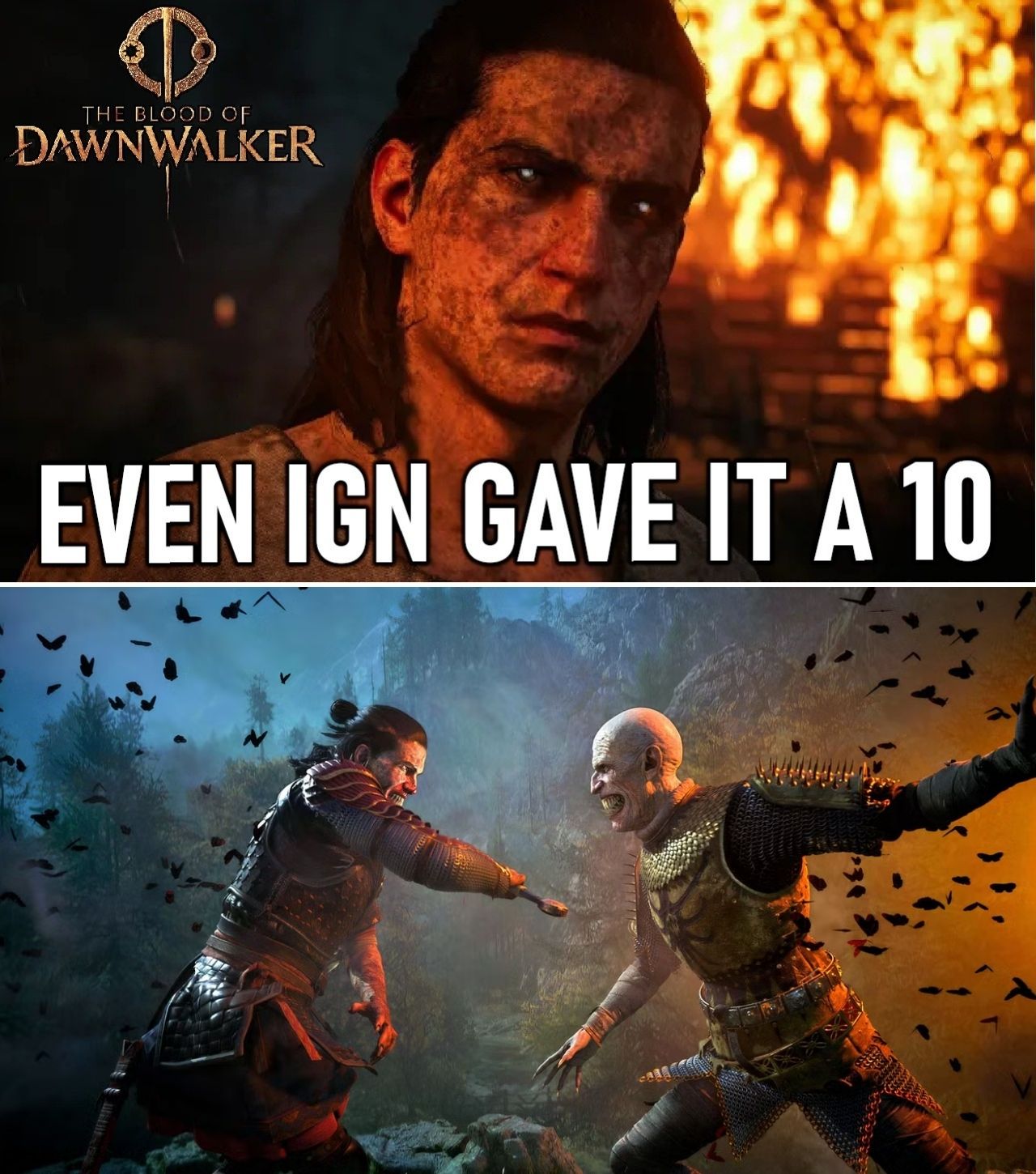
The protagonist is Coen, a young man who becomes a Dawnwalker — a supernatural being caught between humanity and vampirism.
The setting is a plague-ravaged 14th-century European region controlled by vampires, creating an environment that naturally invites comparisons to the grim medieval world of The Witcher.
The similarities are obvious.
The differences are just as important.
The Witcher DNA Is Everywhere
Even before release, developers acknowledged that comparisons with The Witcher 3 were inevitable.
After all, Konrad Tomaszkiewicz directed The Witcher 3, while several other Rebel Wolves developers previously worked on CD Projekt’s major RPGs.
That experience is visible in the game’s philosophy.
Like The Witcher 3, Dawnwalker emphasizes:
story-driven quests;
a mature dark-fantasy setting;
consequential choices;
a handcrafted open world;
characters with complicated motivations;
exploration away from the main storyline.
GamesRadar’s hands-on preview specifically noted that the game builds upon some of The Witcher 3’s open-world sensibilities while also introducing more old-school RPG friction.
That last point is significant.
Rebel Wolves isn’t simply attempting to reproduce The Witcher 3.
It is taking lessons from it and combining them with different systems.
And perhaps the biggest difference is time.
You Don’t Have Forever
One of the defining mechanics of The Blood of Dawnwalker is its time system.
Coen has a limited amount of time to rescue his family from the vampire lord Brencis.
The game essentially gives players a ticking clock.
Certain actions consume time.
Some quests advance the clock.
Some activities take place during the day.
Others become more accessible at night.
Exploration and combat don’t necessarily advance time in the same way, while specific activities and quests can push the world forward.
That creates a very different relationship with the open world.
In many modern RPGs, players can spend dozens of hours ignoring the central crisis.
A kingdom might be collapsing.
An evil army might be approaching.
The protagonist might supposedly have an urgent mission.
Yet the player can spend three weeks collecting herbs.
Dawnwalker attempts to make time matter.
You can’t necessarily do everything.
You have to decide what deserves your attention.
And those decisions can have consequences.
That concept gives the game a more distinctive identity than simply copying The Witcher.
The Vampire Mechanic Changes Everything
Coen’s transformation also changes how players approach the world.
During the day, he remains closer to his human identity.
At night, his vampiric abilities become increasingly important.
That creates a fundamental gameplay loop built around the transition between human and supernatural power.
The vampire side isn’t merely cosmetic.
It affects combat, exploration and the way Coen interacts with the world.
This creates opportunities that Geralt simply doesn’t have.
A Witcher is a professional monster hunter.
Coen is becoming part of the supernatural world he is trying to survive.
That creates a much more complicated protagonist.
And it potentially gives Rebel Wolves the foundation for something that The Witcher never could.
Critics Are Liking the Story
Early reviews suggest that narrative quality is one of Dawnwalker’s strongest elements.
VGC awarded the game 4/5, describing it as an excellent, focused RPG with strong writing and little filler. The outlet specifically praised Rebel Wolves’ decision to build a relatively small open world rather than simply chasing the enormous scale of modern RPGs.
That is a meaningful compliment.
One of the biggest criticisms facing contemporary RPGs is bloat.
Games are becoming larger.
Maps are becoming bigger.
Playtimes are increasing.
But bigger doesn’t necessarily mean better.
Dawnwalker appears to be taking the opposite approach.
Rather than attempting to create the largest possible world, Rebel Wolves has concentrated on making its setting dense.
That philosophy is one reason the Witcher 3 comparison is particularly interesting.
“Focused” May Be the Magic Word
The Witcher 3 was enormous.
Its expansions were enormous.
Its world was packed with quests, characters, monsters and locations.
But Rebel Wolves appears to believe that a smaller environment can create a more meaningful RPG experience.
The VGC review specifically praised Dawnwalker as an example of an RPG that doesn’t “go big for the sake of it.”
That could prove to be one of its greatest strengths.
Instead of asking players to explore an enormous map filled with hundreds of activities, the game can concentrate attention on the relationships and decisions that actually matter.
The time system reinforces this.
If players can’t experience everything during a single playthrough, their decisions become more important.
You aren’t simply completing a checklist.
You’re deciding what kind of story you want to experience.
But It Isn’t Perfect
This is where the “Dawnwalker is perfect” argument starts to fall apart.
The game has received strong reviews, but critics have also identified significant weaknesses.
Technical problems have been one of the most consistent complaints.
Tom’s Guide praised the atmosphere, storytelling and vampire mechanics while criticizing bugs, frame-pacing issues, texture loading and repetitive combat.
Other reviews have similarly highlighted uneven enemy variety and combat limitations.
GamesRadar’s review coverage also noted that some critics found the game’s quest structure repetitive and its time-based systems less transformative than they initially appeared.
So calling Dawnwalker “perfect” would be misleading.
It isn’t.
The game has rough edges.
But that doesn’t necessarily undermine its larger achievement.
The Combat Is Where Comparisons Get Complicated
Combat is another area where Dawnwalker tries to distinguish itself.
Coen has access to traditional weapons alongside supernatural abilities.
The game combines melee combat with vampiric powers, creating a hybrid system that can feel considerably different from Geralt’s combat style.
But critics have been divided over how well that system holds up across a full playthrough.
Some have found the combat engaging, especially early on.
Others have argued that enemy variety and repetition eventually reduce its impact.
That’s an important distinction.
A new RPG doesn’t have to beat The Witcher 3 in every category.
It needs to provide enough of its own identity that players don’t constantly ask why they’re not playing Geralt.
In that regard, the vampire mechanics and time system are crucial.
The Community Comparison Is Inevitable
Online discussion has naturally focused on the game’s CD Projekt pedigree.
Players see the names behind Rebel Wolves and immediately connect them to The Witcher 3.
That isn’t unreasonable.
These developers helped create one of the most influential modern RPGs.
But there is also a danger.
The closer Dawnwalker gets to The Witcher 3 in tone and structure, the more aggressively players will compare every weakness.
If the dialogue isn’t as memorable, people will notice.
If the combat isn’t as satisfying, people will notice.
If the world feels smaller, people will notice.
If the choices don’t have the same long-term consequences, people will notice.
The Witcher comparison is therefore both Rebel Wolves’ greatest marketing advantage and its biggest burden.
The Timing Could Be Perfect
There is another reason Dawnwalker has attracted so much attention.
The RPG landscape is changing.
Players are increasingly pushing back against gigantic games that require 100-plus hours to complete.
There is growing interest in focused RPG experiences where every quest and decision feels important.
That makes Dawnwalker’s philosophy particularly timely.
And the game’s release comes while The Witcher itself remains extremely relevant.
The Witcher 3 recently received renewed attention following the announcement of its remastered edition, while CD Projekt continues developing the next generation of the franchise.
So the conversation isn’t really happening in a vacuum.
Fans aren’t choosing between an old forgotten RPG and a new game.
They’re comparing Dawnwalker against one of the most celebrated RPG franchises in history while waiting for the next official Witcher adventure.
That’s an enormous challenge.
Could Dawnwalker Actually Replace The Witcher?
Not literally.
No new IP can “replace” The Witcher overnight.
The Witcher is an established multimedia franchise with decades of history, multiple games, books, characters and an enormous global fanbase.
Dawnwalker is Rebel Wolves’ first game.
But there is another interpretation of “replacement.”
It could become the game players recommend when someone says:
“I want something like The Witcher 3.”
That’s a much more realistic possibility.
The game already has several ingredients that make that comparison natural:
A dark medieval world.
A morally complicated protagonist.
Story-focused quests.
Supernatural creatures.
Consequential decisions.
A strong emphasis on characters.
And developers who know exactly what made The Witcher 3 work.
The Bigger Story Is Rebel Wolves Itself
Perhaps the most exciting part isn’t whether Dawnwalker dethrones Geralt.
It’s what the game could mean for Rebel Wolves.
The studio has already talked about Dawnwalker as the beginning of a broader saga.
If the first game succeeds, Rebel Wolves could establish an entirely new RPG universe rather than becoming simply “the former Witcher developers’ studio.”
That would be a much bigger achievement.
Instead of living permanently in CD Projekt’s shadow, the studio could prove that its veterans have something new to say.
And early reviews suggest there is a genuine foundation for that future.
The current critical reception is positive, with an 83 Metacritic score and praise for the game’s narrative ambitions and atmosphere.
That doesn’t make Dawnwalker flawless.
But it does make it significant.
The Verdict
So, has The Blood of Dawnwalker replaced The Witcher?
No — not yet, and probably not in the literal sense.
But has Rebel Wolves created a credible new home for players who miss the kind of dark, choice-driven RPG experience that made The Witcher 3 so beloved?
The early evidence suggests yes.
The game’s biggest strength may actually be that it doesn’t try to become The Witcher 4.
It takes lessons from the developers’ past work, then adds vampires, a ticking clock, a smaller world and a completely new mythology.
That gives it an identity of its own.
And that may be exactly what the RPG genre needs.
The Witcher 3 doesn’t need to disappear for Dawnwalker to succeed.
If anything, the best outcome for players would be having both.
One franchise can continue Geralt’s legacy and expand CD Projekt’s world.
The other can build an entirely new dark-fantasy universe from the ground up.
And if Rebel Wolves can solve the technical issues, improve combat variety and continue developing the ideas that already work, The Blood of Dawnwalker may eventually stop being described as “the RPG made by former Witcher developers.”
It may simply become known as Dawnwalker.
That would be the real victory.