“24 Hours, Two Children”: The Chilling Hospital Connection Between Preston Davey and Damion Russell
🚨 TWO TODDLERS. THE SAME HOSPITAL. JUST 24 HOURS APART. BOTH WOULD LATER BE MURD3RED.
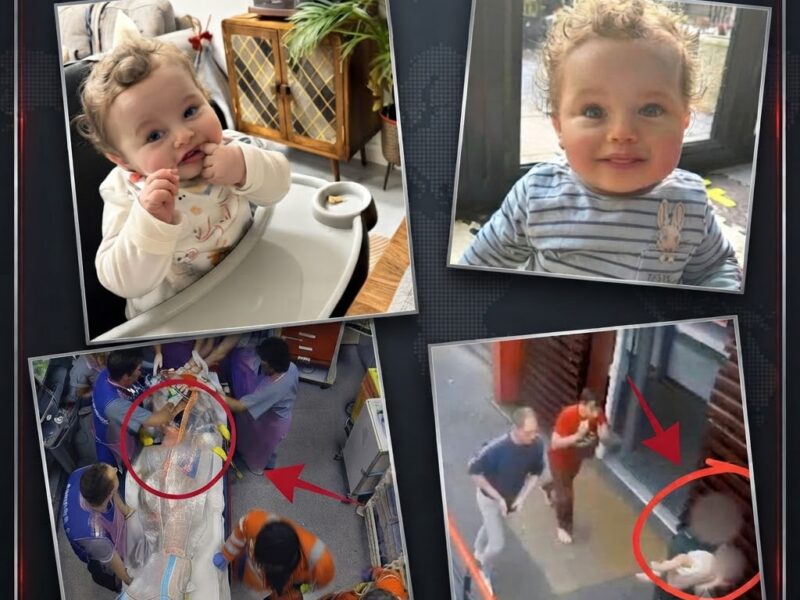
One day before Preston Davey arrived at Blackpool Victoria Hospital with bruising, another little boy — Damion Russell — had been seen there with a bruise on his forehead. In Damion’s case, a later safeguarding review found that hospital staff failed to ask his father the basic question they were expected to ask.
So did two separate warning signs pass through the same hospital within 24 hours — without anyone realizing the horrifying connection that would emerge later? And what does that say about the system meant to protect vulnerable children? 👇
🔥 The chilling Preston-Damion timeline is raising questions that authorities now have to answer.
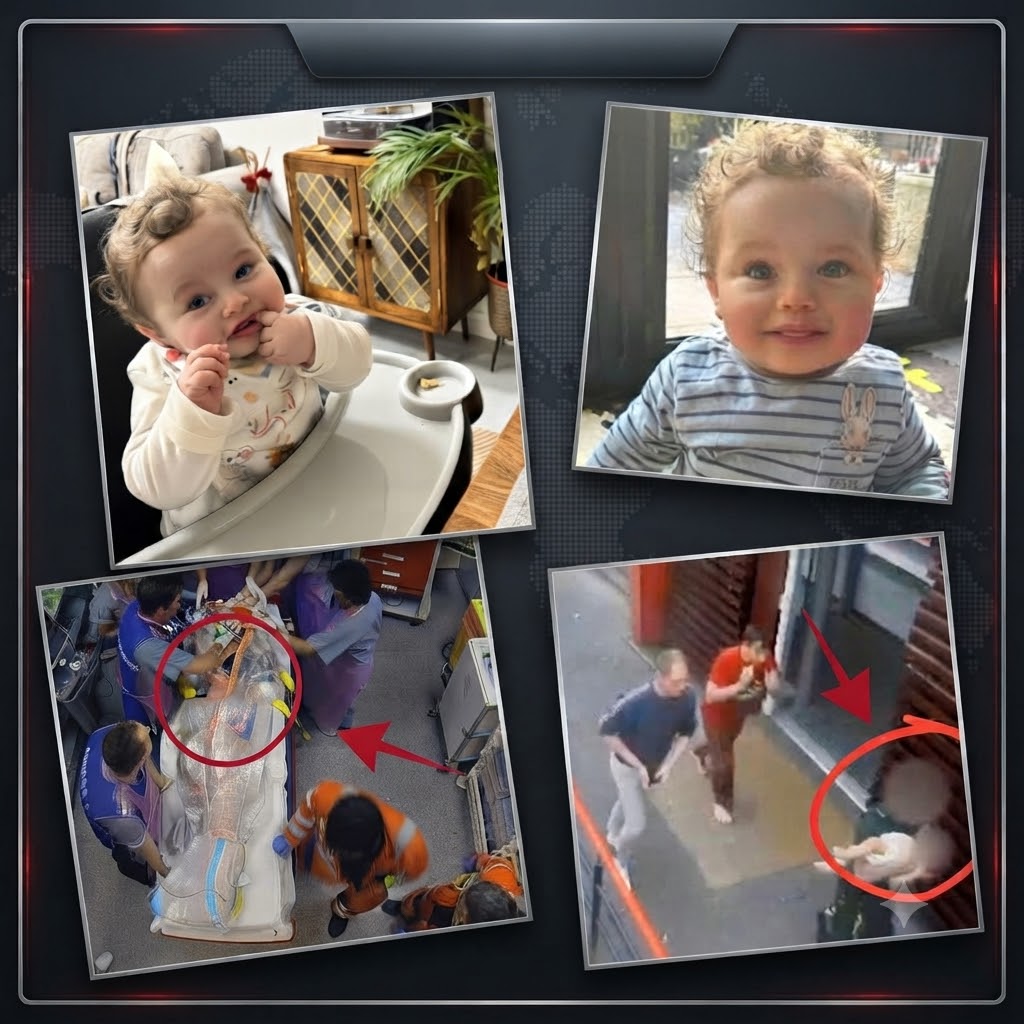
The Preston Davey case has already raised deeply troubling questions about whether warning signs were missed before a vulnerable 13-month-old was murdered by his adoptive father.
Now, an extraordinary coincidence has brought renewed attention to the child-protection system surrounding his final weeks.
Just one day before Preston Davey was taken to Blackpool Victoria Hospital with bruising, another toddler, Damion Russell, had been treated at the same hospital after suffering a febrile convulsion. Medical staff noticed an older bruise on his forehead.
Damion was later murdered by his father, Daniel Hardcastle.
The two cases are not connected in the sense that the children knew one another or that investigators have established a direct relationship between their deaths. But the fact that both children passed through the same hospital within approximately 24 hours has become a major point of concern because safeguarding questions were subsequently raised in both cases.
The details have emerged as authorities continue examining the circumstances surrounding Preston’s death and the wider failures that may have allowed abuse to continue.
The 24-hour coincidence
On June 29, 2023, Damion Russell was taken to Blackpool Victoria Hospital after suffering a febrile convulsion.
According to an investigation by The Lancashire Lead, hospital staff noticed what was described as an “old, mild black bruise spot” on the two-year-old’s forehead.
But staff did not ask his father, Daniel Hardcastle, how the injury had occurred.
A later Child Safeguarding Practice Review identified that omission as a failure to follow expected safeguarding practice.
The following day, June 30, Preston Davey was taken to the very same hospital.
He was 12 months old at the time.
Varley and his partner, John McGowan-Fazakerley, reportedly brought Preston to the emergency department at around 8:25 p.m., saying that he had a rash, diarrhea, vomiting and a high temperature.
Medical staff again noticed bruising on his head.
The adults provided an explanation involving a toy box.
They even showed hospital staff a video of Preston apparently pulling the toy box onto himself while playing.
But investigators later established that the video had actually been recorded 12 days earlier.
It therefore could not explain the bruising observed during the June 30 hospital visit.
The juxtaposition is striking.
One child was seen at the hospital on June 29.
Another child arrived at the same hospital on June 30.
Both had bruising.
Both would later become victims of fatal violence.
But the similarities end there as far as the available evidence establishes.
Damion Russell’s story
Damion Russell had spent much of his early childhood in care.
According to reporting on the case, he was born in July 2021 and spent his first 10 months with his mother before being taken into care.
He subsequently lived with foster carers for approximately nine months.
His foster family reportedly described him as a happy child who could “light up any room” with his smile and laugh.
After a DNA test established Daniel Hardcastle as his father, Hardcastle obtained sole custody and moved with Damion into a flat in Blackpool in May 2023.
That arrangement lasted only a few months.
Damion was later killed by Hardcastle in an attack that caused fatal brain injuries.
The subsequent investigation revealed that the boy had suffered numerous injuries.
Hardcastle attempted to explain some of the bruising as the result of Damion’s unsteadiness and repeated falls.
A later safeguarding review examined the history of those injuries and the decisions made by professionals.
Crucially, the review did not conclude that every previous professional assessment had been unreasonable.
In fact, it found that on several occasions practitioners had followed expected practice by asking Hardcastle about bruises and had reasonably accepted his explanations based on the information available to them at the time.
The June 29 hospital visit was different.
The review specifically identified the failure to ask about the forehead bruise as the occasion when expected practice had not been followed.
Then Preston arrived
The following evening, Preston was brought into the same emergency department.
His circumstances were already concerning.
He had previously been hospitalized on May 25 after Varley reported breathing difficulties and a seizure. Medical staff noticed bruising on Preston’s head, and hospital safeguarding staff contacted social services and Lancashire Police.
Police detectives attended.
But medical staff ultimately indicated that they did not consider the bruising sufficiently suspicious to classify it as non-accidental injury.
No continuing police investigation resulted from that referral.
Then, on June 30, Preston returned.
Again, bruising was noticed.
Again, an explanation was provided.
Again, he returned home.
The significance of the June 30 visit became much clearer after his death.
The toy-box explanation
One of the most striking pieces of evidence from Preston’s second hospital visit concerned the video used to explain his bruising.
Varley reportedly showed medical staff footage of Preston playing with a toy box.
The implication was that the child had caused the injury himself.
But investigators later examined the recording and determined that it had been made 12 days before the hospital visit.
That discovery fundamentally changed the context.
The video could not have shown what caused the bruising observed on June 30.
It became another example of how investigators reconstructed Preston’s final months using digital evidence after his death.
Police ultimately recovered extensive photographs and videos from the phones belonging to Varley and McGowan-Fazakerley.
Those files showed evidence of physical cruelty on multiple dates throughout the period when Preston was living with them.
A third hospital visit came just six days later
Preston’s medical encounters did not end on June 30.
On July 6, he was taken back to Blackpool Victoria Hospital for a third time.
This time, the problem was an injury to his left arm.
An X-ray showed a fractured elbow, and a cast was applied.
Varley reportedly provided different explanations to different people for how the injury had occurred.
According to Lancashire Police, he told A&E staff there had been an incident involving Preston’s cot. He later told doctors that the injury happened while placing Preston in a car seat, while a message to a friend suggested he had caught Preston while he was falling.
The fractured arm would later be assessed as a non-accidental injury during the postmortem examination.
Yet once again, Preston went home.
The sequence was becoming increasingly difficult to ignore in retrospect.
The professionals were seeing fragments of a much bigger picture
This is perhaps the most important distinction in the entire case.
It would be easy, after Preston’s murder, to look backward at every hospital visit and conclude that the outcome should have been obvious.
But the professionals dealing with Preston at the time did not have the complete picture investigators eventually assembled.
They saw individual injuries.
They heard explanations.
They reviewed a child at particular moments.
They did not yet have access to the complete contents of the defendants’ phones or the forensic evidence recovered after Preston’s death.
That does not mean there were no missed opportunities.
It means the question is more complicated than simply asking why somebody “didn’t see” the abuse.
The emerging issue is whether information from different professionals and different encounters was sufficiently connected.
The safeguarding review
Preston’s case has triggered significant scrutiny.
ITV News reported that the toddler had been seen by a “battery of professionals” before his death and that police had even been called following one of his hospital visits.
A separate safeguarding review is examining how authorities responded before Preston died.
The potential questions include how medical information was communicated, how social workers interpreted repeated injuries, whether concerns were appropriately escalated and whether the wider pattern was recognized.
Those questions are especially important because Preston had been described as a healthy, happy baby while living with his foster carers.
His condition deteriorated dramatically after he entered the adoptive placement.
The two cases now sit side by side
The discovery involving Damion Russell adds another layer to that scrutiny.
His case shows that the June 29 hospital visit was not simply a matter of Preston’s story.
A different vulnerable child had been there less than 24 hours earlier.
A bruise was visible.
The expected question about how the injury occurred was not asked.
And the child later died at the hands of his father.
The safeguarding review into Damion’s case nevertheless concluded that professionals generally acted reasonably when they questioned other injuries and accepted explanations that were consistent with what they knew about his developmental difficulties.
That nuance is important.
There is no evidence that hospital staff knew Damion was destined to become the victim of a murder.
There is also no evidence that they knew Preston would arrive the next day with bruising.
The disturbing connection only becomes apparent when the cases are viewed retrospectively.
Did the same doctors treat both children?
That is one of the questions that has attracted considerable attention.
According to The Lancashire Lead, Blackpool Teaching Hospitals was asked whether Damion and Preston were treated by the same medical personnel.
The hospital did not answer that specific question.
It also did not provide answers to several other questions raised about the cases.
That does not establish that the same doctors or nurses treated both children.
It simply means the available public reporting does not establish whether they did.
The distinction is crucial.
A claim that “the same doctors saw both children” would go beyond the evidence currently available.
What can be established is that the same hospital treated both children within approximately one day of each other.
The hospital says changes were already underway
Blackpool Teaching Hospitals has acknowledged the findings of the safeguarding review concerning Damion.
Chief executive Maggie Oldham said the trust accepted the review’s findings and emphasized that work had already been underway to strengthen practice in the emergency department and other areas where children receive care.
The hospital said this included ensuring appropriate examinations take place, improving staff confidence in asking questions about injuries and ensuring concerns are escalated through safeguarding procedures.
The trust also said families should expect staff to ask about bumps, bruises and other injuries — including older injuries — and that babies who are not independently walking should receive a full examination in the emergency department.
Those changes are significant because the Damion review specifically identified the failure to ask about his forehead bruise as the point where expected practice was not followed.
Preston’s death exposed a much wider pattern
The tragedy became even more disturbing after Preston died.
He was taken to hospital for the final time on July 27, 2023, unconscious and in cardiac arrest.
He was pronounced dead at 7:20 p.m.
Lancashire Police said the prosecution case was that Preston had been assaulted earlier that day and suffered a further assault that obstructed his airway.
A postmortem examination identified approximately 40 traumatic injuries.
Varley was ultimately convicted of murder and multiple other offences.
McGowan-Fazakerley was convicted of causing or allowing Preston’s death and other offences.
Varley received a whole-life order, while McGowan-Fazakerley was sentenced to 25 years in prison.
The criminal proceedings established responsibility for Preston’s death.
But they also raised the question of whether earlier interventions could have prevented the final tragedy.
Eight potential missed opportunities
The Times has reported that the Preston case highlighted eight potential missed opportunities involving medical professionals and social services.
Those concerns include the repeated hospital attendances, unexplained injuries and decisions made by professionals before Preston’s death.
That does not mean every event constituted negligence.
Nor does it mean Preston’s death could certainly have been prevented if one decision had been different.
Those are questions for the safeguarding review and any subsequent formal scrutiny.
But the sheer number of contacts with professionals is difficult to overlook.
Preston was not completely invisible to the system.
He was repeatedly seen.
He was taken to hospital.
Safeguarding staff were involved.
Police were contacted.
A social worker visited him.
And yet the abuse continued.
Why the Damion connection matters
The Damion case does not prove that Blackpool Victoria Hospital caused or contributed to Preston’s death.
It does, however, provide an uncomfortable backdrop to the questions surrounding the hospital’s safeguarding procedures.
Within roughly 24 hours, two vulnerable children were treated there.
Both had visible head bruising.
In Damion’s case, a later review found that staff failed to ask his father about the injury.
In Preston’s case, staff did identify bruising, and safeguarding authorities were already aware of him from his earlier hospital attendance. But the concern did not result in an intervention that removed him from the home.
That distinction is essential.
The cases are similar, but not identical.
And the available evidence does not establish that the same safeguarding failure occurred in exactly the same way.
The bigger question is whether systems connect the dots
Perhaps the most troubling lesson is not about one hospital or one professional.
It is about whether fragmented warning signs become meaningful when viewed together.
A bruise may have an innocent explanation.
A fractured arm may have an explanation.
A child may be ill.
A parent or carer may appear convincing.
But when those incidents accumulate, the question becomes different.
Is there a pattern?
That is precisely what safeguarding investigations are designed to determine.
In Preston’s case, investigators later discovered that the pattern was far darker than professionals had understood at the time.
Digital evidence revealed repeated physical cruelty.
Medical evidence identified extensive injuries.
Messages and videos contradicted some of the explanations provided by the adults caring for him.
What happens next?
The criminal case against Varley and McGowan-Fazakerley is now settled.
The wider safeguarding questions are not.
Oldham Council’s safeguarding review into Preston’s death is continuing, while scrutiny of the authorities involved is expected to examine whether opportunities existed to intervene earlier.
Meanwhile, the findings from Damion Russell’s case have already produced changes at Blackpool Teaching Hospitals.
The coincidence of the two cases is undeniably chilling.
But the most responsible conclusion is not that two children were simply “failed by the same doctors.”
The evidence does not establish that.
What it does establish is more subtle — and perhaps more important.
Two vulnerable children passed through the same hospital within roughly 24 hours. Both had head bruising. Both would later be murdered. And in both cases, questions are now being asked about whether warning signs were recognized and acted upon quickly enough.
For Preston’s family, those questions cannot change what happened.
But the answers could determine whether the tragedy leads to stronger safeguarding practices — and whether the next child arriving at an emergency department with an unexplained injury receives the scrutiny that Preston and Damion needed.