Anne Hegerty Health Scare Sends ‘The Chase’ Fans Into Panic — But What Is Actually Confirmed?
💔 FANS ARE WORRIED ABOUT ANNE HEGERTY — BUT WHAT’S REALLY BEHIND THE LATEST “HEALTH WARNING”?
A wave of emotional posts has sent The Chase fans into panic, with messages of support flooding social media for the woman they know as “The Governess.”
But there’s a major problem: dramatic claims about Anne’s health are spreading online WITHOUT solid confirmation from ITV, Anne herself, or a reputable medical source.
So what is actually known — and what appears to be nothing more than a viral rumour?
Anne has remained a familiar face in The Chase world, and recent reports have continued to feature her career and life away from the quiz show.
👇 Click below for the facts behind the latest Anne Hegerty health scare — and the detail fans should know before believing the headlines.
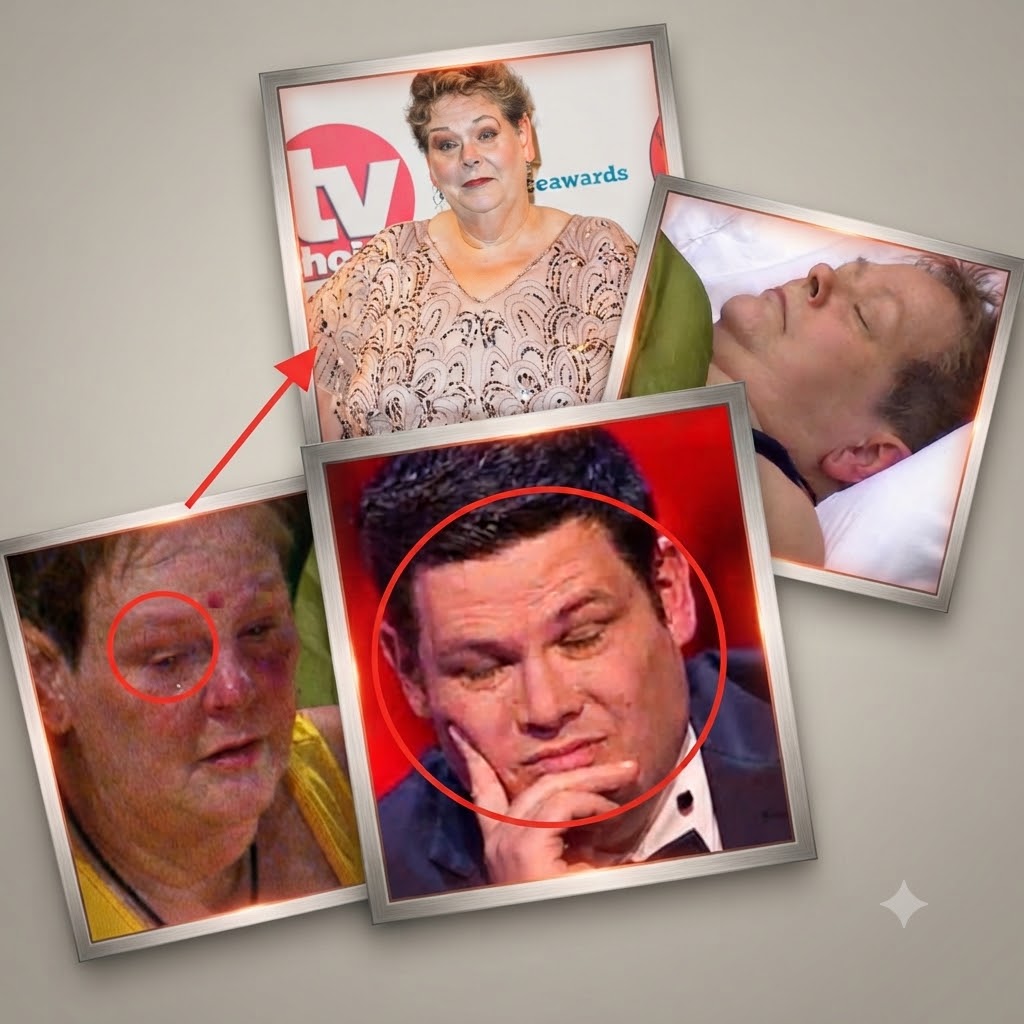
Anne Hegerty Health Scare Sends ‘The Chase’ Fans Into Panic — But What Is Actually Confirmed?
Anne Hegerty has once again found herself at the centre of intense online attention, but this time it is not because of a difficult question on The Chase.
A wave of social-media posts has circulated claims that the ITV quiz-show favourite has received a serious medical warning, prompting emotional messages from fans who have followed her career as the famously formidable “Governess.”
Some of the online material goes considerably further, alleging that Hegerty has been diagnosed with an aggressive stage III pancreatic neuroendocrine tumour.
Those claims are dramatic.
But there is a problem.
There is currently no reliable evidence from Anne Hegerty, ITV, her representatives or a reputable mainstream news organisation confirming such a diagnosis.
That distinction is particularly important when dealing with medical information about a living person.
Several low-quality websites have circulated highly specific claims about a supposed pancreatic cancer diagnosis, including alleged statements from a London medical team. However, those reports do not provide verifiable primary documentation, and the claims should therefore not be treated as established fact.
Meanwhile, recent reporting has continued to feature Hegerty in connection with The Chase and her life outside the programme.
Why fans became concerned
Anne Hegerty has been a fixture on British television for more than a decade.
She joined The Chase during its early years and became one of the programme’s most recognisable Chasers.
Her nickname, “The Governess,” reflects the intimidating image she developed on the show: precise, quick-thinking and seemingly capable of recalling an extraordinary range of facts.
That television persona has made Hegerty particularly popular with viewers.
Consequently, even an unverified health story involving the 68-year-old television personality can spread extremely quickly.
Fans who see words such as “emergency,” “doctors,” “serious illness” or “health warning” may understandably react emotionally before checking where the information originated.
That appears to be what has happened with the latest wave of posts.
The pancreatic tumour claim
The most alarming version of the story claims that Hegerty has been diagnosed with a stage III pancreatic neuroendocrine tumour.
One website published a highly specific account alleging that she had experienced abdominal discomfort, unexplained weight loss and fatigue before receiving the diagnosis.
However, the publication does not provide sufficient evidence to independently verify those claims.
More importantly, searches for confirmation from credible sources do not currently produce an announcement from Hegerty herself, ITV or a recognised British news organisation confirming the alleged diagnosis.
That means the claim should be treated as unverified, rather than reported as fact.
The distinction is not merely technical.
A cancer diagnosis is highly sensitive personal information, and falsely reporting that someone has cancer can cause significant harm to the individual and their family.
What recent reporting actually says
Recent coverage of Hegerty has focused on considerably less alarming subjects.
In August 2026, reports discussed Hegerty’s thoughts about the future of The Chase, including the question of who might replace presenter Bradley Walsh if he ever decided to leave the programme.
Hegerty has worked alongside Walsh since the show’s early years and has described the prospect of his departure as difficult to imagine.
She nevertheless suggested comedian Omid Djalili could potentially be an entertaining replacement.
That is not the picture of a television personality whose career has suddenly been halted by a publicly confirmed medical crisis.
There have also been recent stories about Hegerty’s personal experiences with an admirer who became excessively attached to her.
In June, she described how a woman she had befriended eventually moved hundreds of miles from London to Manchester and ended up living just three streets away from Hegerty.
Again, the focus of that coverage was her personal life rather than a newly announced cancer diagnosis.
Why the story is spreading
The latest health claims illustrate a familiar pattern in celebrity misinformation.
A vague reference to a “doctor’s warning” can become a headline about a “serious illness.”
A headline about a “serious illness” can become claims of a specific cancer.
And once social-media users begin sharing emotional messages, the repeated posts can make an unverified claim appear increasingly credible.
The number of people repeating a claim does not make the claim true.
This is particularly relevant on Facebook, TikTok and other platforms where sensational health stories can travel faster than corrections.
The emotional language used in the posts is also significant.
Words such as “heartbreaking,” “devastated,” “prayers” and “shocking update” encourage people to react emotionally before they have established whether the underlying information is accurate.
Anne Hegerty is no stranger to public discussion of health
Hegerty has previously spoken publicly about aspects of her personal life and health.
Her openness has helped fans understand the person behind the stern television persona.
But that openness should not be interpreted as permission to assume that every health claim circulating online is true.
There is a substantial difference between information voluntarily disclosed by a public figure and information invented or amplified by third-party websites.
For a celebrity with millions of viewers, that distinction becomes especially important.
Why the medical terminology makes the story sound convincing
The alleged diagnosis is described using sophisticated medical terminology: “pancreatic neuroendocrine tumour” and “stage III.”
That language can make a story appear authoritative.
But medical terminology itself is not evidence.
Pancreatic neuroendocrine neoplasms are a real and medically recognised group of tumours.
Recent medical literature describes them as biologically diverse, ranging from relatively indolent tumours to aggressive neuroendocrine carcinomas. Diagnosis and treatment depend on factors including tumour differentiation, grade, staging and whether disease has spread.
That general medical information, however, does not establish that Anne Hegerty has such a tumour.
It is essential not to confuse information about a disease with evidence that a particular person has that disease.
What scientists know about pancreatic neuroendocrine tumours
Pancreatic neuroendocrine tumours are relatively uncommon compared with the more familiar pancreatic ductal adenocarcinoma.
They arise from neuroendocrine cells within the pancreas and can behave very differently from one another.
Some grow slowly.
Others can be much more aggressive.
Modern medical research has increasingly emphasised the importance of accurate diagnosis and staging because treatment decisions depend heavily on the biological characteristics of an individual tumour.
A 2026 review in Surgical and Clinical Oncology noted that pancreatic neuroendocrine neoplasms range from well-differentiated tumours that may be relatively indolent to aggressive neuroendocrine carcinomas.
Another 2026 study published in JAMA Network Open found substantial variation in outcomes among gastro-entero-pancreatic neuroendocrine neoplasms, reinforcing the point that the term covers a heterogeneous group of diseases rather than one uniform condition.
Again, none of this confirms the online claims concerning Hegerty.
The danger of celebrity health rumours
Celebrity health stories are particularly vulnerable to exaggeration because audiences develop strong emotional connections with familiar television personalities.
For The Chase viewers, Hegerty is not simply another television contestant.
She has been part of the programme’s identity for years.
Her stern expressions, rapid-fire answers and dry sense of humour have turned her into one of Britain’s most recognisable quiz-show personalities.
So when fans encounter a headline suggesting that something serious has happened to her, an emotional response is natural.
But emotion is precisely why verification matters.
A false cancer story can be distressing not only for the person named but also for their relatives, colleagues and supporters.
The Governess remains a major part of The Chase
Hegerty joined The Chase in 2010 and became one of the show’s defining Chasers.
The programme itself has remained one of ITV’s most successful daytime and early-evening formats.
Its enduring appeal comes partly from the chemistry between host and Chasers.
Hegerty’s personality occupies a distinctive place within that group.
She is intimidating without needing to raise her voice.
She can deliver an incorrect answer with the same confidence as a correct one.
And she has become a favourite target for contestants hoping to achieve the rare satisfaction of beating a Chaser.
That long-running television presence helps explain the strong reaction whenever rumours about her future circulate.
Recent stories have shown that she remains active
The recent coverage involving Hegerty is important because it provides context.
In August 2026, she was still being discussed in relation to The Chase and the programme’s future.
The stories did not report a confirmed medical diagnosis or an announcement that she was stepping away from television because of serious illness.
That does not prove that she has no health concerns.
A person’s private medical situation cannot be inferred simply from their television appearances.
But it does mean that viral claims about a specific life-threatening diagnosis should not be presented as established fact without confirmation.
What about the fans’ reaction?
The emotional response from fans is real, even if the underlying health claims are not verified.
Social-media users have posted messages expressing concern and wishing Hegerty well.
That reaction demonstrates the affection many viewers have for the Chaser.
But supportive messages should not be interpreted as confirmation.
People can express concern about a rumour without knowing whether the rumour is true.
In fact, the volume of supportive comments may inadvertently help the original claim spread further.
One person sees dozens of messages saying “get well soon.”
They assume something terrible must have happened.
They share the post.
Another person sees it and does the same.
The cycle continues.
No confirmed announcement from Anne Hegerty
At present, the most important missing piece is a direct statement from Hegerty or a credible representative.
If a serious diagnosis had been publicly confirmed, a reliable report would normally be expected to identify the source of the information.
That could be the celebrity herself, a representative, a family statement or a reputable news organisation quoting an identifiable source.
The viral material currently circulating does not provide that level of confirmation.
For that reason, responsible reporting requires restraint.
Why fans should wait before panicking
The simplest advice for fans is also the most important:
Do not treat a viral headline as a medical statement.
If Hegerty chooses to discuss her health publicly, fans will have an opportunity to hear the information directly.
Until then, speculation should remain speculation.
The fact that a website uses medical language, publishes an alleged doctor’s statement or claims to have inside information does not make the information reliable.
Readers should look for confirmation from established news organisations or direct statements from the person involved.
The bigger lesson
Anne Hegerty’s latest online health scare is a reminder of how quickly celebrity rumours can become apparent “news.”
The technology of social media rewards emotional content.
A post announcing that a celebrity is fine is unlikely to attract the same attention as one claiming they have received a devastating diagnosis.
That creates an incentive for sensational websites to use increasingly dramatic headlines.
The result can be a distorted information environment in which the most frightening version of a story becomes the most visible version.
Hegerty’s case illustrates why readers need to separate three things:
What is confirmed.
What is alleged.
And what is simply being repeated online.
At the moment, the alleged pancreatic neuroendocrine tumour belongs firmly in the second category.
What happens next?
For now, there is no reliable basis for announcing that Anne Hegerty has been diagnosed with an aggressive stage III pancreatic tumour.
Her recent public profile remains focused on The Chase, her career and other personal stories.
If a genuine medical announcement emerges, it should come directly from Hegerty, her representatives or a reputable news source.
Until then, fans can certainly send their best wishes without repeating an unverified diagnosis.
After more than a decade as “The Governess,” Hegerty has built a loyal following that clearly cares about what happens to her.
But perhaps the most appropriate response to the latest wave of alarming headlines is not panic.
It is patience.
Because when it comes to someone’s health, getting the story right matters far more than getting the story first.