Rob Rinder Mourns Father David at 73 as Heartbreaking Tribute Shines Light on Lewy Body Dementia
💔 ROB RINDER’S FAREWELL TO HIS FATHER HAS LEFT FANS IN TEARS — AND ONE DETAIL MAKES IT EVEN MORE HEARTBREAKING.
The TV star has confirmed that his beloved father David died aged 73 after living with Lewy body dementia — an illness Rob says is still “poorly understood” and “desperately under-researched.”
But it was the final moments of his father’s life that made his tribute especially moving: surrounded by family, cared for with dignity, and remembered not as an illness… but simply as “my dad.”
Rob’s words about their differences, his father’s reaction when he came out, and the people who cared for David until the very end have touched fans across Britain.
👇 Click below to read Rob Rinder’s heartbreaking farewell and the message he hopes people remember.
Rob Rinder Mourns Father David at 73 as Heartbreaking Tribute Shines Light on Lewy Body Dementia
Rob Rinder has announced the death of his father, David Rinder, at the age of 73, sharing an unusually personal tribute that has moved fans while drawing attention to an illness he says remains badly understood.
The television judge, barrister and broadcaster revealed that David had been living with Lewy body dementia, a progressive neurological condition and one of the most common forms of dementia.
Rather than simply announcing his father’s death, Rinder used the moment to describe the man behind the diagnosis: a London taxi driver, lifelong Tottenham Hotspur supporter, loving father and grandfather whose personality, he said, should not be forgotten simply because dementia had changed his life.
“My dad died yesterday aged 73,” Rinder wrote in an Instagram post shared on Thursday.
He explained that he had initially been uncertain about making the news public but ultimately decided that speaking about his father’s illness could help raise awareness of a condition that remains poorly understood.
A father and son who were “very different men”
The tribute offered an unusually candid glimpse into Rinder’s relationship with his father.
David and Rob were, by Rinder’s own description, very different personalities.
His parents divorced when he was young, meaning Rinder did not grow up with his father in the family home.
Yet the distance did not prevent a deep bond from developing.
Rinder recalled that he loved opera while his father loved Tottenham Hotspur and cigarettes.
The contrast became one of the most memorable elements of the tribute.
But beneath those differences was something Rinder said he never questioned: his father’s pride in him.
That relationship became particularly meaningful when Rinder came out as gay.
Rinder has previously spoken publicly about his sexuality and the shame he experienced when he was younger.
His father, however, did not react with the rejection or confrontation that Rinder might have feared.
Instead, he treated it with what his son described as “magnificent indifference.”
The message, in effect, was simple: Rinder was still his son, and that was all that mattered.
It is one of the details from the tribute that has resonated most strongly with readers.
David Rinder’s final years
David spent his final years living with Lewy body dementia.
The condition can cause cognitive decline as well as movement problems and other neurological symptoms.
Rinder has described it as an illness that too few people understand and one that is “desperately under-researched.”
The disease had a profound effect on the family.
In his tribute, Rinder said dementia had “made the familiar strange and the certain uncertain.”
That description captures one of the most difficult aspects of dementia: the way a person’s personality, memories and abilities can change while the person themselves remains deeply loved by those around them.
Rinder’s decision to focus on the illness was therefore deliberate.
He was not simply announcing a death.
He was attempting to make sure that his father’s final years could help raise awareness of a condition that affects many families but remains less familiar to the public than Alzheimer’s disease.
Jewish Care’s role
Another major part of Rinder’s tribute was his praise for Jewish Care, the organisation that cared for David during his final years.
Rinder described it as a place where “dignity and tenderness” were practised every day.
He also highlighted the fact that his father, a Jewish man, was cared for by people of different faiths.
For Rinder, that became a powerful symbol of shared humanity.
He specifically thanked carers including Walid and Tosin, saying they cared for his father and came to say goodbye to him at the end.
The detail gave the tribute a particularly intimate quality.
Instead of focusing solely on grief, Rinder acknowledged the people who had helped his father through the final stage of his illness.
“He died with his family around him”
Perhaps the most emotional detail was Rinder’s description of his father’s final moments.
David died with his family around him.
Rinder said he was “loved and held to the last.”
That detail has become one of the most widely highlighted elements of the tribute because it conveys something beyond the fact of death.
For a family living through a progressive illness, the final stages can be marked by uncertainty and profound emotional strain.
Rinder’s words suggest that, despite those difficulties, his father was not alone.
The family was there.
So were carers who had become part of his final years.
And Rinder was able to remember him not merely as a patient but as the man he had known throughout his life.
A London cabbie and Spurs supporter
Away from the illness, Rinder deliberately filled his tribute with ordinary details about his father’s life.
David was a London cab driver and a lifelong Tottenham Hotspur supporter.
He was also described as someone who attended football matches involving his sons and grandsons.
Those details matter because they restore individuality to someone whose final years had been dominated by dementia.
A disease can easily become the central narrative of a person’s final chapter.
Rinder’s tribute pushed back against that.
His father was more than his diagnosis.
He was a cabbie.
A football supporter.
A father.
A grandfather.
And, in Rinder’s words, a man who was “funny, beautifully flawed, loving.”
The line that summed up the tribute
Rinder ultimately reduced his description of his father to a few simple words:
“Funny, beautifully flawed, loving and my dad.”
The sentence carries particular weight because the tribute repeatedly acknowledged the complexities of their relationship.
They had not always lived together.
They had different interests.
They were different kinds of men.
But the affection remained.
The phrase also underlines one of the central themes of the tribute: dementia may alter someone’s behaviour, memories and abilities, but it does not erase the history shared by the people who love them.
Rinder turns grief into an awareness campaign
Rinder has become an advocate for greater understanding of Lewy body dementia since his father’s diagnosis.
He became a patron of the Lewy Body Society and has used his public profile to discuss the condition.
In his latest tribute, he urged people to learn the name of the disease, recognise its signs and support efforts to improve research.
That appeal was arguably the most important part of the announcement from a public-health perspective.
Lewy body dementia is not an obscure condition in terms of the number of people affected.
But public understanding remains limited compared with other forms of dementia.
Rinder wants his father’s death to contribute to changing that.
What is Lewy body dementia?
Lewy body dementia is associated with abnormal deposits of a protein called alpha-synuclein in brain cells.
It can produce a combination of cognitive, movement, sleep and behavioural symptoms.
The condition can be particularly difficult for families because symptoms may fluctuate.
A person may appear relatively clear and engaged at one point and confused or disoriented at another.
It can also involve Parkinson’s-like movement symptoms.
Rinder’s description of the disease “making the familiar strange” reflects the profound changes that families can witness.
The condition is one of the more common forms of dementia, but it remains less widely understood than Alzheimer’s disease.
Several reports covering Rinder’s announcement cited estimates of around 125,000 people living with Lewy body dementia in the UK.
Fans and celebrities respond
The announcement quickly attracted messages of sympathy from fellow television personalities and public figures.
Among those offering condolences were Good Morning Britain presenter Susanna Reid, Alan Carr, Denise Welch and former Strictly Come Dancing professional Luba Mushtuk.
The reaction was not surprising.
Rinder has spent years in the public eye, first becoming widely known through Judge Rinder before expanding into documentaries, travel programmes and other television projects.
But his father’s death was presented in a very different tone from the polished television persona viewers are accustomed to seeing.
There was no courtroom drama.
No television confrontation.
No legal argument.
Instead, there was a son remembering his father.
The man behind Judge Rinder
Rob Rinder became a household name through Judge Rinder, but his career extends well beyond the courtroom television format.
He is a practising barrister, author and broadcaster.
His television work has included documentaries exploring history, travel and Jewish heritage, as well as projects alongside fellow broadcaster Rob Brydon and musician Rylan Clark.
He was appointed an MBE in 2020 for services to Holocaust education.
His public work has frequently involved serious subjects, including antisemitism, the Holocaust, justice and social issues.
His decision to use his father’s death to discuss dementia therefore fits a broader pattern in his career.
Rather than keeping the illness entirely private, he has chosen to use his platform to encourage a wider conversation.
A complicated grief
There is also a quieter story beneath the public announcement.
Losing a parent after a long period of dementia can create a complicated form of grief.
Families often experience a sense of loss long before the actual death as the person’s memories, abilities or personality begin to change.
That does not make the final loss easier.
Instead, it can make the emotional experience particularly complicated.
Rinder’s tribute suggests that he wanted to remember the person his father had always been, rather than allowing the disease to define him.
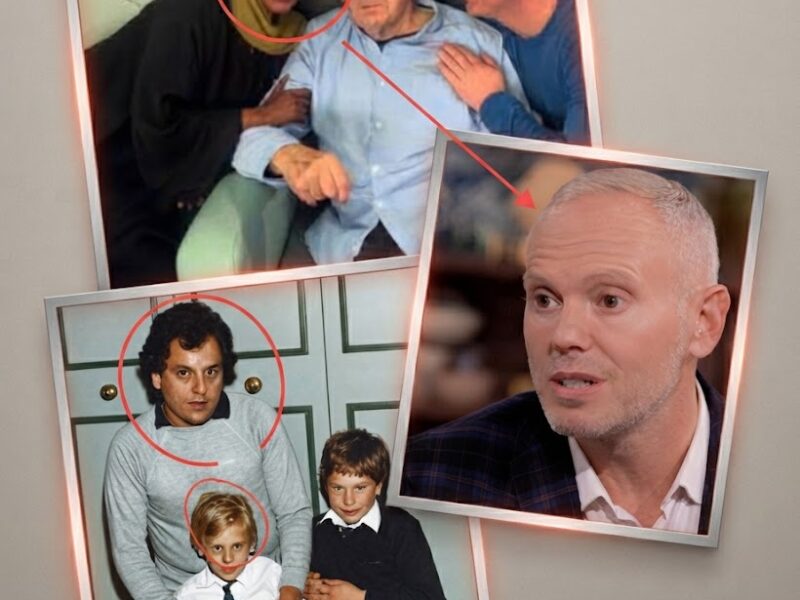
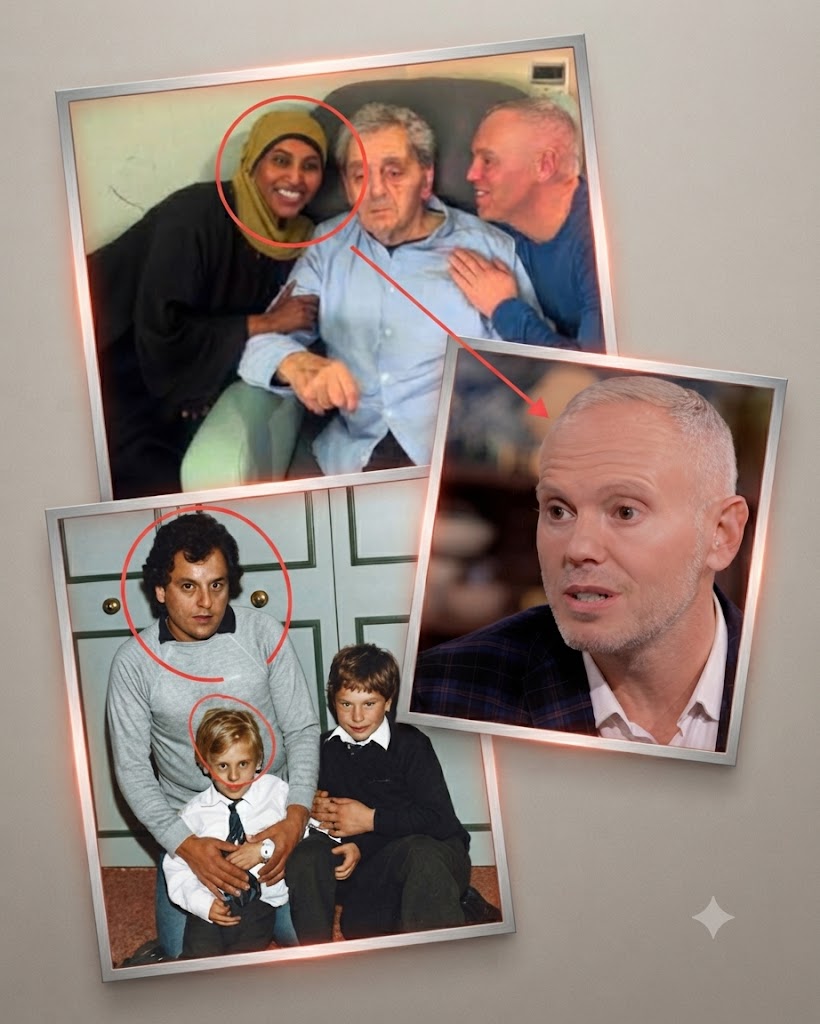
The childhood photograph accompanying his announcement reinforced that message.
It showed a younger David alongside his son, providing a visual reminder of a relationship that existed long before dementia entered their lives.
“He was still my dad”
One of the strongest themes running through Rinder’s tribute is the idea that identity survives illness.
His father was not reduced to a medical diagnosis.
He remained the man who loved Tottenham, drove a London taxi and attended football matches involving his family.
He remained the father who accepted his son without drama when Rinder came out.
And he remained someone Rinder could describe with affection despite acknowledging their differences.
That may explain why the tribute has resonated so strongly.
It is not an idealised portrait of a perfect family.
Rinder openly admits that the two men were different.
His parents divorced when he was young.
He did not grow up with his father at home.
There were complicated elements to their relationship.
Yet affection endured.
The importance of the final goodbye
Rinder’s description of Jewish Care staff coming to say goodbye to his father adds another layer to the story.
End-of-life care can be an intensely private experience, but it also depends heavily on carers who become part of a family’s life.
For David, those carers were present during his final years.
For Rinder, their support appears to have made a lasting impression.
His praise for Jewish Care was therefore not simply a thank-you.
It was part of his larger message about dignity.
A person living with dementia should still be treated as a whole person.
Their illness may alter their world, but it does not remove their humanity.
Why Rinder decided to speak publicly
Rinder admitted that he was initially unsure whether to share his father’s death publicly.
That hesitation is understandable.
Death is intensely personal, particularly when the person involved is a close family member.
But he ultimately decided that there was a reason to speak.
If the announcement encouraged even one person to learn more about Lewy body dementia, he believed it was worth sharing.
That decision transformed a personal farewell into a public-awareness message.
And it may ultimately become one of the most meaningful parts of his father’s legacy.
A farewell that was about more than death
David Rinder’s death at 73 marks a deeply painful moment for his family.
But his son’s tribute was not simply about mourning.
It was about remembering.
Remembering a London cabbie.
A Tottenham supporter.
A father who was proud of his son.
A grandfather who attended family football matches.
And a man who, despite the effects of dementia, remained “funny, beautifully flawed, loving.”
It was also about acknowledging the people who cared for him when he could no longer care for himself.
And finally, it was about drawing attention to an illness that Rinder believes deserves far greater recognition.
The circumstances of David’s final years may have been shaped by dementia, but Rinder clearly does not want that illness to become his father’s entire story.
Instead, he has left the public with a much simpler picture.
A son lost his father.
His father was loved.
His family was there at the end.
And in the words Rinder chose to close his tribute, he was — above all — his dad.