CD Projekt Red Tells Witcher 4 Critic “Don’t Buy It” — And Gamers Are Asking Why the Studio Would Mock Potential Customers
🚨 CDPR REALLY JUST TOLD WITCHER FANS TO “NOT BUY IT.”
A fan said he wouldn’t buy The Witcher 4…
And the official Witcher account basically responded: “Well, don’t buy it.”
One meme. That’s all it took.
Now gamers are arguing over whether CDPR just mocked its own customers — or whether fans are blowing a harmless joke completely out of proportion.
But here’s the uncomfortable part:
Why would a company about to launch one of the most anticipated RPGs in the world choose to antagonize people who are literally telling them they won’t buy the game?
And after the Cyberpunk 2077 launch, the relationship between CDPR and its audience is already complicated.
Was this just a harmless meme…
Or did CDPR just make one of the dumbest marketing moves possible? 👇🔥
CD Projekt Red Tells Witcher 4 Critic “Don’t Buy It” — And Gamers Are Asking Why the Studio Would Mock Potential Customers
CD Projekt Red is facing a fresh wave of online criticism after the official Witcher social-media account responded to a user who said he would not buy The Witcher 4 with a dismissive meme — reigniting a much larger debate over how gaming companies should respond to criticism.
For a company preparing to release one of the most anticipated RPGs of the decade, telling an unhappy customer “don’t buy it” probably isn’t the marketing strategy most people would recommend.
Yet that is essentially what happened this week.
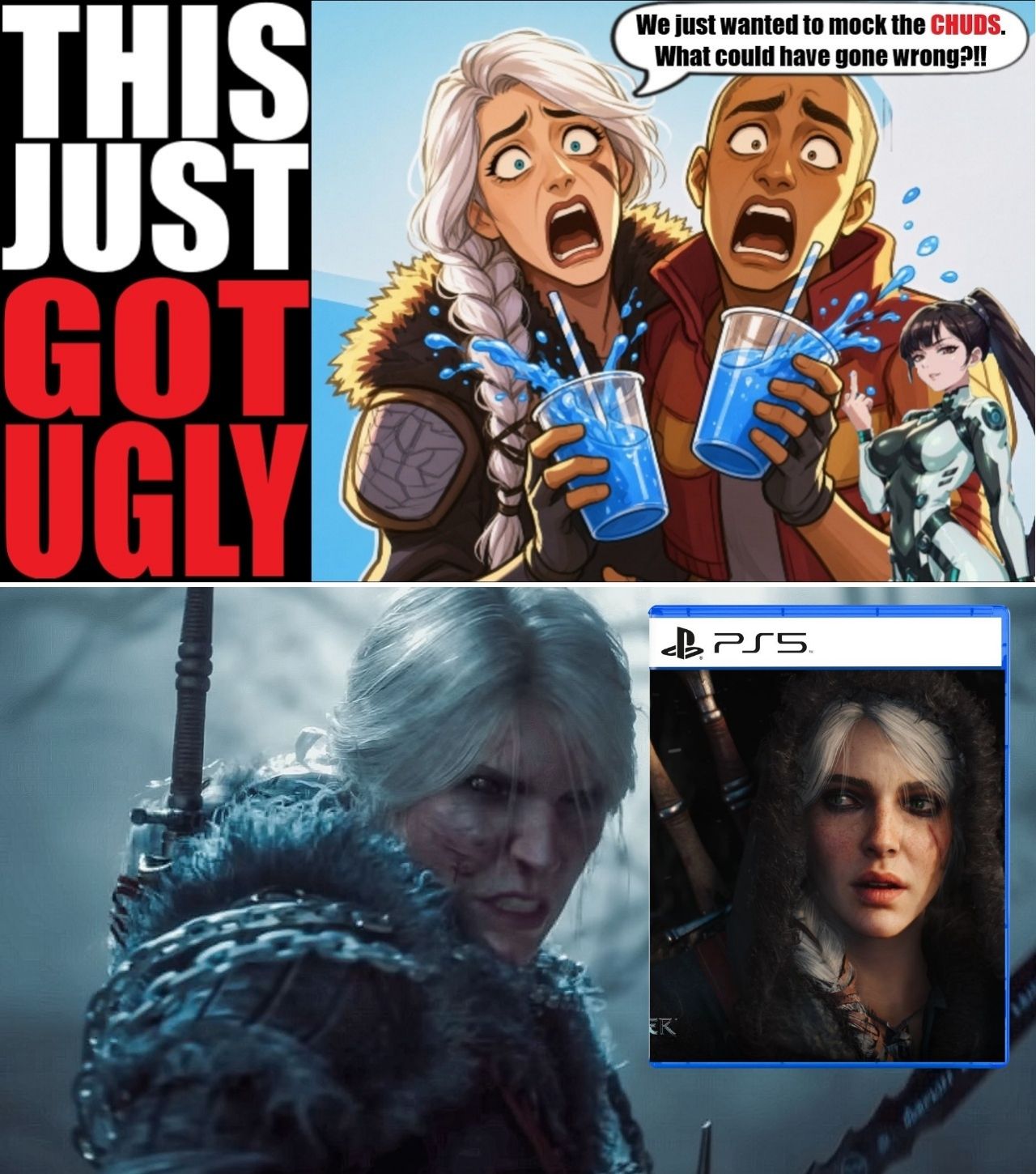
A post from the official The Witcher account on X became the center of a growing online argument after a user criticized the upcoming The Witcher 4 and said he would not purchase it.
The official account responded with a meme carrying the message:
“Well, don’t buy it.”
The exchange was brief.
The reaction wasn’t.
Screenshots of the interaction quickly spread across gaming forums and social media, with some players treating the response as harmless internet banter while others accused CD Projekt Red of openly mocking its own customers.
And the controversy comes at a particularly interesting moment for CDPR.
The studio has just confirmed that The Witcher 4 is targeting a 2028 release, with more than 500 developers currently working on the project.
That means CDPR has years to build anticipation for the game.
It also means the company has years to manage one of gaming’s most difficult commodities:
fan expectations.
The Meme That Started Everything
The controversy began after the official Witcher account posted content related to The Witcher 3.
One user responded by praising The Witcher 3 but saying he would not buy the upcoming fourth installment.
Rather than ignore the comment or respond with a conventional promotional message, the official account answered with a meme effectively saying:
“Well, don’t buy it.”
On the internet, that’s a fairly ordinary style of response.
Gaming communities are full of sarcasm.
Developers joke with players.
Players joke with developers.
Official social-media accounts routinely use memes to sound less corporate.
The problem is that CD Projekt Red isn’t just another gaming account.
The Witcher is one of the industry’s biggest RPG franchises.
And The Witcher 4 is expected to become one of CDPR’s most important releases ever.
That makes every interaction with the community considerably more consequential.
Why Gamers Took It Personally
The criticism isn’t necessarily about the literal meaning of the sentence.
Nobody seriously believes CDPR has banned critics from purchasing the game.
The issue is tone.
A customer saying “I’m not buying your product” is effectively communicating dissatisfaction.
A traditional marketing response might be:
We understand your concerns.
Give the game a chance.
We think you’ll be surprised.
Here’s why we made these creative decisions.
Instead, the official account chose humor.
And humor is inherently risky.
The joke may land perfectly with one audience and look incredibly arrogant to another.
That split is already visible in community reactions.
One Reddit discussion about the post received hundreds of votes, with some commenters interpreting the exchange as CDPR mocking people who won’t purchase the game.
Others have taken the opposite position.
Their argument is simple:
If you don’t want the game, don’t buy it.
And from a purely consumer standpoint, that is completely reasonable.
Nobody is obligated to purchase The Witcher 4.
The Other Side of the Argument
There is an important distinction between “don’t buy it” as a literal statement and “don’t buy it” as a marketing strategy.
The first is obvious.
If a game doesn’t appeal to you, don’t purchase it.
The second is where things become complicated.
Companies spend enormous amounts of money trying to convince consumers to buy products.
Every trailer, developer interview, showcase and social-media post exists for a reason.
The entire marketing machine is designed around one basic objective:
Turn interest into purchases.
So when a customer says:
“I’m not buying this.”
the logical marketing response is usually to ask:
“What would convince you?”
That doesn’t mean CDPR should apologize for making the game it wants to make.
It doesn’t mean developers should surrender creative control to internet mobs.
And it certainly doesn’t mean every criticism deserves a serious corporate response.
But publicly mocking potential customers can be a strange choice.
Especially when the product in question is still years away.
The Witcher 4 Already Has a Major Conversation Around It
The controversy isn’t happening in a vacuum.
Since The Witcher 4 was formally revealed, the game has generated intense discussion over its direction, particularly because Ciri is now the protagonist.
Some fans have embraced the change.
Others have questioned the decision.
Some criticism has focused on Ciri’s appearance and characterization.
Other arguments have drifted into broader culture-war debates about representation and the direction of Western game development.
Community discussions on forums such as NeoGAF show just how polarized some of those conversations have become.
That polarization makes the social-media response even more sensitive.
A meme that might normally be forgotten can suddenly become ammunition for both sides.
One side sees it as:
“CDPR finally standing up to toxic fans.”
The other sees:
“CDPR insulting the people who made The Witcher successful.”
And neither interpretation is particularly useful for the company.
The Ciri Debate Is Bigger Than One Meme
At the center of the larger argument is a simple creative decision.
Geralt is no longer the main protagonist.
Ciri is.
That isn’t exactly a secret.
CDPR has been clear about it for some time.
The studio has also spent years positioning the next Witcher saga as a new chapter rather than simply another Geralt adventure.
For many fans, that is exciting.
Ciri has been one of the most important characters in the Witcher universe since the beginning.
Her relationship with Geralt is central to the original trilogy and the novels.
Giving her the lead role therefore has an obvious narrative foundation.
But some players wanted another Geralt story.
Others simply don’t like the creative direction.
Those people are allowed to walk away.
That’s how entertainment works.
The problem begins when disagreement between creators and consumers becomes an online fight.
CDPR’s 2028 Announcement Adds Another Layer
Just days before the Gamescom period, CD Projekt Red officially confirmed that The Witcher 4 is targeting 2028.
Joint CEO Michał Nowakowski said more than 500 developers are currently working on the project and described it as the company’s biggest and most ambitious game yet.
The studio has also emphasized lessons learned from the disastrous launch of Cyberpunk 2077.
That history matters.
CDPR’s reputation today is complicated.
The company once became one of gaming’s most beloved studios after The Witcher 3 and its expansions.
Then Cyberpunk 2077 launched in 2020 in a deeply troubled state, particularly on older consoles.
Years of patches, updates and the excellent Phantom Liberty expansion helped dramatically rehabilitate the game’s reputation.
By 2026, CDPR once again enjoys enormous goodwill among many players.
But that goodwill isn’t unlimited.
The studio has something to prove with The Witcher 4.
And That’s Why the Social-Media Tone Matters
CDPR doesn’t need to convince everybody.
That’s impossible.
A game with millions of potential customers will always attract people who dislike its direction.
But it does need to maintain the trust of its core audience.
That audience is the reason The Witcher 4 can be announced years before release and immediately become one of the industry’s biggest talking points.
Those fans are effectively giving CDPR something incredibly valuable:
attention.
They are watching every trailer.
Analyzing every frame.
Arguing over every character.
Discussing every developer comment.
Tracking every technical demonstration.
That attention eventually becomes sales.
So when the official account responds to criticism with “don’t buy it,” some players naturally interpret that as the company taking its audience for granted.
Whether that interpretation is fair is another question.
Social Media Is Not a Press Conference
There is also an argument in CDPR’s defense.
The post was clearly presented as a meme.
It wasn’t a CEO announcing a corporate policy.
It wasn’t a statement from the game’s director.
It wasn’t an official marketing campaign telling dissatisfied customers to leave.
It was a social-media joke.
That matters.
Official gaming accounts regularly communicate in a deliberately informal way.
Nintendo, Xbox, PlayStation, Ubisoft and countless other publishers have all embraced meme-driven social-media marketing.
The goal is to make corporations sound human.
Sometimes it works.
Sometimes the joke becomes the story.
This appears to be one of those times.
The Real Problem With “Don’t Buy It”
The problem isn’t that customers are being told they have a choice.
They obviously do.
The problem is that the response closes the conversation.
Imagine a customer walking into a restaurant and saying:
“I don’t like this new menu.”
The restaurant owner can say:
“Fair enough.”
Or:
“Why don’t you like it?”
Or:
“Try this dish instead.”
Or:
“We changed the menu because our customers asked for something different.”
Or they can say:
“Then don’t eat here.”
Technically, the last response is perfectly true.
But it’s not exactly a brilliant customer-relations strategy.
That’s why some gamers are calling the CDPR response poor marketing rather than an actual scandal.
The meme may have been funny.
But it wasn’t persuasive.
The Counterargument: Gamers Aren’t Shareholders
There is another uncomfortable truth.
Developers don’t owe fans complete creative control.
A common misconception in gaming discussions is that buying previous games gives consumers the right to determine what the next game should be.
It doesn’t.
CDPR is entitled to make Ciri the protagonist.
It is entitled to change the combat system.
It is entitled to redesign the world.
It is entitled to introduce new characters.
And players are entitled to dislike those decisions.
Both things can be true.
The healthiest relationship between a studio and its audience isn’t:
“The fans decide what we make.”
It’s:
“We make the game we believe in, and consumers decide whether they want it.”
The problem with the recent meme is that it makes the second half sound almost contemptuous.
Some Fans Are Actually More Excited Than Ever
It’s also important not to mistake the controversy for a universal backlash.
It isn’t.
There are plenty of Witcher fans who remain extremely excited about the next game.
CDPR’s recent Witcher 3 activity has generated substantial enthusiasm.
The upcoming The Witcher 3: Wild Hunt – Songs of the Past expansion is scheduled for 2027, while a full remaster of the original game is scheduled for September 29, 2026.
Community discussions show plenty of players eagerly looking forward to returning to the world.
One recent Reddit thread about CDPR’s latest Witcher-related announcement received thousands of upvotes, with users expressing excitement about returning to The Witcher 3.
That’s important context.
The online controversy doesn’t mean the franchise has suddenly lost its audience.
Far from it.
The Numbers Suggest CDPR Has Room for Confidence
The Witcher franchise has enormous commercial momentum behind it.
CDPR doesn’t need every Witcher 3 player to purchase The Witcher 4.
It needs enough of them.
And there is a huge difference between:
“Some gamers online say they won’t buy it.”
and:
“The market doesn’t want the game.”
The first is inevitable.
The second remains completely unproven.
In fact, one recent social-media analysis pointed out that the original Witcher 4 reveal trailer still has a heavily positive like-to-dislike ratio, suggesting that online criticism represents only one portion of the overall audience.
That doesn’t guarantee sales.
But it does show why declaring the game commercially doomed based on social-media arguments would be premature.
There’s Also a Familiar Lesson From Cyberpunk
CDPR should remember one thing from Cyberpunk 2077:
Hype cuts both ways.
Before release, expectations became almost impossible to satisfy.
Every interview created another promise.
Every trailer created another theory.
Every developer statement became evidence of what players expected the final game to be.
The launch then exposed the enormous gap between expectations and reality.
CDPR spent years rebuilding trust.
The studio now has the opportunity to do things differently.
That means controlling hype.
Being precise.
Showing real gameplay.
And, perhaps most importantly, not unnecessarily antagonizing the audience before the game is even close to launch.
The 2028 Target Gives CDPR Plenty of Time
The good news for CDPR is that The Witcher 4 is still years away.
That means this controversy is unlikely to have a meaningful direct impact on sales.
There will be dozens of trailers.
Developer interviews.
Gameplay demonstrations.
Reviews.
Technical showcases.
And probably countless internet arguments between now and release.
A meme posted in August 2026 will probably be forgotten by the time the game actually launches.
Unless, of course, the studio keeps creating similar moments.
That’s when a joke becomes a pattern.
The Biggest Marketing Mistake Would Be Turning Criticism Into a War
CDPR doesn’t need to win arguments with gamers.
It needs to make a great game.
That’s the strongest possible response.
If The Witcher 4 launches in 2028 with an incredible story, memorable characters, deep RPG systems and a world that lives up to expectations, the current controversy will become irrelevant.
Players won’t care about an old meme.
They’ll be too busy playing.
But if the game disappoints, every old controversy will suddenly be rediscovered.
The meme will resurface.
The interviews will resurface.
The debates will resurface.
The screenshots will resurface.
That’s how internet culture works.
So Was “Don’t Buy It” a Stupid Marketing Strategy?
As a marketing tactic?
Probably not a smart one.
As a meme?
It may have been completely harmless.
As evidence that CDPR hates its customers?
There isn’t enough evidence to make that claim.
And that’s an important distinction.
The official account’s response was dismissive enough to annoy people, but one social-media exchange does not establish a company-wide attitude toward its audience.
At the same time, companies should understand that official social accounts are not private group chats.
A joke made by an employee or community manager can instantly become a headline.
Especially when it involves a franchise as enormous as The Witcher.
The Fans Still Have the Final Word
Ultimately, the entire argument comes down to something remarkably simple.
CDPR can make whatever Witcher 4 it wants.
Fans can criticize it.
Some will love Ciri as the protagonist.
Some won’t.
Some will preorder the game.
Some will wait for reviews.
Some will never buy it.
And that’s perfectly normal.
The market doesn’t require everybody to agree.
But there is a difference between “you don’t have to buy our game” and “we don’t care whether you buy our game.”
The first is basic consumer choice.
The second is terrible business.
CDPR probably meant the former.
Unfortunately for the studio, the internet interpreted it as the latter.
And Now the Real Test Begins
With The Witcher 4 targeting 2028 and more than 500 developers working on it, CDPR has plenty of time to demonstrate what the game actually is.
The best way to settle the argument won’t be another meme.
It won’t be another social-media fight.
It won’t be another “woke vs. anti-woke” debate.
It will be gameplay.
If CDPR delivers an RPG worthy of the Witcher name, the audience will decide with its wallets.
And if people genuinely don’t like it?
Well…
They won’t buy it.
That’s how the market works.
But perhaps the smartest thing CDPR can do between now and 2028 is remember that the people threatening not to buy the game aren’t necessarily enemies.
Some of them are the most passionate fans the franchise has.
And sometimes, the person complaining the loudest isn’t telling you they want to leave.
They’re telling you:
“Give me a reason to stay.”