“Round Two”: The Second Attempt to “Cancel” Hogwarts Legacy Ignites a Cultural Firestorm
THEY’RE BACK AT IT! The “Boycott” Meltdown Over Hogwarts Legacy 2 Starts NOW! 🚨
Remember three years ago? When they screamed, wailed, and tried to cancel Hogwarts Legacy, only for it to become the best-selling game of the year? Well, guess what—they’ve learned absolutely nothing.
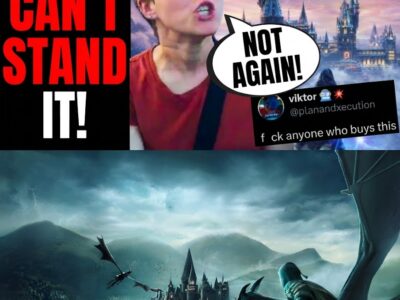
Warner Bros. just officially confirmed that Hogwarts Legacy 2 is in development, and the “pronouns-in-bio” crowd is already having a full-blown mental collapse. We’re talking about wild accusations, “trans-genocide” fear-mongering, and blocking sprees because you dared to be excited about a wizarding game.
It’s round two of the most failed boycott in gaming history. Are you ready to see them take another massive L, or is the outrage getting even more unhinged this time around?
See the absolute state of these unhinged meltdowns and why the “anti-Rowling” crusade is failing for the second time here 👇
The gaming industry is witnessing a case of historical deja vu. Three years ago, the launch of Hogwarts Legacy became a defining moment in the modern “culture war,” as a vocal group of activists attempted to organize a massive boycott of the title, citing the political views of creator J.K. Rowling. Despite these efforts, the game smashed sales records, becoming the highest-selling title of its year.
Now, with Warner Bros. officially confirming that Hogwarts Legacy 2 is in development, the same digital battle lines are being drawn—but for many, the cycle of outrage is beginning to feel like a parody of itself.
The Return of the “Boycott”
The announcement of the sequel has triggered an immediate response from those who view the Harry Potter franchise as an ideological battleground. Across X (formerly Twitter) and other social media platforms, activists have begun calling for a new, “more effective” boycott, linking the purchase of the game to the funding of “anti-transgender legislation” in the United Kingdom.
The rhetoric used by these groups remains as heated as ever. Users are circulating lists of potential buyers to “block” and claiming that playing the game is an act of active harm. However, this time, the reception among the broader gaming public appears to be one of profound exhaustion. To many, the repeat attempt at a “moral crusade” against a video game feels less like a principled stand and more like a performative ritual that the vast majority of players have long since tuned out.
Misinformation and the “Epstein” Narrative
A significant portion of the current outrage is being fueled by viral misinformation. Critics have repeatedly attempted to link J.K. Rowling to the Jeffrey Epstein scandal, often through tenuous or debunked claims regarding email correspondence. Despite evidence showing these claims to be largely without substance, they continue to circulate as primary “evidence” for why fans should shun the franchise.
For observers of the industry, this highlights a dangerous trend in digital activism: the willingness to prioritize narrative over reality. By attempting to tie Rowling to the most heinous of crimes, activists are trying to elevate their ideological disagreements with her stance on gender into a moral emergency. As one community analyst pointed out, “The goal is to make people feel like buying a video game makes them complicit in atrocities—a tactic that simply isn’t resonating with a public that values the game’s actual quality.”
Why the “Hogwarts” Model Works
Despite the vitriol, Hogwarts Legacy was widely regarded as a solid, immersive, and enjoyable title. By focusing on the player’s desire to explore the Wizarding World, the developers were able to bypass the “culture war” noise and cater to the actual desires of the fanbase.
The success of the first game proved that for the overwhelming majority of consumers, political signaling in the media does not equate to the moral character of the person buying it. The attempt to “shame” people out of their hobbies has proven to be a losing strategy time and again. Critics of the activists argue that by failing to realize this, these groups are only accelerating their own irrelevance.
The “Girlboss” Critique vs. The Reality
The debate surrounding the sequel has also surfaced old arguments about the developer’s “ideological” direction. While activists call for the game to be “killed” for its association with Rowling, fans are more interested in the mechanics: Will the sequel improve upon the combat? Will the world be larger? Will the RPG elements be more refined?
The disconnect between the two groups is total. While one side focuses on the potential for a deeper, more engaging exploration of the Harry Potter universe, the other is obsessed with the idea that the game serves as a tool for “trans-genocide.” This yawning gap in perspective suggests that the second boycott will likely follow the same trajectory as the first: an incredible amount of online volume, followed by an equally incredible amount of commercial success for the game.
Looking Ahead
As development of Hogwarts Legacy 2 continues, the question remains: at what point does the outrage cease to be news and start to be background noise? With the industry moving toward a model that caters to mass appeal, the “boycott culture” that dominated the early 2020s is beginning to face a reality check.
For now, the activists are doubling down on their messaging, and the gamers are doubling down on their anticipation. History suggests that when these two forces collide, the outcome is rarely in favor of the outrage-seekers. As we head into the next phase of this saga, the only thing guaranteed is that the “Hogwarts Legacy” wars are far from over—even if the world has largely moved on.