In the humid haze of Titusville, Florida, where the Indian River Lagoon mirrors the Space Coast’s starry ambitions and palm fronds rustle like half-forgotten secrets, the Kepner family confronts a Thanksgiving shadowed by irrevocable loss. On November 26, 2025—just days before the holiday turkeys would grace tables stripped of one cherished voice—Christopher Kepner, father to the late 18-year-old Anna Marie Kepner, broke his measured silence in an exclusive interview that reverberated like a thunderclap across a grieving community. Speaking amid the wreckage of a blended family voyage turned fatal on the Carnival Horizon, Christopher uttered words that cleaved deeper than any autopsy knife: his 16-year-old stepson “should face the consequences” of whatever transpired in the isolated confines of Cabin 7424. Not a outright accusation, but a father’s frayed tether to justice, these sentiments emerge as the FBI’s homicide probe grinds forward, ensnaring a custody battle and exposing the brittle seams of stepfamily bonds. For the Kepners, this is no mere legal footnote; it’s the raw calculus of accountability, where love’s fractures birthed a death by asphyxiation, leaving a cheerleader’s dreams adrift in Caribbean currents.
Anna Kepner was the luminous heartbeat of her Titusville enclave—a straight-A senior at Temple Christian School whose cheerleading prowess wasn’t confined to gymnasiums but spilled into every interaction, her routines a whirlwind of flips, chants, and unyielding optimism that could coax smiles from the stormiest skies. At 18, with her braces glinting like conspiratorial winks and her sights locked on a U.S. Navy enlistment post-graduation, Anna embodied reinvention: the girl who’d captained her squad through state qualifiers, volunteered at beach cleanups, and texted “Love you more” to far-flung kin with the fervor of someone allergic to goodbyes. Born in 2007 to Christopher and his first wife, Heather Wright, Anna’s world tilted at age four when divorce dispatched Wright to Oklahoma, stranding mother and daughter in a limbo of sporadic calls and court-mandated glimpses. Christopher, a 41-year-old shipyard foreman whose days blurred in the clang of welders and the salt-sting of Brevard County’s boatyards, shouldered sole custody, his steady grip a bulwark against the chaos.
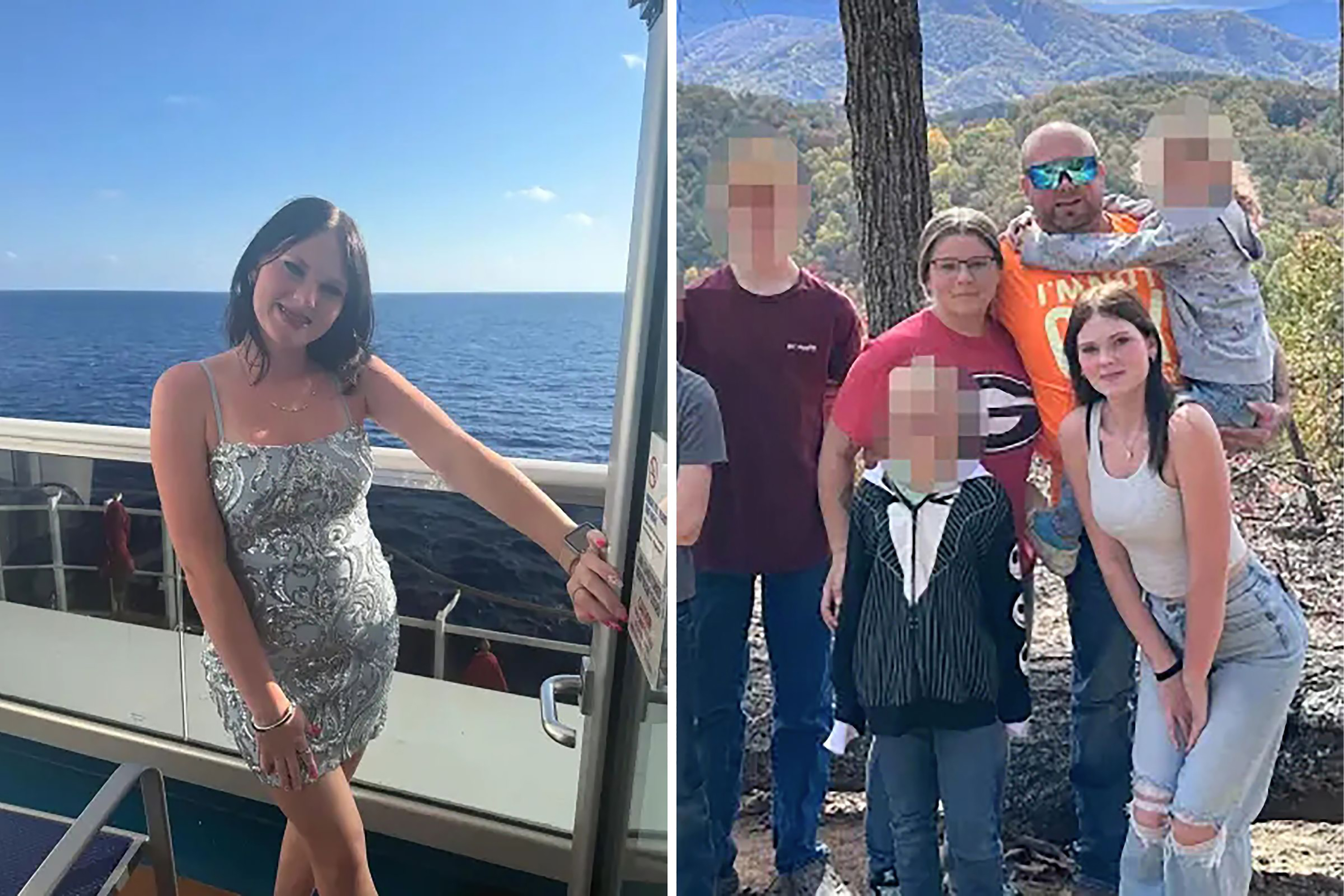
Remarriage in December 2024 to Shauntel Hudson promised patchwork wholeness, merging Anna with her two biological siblings and Shauntel’s three children—including the 16-year-old stepbrother, a reticent teen whose quiet demeanor masked undercurrents the family now questions in hindsight. The Kepner-Hudson home, a modest rancher amid Titusville’s chain-link sentinels, pulsed with the orchestrated anarchy of seven under one roof: shared bathrooms echoing with sibling ribbing, dinner tables laden with Shauntel’s gumbo and Anna’s requested cornbread casserole, weekend barbecues where “steps” dissolved into easy alliances. Yet whispers of discord filtered through—Anna’s ex-boyfriend, Joshua Tew, recounting her unease with the stepbrother’s lingering proximities, a FaceTime glimpse of him mid-lunge that left her rattled, confiding, “He’s too close, too much.” Her 14-year-old brother, Connor, overheard the rebuffs: pleas for space dismissed as teenage phases in a household hell-bent on harmony. Christopher, ever the unifier, saw potential in the blend, blind to the obsession’s slow simmer.
The Carnival Horizon’s November 6, 2025, departure from PortMiami was framed as a covenant—a seven-day Caribbean salve for the family’s scars, ferrying Christopher, Shauntel, grandparents Jeffrey and Barbara Kepner, and the five children to Cozumel’s reefs and Roatán’s idylls. Three staterooms sufficed for the nine: elders in pull-out comforts, teens in the thrill of semi-autonomy. Anna, nursing seasickness that twisted her stomach but not her spirit, shared Cabin 7424 with the stepbrother and possibly another sibling—a triple setup Christopher greenlit as “just like home,” despite Barbara’s later admission of spare bunks aplenty. “We offered,” she would sigh, voice laced with the gravel of regret. The voyage’s opening acts dazzled: atrium selfies under the ship’s kaleidoscopic lights, buffet feasts where Anna’s laughter cut through the din, deckside trivia where her ’90s pop trivia aced the room. Texts to Tew hummed with buoyancy—”Waves are wild, but so am I”—her final dispatch at 9:47 a.m. on November 7, as the Horizon plowed toward Honduras.
By 11:17 a.m., buoyancy curdled to catastrophe. A housekeeper’s routine entry unveiled Anna’s form—crammed beneath the lower bunk, shrouded in a damp blanket, camouflaged by a haphazard stack of Day-Glo life vests that screamed staging over accident. The Miami-Dade Medical Examiner’s preliminary verdict, etched on a death certificate released November 24, branded it homicide: mechanical asphyxiation, bruises blooming like indictments across her neck in the pattern of a “bar hold”—an arm’s unyielding clamp throttling breath until silence reigned. No drugs, no alcohol, no sexual assault marred the tox screen, but the seclusion indicted: surveillance logs logging the stepbrother as sole occupant, his frantic corridor dashes the only footprints in the digital dust. The ship, per protocol, pressed on to port, FBI agents swarming the November 8 docking like gulls on chum, sealing the cabin in evidence tape while oblivious passengers disembarked to conch shells and cabanas.
The probe’s tendrils snaked into family fault lines, court filings in Shauntel’s divorce from the stepbrother’s biological father exploding like grenades on November 17. Hudson’s petition to halt proceedings invoked “an extremely sensitive and severe circumstance,” FBI missives warning of imminent charges against one of her minors—the 16-year-old, now a spectral figure in juvenile anonymity. His father’s attorney pounced in a November 20 hearing, decrying the cabin-sharing as maternal malfeasance: “Circumstances regarding the 16-year-old and the mother’s judgment… affect her ability to care for the minor child.” The boy, whisked to a relative’s for his younger sister’s safeguard, crumbled in interviews—amnesia his shield: “I don’t remember,” a refrain Barbara Kepner, his surrogate grandmother, clings to as “his demons speaking,” even as it hollows her. Grandparents’ accounts paint a frantic prelude: the boy’s to-and-fro from the cabin, unexplained; Anna’s last words to them the night prior, “Meemaw, love you—see you tomorrow,” a vow the sea swallowed.
Enter Christopher’s subpoena, served November 25, yanking him into the custody coliseum on December 5. The summons, from the stepbrother’s paternal camp, probes his orchestration of the cruise’s quarters, his oversight in a tinderbox of teen tensions. Hudson, frantic, beseeched a gag order on November 26—fearing leaks would torpedo the FBI’s work or imperil her brood—only for a judge to deny it, public interest trumping privacy’s plea. It’s here, in the interview’s stark candor, that Christopher’s stance crystallizes: “He should face the consequences,” he tells reporters, his tone a tightrope between paternal fealty and filial fury. “I cannot say that he is responsible but I can’t decline. He was the only one that was in the room and the FBI has an ongoing investigation in which they will have to provide the evidence to say that he did do it or did not do this.” No outright condemnation, but a tacit concession—the stepson’s solitude damns him, the bar hold’s ghost a familial specter. “Right now, my best course of action is to let the FBI do what they’re doing,” he adds, eyes shadowed by the weight of what-ifs: Why that cabin? Why no intervention? Why the blindness to unease’s undercurrent?
The fallout fractures further. Heather Wright, apprised of Anna’s passing via a merciless Google alert, wages war from Oklahoma’s plains: texts to Christopher evaporating into ether, her pleas for maternal inclusion rebuffed by logistics and lingering animus. “I am not okay,” she posts rawly, Jelly Roll’s lament her soundtrack, demanding transparency in a void the feds guard like Fort Knox. The memorial on November 20 at The Grove Church—a “celebration of life” in Anna’s beloved blues, classmates festooning her car with balloons like defiant blooms—swelled with 500 souls, eulogies lionizing her “mighty” mettle: pyramid-top poise, off-key karaoke anthems, dreams of K9 naval units. Yet Heather slipped in incognito, sunglasses veiling tears, banned by decree yet unbowed: “They can’t stop me from grieving my daughter.” Tew, Anna’s first love, honors her in sidelined silence—FBI gag orders muting his FaceTime horrors, his father’s echo: “She was scared of him.” Connor, the eavesdropper of entreaties, bears adolescent scars, his “Stay safe, sis” texts now tombstones.
Carnival Cruise Line, ensnared in the scrutiny, parries with platitudes: full FBI cooperation, the Horizon sailing sans spectacle, its decks ferrying fresh faces past the tragedy’s coordinates. Critics assail the protocols—unhalted itineraries post-death, scant onboard mediation for familial fissures, the illusion of seclusion amplifying isolation’s perils. Blended families, those modern mosaics, find themselves under the microscope: step-sibling ambiguities festering in confined crucibles, unrequited shadows twisting into violence. Experts murmur of red flags ignored—Anna’s discomforts chalked to phases, the cabin a cauldron of unchecked proximity. For Christopher, Thanksgiving looms as defiant ritual: cornbread steaming in Anna’s honor, an empty chair a vessel for stories, not sorrow. “We’re celebrating different this year,” he vows, faith his compass: Anna, baptized months prior, “still with us” in laughter’s echo, ranch-dipped fries passed like sacraments.
As December 5 beckons, the courtroom becomes coliseum—Christopher’s testimony a potential porthole to the probe’s core: cabin greenlights dissected, FBI whispers unearthed, consequences weighed. Will evidence exonerate the boy, his “demons” mere adolescence’s storm? Or indict, the bar hold’s imprint a familial brand? Shauntel navigates divorce’s crossfire, her pleas for pause a mother’s gambit; the stepfather’s camp presses for parity, the custody of a 9-year-old son the prize. In Titusville’s twilight, where rocket plumes streak the firmament—a nod to horizons Anna craved—the Kepners teeter on grief’s brink. Christopher’s words, reluctant yet resolute, herald a pivot: from unity’s myth to accountability’s mandate. Anna, the cheer who rallied against odds, demands no less—her refusal of shadows a legacy, her light a beacon through the fog. In the Horizon’s wake, where waves erase yet whisper, justice stirs: consequences, at long last, for a cabin’s concealed storm.