They hadn’t missed me. They had missed my utility.
“You’re nothing but a problem, Nate.”
My brother Mark said it from the kitchen doorway like he was commenting on the weather.
No hesitation. No guilt.
I stood beside the counter with both hands braced against the edge, trying to keep them from shaking.
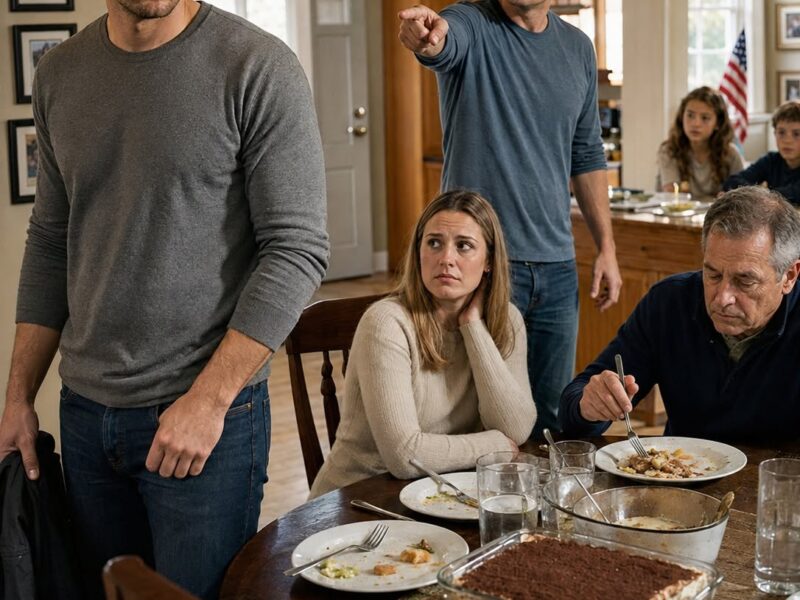
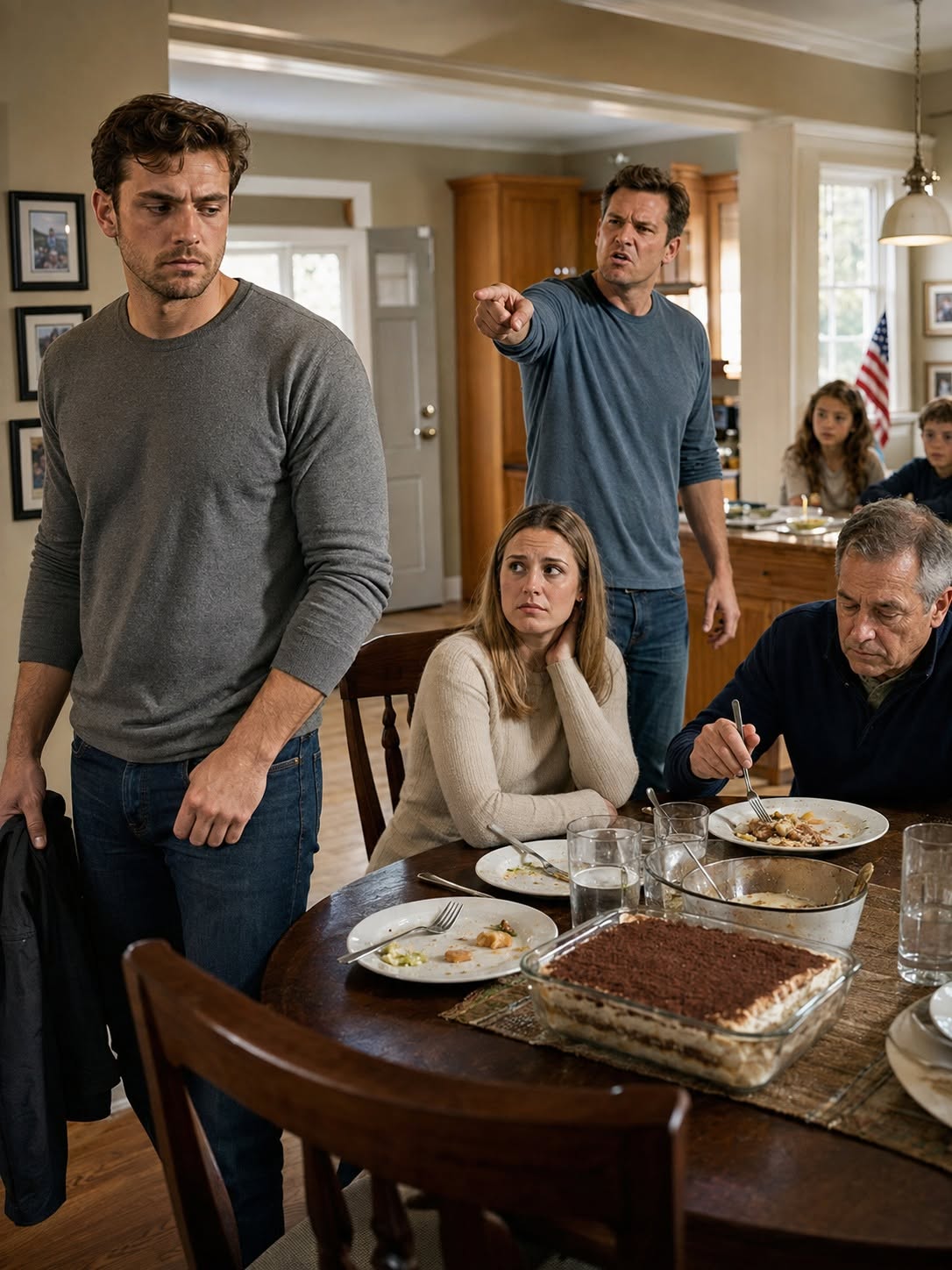
Behind him, our father was still sitting at the dining table with Mark’s wife, Lauren, and their two kids. Plates were half-finished. Forks scraped against ceramic. The homemade tiramisu I had spent all morning making sat untouched near the center.
The argument had started over that dessert.
Lauren had looked at it and asked if it contained alcohol. I calmly explained there was a small amount of Marsala and said I could bring something different next time.
Mark scoffed.
“Always has to be different.”
Dad immediately joined in.
“See? This is the problem. You always make things harder than they need to be.”
I walked into the kitchen because I didn’t want another fight.
Mark followed me.
Then came the sentence.
“You’re nothing but a problem, Nate. You always have been.”
I looked at him, waiting for his face to change.
It didn’t.
So I walked back into the dining room, picked up my jacket, and headed toward the front door.
Dad barely looked up from his plate.
“This family would finally have peace without you.”
That stopped me for half a second.
Not because I wanted to argue.
Because I wanted to remember exactly how calmly he said it.
Then I opened the door and left.
Nobody followed.
Nobody called my name.
I sat in my car for almost thirty minutes under the cold porch light, staring at the steering wheel.
I wasn’t crying.
I wasn’t even angry anymore.
I felt empty.
For years, I had kept showing up because some part of me believed consistency would eventually matter.
I attended birthdays. Helped with repairs. Covered emergency bills. I once loaned Mark $5,000 for the down payment on his car and never asked for it back.
When Dad struggled with expenses, I quietly helped there too.
None of it changed the role they had assigned me.
Mark was the golden son.
I was the difficult one.
That dynamic had existed since childhood, but after Mom died five years ago, it became unbearable.
She had been the only person in the house who seemed to understand that being different from Mark didn’t make me defective.
After she was gone, Dad stopped hiding his disappointment.
And Mark started acting like he had inherited authority over the entire family.
So when Dad said they would finally have peace without me, something in me shut down.
I drove back to my apartment in the city.
Then I disappeared from their lives.
No calls.
No texts.
No family group chat.
Not even a social media reaction.
For the first few days, the silence felt incredible.
I went to the gym. Read books. Watched movies I had kept putting off. I even pulled out an old sketch pad and started drawing again.
Then Lauren called.
I ignored it.
Dad called next.
Then Mark twice.
The next day, more calls appeared.
I still didn’t answer.
Eight days after I walked out, I woke up, reached for my phone, and froze.
Seventeen missed calls.
Every single one from them.
I sat up in bed and stared at the screen.
No voicemail.
No explanation.
Just seventeen attempts to reach the man they had said was ruining their peace.
My first thought was that something serious had happened.
My second was more cynical.
They needed something.
I left the phone on the nightstand.
Around noon, it rang again.
Dad.
I watched his name flash across the screen until the call died.
Then I turned the phone facedown.
A few minutes later, a text arrived from Lauren.
“Hey Nate, sorry to reach out like this, but something’s going on with your dad. He’s been in and out of the hospital since Tuesday. Mark’s overwhelmed. Could you call when you have a sec?”
I read it twice.
Tuesday.
They had known for days.
They had known since Tuesday, yet they didn’t bother to inform me until Sunday morning—when they realized no one else was available to foot the accumulating medical bills, run errands, or play the unpaid caregiver.
I stared at the screen, a cold, heavy numbness replacing the lingering traces of family guilt I had carried for decades. They hadn’t missed me. They had missed my utility.
I didn’t reply to Lauren’s text. Instead, I threw on a hoodie, grabbed my car keys, and drove out to the suburban hospital forty minutes away. Not because I had forgiven them, but because I wanted to look them in the eye one last time—completely untethered—and see if any of them possessed an ounce of genuine remorse.
When I pushed open the heavy double doors of St. Jude’s cardiac ward, the familiar, sterile smell of antiseptic hit me like a physical blow.
I found Room 402 near the end of the hall. The door was cracked open.
Inside, my father was propped up on adjustable hospital pillows, looking remarkably healthy for a man who was supposedly “in and out” of critical care. Mark was slumped in an armchair nearby, scrolling furiously on his phone with an expression of deep irritation, while Lauren was peeling an orange by the bedside table.
“…I’m telling you, he’s just being dramatic,” Mark muttered, tossing his phone onto his lap. “He cut us off because he wanted attention. Now look, Dad is stuck eating hospital food on a Sunday because his youngest son can’t bother to answer a phone call.”
My father let out a raspy, theatrical sigh, resting a hand over his chest. “After everything I’ve sacrificed for that boy… this is how he repays me. Total abandonment. I always knew he was ungrateful.”
I pushed the door open all the way. It clicked softly against the wall.
The three of them froze.
Mark scrambled up from his chair, his eyes widening in annoyance rather than relief. “Nate? Finally! Where the hell have you been? Do you have any idea how stressful this week has been for us?”
I didn’t step forward. I kept my hands tucked safely inside my hoodie pockets, watching them with a calm detachment that visibly unsettled my brother.
“Lauren’s text said Dad was in the hospital since Tuesday,” I said, my voice remarkably even. “So why are you only calling me now, five days later?”
Mark stammered for a split second before recovering his usual defensive swagger. “We didn’t want to bother you while you were busy throwing your little tantrum! But Dad’s blood pressure spiked, and frankly, someone needs to help handle the co-pays and insurance paperwork. You have more free time than I do anyway.”
I turned my gaze to my father. He gave me a weak, practiced look of martyrdom.
“Nate, son,” Dad murmured, his voice trembling just enough to sound pathetic. “Family is supposed to pull together when things get tough. I know you got upset about what I said last week… but tempers flare. You shouldn’t have cut us off like a stranger.”
For thirty-two years, that exact tone would have broken me. I would have rushed forward, apologized for upsetting them, and offered my checkbook before they even asked.
Instead, a quiet, liberating smile touched my lips.
“You’re right, Dad,” I said softly. “Family is important. That’s why I came here today—to make sure you have complete and total peace.”
Mark frowned, crossing his arms. “What is that supposed to mean?”
I reached into my pocket, pulled out my wallet, slid a folded white piece of paper across the metal tray next to the hospital bed, and placed it right beside the peeled orange.
“What’s this?” Dad asked, picking it up suspiciously.
“An itemized check covering every single penny of the emergency loan I gave Mark for his car down payment, plus the cash I fronted for your property taxes last November,” I said clearly. “Consider it my final contribution to your household expenses.”
Mark’s face turned pale. “Wait, Nate—what are you doing? Why are you bringing money into this?”
“Because,” I replied, taking a slow step back toward the door, “if I’m nothing but a problem… and if this family would finally have peace without me… I’m going to make sure you never have to deal with my problems ever again.”
My father stared at the check, his mouth opening and closing soundlessly, the manufactured look of suffering instantly replaced by genuine panic.
“Nate, wait—don’t be ridiculous,” Mark snapped, taking a hasty step forward. “You can’t just walk out like this! We need to talk about—about holidays, about Dad’s long-term care—”
“Talk to your golden son, Mark,” I said, looking him dead in the eye. “He’s always been more than capable.”
I turned around, walked out of Room 402, and didn’t look back once down the long, bright hospital corridor.
As I stepped outside into the crisp Sunday air, my phone buzzed in my pocket. I pulled it out. Another call from Mark.
I didn’t hit decline. I didn’t block the number.
I simply powered the phone completely off, dropped it into my cupholder, and drove away into the bright, silent afternoon—for the first time in my life, completely at peace.