The Palworld 1.0 Power Shift: How Secret Meta Changes and Hidden Stat Buffs Are Tearing the Community Apart
Wait, you’ve been building your Palworld 1.0 endgame team COMPLETELY wrong. 🛑
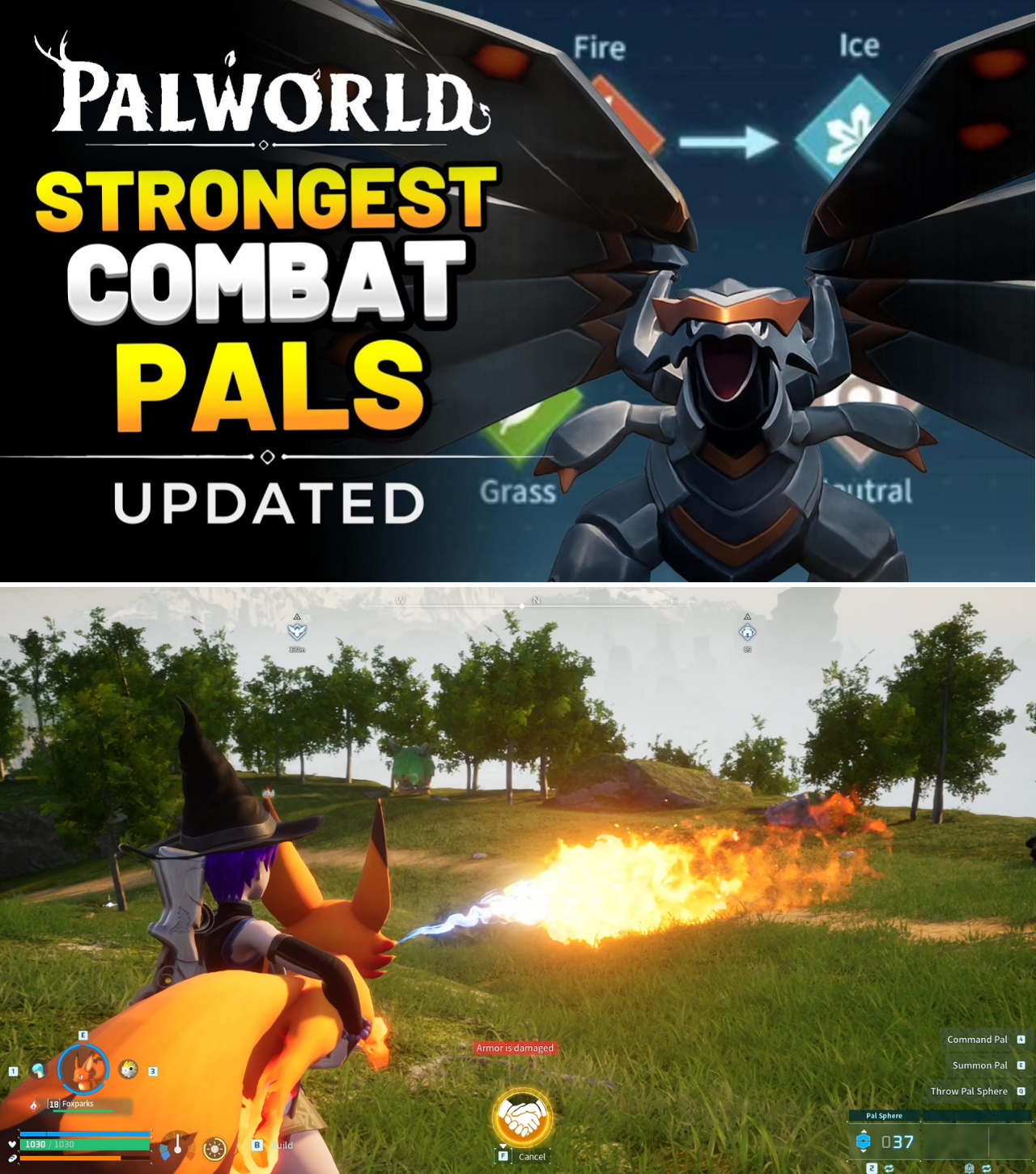
Top-tier dataminers just exposed the true combat meta, revealing that massive hidden stat buffs have quietly dethroned everyone’s old favorite Pals overnight. Are you actually prepared for the new endgame bosses, or is your current lineup secretly holding you back from dominating the new level cap?
Find out exactly which Elemental beasts are breaking the game before Pocketpair drops a massive hotfix 👇🔥
The landscape of survival crafting changed forever when Pocketpair officially pushed Palworld out of Early Access and into its highly anticipated 1.0 release. Bringing massive new zones, raised level caps, and an influx of new Pals, the update was supposed to be a unifying victory lap for the millions of players who stuck by the game. Yet, beneath the shiny veneer of expanded base building and new boss towers, a fierce internal war is brewing among the hardcore community.
As millions of players flood back into the Palpagos Islands, they are quickly realizing a harsh reality: the combat meta they spent hundreds of hours perfecting is officially dead. Between massive hidden stat buffs, completely overhauled Partner Skills, and the quiet dethroning of legendary Pals, the 1.0 update has thrown the competitive and raiding scene into absolute chaos.
Now, top-tier content creators and meticulous dataminers are tearing apart the game’s source code to figure out who truly rules the new elemental hierarchy—and the results are leaving veteran players in a state of shock.
The Death of Gobfin Stacking and the Dark Meta Revolution
For the longest time, the undisputed king of Palworld damage optimization was the infamous “Gobfin stacking” strategy. Players would fill their party with Gobfins to endlessly buff their player character’s attack, melting raid bosses in seconds. That era has been violently brought to an end, and the community is entirely divided on the culprit.
According to a highly circulated breakdown by prominent Palworld analyst Vilestride, the new reigning champion of the Dark element—and arguably the catalyst for this meta shift—is Selyne. Added to the roster and now dominating the endgame, Selyne’s Partner Skill increases player damage by an astounding 80%, but with one massive catch: every single Pal in your party must be a different species.
“Gone are the days of Gobfin stacking now that we have Selyne,” Vilestride noted in a recent YouTube deep-dive that has since gone viral across X (formerly Twitter) and TikTok. The shift has sparked fierce debates on the r/Palworld subreddit. Purists who spent weeks breeding perfect-IV Gobfins are furious that their time investment was invalidated overnight, while newer players are celebrating the forced diversity in team building.
Dark types have historically ruled Palworld, and 1.0 is no different. Frostallion Noct remains firmly planted at the top of the food chain. Its Partner Skill not only changes player damage to Dark but now also inflicts Blind while increasing damage by up to 40%. Meanwhile, Shadowbeak remains a menace with its exclusive skill, Divine Disaster 2, holding its ground as an incredibly strong offensive option. For players looking for pure, unadulterated “glass cannon” damage, Bellanoir has been confirmed to boast the highest base attack out of any Pal in the entire game.
Fire and Electric Upheavals: The Machine Gun Meta
While the Dark meta has shifted structurally, the Fire and Electric elements have received raw, brute-force injections of power that are leaving communities on Discord entirely stunned.
In the Electric category, Orserk has received what the community is calling a “massive glow-up.” Previously sitting in the shadow of Grizzbolt, Orserk’s 1.0 Partner Skill now grants an extra 5% Attack and Defense to the active Pal for each bullet that hits an enemy, lasting 5 seconds and stacking up to 30 times.
Clips on TikTok are already surfacing showing players using fully automatic assault rifles to instantly max out Orserk’s stacks, generating a localized 150% stat boost that shreds endgame bosses in seconds. “This makes Orserk a top contender for a spot on any team,” Vilestride emphasized. Meanwhile, Helzephyr Lux has found a niche spot in the meta purely for converting player damage to Electric, making it a critical tool for taking down heavy Water-type raid bosses.
The Fire element is seeing equally dramatic shifts. Long-time staple Jormuntide (alongside its Ignis variant) received a massive rebalancing to its Partner Skill, now granting a staggering 65% damage buff whenever attacking enemies afflicted with the Burn status. Blazamut Ryu also retains its top-tier status, allowing players to deal 40% more damage when attacking weak points with Dragon damage—pairing beautifully with Chillet’s damage conversion mechanics.
However, the biggest shock in the Fire category belongs to Knocklem. Despite boasting the highest base defense rather than attack, the 1.0 Knocklem variant possesses a Partner Skill that temporarily increases its Attack and Defense by up to 210%. The sheer mathematical absurdity of this boost has Reddit theory-crafters scrambling to build specialized team comps around it, heavily utilizing support Pals like Kelpsea Ignis, Rooby, and Wixen to further stack the buffs.
The Hitbox Debate: Why Bigger Isn’t Always Better
Beyond raw stats and Partner Skills, 1.0 has introduced a highly controversial mechanical reality that is forcing players to rethink their entire approach to endgame survival: hitbox optimization.
As players dive into the newly introduced raid content and high-level boss towers, they are encountering massive Area of Effect (AoE) attacks, such as the devastating Holy Burst. In previous builds, massive legendary Pals like Astegon, Jetragon, and Frostallion were the default choices due to their gargantuan stat pools. Now, their massive physical models are proving to be fatal liabilities.
Hardcore raiders on Discord are pointing out that larger Pals take significantly more multi-hit damage from these AoE skills simply because their hitboxes absorb more overlapping damage frames.
“This is a very legitimate argument for using smaller Pals,” Vilestride explained, highlighting smaller, highly potent combatants like Menasting Cryst, Anubis, or specialized variants over massive targets like Paladius or Jormuntide. “Frostallion is going to get torn up by these kinds of attacks, but it really just depends on what you’re fighting.”
This revelation has split the community. Casual players argue that punishing players for using visually impressive, legendary boss Pals ruins the fantasy of the game, while hardcore PvP and raid-focused players praise Pocketpair for adding an unintended layer of tactical depth to Pal selection.
Looking Ahead: Can the Meta Stabilize?
The 1.0 update has proven that Pocketpair is not afraid to completely dismantle established hierarchies in favor of promoting diverse, synergistic gameplay. From the defensive powerhouse of Astegon and the insane scaling of Orserk, to the structural shift away from Gobfin stacking via Selyne, Palworld team building has never been more complex—or more volatile.
For now, the player base remains locked in an arms race of datamining, breeding, and optimization. As thousands of players flock to social media to share their optimized 1.0 builds and viral boss-melting clips, it is clear that Palworld’s hold on the gaming community is stronger than ever. The only question that remains is whether this new meta will survive the year, or if Pocketpair has another stealth hotfix waiting in the wings to turn the community upside down all over again.