THE HIGH-BORN SNIFF: What Is Ormund Hightower Inhaling in ‘House of the Dragon’ Season 3? Medieval History Holds the Answer
🚨 AN ILLEGAL WESTEROS SUBSTANCE… OR SOMETHING FAR DARKER? 🚨
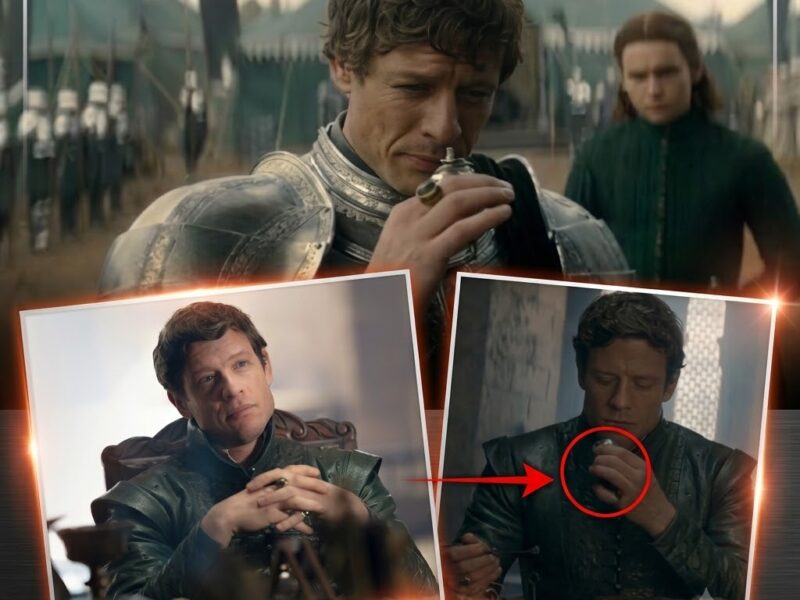
Fans are officially hyper-fixating on Lord Ormund Hightower’s bizarre behavior in the Season 3 premiere. Frame-by-frame breakdowns are flooding TikTok after the head of House Hightower was spotted pulling out an intricate silver sphere and deeply inhaling an unidentified substance during a tense military meeting.
Is James Norton’s character secretly battling a crippling substance addiction that will compromise Team Green’s entire army, or is this a calculated, hidden historical easter egg meant to telegraph his absolute disgust for the common folk? The internet is running wild with dark drug theories, but medieval history reveals a truth that completely redefines his character.
Uncover what Ormund is actually inhaling and the sinister meaning behind his obsession 👇
A new player has officially entered the Dance of the Dragons, and he is already driving the internet completely insane with a single, bizarrely recurring habit. Following the highly anticipated Season 3 premiere of HBO’s House of the Dragon, viewers have found themselves utterly fixated not on dragon battles or political backstabbing, but on the delicate, specific movements of Lord Ormund Hightower’s nose.
Introduced as Otto Hightower’s (Rhys Ifans) elite nephew and the formidable commander of the 15,000-strong army of the Reach, Lord Ormund (played by Happy Valley star James Norton) instantly commanded the screen. But during a tense sequence where he receives a critical wartime letter from King’s Landing instructing him to halt his march on the capital, Ormund did something that sent social media into an immediate tailspin.
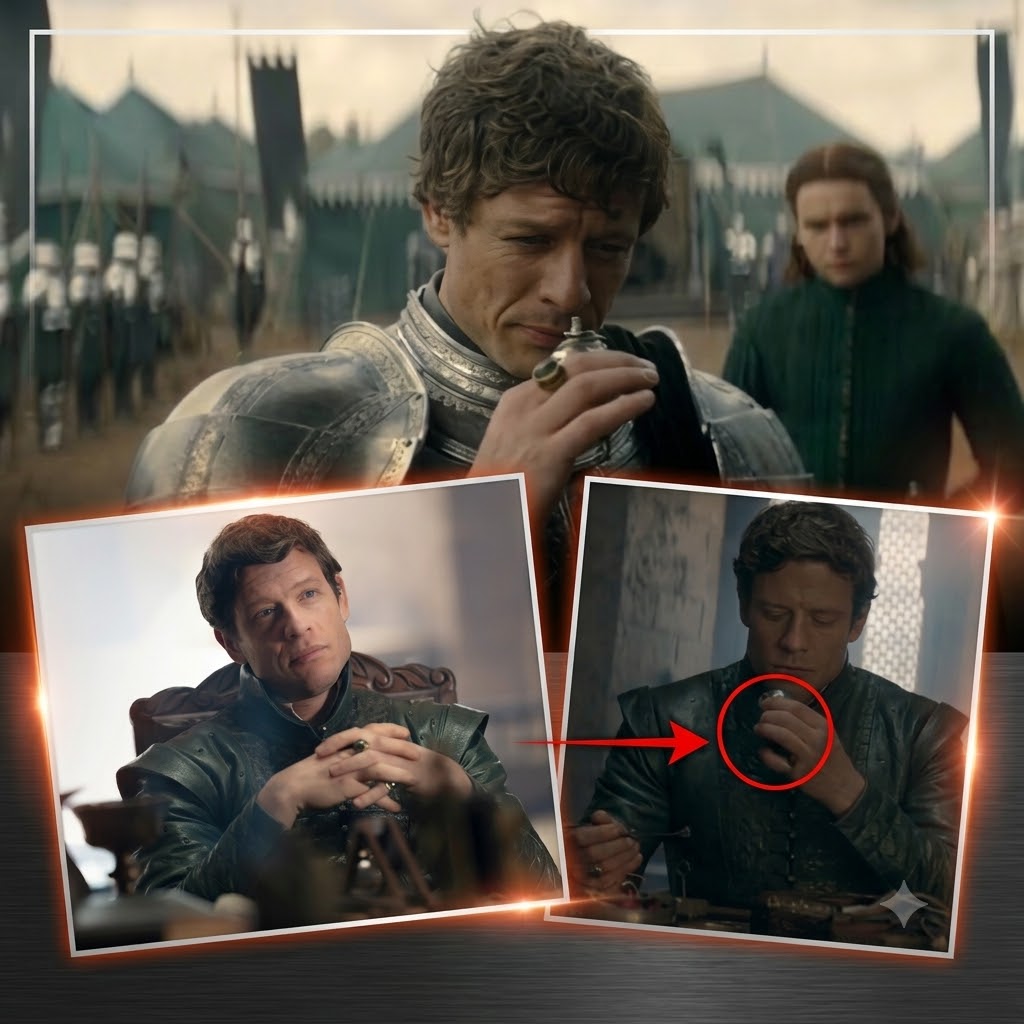
Before opening the parchment, Ormund visibly wrinkled his nose in profound disgust, unclipped an intricate, spherical silver device from his belt, brought it directly to his face, and deeply inhaled.
Almost immediately, X (formerly Twitter), TikTok, and Reddit exploded with frantic speculations. Frame-by-frame breakdowns emerged within hours, with casual fans convinced they were witnessing a hidden character flaw.
“Is Ormund Hightower chasing the dragon in the middle of a war council?” one viral post on X questioned, racking up tens of thousands of interactions. “He looks like he’s hitting a medieval vape or sniffing some high-grade Westerosi narcotics.”
Over on the r/HouseOfTheDragon subreddit, theories quickly veered into the dark and conspiratorial, with some users guessing the prince was heavily addicted to an exotic fantasy drug or an early alchemical stimulant meant to give him an edge in battle. However, historical traditionalists and lore experts have stepped in to shut down the drug rumors, pointing out a brilliant, deeply subtle historical detail that telegraphes exactly who Ormund Hightower is.
The Real-World Lore: The Medieval Pomander
For those wondering about the real nature of Ormund’s mysterious silver ball, the explanation doesn’t lie in fictional Westerosi narcotics, but rather in actual European history. Lord Ormund Hightower is using a pomander.
Derived from the French pomme d’ambre (apple of amber), a pomander was a highly ornate, perforated metallic sphere crafted from gold or silver. Worn primarily by high nobility, royalty, and elite clergy during the Middle Ages, these spheres were tightly packed with intensely aromatic mixtures of ambergris, musk, civet, cloves, cinnamon, and dried herbs.
               [THE MEDIEVAL POMANDER DIAGRAM]
                             ___
                            /   \  <-- Hanging Loop (Attached to belt)
                           | (*) | <-- Perforated Silver/Gold Shell
                            \___/  <-- Packed with Musk, Cloves & Herbs

              [FUNCTION: Masking the "Miasma" of the Poor]
Historically, pomanders served two distinct functions. First, they were used to combat the “miasma theory”—the obsolete medical belief that toxic, foul-smelling air (bad air) was the direct cause of deadly diseases like the plague. Second, and more practically, they were used to shield aristocratic noses from the overwhelming, unwashed stench of medieval life.
When Ormund steps out of his pristine command tent to meet the messenger, the context clues are explicitly laid bare. The rider is visibly caked in mud, sweat, and road grime. Ormund’s immediate reaction to pull out his pomander is a reflex of pure aristocratic revulsion. He isn’t getting high; he is protecting his high-born senses from the stench of a peasant.
The Character Insight: A Brilliant, Pompous Diva
While the pomander is a historically accurate luxury item, its inclusion in House of the Dragon serves as a brilliant narrative shorthand to establish Ormund’s psychology.
In an industry interview, actor James Norton reportedly joked about the character trait, teasing that Ormund is essentially a high-society diva who insists on pulling out his personal perfume the absolute second any “stinky people” on the road dare to come within close proximity to him. The premiere even emphasizes this further when a disgusted Ormund immediately orders a hot bath for the messenger before he will even consider further contact.
This intense aversion to uncleanliness draws a fascinating contrast to the grimy, blood-splattered reality of the war he is about to lead. Oldtown, the ancestral seat of House Hightower, is historically romanticized as the fairest, most beautiful, and most cleanly city in the Seven Kingdoms—often compared to a heavily perfumed dowager. King’s Landing, by comparison, is a notoriously foul, overcrowded urban slum. By showcasing Ormund’s extreme sensitivity to a single dirty messenger, the showrunners are subtly highlighting how ill-prepared this pristine southern lord might be for the psychological horror and muddy, unglamorous carnage of the Dance of the Dragons.
Fans Think It Hints at a Darker Narrative Arrogance
While the drug addiction theories have been thoroughly debunked by history, a far darker thematic theory has taken root across Discord communities. Fans believe Ormund’s weaponized snobbery is foreshadowing a fatal flaw in Team Green’s military strategy: an absolute, catastrophic underestimation of the common folk.
Throughout the Game of Thrones universe, lords who treat the smallfolk like expendable, foul-smelling background noise almost always pay a devastating price. Corlys Velaryon has already warned Team Black that the common people are growing increasingly hostile toward the ruling elite as the dragon war disrupts their livelihoods.
Ormund’s pomander reinforces a dangerous ideological echo chamber within Team Green. If the High Lords of Oldtown view their own loyal soldiers and messengers with open, physical disgust, they risk alienating the very foundation of their army.
As Season 3 progresses and the war moves into the brutal, chaotic battlefields of the Reach, Lord Ormund will soon find himself surrounded by rotting corpses, burning fields, and the suffocating ash of dragonfire. Fans are eagerly waiting to see how long his precious silver pomander can protect him from the true, unavoidable smell of war.